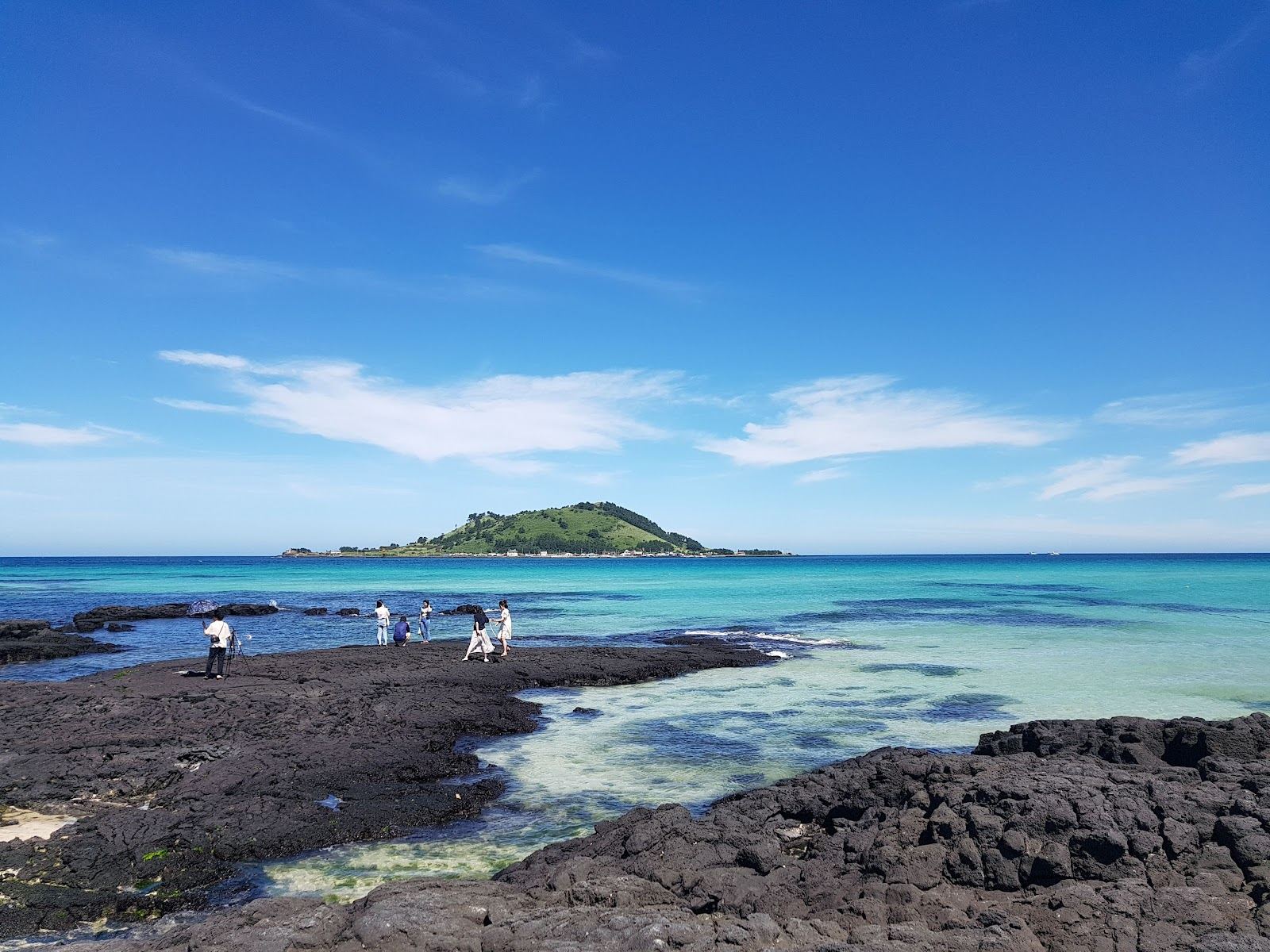
 Photo: Sohyun Kwon (Emma) via Google
The verdict
- Best forSnorkellers happy with cooler water and a wetsuit, chasing clear volcanic shallows over rocky reef
- Top pickHyeopjae on the west coast, where the turquoise shallows run out toward Biyangdo island
- One thing to knowJeju is not the tropics, so the sea is clearest and warmest from July into early autumn, and a wetsuit helps
Published 4 February 2026. Last reviewed 5 June 2026
Jeju snorkels nothing like the tropics, and knowing that before you pack is half the trip. This is a volcanic island in a cool current, so the water is bracing for much of the year and the visibility swings with the wind, but on a calm summer day the clear shallows over black lava reef and white shell sand are genuinely lovely. The skill here is timing and aspect rather than chasing a single famous reef.
We have ranked these on water clarity, what the rock and reef give back, and how easy the entry and the access are. The clearest water sits on the west and east coasts where shell sand meets lava, a short drive from the main towns, while the big surf beaches on the south churn and pull and snorkel poorly. Hyeopjae and its neighbour Geumneung are the easy clear water wins, both an easy drive with parking close to the sand.
Pack a wetsuit or at least a rash top even in summer, reef shoes for the sharp lava, and a dry bag for the bus or the rental car. Start on a calm morning before the afternoon wind gets up, and treat the day as a swim and a float over reef rather than a deep dive. The honest line is that surf famous Jungmun Saekdal is the one to skip for snorkelling, while the west coast shallows reward the early start.
Each beach below links to its full guide for access, parking and the honest read on crowds, and remember conditions are typical rather than guaranteed, so read the sea and the wind before you swim out.
The clearest water for snorkelling in Jeju
Judged on visibility, lava reef and how gentle the entry is.
Hyeopjae
Jeju's signature clear water, a wide arc of white shell sand and shallow turquoise sea looking out to the little island of Biyangdo, an easy drive from the west with parking and cafes close by. The shallows are gentle and bright on a calm day, best at the rocky margins, though it is one of the island's busiest beaches so come early.
Geumneung
The quieter neighbour right beside Hyeopjae, with the same clear shallow water and lava rock but fewer people and a more local feel. The rocky patches hold small fish and the entry is gentle, which makes it a relaxed alternative when Hyeopjae fills up, and the sunset here is a bonus.
Gwakji
A compact sandy bay with clear water and rocky ends, known locally for the freshwater spring showers behind the sand. The headlands are where the snorkelling is, the water clears quickly off the rock, and the facilities make it an easy half day, though it too gets busy on summer weekends.
Sehwa
A bright east coast beach with clear shallow water and a calmer, less developed feel than the western stars. The reef life sits at the rocky margins and the open aspect keeps the water clean, but the same exposure can bring wind and chop, so a still morning is the time to go.
Woljeongri
A photogenic east coast strip better known for its cafes than its reef, with clear shallow water and lava rock at the edges. The snorkelling is gentle and modest rather than rich, best at the rocky ends, and the scene behind the sand makes it an easy place to pass a day between swims.
The honest read on snorkelling here
Jeju rewards snorkellers who set the right expectation. This is cool clear volcanic water rather than a warm coral sea, so the pleasure is in the light over black lava reef and white shell sand on a calm summer day, not in big fish or deep colour. The west coast shallows around Hyeopjae and Geumneung and the east coast at Sehwa give the cleanest gentlest water.
Timing decides your day more than place. The sea is coldest and roughest through the cooler months and only really warms from July into early autumn, while the afternoon wind clouds the shallows, so a calm early morning in late summer is the window. A wetsuit or rash top extends the swim, and reef shoes save your feet on the sharp lava.
The honest line is to skip the famous southern surf beach of Jungmun Saekdal for snorkelling, since the waves and currents that make it a surf spot churn the water and make it a poor and risky float. Tread lightly on the reef, leave the shellfish for the haenyeo divers who harvest them, and treat conditions as typical rather than guaranteed.
A clear bay with a lounger and lunch
A few of the easier west and east coast bays sit beside cafes and relaxed beach spots where you can warm up, rinse off and eat between swims, while the quieter coves stay simple and unserviced. We never invent a venue, a price or an opening status, so anything we cannot confirm is marked to be confirmed. Check the directory for who is open this season, then send a single enquiry.
Book a beach club in Jeju
Independent and honest · 1,340 beaches ranked across 103 destinations · We answer to no resort
Before you go
Where is the best snorkelling on Jeju?
The west coast around Hyeopjae and its quieter neighbour Geumneung has the clearest shallowest water, with Gwakji nearby and Sehwa on the east coast as calm alternatives. The rocky margins of each bay hold the most to see.
Is Jeju good for snorkelling?
It is good on its own terms rather than tropical. The water is cool and volcanic with variable visibility, but on a calm summer day the clear shallows over lava reef and shell sand are lovely. Set the right expectation and pick a calm morning.
Do I need a wetsuit to snorkel on Jeju?
It helps for most of the year. Even in summer the water is brisk, so a wetsuit or at least a rash top makes a longer float comfortable, and reef shoes protect your feet on the sharp volcanic rock.
When is the sea warmest and clearest?
From July into early autumn the sea is at its warmest and most settled, and a calm morning before the afternoon wind gives the clearest shallows. The cooler months bring cold, often rough water that snorkels poorly.
Which Jeju beach should I avoid for snorkelling?
Jungmun Saekdal. It is a celebrated surf beach, and the same waves and currents that draw surfers churn the water and make snorkelling poor and risky. Head to the west coast shallows instead.