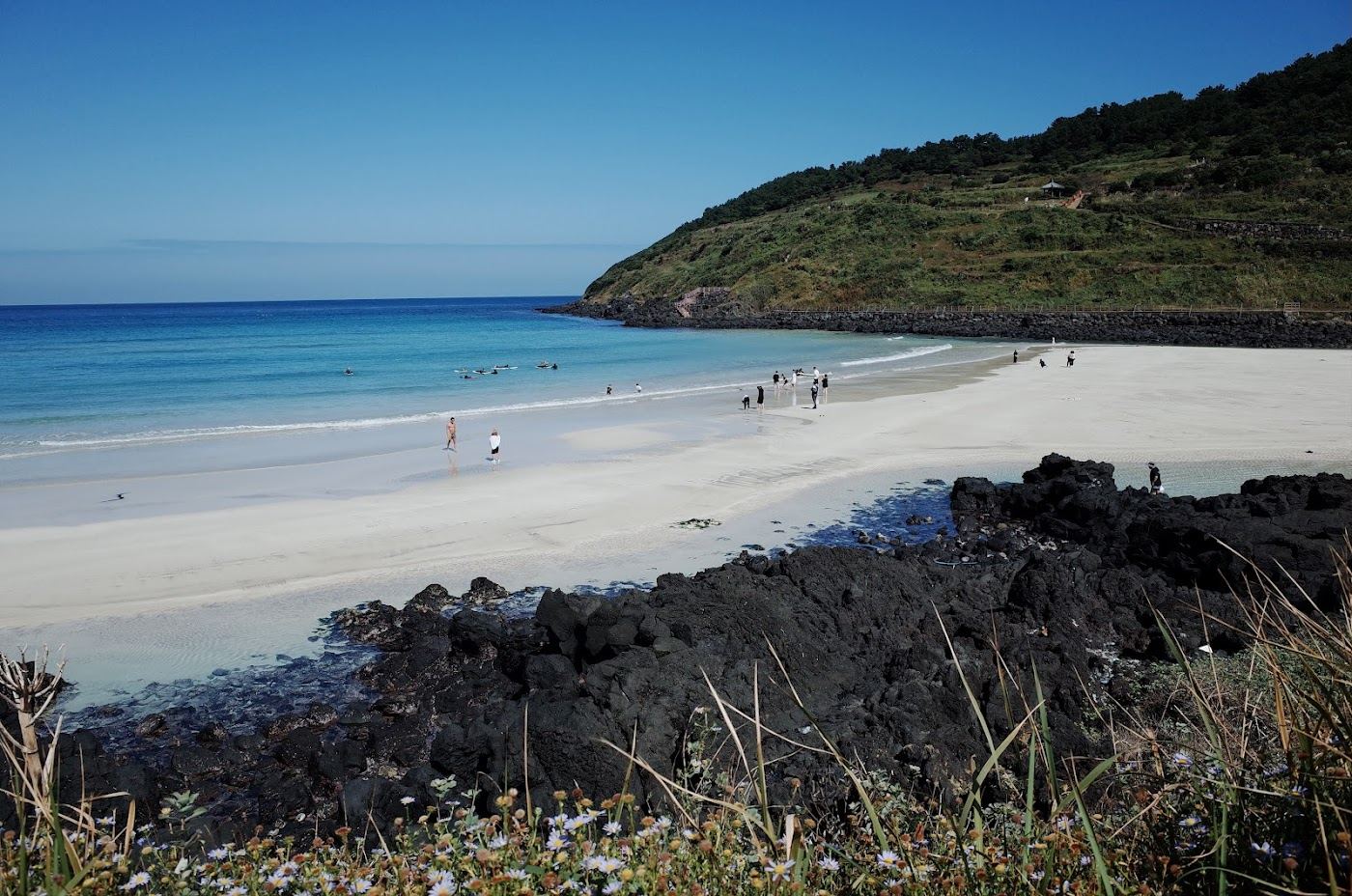
 Photo: 초이의 제주일상 via Google
The verdict
- Best forTravellers timing a Jeju trip who want to match the visit to the day they actually want, a warm summer swim or a settled shoulder season coast walk, rather than expecting both at once.
- Single best spotLate July to mid August for swimming, once the monsoon has broken and the sea is warm, with May and October the pick for fine weather without the water.
- One thing to knowThe sea here keeps a season. It is only comfortable to swim from July to early September, so the calendar decides far more than the choice of beach.
Published 1 March 2026. Last reviewed 23 May 2026
Jeju runs on a temperate four season calendar rather than a tropical one, and that single fact shapes every beach decision you make. Unlike a warm water island where you can swim any month, Jeju keeps a genuine swim season that opens through July and August when the sea finally warms into the mid twenties and the lifeguards come on duty. The rest of the year the beaches are beautiful but cool to cold, places to walk, photograph and drink coffee with a view rather than to swim. Reading the calendar well here matters more than choosing the perfect beach.
The catch with the swim season is that it overlaps with the wettest, stormiest part of the year. The summer monsoon, jangma, usually arrives in late June and lingers into July, and the typhoon risk builds through August into September, so the warm water comes with rain and the odd washed out day. What follows is the year broken down month by month for the things that actually shape a Jeju beach trip, the air, the sea, the rain and the crowd, with an honest verdict for each, and a clear steer toward the late July and August swim window and the calm May and October shoulders for everything else.
Month by month at a glance
| Month | Air | Sea | Rain | Crowd | Verdict |
|---|---|---|---|---|---|
| January | Cold, around 8C | Cool, around 14C | Low | Low | Cold and windy, a scenic coast for walks but far too cold to swim |
| February | Cold, around 9C | Cool, around 13C | Low | Low | Still winter, quiet beaches and bracing air, no swimming but fine for the coast path |
| March | Mild, around 12C | Cool, around 14C | Building | Building | Spring stirs and the island greens, pleasant walking weather, sea still cold |
| April | Mild, around 17C | Cool, around 16C | Moderate | Busy | Flower season fills the island, lovely for the coast and cafes, water too cool to swim |
| May | Warm, around 21C | Mild, around 18C | Moderate | Moderate | One of the best months for weather, fine for paddling and the coast, sea only just warming |
| June | Warm, around 24C | Mild, around 21C | Wetter late | Building | Pleasant early, then the monsoon arrives late in the month, sea warming toward a swim |
| July | Hot, around 28C | Warm, around 24C | Wet early | High | Monsoon early then it breaks, beaches open and the swim season begins, late July is the pick |
| August | Hot, around 30C | Warm, around 27C | Wettest | Peak | Peak summer with the warmest sea and the biggest crowds, hot, humid and storm prone |
| September | Warm, around 26C | Warm, around 25C | Wet | Easing | Warm water lingers early on, but typhoon risk is highest, watch the forecast closely |
| October | Mild, around 21C | Mild, around 22C | Lower | Busy | Glorious autumn weather and a still mild sea, superb for the coast though the swim season is closing |
| November | Cool, around 15C | Mild, around 19C | Low | Lower | Crisp and quiet, the sea slow to cool but the air too brisk for most swimmers |
| December | Cold, around 10C | Cool, around 16C | Low | Low | Winter returns, windy and cold, a beach for bundled walks and not for the water |
When each month earns its place
May. The pick of the shoulder season for weather. The air is warm and settled before the monsoon, the island is green and the canola has faded into a fresh early summer, which makes it ideal for driving the ring road and walking the coast paths. The sea is only just warming, around eighteen degrees, so it is more a paddle than a proper swim, but for everything except getting fully in the water May is hard to beat.
July. The month the beaches truly open. It starts under the tail of the monsoon, with heavy bursts of rain, then usually breaks around the middle or end of the month into bright skies and warm water, which is why late July is the sweet spot of the whole year for a swim. The sea climbs to the mid twenties, the lifeguards are posted and the bays come alive. Watch the forecast early in the month and aim for the second half.
August. Peak summer and the warmest sea, often around twenty six or twenty seven degrees, but also the busiest, wettest and most storm prone stretch. The beaches are wonderful when the sun is out, but this is the height of the Korean holidays, so the famous bays fill and the car parks strain, and a passing typhoon can shut the water for a day. Book ahead, arrive early, and keep a flexible day or two in reserve.
September. A gamble worth understanding. The water stays warm into the first week or two, so an early September swim is often still on, but this is the peak of the typhoon risk and the season officially winds down, so it rewards a traveller who watches the forecast and can move plans. The upside is that the summer crowds thin quickly once the holidays end.
October. The autumn star for everything but swimming. The weather turns clear, dry and gloriously mild, the island shows its autumn colour, and the sea, slow to cool, still hovers around a swimmable mark early in the month. It is one of the most beautiful times to drive the coast and walk the trails, so come for the scenery and a brave dip rather than a full beach holiday.
Get the Jeju beach calendar
Independent and honest · 1,340 beaches ranked across 103 destinations · We answer to no resort
Before you go
When is the best time to visit Jeju for the beach?
For swimming, July and August are the only dependable months, when the sea warms to the mid twenties and the beaches officially open with lifeguards. Late July, after the monsoon usually breaks, is often the sweet spot. For pleasant weather to walk the coast and the cafes without swimming, May and October are lovely, though the water is cool. Conditions are typical and never guaranteed.
How warm is the sea in Jeju?
The sea swings with the seasons, unlike a tropical island. It sits around fourteen degrees Celsius in winter and climbs to roughly twenty six or twenty seven degrees at the August peak, easing back through the mid twenties in September. Comfortable swimming is really limited to July, August and the start of September. Conditions are typical and never guaranteed.
Does it rain a lot in Jeju?
Jeju is one of the wetter parts of Korea. The summer monsoon, known as jangma, usually arrives in late June and runs into July with heavy bursts, and August is often the wettest month overall, with some typhoon risk through late summer. Spring and autumn are drier and more settled. Watch the forecast in summer and keep beach plans flexible.
Is there a typhoon season in Jeju?
Yes, the typhoon risk runs roughly from August into September, when a passing storm can close the beaches and disrupt flights and ferries for a day or two. Most summers see only a handful of systems and many pass without a direct hit, but it is wise to build a little slack into a late summer trip and watch the forecast. Conditions are typical and never guaranteed.
When is Jeju least crowded?
The quietest months are the cold ones from December to February, when the beaches are scenic but unswimmable. Among the pleasant months, early summer in June before the school holidays and late autumn in November are the calmest. The busiest stretches are the July and August swim peak, the spring flower season around April and the autumn foliage in October.
Is the sea calm for swimming in Jeju?
It varies by coast. The west and northeast bays such as Hyeopjae, Gwakji and Hamdeok are usually the calmest and best for a family swim, while the south coast at Jungmun is the surf beach with rougher water and currents. Jeju is a windy island, so conditions change quickly. Respect the lifeguard flags in season, and treat all conditions as typical and never guaranteed.