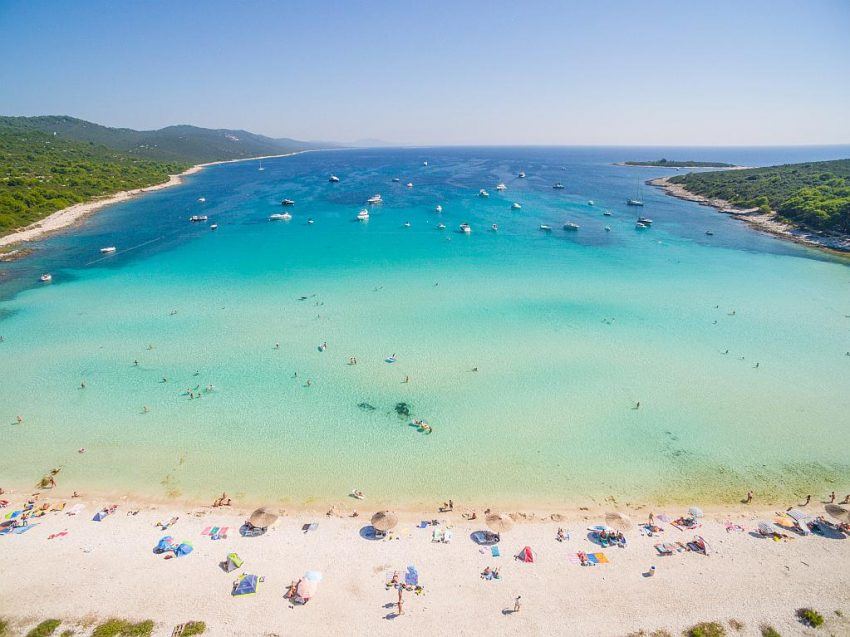
 Photo: Demytr Katriy via Google
The whitest sand beaches on the Dalmatian coast
The rare real sand among Croatia white pebble, ranked honestly with the shingle named.
The verdict
- Best forTravellers who want genuine soft sand rather than the white pebble that defines most of this coast
- Top pickSakarun on Dugi Otok for powder soft white sand and shallow turquoise water, the Croatian Caribbean
- One thing to knowMost famous white Dalmatian beaches are dazzling pebble, not sand, and true soft sand is rare and found mainly at Sakarun, Nin and Rab
Published 19 March 2026. Last reviewed 30 April 2026
Here is the truth the brochures skate over, because the Dalmatian coast is pebble country. Those glowing white beaches in the photos, the spits and coves that make Croatia look Caribbean, are almost all white pebble and shingle rather than sand, dazzling to look at and hard on bare feet. If you are picturing powder between your toes, you need to know that real soft sand on this coast is genuinely rare.
It does exist, in a handful of special places where shallow bays and the right geology have laid down soft white grains rather than stone. We have ranked the genuine sand beaches first and honestly, and we have then named the famous white pebble icons for what they are, so you can choose with open eyes between true sand and the brilliant shingle that most of the coast actually offers.
If you want the short version, the real sand is at Sakarun on Dugi Otok, a powder soft white bay over shallow turquoise water that earns its Croatian Caribbean nickname, and at the long natural sand strands of Nin and the island of Rab. The celebrated names like Zlatni Rat and Punta Rata are beautiful, but they are white pebble, so go to them for the colour of the water and to the sand beaches for the feel underfoot.
The palest sand in Dalmatian Coast
Genuine soft pale sand first.
Sakarun
The finest real sand beach in Dalmatia, a kilometre of powder soft white sand shelving into water so shallow and clear it glows turquoise, fully earning its Croatian Caribbean tag. Set on the quiet island of Dugi Otok and backed by pine, it stays relatively wild and uncommercial. This is the one beach on the coast where the sand genuinely matches the famous water, and the clear top pick for soft sand.
Queens Beach Nin
A long natural sand strand in the shallow lagoons by the old royal town of Nin, with soft pale sand, water you can wade out into for ages and views to the Velebit mountains. There is healing mud at one end, birdlife in the lagoons and a wild, open feel away from the resorts. For real soft sand over a vast shallow flat, this is the most natural choice on the coast.
Paradise Beach Rab
The best known true sand beach in Croatia, a long shallow sweep of soft pale sand at Lopar on the island of Rab, gentle enough that children can wade far out. It is more developed and busier than Sakarun or Nin, with the full run of facilities, but the sand is genuine and the shallow water is warm and calm. Real sand with everything to hand, if you can take the crowds.
Zlatni Rat
The most photographed beach in Croatia, a shifting white spit reaching out from Bol on Brac into brilliant blue water, and a genuinely spectacular sight. The honest catch is that it is white pebble and shingle, not sand, so it is dazzling to look at and to swim from but firm underfoot. Come for the iconic shape and the colour of the sea, not for soft grains between your toes.
Punta Rata
Routinely named among Europe finest beaches, a gorgeous cove of brilliant white stone backed by pines that lean over clear turquoise water. Like most of the coast it is white pebble rather than sand, beautiful and clean but hard underfoot, so bring water shoes. A stunning swimming cove and a fair stand in for white sand from a distance, as long as you know what you are walking on.
The honest read on white sand
The honest read on Dalmatia starts with a correction. This is one of the great pebble coasts of the world, and the famous white beaches that make Croatia look tropical are overwhelmingly white pebble and shingle, not sand. That is not a flaw, because white stone gives the water its astonishing clarity and that luminous turquoise, but it does mean bare feet want water shoes and a sun mat, and powder seekers must hunt for the rare real sand.
When you do find genuine sand it tends to come with the best of the coast nature attached. Sakarun sits on quiet, pine backed Dugi Otok, and the sand flats of Nin spread through shallow lagoons rich in birdlife, with the Velebit mountains rising behind and healing mud at the shore. These are the wild, natural corners of a coast that elsewhere can feel crowded and built up, so the soft sand and the quiet often arrive together.
A few honest cautions. The sea is clear and generally calm in the sheltered bays but cooler and deeper off the pebble coves, where the stone shelves quickly, so the shallow sand beaches at Sakarun, Nin and Rab are far gentler for children. The bura and maestral winds can whip up in the afternoon, conditions are typical rather than guaranteed, and shade is limited on the open sand flats. Pack water shoes for the pebble, sun cover for the sand, and you will know exactly what each beach offers underfoot.
A base near the rare sand
Dalmatian beach life runs to simple beach bars, concessions and the odd lounger rather than the grand daybed clubs of the western Mediterranean, and the wilder sand beaches like Sakarun and Nin keep it especially low key. The busier sand strands such as Rab have fuller facilities. We never invent a venue, a minimum spend or an opening status, so anything unconfirmed is marked to be confirmed. Browse the directory and send one enquiry to check what is open and bookable.
Book a beach club in Dalmatian Coast
Independent and honest · 1,340 beaches ranked across 103 destinations · We answer to no resort
Before you go
Where is the real white sand on the Dalmatian coast?
Genuine soft white sand is rare in Dalmatia and is found mainly at Sakarun on the island of Dugi Otok, the long sand strands by Nin near Zadar, and Paradise Beach at Lopar on the island of Rab. Sakarun is the standout, a powder soft bay over shallow turquoise water. Most other famous white beaches are pebble rather than sand.
Are Croatian beaches sand or pebble?
Most Croatian beaches, and almost all the famous white ones, are pebble or shingle rather than sand. The white stone is what gives the sea its brilliant clarity and turquoise colour, but it is firm underfoot and water shoes help. Real soft sand is the exception here, confined to a few shallow bays like Sakarun, Nin and Rab.
Is Zlatni Rat a sand beach?
No. Zlatni Rat at Bol on Brac, the most photographed beach in Croatia, is a white pebble and shingle spit, not sand. It is genuinely spectacular for its shifting shape and the colour of the water around it, and it is a fine place to swim, but it is firm underfoot. For soft sand, head to Sakarun, Nin or Rab instead.
Which Dalmatian sand beach is best for nature and quiet?
Sakarun on pine backed Dugi Otok is the wildest of the true sand beaches, and the sand flats and lagoons around Nin are rich in birdlife with the Velebit mountains behind and healing mud at the shore. Both feel natural and open compared with the busier coast. Paradise Beach on Rab is sandy too but more developed and crowded.
Are the sand beaches good for children?
Yes, the rare sand beaches are the gentlest on the coast for children, because Sakarun, Nin and Rab all shelve very gradually into warm shallow water you can wade out into for a long way. The pebble coves by contrast shelve quickly into deeper, cooler water. Conditions are typical and never guaranteed, so still watch the wind and keep children in the shallows.