Zlatni Rat Beach, Bol
The verdict
- Best for: Photographers and swimmers drawn to the iconic shape and clear water, plus windsurfers who want the dependable afternoon wind off Bol.
- Best spot: The tip of the spit for the postcard view and clear deep water, with the calmer side of the horn sheltered from whichever way the wind is blowing.
- Know this: Zlatni Rat is pebble that shelves quickly into deep water, so water shoes help and it suits swimmers more than toddlers, and it gets very busy in peak summer.
Published 19 April 2026. Last reviewed 14 May 2026
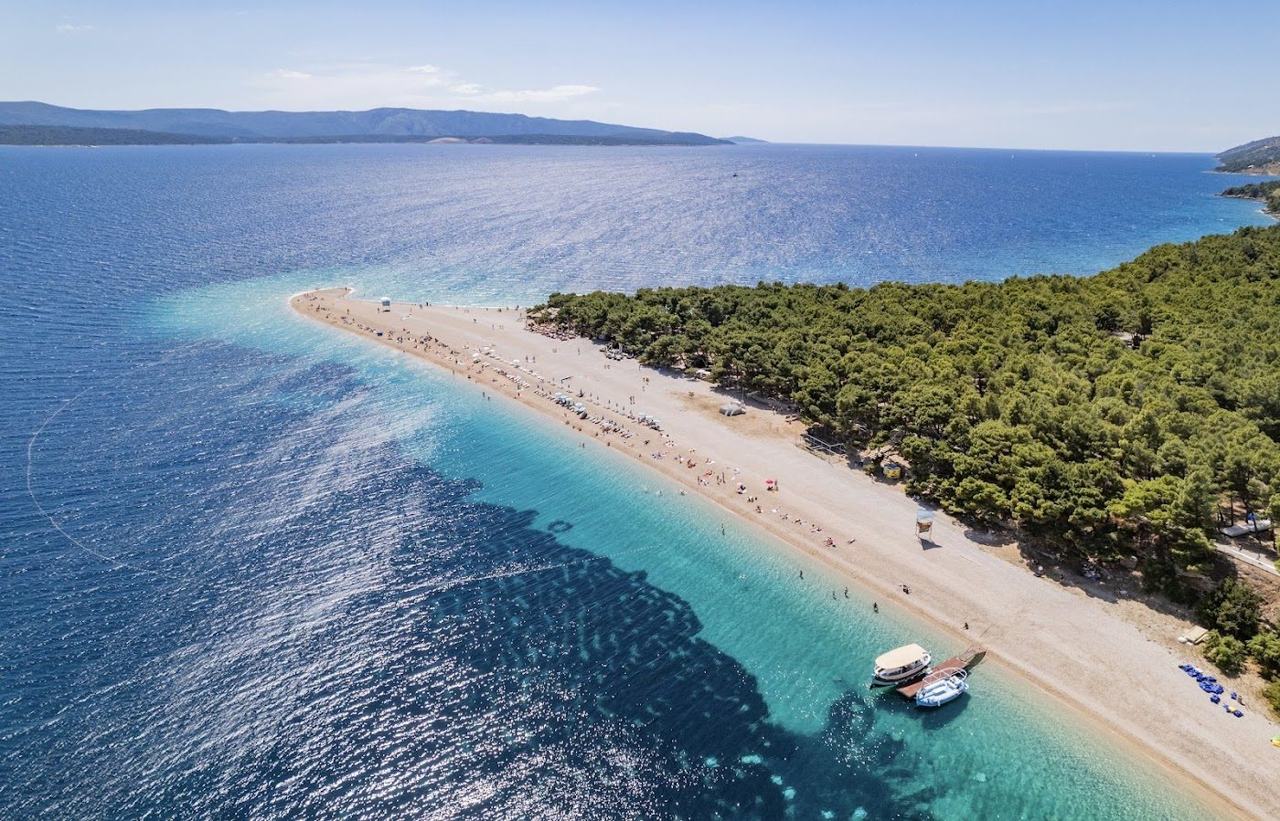
Zlatni Rat is the beach on every Croatian postcard, and for once the hype is mostly earned. Reaching out from the pine woods near Bol on the island of Brac, the golden horn is a long tongue of smooth white pebble that points into water of an almost unreal turquoise. Its party trick is real: the tip genuinely shifts direction with the prevailing wind and current, so the exact shape of the spit changes through the season, which is why it has fascinated visitors for decades.
In the water it lives up to the look. The sea is clear and clean and shelves quickly into swimmable depth off both sides of the horn, and because the spit has two faces, one of them is almost always sheltered from whichever way the wind is blowing. That same afternoon wind, the maestral that funnels through the channel between Brac and Hvar, has made Bol a genuine windsurfing and kiteboarding base, so the beach has a sporty energy alongside the sunbathers. Behind it, the pine wood gives natural shade, a real bonus on a hot Dalmatian afternoon.
The honest note is that fame has a price. In July and August Zlatni Rat is busy, the sunbeds fill, and you reach it by a walk, shuttle or boat from Bol rather than stepping straight off the road. It is pebble, not sand, and it drops into depth fast, so water shoes help and it is better for swimmers than for toddlers paddling. Come in the shoulder months or early in the day, use the sheltered side, and the most famous beach in Croatia still feels like the postcard rather than a crowd.
Clubs near this beach
Zlatni Rat is a pebble spit of beach bars, sunbed concessions and watersports rather than a single bottle service club. Named club style venues of the coast feature in our directory.
Beach bars and sunbed concessions
The spit and pine wood are served by beach bars, sunbed and umbrella hire and watersports rather than one large club, with food and drinks close to the sand. Access, rates and any minimum spend are to be confirmed.
Windsurf and watersports centres
Bol is a windsurfing and kiteboarding base, with rental and lesson centres near the beach run by independent operators. Their hours, rates and conditions are to be confirmed.
Zlatni Rat sits about two kilometres west of Bol town on the south coast of Brac, reached by a pleasant walk along the seafront, a seasonal shuttle or a short boat. Brac is reached by car or passenger ferry from Split, so most visitors come via Split and the island ferry, and conditions are typical and never guaranteed.
In summer it is busiest in the middle of the day, so arriving early or late gives you the calmest version of the spit. Bring water shoes for the pebble, use the sheltered side of the horn for swimming, and expect the afternoon wind to pick up for the windsurfers.
Not ready to book?
Keep the good shorelines coming. Shore Notes is our occasional letter on the best beaches and the clubs worth your day, sent straight to your inbox. One field, unsubscribe any time.
Reserve a day at Zlatni Rat Beach
Zlatni Rat is a public spit of bars and watersports rather than a single club beach, but tell us your date and party and we will point you to the named club style venues along the coast. No charge to enquire.
Independent and honest · 1,340 beaches ranked across 103 destinations · We answer to no resort
Common questions
Why does Zlatni Rat change shape?
The tip of the spit is made of loose pebble that the prevailing wind and current push from one side to the other, so the horn curls east or west and changes shape through the season. It is a natural process that makes Zlatni Rat unusual among Adriatic beaches.
Is Zlatni Rat sand or pebble?
Zlatni Rat is a smooth white pebble beach, not sand. The water shelves quickly into depth off both sides, so water shoes help with comfort and entry, and it suits confident swimmers more than toddlers paddling at the edge.
How do you get to Zlatni Rat from Bol?
Zlatni Rat is about two kilometres west of Bol town, reached by a walk along the seafront, a seasonal shuttle or a short boat. Brac itself is reached by car or passenger ferry from Split, so most visitors come via Split and the island ferry.
Is Zlatni Rat good for windsurfing?
Yes. The reliable afternoon maestral wind that funnels through the channel between Brac and Hvar makes Bol one of Croatia's best known windsurfing and kiteboarding bases, with rental and lesson centres near the beach run by independent operators whose rates are to be confirmed.
When is the best time to visit Zlatni Rat?
Summer from June to September brings the warmest sea, the liveliest scene and the best wind, but also the biggest crowds in July and August. Late spring and early autumn are quieter and still warm, and early mornings are calmer in peak season.