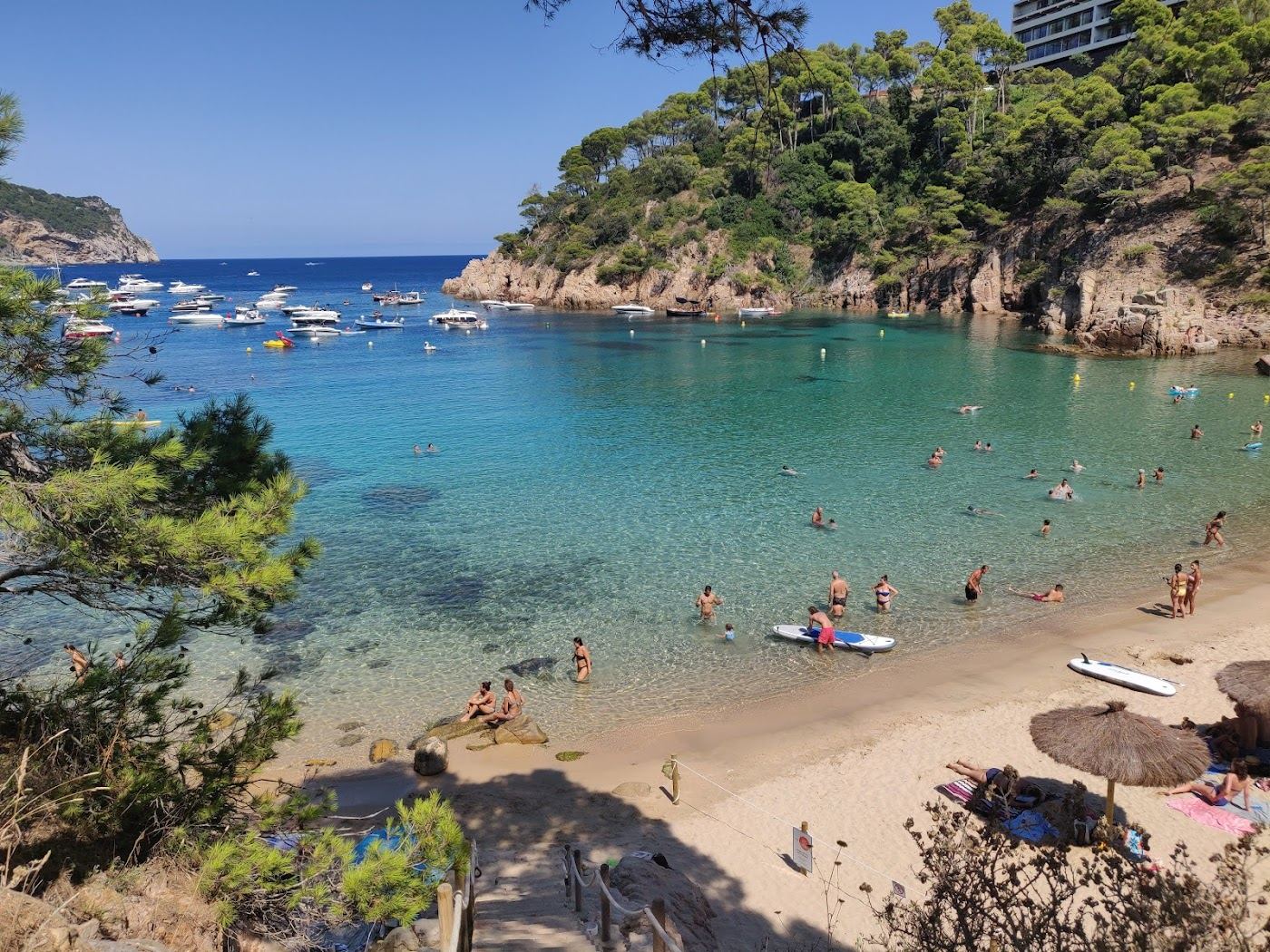
 Photo: Ferran Gascon via Google
The Best Beaches
in Costa Brava
Pine fringed coves, fishing villages and the food coast of Catalonia, ranked honestly.
The verdict
- Best forTravellers who want small turquoise coves backed by pine and a fishing village, with one of the best food regions in Spain behind the sand
- Single best spotAiguablava near Begur for the postcard cove, with Cadaques in the far north for a beach and an artist's town in one
- One thing to knowThe magic is in the small coves between Begur and Palafrugell, not the big southern resorts, so skip Lloret de Mar and drive north
Published 6 April 2026. Last reviewed 25 April 2026
The Costa Brava earned its name, the wild coast, long before the package resorts arrived, and the wildness is still there if you know where to look. This is not a coast of one long beach but of dozens of small coves, the calas, each tucked into a fold of pine and ochre rock with a scatter of fishing boats and a village behind it. The water is the clean turquoise of the northern Mediterranean, the cliffs are walkable on the old coastguard path, and the whole thing is stitched to some of the finest food in Spain. Get the geography right and it is one of the most rewarding beach coasts in Europe.
Get it wrong and you end up in the concrete. The southern end around Lloret de Mar and Blanes is where the cheap package crowd lands, and it gives the whole coast a reputation it does not deserve. The real Costa Brava begins further north, in the calas of Begur and Palafrugell and on up to the dramatic headlands of Cap de Creus and the white town of Cadaques where Dalí lived and painted. A culture wanderer reads this coast as a string of villages first and beaches second, because here the lunch, the wine and the town are as much the point as the swim. Below we rank the beaches that justify the drive, and we are honest about which are worth it and which are a trap.
Ranked, not listed
Scored on the cove, the water, the village behind it and the food within reach. Honest verdicts, the resorts flagged.
Aiguablava
The cove that defines the Costa Brava, a small bay of clear turquoise water framed by pine and pale rock near Begur, its very name meaning blue water. Sheltered and beautiful, with a parador above and the neighbouring Fornells inlet a short walk on the coast path. It is small and fills fast in summer, so come early and stay for a long seafood lunch.
Sa Riera
The largest and most relaxed of the Begur beaches, a broad sandy cove with a former fishing hamlet behind it and easy access to wilder coves north along the Cami de Ronda. Family friendly and less hectic than the tiny calas, with good seafood restaurants on the front. A fine base for exploring the Begur coast on foot.
Tamariu
The smallest and prettiest of the three Palafrugell coves, a crescent of sand and clear water hemmed by pines, named for the tamarisk trees along the front. Quieter and more intimate than its neighbours, with a handful of excellent fish restaurants right on the bay. The pick for a slow, elegant cove day with a serious lunch attached.
Llafranc
The most polished of the Palafrugell coves, an elegant bay with a palm lined promenade, a small marina and a walk up to the Sant Sebastia lighthouse for the view down the coast. Calm and clear, with a refined, slightly grown up feel and good dining on the front. Lovely at dusk when the promenade lights come on.
Calella de Palafrugell
The most characterful of the trio, a whitewashed old fishing village of arched waterfront houses and small sandy coves, where the habaneras sea shanty festival fills the front each summer. Less a single beach than a series of intimate inlets among the boats. Beautiful and atmospheric, the cove that best holds the old Costa Brava spirit.
Sa Tuna
A tiny pebble cove below Begur with a cluster of white fishermen's houses and a single small hotel, about as intimate as the coast gets. The swimming is in clear deep water off the rocks and the whole scene is gloriously low key. There is little here but a restaurant and the sea, which is exactly the point. Park above and walk down.
Platja de Castell
A rare undeveloped beach saved from the builders by a local referendum, a broad sweep of sand backed by farmland and pine near Palamos with an Iberian hill settlement above. No resort, no promenade, just a beautiful natural beach and a couple of seasonal chiringuitos. Palamos in town lands the famous red prawns, so the lunch nearby is a serious one.
Cadaques
Less a beach than a beach town, the whitewashed artist's village where Dalí lived, reached over a mountain pass and ringed by small pebble coves and the wild headland of Cap de Creus. The swimming is in clear water off the rocks and pebbles, the real draw the town, the light and the galleries. The tramuntana wind can blow hard, so pick your day.
Who it suits, who should skip
Who should skip what? If your picture of the Costa Brava is the package resort, the all day pool bar and the high rise hotel, then the southern end around Lloret de Mar and Blanes will meet that expectation and the northern calas will feel like hard work, all winding roads and small car parks. But if you came for the coast in the postcards, the turquoise cove and the white village, then Lloret is the trap and the calas of Begur and Palafrugell are the reward. Be honest with yourself about which holiday you actually want, because the two ends of this coast are almost different places.
Logistics shape the good version. The best coves are small, scattered along a twisting road, and their car parks fill by mid morning in July and August, so an early start is the difference between a parking space and a wasted drive. The Cami de Ronda, the old coastguard path that threads the cliffs, is the secret weapon, letting you walk between neighbouring coves and reach little inlets the crowds skip. The far north around Cadaques adds the tramuntana, a fierce dry wind that can ruin an exposed beach day, so keep an eye on the forecast. Conditions are typical and never guaranteed, and the coast rewards a flexible plan over a fixed one.
A beach day is also a long lunch
This is where the Costa Brava pulls ahead of prettier but plainer coasts, because behind the beaches sits one of the great larders of Spain. The Emporda plain grows superb vegetables and bottles distinctive wines, the fishing ports of Palamos and Roses land red prawns and the day's catch, and the village kitchens turn it into suquet de peix, the soupy fish stew, and arros a la cassola, the local rice. The anchovies cured along the coast at nearby L'Escala are famous across the country, and the region has produced some of the most celebrated restaurants in the world, with the city of Girona a short drive inland.
The way to travel this coast, then, is to let the lunch shape the day. Swim the morning at a quiet cala, walk a stretch of the Cami de Ronda to work up an appetite, and arrive at a village front restaurant in time for a long seafood lunch and a chilled Emporda white. Tamariu, Calella de Palafrugell and the prawn port of Palamos do this best, and even a simple chiringuito on the sand will grill the catch well. On the Costa Brava the beach and the table are not separate pleasures, they are the same day, and the traveller who treats them that way gets the most out of the coast.
The best months in Costa Brava
The Costa Brava has a classic Mediterranean season. July and August bring the warmest sea, the liveliest village fiestas and the biggest crowds and prices, with the small cove car parks full by mid morning. June and September are the sweet spot, warm water and long evenings without the squeeze, and the coastal path at its best. May and October suit walkers and food lovers more than swimmers, the sea cooler and some beach restaurants closing, while the towns stay lovely. In the far north watch for the tramuntana wind, which can blow cold and hard around Cadaques in any season.
Where to book a daybed
The Costa Brava is not a daybed and bottle service coast in the way of Ibiza or the south of France, and that suits its character. The scene here is the beach restaurant and the chiringuito, the seasonal sand bar where you settle in for a long lunch and a swim rather than a minimum spend, found on the bigger beaches like Sa Riera, Platja de Pals and around the southern resorts. Our directory keeps an honest note of where you can reserve a sunbed and a table and where the cove is simply free, so you can match the morning swim to the afternoon you want.
Book a beach club in Costa Brava
Independent and honest · 1,340 beaches ranked across 103 destinations · We answer to no resort
Before you go
Which is the best beach in Costa Brava?
For most people it is Aiguablava near Begur, a small bay of clear turquoise water framed by pine and rock that defines the postcard Costa Brava. Cadaques in the far north is the other great choice for those who want a beach with an artist's town attached. Both are calas, small coves, which is what this coast does best.
Is Lloret de Mar worth visiting for the beaches?
For the coves around it, yes, but the main town is a built up package and party resort and the headline beach is crowded and lined with concrete. The water is fine and quieter Fenals next door is better, but if you came for the beautiful Costa Brava of the brochures, drive north to the Begur and Palafrugell coves instead.
Which part of Costa Brava has the best beaches?
The central stretch between Begur and Palafrugell holds the finest coves, a string of small pine backed bays like Aiguablava, Tamariu, Llafranc and Calella de Palafrugell linked by the coastal Cami de Ronda path. The far north around Cadaques and Cap de Creus is wilder and more dramatic. The southern resorts are the busiest and least special.
Do you need a car for the Costa Brava beaches?
For the best coves, yes, as they are scattered along a winding coast and public transport is thin between the small villages. A car turns the calas into easy day trips, and the Cami de Ronda coastal path lets you walk between several neighbouring coves once you have parked. Summer parking at the popular bays fills early, so arrive in the morning.
When is the best time to visit Costa Brava beaches?
June and September give warm water, long days and lighter crowds than the packed weeks of July and August. May and October are pleasant for the coastal walks and the towns, though the sea is cooler and some beach restaurants wind down. Watch for the tramuntana wind in the far north, which can blow hard around Cadaques.
Is Costa Brava good for food?
It is one of the great food regions of Spain. The Emporda behind the coast grows superb produce and wine, the fishing villages serve suquet de peix and just landed seafood, the anchovies of nearby L'Escala are famous, and the wider area has produced some of the world's most celebrated kitchens. A Costa Brava beach day is also a serious lunch.