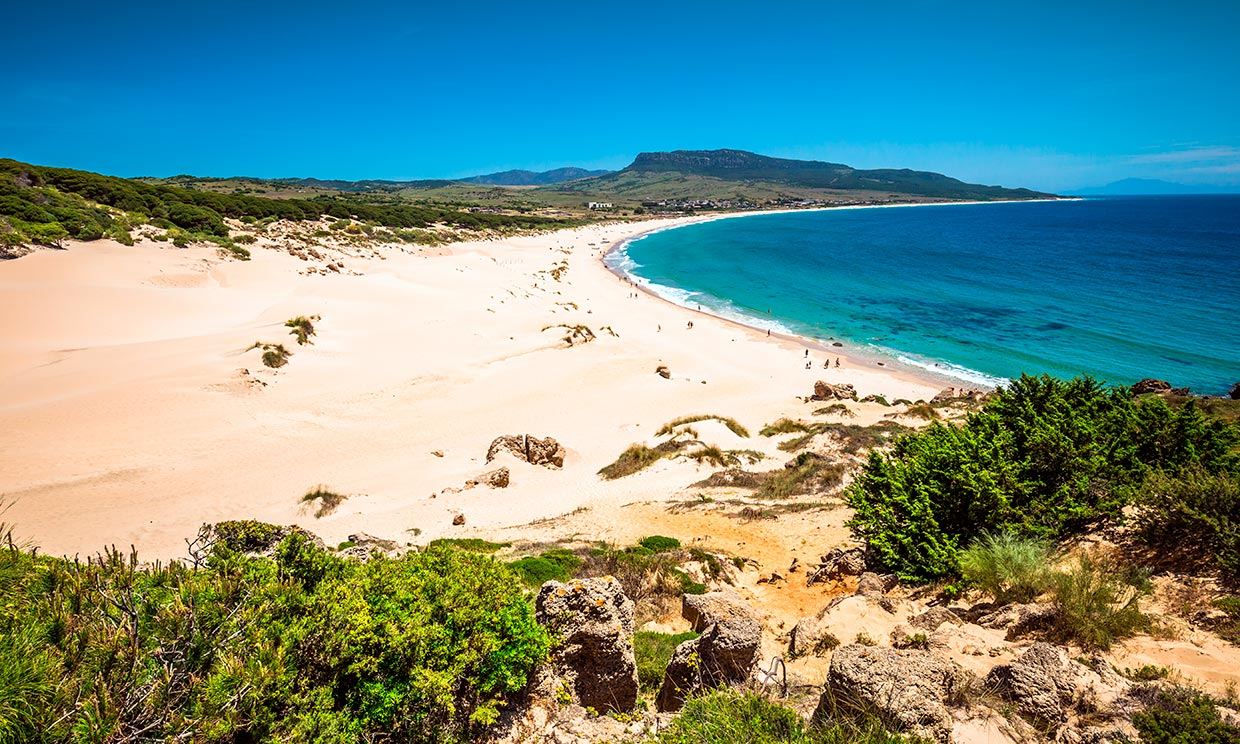
 Photo: Rogelio Angulo via Google
The Best Beaches
on the Costa de la Luz
Wild Atlantic sand, giant dunes and white towns, ranked honestly.
The verdict
- Best forTravellers who want wild Atlantic beaches, huge skies and white towns, with world class windsurf and real surf, and who do not mind the wind that defines this coast.
- Single best spotBolonia near Tarifa for its giant dune and Roman ruins, or Zahara de los Atunes for miles of untouched sand and a foodie village behind it.
- One thing to knowThis is the windy Atlantic coast of Cadiz, so check the forecast, because a strong Levante day that thrills kitesurfers can blow sand at sunbathers.
Published 31 March 2026. Last reviewed 15 May 2026
The Costa de la Luz is the coast of light, the Atlantic edge of Cadiz province that runs from the mouth of the Guadalquivir down to Tarifa and the Strait of Gibraltar, where Spain comes within sight of Africa. This is a wholly different Andalusia from the built up Costa del Sol around the corner. Here the beaches are vast and wild, the sand is pale and clean, the towns are whitewashed and low, and the wind is a constant character rather than an occasional visitor. It is a coast for travellers who want huge horizons, surf and kite, fresh tuna and sherry country behind them, rather than a marble lined resort strip.
The honest read is that the wind defines everything here, and you make your peace with it or you choose the wrong week. The same Levante that makes Tarifa the kitesurfing and windsurfing capital of Europe will, on a strong day, sandblast a family trying to sunbathe, while the cooler Poniente brings the waves the surfers love. Time it well, in the calmer shoulder weeks or on a settled day, and the reward is some of the most beautiful, least spoiled beach country in Spain, from the giant dune at Bolonia to the endless sands of Zahara. Below we rank the beaches the way you would actually use them, honest about which are wild, which are windswept and which give you a sheltered family swim.
Ranked, not listed
Scored on the setting, the sand, the water and the kind of day each one gives. Honest verdicts, the wind flagged.
Bolonia
The icon of the coast, a wild protected bay of pale golden sand backed by the towering Duna de Bolonia and the remarkable Roman ruins of Baelo Claudia, with clear Atlantic water and a handful of low key bars. It is undeveloped on purpose, beautiful and a little exposed to the wind, and the climb up the dune is worth it for the view. The most special beach on the Costa de la Luz, and a short drive from Tarifa.
Zahara de los Atunes
Miles of virtually untouched golden sand running south from a small fishing village towards Cabo de Plata, sleepier and more spacious than the Conil beaches and famous for its food, built on the prized local tuna. It is the choice for a long, uncrowded walk on the sand and a memorable dinner afterwards, with a relaxed, slightly bohemian feel. Open to the Atlantic, so expect waves and some wind, and bring a windbreak on a Levante day.
Valdevaqueros
A dramatic wide bay west of Tarifa, dominated by its own great migrating dune and lined with cool, low slung beach bars built for board sports. This is one of the prime windsurfing and kitesurfing beaches in Europe, alive with sails on a breezy day, which is its glory and its catch, since the same wind that thrills the boards is too much for a still sunbathing day. Come for the energy and the kit, and pick a calmer beach if you want stillness.
El Palmar
The surf beach of the Costa de la Luz, a long straight strand of white sand with crashing Atlantic waves, surf hire shacks and a string of beach bars that turn lively at sundown with music and a young crowd. It is the place to learn to surf or to watch the swell with a drink as the sun drops, easygoing and a little scruffy in the best way. Better for surf, sunset and atmosphere than for calm swimming with small children.
La Barrosa
The big, well organised family beach of the coast, a long blue flag sweep of fine sand near Sancti Petri backed by pine and low resort development, with full facilities and gentler, more sheltered swimming than the open Tarifa beaches. It is the most comfortable choice for a family day with everything to hand, busier and more built up than the wild beaches but reliably easy. A sensible base near Chiclana for an unfussed holiday.
Canos de Meca
A bohemian, low rise village beach below the Cape Trafalgar lighthouse, with freshwater springs in the cliffs, pine above the sand and a relaxed, alternative mood that has drawn a free spirited crowd for decades. There are quieter and clothing optional stretches towards the cape, so check the spot before you settle. Characterful and scenic rather than polished, a good pairing with a sunset at the lighthouse.
Los Lances
The huge flat sandy beach right at Tarifa, the everyday playground of the kite and windsurf scene, with a shallow lagoon at the river mouth and sails filling the sky on a windy day. It is long and open with room for everyone, but it is also one of the windiest spots on a coast known for wind, so it is paradise for boards and a challenge for a quiet sunbathe. Come for the sport and the spectacle, with the town on your doorstep.
Cala del Aceite
A small, sheltered cove just west of Conil, tucked behind low cliffs and pine with calmer, more protected water than the open beaches, which makes it a gentle pick for families and a welcome shelter on a windy day. It has a car park and a beach bar close by and fills quickly in summer because the calm is rare on this coast. Come early for a spot, and treat it as the sheltered alternative when the wind is up elsewhere.
Who it suits, who should skip
Who should skip the Costa de la Luz? Anyone who wants warm, calm, Mediterranean water and a polished resort scene of beach clubs and promenades will find this coast too wild and too windy, and would be happier on the Costa del Sol or the Balearics. The Atlantic here is cooler, the waves are real, the wind is frequent and the development is light, so the visitor expecting a sheltered swim off a manicured strip will feel the coast is raw. That rawness is precisely the appeal for everyone else, but it is the wrong choice if calm sunbathing is the whole point.
The trap here is not an overrated beach but an underestimated wind. Travellers arrive picturing endless golden sand, which is real, and forget that the Levante can blow hard enough to send that sand stinging across their legs and snatch the umbrella away. The fix is simple, check the wind forecast, keep the sheltered options such as Cala del Aceite and the resort end of La Barrosa for the breezy days, and save the wide open beaches at Tarifa for when the air is calm or when you have come to ride it. Get that right and the coast rewards you with the giant dune at Bolonia, the Roman ruins of Baelo Claudia, the long empty sweep of Zahara, the surf and sundown bars of El Palmar and some of the best seafood and white town country in Spain. It is one of the last genuinely wild beach coasts in western Europe, and it earns its name.
The best months on the Costa de la Luz
The coast has a long warm season, but the wind matters as much as the temperature. July and August are hottest, busiest and bring Spanish holiday crowds to the towns, with a strong Levante possible on any day. Late spring and early autumn, around May, June and September, are the sweet spot for most visitors, with warm days, lighter crowds and a better chance of calmer air for a beach day. Windsurfers and kitesurfers, by contrast, chase the windy months and watch the Tarifa forecast closely. Whenever you come, the Atlantic stays cooler than the Mediterranean, so pack for sun, wind and a livelier sea, and treat conditions as typical rather than guaranteed.
Where to book a daybed
The Costa de la Luz does beach bars rather than the marble and minimum spend theatre of the resort coasts, which suits its easygoing, windswept character. The cool chill out bars at Valdevaqueros and the lively sundown spots at El Palmar set the tone, the towns of Tarifa, Zahara and Conil keep the food and the drinks honest, and the resort end near Sancti Petri adds a more organised lounger scene. Specific venues, opening status and any minimum spend change with the season, so we mark anything we cannot confirm as to be confirmed and let each venue give you the real figure when you enquire. Our directory will compare them by beach and mood as the cluster fills out.
Book a beach club on the Costa de la Luz
Independent and honest · 1,340 beaches ranked across 103 destinations · We answer to no resort
Before you go
Which is the best beach on the Costa de la Luz?
Bolonia near Tarifa is the standout, a wild protected sweep of golden sand backed by a giant dune and the Roman ruins of Baelo Claudia, with clear Atlantic water. For endless untouched sand and a foodie village, Zahara de los Atunes is its rival. The right pick depends on whether you want raw natural drama or miles of open beach with good restaurants behind it.
Why is the Costa de la Luz so windy?
This is the Atlantic coast of Cadiz beside the Strait of Gibraltar, where two winds rule, the strong dry Levante off the land and the cooler onshore Poniente. That wind is exactly why Tarifa is the kitesurfing and windsurfing capital of Europe. It thrills the boards and keeps the heat down, but on a strong Levante day the sand can blow, so check the forecast before a sunbathing day.
Is the Costa de la Luz better than the Costa del Sol?
It depends on what you want. The Costa de la Luz is wilder, windier and far less developed, all Atlantic surf, huge dunes, white towns and long empty sand, while the Costa del Sol is calmer, warmer water, built up and resort led. For nature, surf and authenticity choose the Costa de la Luz, and for sheltered Mediterranean swimming and a polished resort scene choose the Costa del Sol.
Can you swim on the Costa de la Luz?
Yes, but it is the Atlantic, so the water is cooler and livelier than the Mediterranean, with real waves and the odd current on the open beaches. Sheltered spots such as Cala del Aceite near Conil and the resort sands of La Barrosa are gentler, while El Palmar and the Tarifa beaches get surf and wind. Always read the flags and the conditions, since these are typical and never guaranteed.
When is the best time to visit the Costa de la Luz?
Late spring and early autumn, roughly May, June and September, give warm days, lighter crowds and a better chance of calmer winds than high summer. July and August are hottest and busiest, and a strong Levante can blow on any summer day. For windsurfers the windy months are the draw, while sunbathers prefer the calmer shoulder weeks. Conditions are typical and never guaranteed.