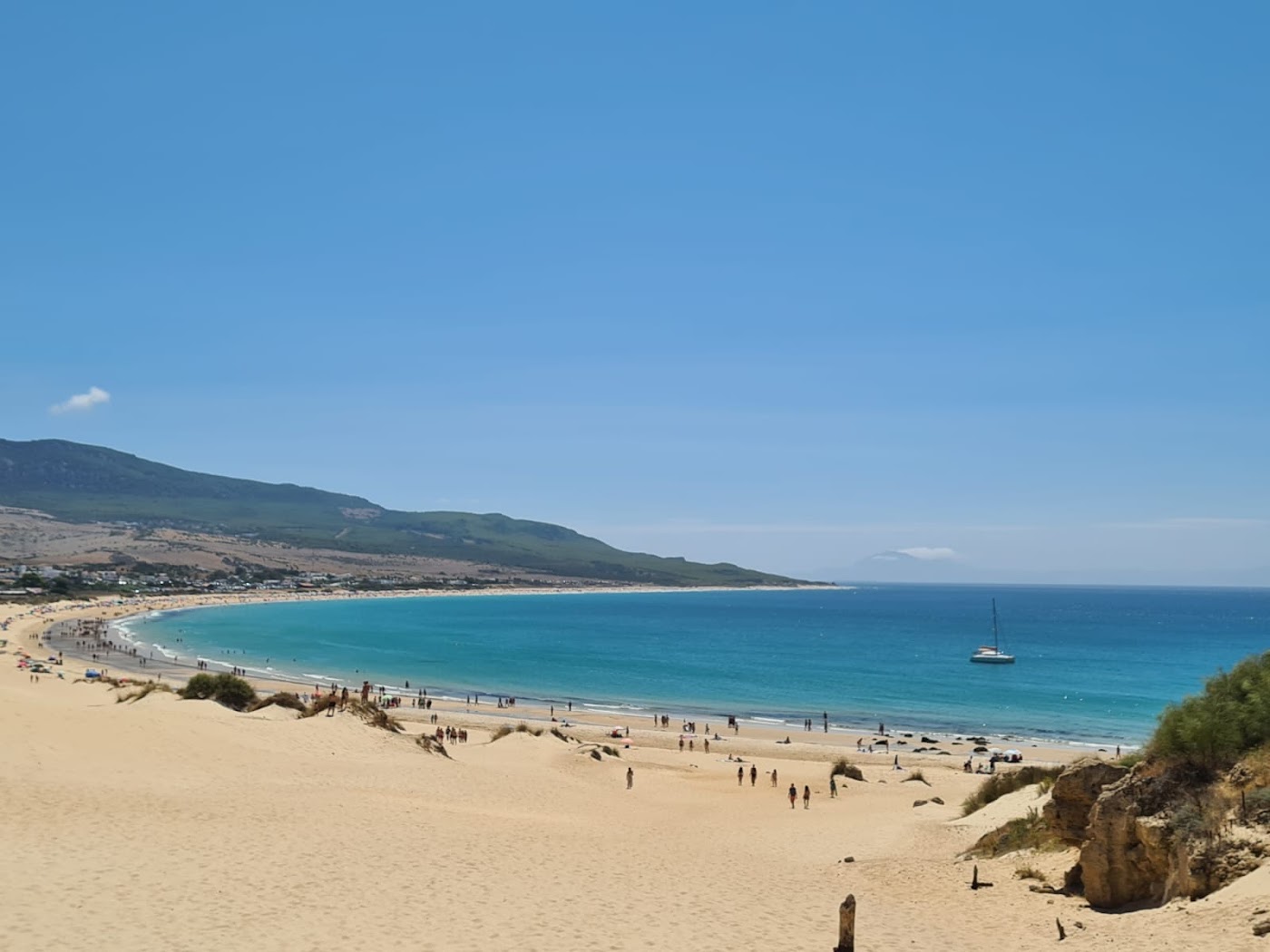
 Photo: Micaela Barrio via Google
When to Go to the Costa de la Luz
Reading the Atlantic light, the Levante wind and the quiet weeks.
The verdict
- Best forTravellers who want long, wild Atlantic beaches and a warmer, drier shoulder season than the rest of Spain.
- Top pickJune and September, for warm sun, swimmable sea and far lighter crowds than August.
- One thing to knowThe Levante wind off the Strait of Gibraltar shapes everything near Tarifa, cooling the air and feeding the kitesurfers.
Published 2 March 2026. Last reviewed 28 May 2026
The Costa de la Luz earns its name. This is the Atlantic coast of Andalusia, where the light is whiter and cleaner than on the Mediterranean side, the beaches run long and pale toward the dunes, and the wind is part of the character rather than a flaw. Choosing your week here is less about avoiding rain and more about reading the sea temperature and the wind, since both run cooler and stronger than most Spanish coasts.
High summer, July and August, is hot, bright and busy, peaking in August when Spanish families fill the beach towns of Cadiz and Huelva. The sea is at its most swimmable, the towns hum late into the evening, and the dunes at Bolonia and the wild sands toward Tarifa look their best under the strong sun. The trade off is heat, crowds and prices, and on a Levante day the wind can flick stinging sand across exposed beaches.
The shoulder weeks are where this coast quietly excels. June and September keep the warmth and the swimmable water but shed much of the crowd, and the light softens into something painterly across the white villages inland. Spring and autumn proper, May and October, are glorious for walking, towns and surf, with the sea on the cool, fresh side. Below is a month by month read, then the months that most reward or most test a visit, all of it typical rather than guaranteed.
Month by month at a glance
| Month | Air | Sea | Wind | Crowd | Verdict |
|---|---|---|---|---|---|
| January | Cool | Cool | Variable | Low | Quiet and fresh, for white villages and long walks |
| February | Cool | Cool | Variable | Low | Mild bright spells, very quiet beaches |
| March | Mild | Cool | Variable | Low | Spring warming, lovely light, sea still brisk |
| April | Mild | Cool | Variable | Low | Warm days for towns and surf, cool swimming |
| May | Warm | Cool | Variable | Medium | Warm and bright, beaches waking up, good value |
| June | Warm | Mild | Breezy | Medium | A sweet spot, warm sun and swimmable sea, lighter crowds |
| July | Hot | Warm | Breezy | High | Hot and lively, the Levante can blow strong |
| August | Hot | Warm | Breezy | High | Peak heat and crowds, warmest sea, book ahead |
| September | Warm | Warm | Breezy | Medium | The other sweet spot, warm water and easing crowds |
| October | Mild | Mild | Variable | Low | Soft autumn light, good value, sea cooling |
| November | Mild | Cool | Variable | Low | Quiet and fresh, better for towns than beaches |
| December | Cool | Cool | Variable | Low | Calm low season, mild bright days between fronts |
When each month earns its place
June. June is the connoisseur's choice. The sun is reliably warm, the Atlantic has climbed to a swimmable temperature, and the beaches are open and uncrowded before the Spanish holidays land. The light is at its cleanest, the dunes glow pale gold, and prices have not yet hit their August peak. For most travellers it is the best week on the calendar.
September. September runs June a close second and arguably beats it for warm water, since the sea holds the summer's heat. The crowds thin as Spanish families head home, the towns relax, and the low afternoon light flatters the long beaches and the white hill villages inland. Pack a layer for breezy evenings and accept the odd windy day.
August. August is the coast at full tilt, hot and sociable, with the warmest sea and the busiest beach towns. It is wonderful for atmosphere and family energy but demands early booking and patience with crowds. Near Tarifa the Levante wind can blow hard for days, brilliant for kitesurfers and trying for sunbathers, so pick your beach with the forecast in mind.
October. October is the quiet, painterly close to the season. Days stay mild and the light turns golden, ideal for walking the dunes, exploring Cadiz and touring the white villages. The sea is cooling and the wind is less predictable, so it leans more toward sightseeing than long swims, with excellent value as the reward.
Get the Costa de la Luz beach calendar
Independent and honest · 1,340 beaches ranked across 103 destinations · We answer to no resort
Before you go
What is the best month to visit the Costa de la Luz?
June and September are the sweet spots, with warm sun, swimmable Atlantic water and lighter crowds than midsummer. July and August are hottest and busiest, especially with Spanish holidaymakers in August. May and October are lovely for walking and sightseeing, with the sea on the cool side.
What is the Levante wind on the Costa de la Luz?
The Levante is a strong, dry easterly wind that funnels through the Strait of Gibraltar, felt most fiercely around Tarifa at the southern tip. It cools the air and can sandblast exposed beaches, which is exactly why Tarifa is a kitesurfing capital. The gentler westerly Poniente brings calmer beach days.
Is the sea warm enough to swim on the Costa de la Luz?
This is the Atlantic, so the water runs cooler and fresher than the Mediterranean down the road. It is most comfortable for swimming from late June to September, warmest in August and early September. In spring and autumn it can feel bracing, and the wind chill on a Levante day makes it cooler still. Conditions are typical and never guaranteed.
When is the cheapest time to visit the Costa de la Luz?
Late spring and autumn, broadly May, June, late September and October, offer the best balance of value and weather, with warm days and softer prices than the August peak. Winter is cheapest of all but quiet and cooler, better suited to walking, towns and white village trips than to beach days.
Is the Costa de la Luz windy?
It can be, particularly toward Tarifa and Cadiz where the Levante and Poniente winds blow. That wind is a gift for kitesurfers and windsurfers and keeps the summer heat comfortable, but it can also stir up sand on exposed beaches. Sheltered coves and the lee of headlands stay calmer on breezy days.