The verdict on Chwaka
- Who it suitsFor travellers drawn to authentic village life, birdlife and the biggest tides on the island, not for anyone whose main goal is open water swimming and sunbathing.
- Best spotA low tide walk on the vast exposed flats with local gleaners, or a Chwaka Bay boat trip into one of the largest mangrove forests on Unguja.
- One thing to knowThis is the most tidal bay in Zanzibar, so the sea retreats well over a kilometre and the water is often cloudy with stirred sediment.
Published 14 February 2026. Last reviewed 19 May 2026
Chwaka is the beach to understand before you go, because it is easy to arrive expecting a swimming bay and leave puzzled. Sitting on the central east coast about twenty kilometres from Stone Town, it fronts the largest, most tidal bay on the island, a place of fishing boats, mangroves and unhurried village life rather than turquoise lounging. Set your expectations correctly and Chwaka is rewarding, set them wrong and it can disappoint.
The tide here is the biggest in Zanzibar. At low water the sea slides out well over a kilometre, exposing vast pale flats where villagers walk far out to glean octopus, fish and shellfish, an everyday scene that is genuinely fascinating to watch. The flip side is the water itself, which is often cloudy because those strong tides keep stirring up sediment and seagrass, so this is simply not a clear, reliable swimming beach the way the coasts to the north and south are.
What Chwaka does have is depth of a different kind. The bay holds the largest single mangrove forest on Unguja, a rich nursery for fish and a fine place for a boat trip or a guided walk, with birdlife and a working fishing fleet that has changed little in generations. It is a window into how this coast actually lives, and for travellers who value that over a postcard swim, it is well worth a few hours.
So here is the honest steer. If your priority is swimming, treat Chwaka as a cultural stop and head a short drive up the coast to Pongwe or Uroa for clear, calm water, or south to Michamvi for sand and sunset. If your priority is authenticity, mangroves and the spectacle of the great tide, come to Chwaka with an open mind. For organised daybeds and verified spend bands on the swimming coasts, use our Zanzibar beach clubs directory.
Clubs on and near Chwaka
Chwaka is a fishing and mangrove bay with no beach clubs on the sand, and we never invent venues, prices or status. For daybeds and verified spend bands on the calmer swimming coasts, use the Zanzibar beach clubs directory.
Fishing boats and village shore
The bay front is a busy working shoreline of dhows and small boats, liveliest as crews come and go with the tide, a window into everyday island life.
Mangrove flats and bay
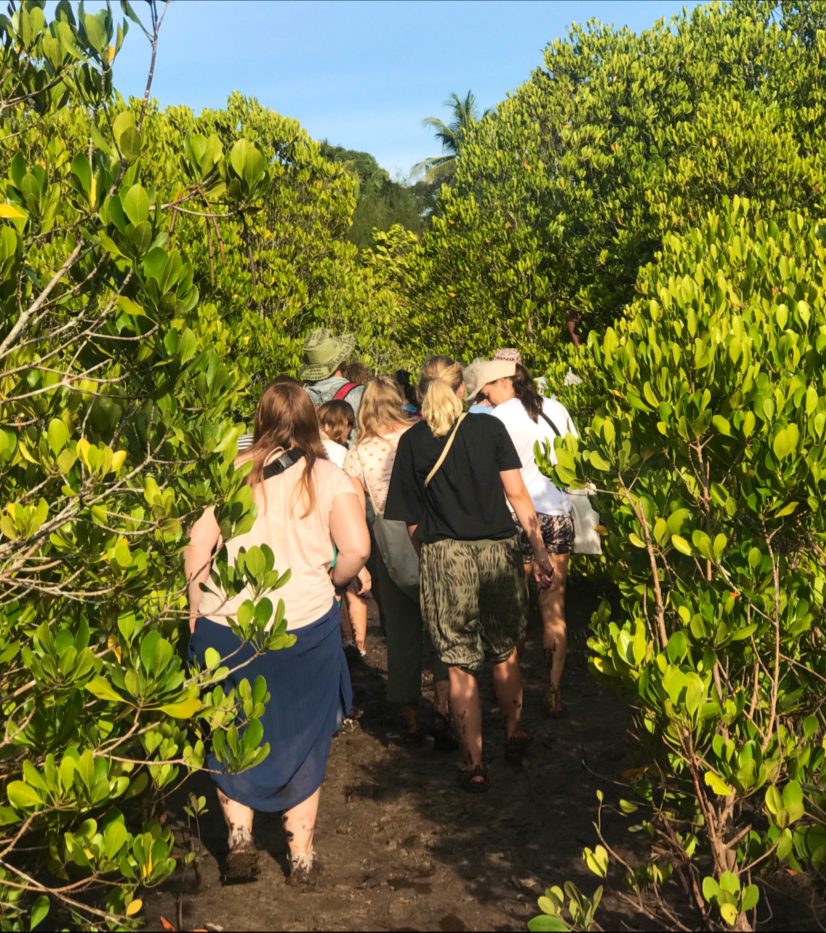
Behind and around the bay lies the largest mangrove forest on Unguja, best seen on a boat trip or a careful low tide walk with a local guide.
Chwaka, Unguja, Zanzibar
Chwaka lies on the central east coast, about twenty two kilometres and under an hour by road from Stone Town. Most visitors arrive by taxi or private transfer, often pairing it with the mangroves or a drive on to the east coast swimming beaches.
Bring water, sun cover and small cash, and consider a local guide for the mangroves and the tide flats. Time a flats walk for low tide and a boat trip for higher water, dress modestly in the village, and treat the working shoreline with respect.
Not ready to book?
Keep the good shorelines coming. Shore Notes is our occasional letter on the best beaches and the clubs worth your day, sent straight to your inbox. One field, unsubscribe any time.
Reserve a daybed near Chwaka
Send your details and we will help arrange a beach club or daybed booking on the clearer swimming coasts near Chwaka. We confirm current minimum spend and availability with the venue before you commit. Nothing is charged here.
Independent and honest · 1,340 beaches ranked across 103 destinations · We answer to no resort
Chwaka FAQ
Can you swim at Chwaka Beach?
Not easily. Chwaka sits on the most tidal bay in Zanzibar, so at low tide the sea retreats well over a kilometre and the water is often cloudy from stirred sediment. For clear, reliable swimming, nearby Pongwe or Uroa are far better.
Why is Chwaka Bay special?
It holds the largest single mangrove forest on Unguja and some of the biggest tides on the island, which makes it a rich nursery for fish and a fine spot for boat trips, birdlife and authentic village life rather than beach lounging.
What is there to do at Chwaka?
Walk the vast low tide flats, watch the fishing fleet work the bay, take a mangrove or bay boat trip, and soak up an unhurried village that sees few tourists. It rewards curiosity more than a towel and a swimsuit.
Where should I swim near Chwaka?
Head a little up the east coast to Pongwe or Uroa for clearer, calmer swimming, or south to Michamvi for a mix of sand and sunset. Each is an easy drive from Chwaka and far better for time in the water.
When is the best time to visit Chwaka?
The dry seasons of June to October and December to February bring the most settled weather for walking the flats, boating the mangroves and watching birds, with calmer skies and gentler conditions overall.