The verdict on Grand Anse
- Who it suitsFor cyclists, walkers and confident sea lovers who want the wild, dramatic side of La Digue away from the famous postcard coves.
- Best spotThere is no club on the sand. Simple kiosks and takeaways sit near the beach at times, but the polished daybeds belong to hotels back near the village.
- One thing to knowThere is no protecting reef and the currents can be strong, especially in the south east season, so swimming is often unsafe and should be judged with care.
Published 5 February 2026. Last reviewed 17 March 2026
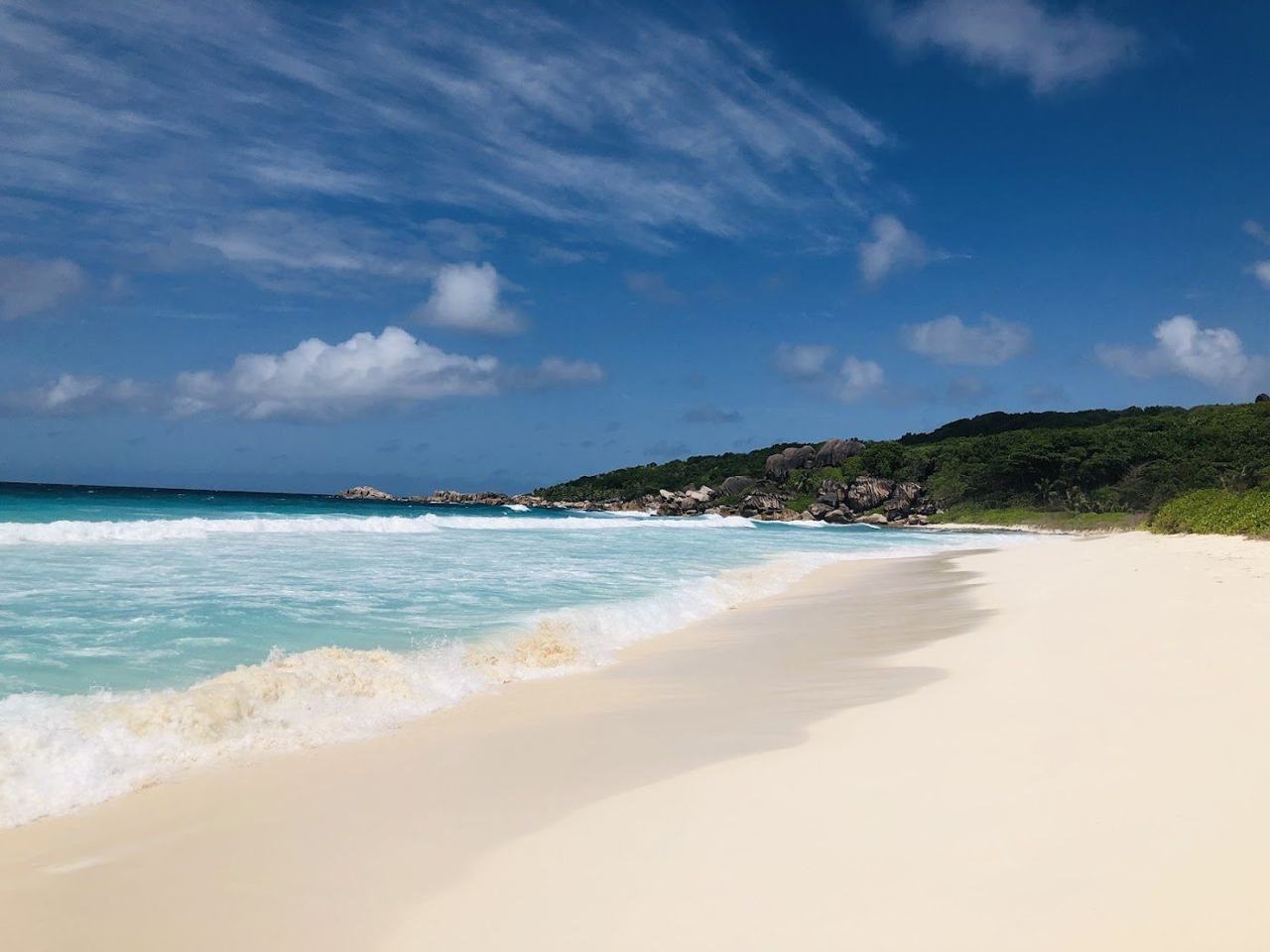
Grand Anse is the other face of La Digue, the wild one. While Anse Source d'Argent on the west side draws the crowds with its sheltered boulders, Grand Anse on the south east coast is a wide, powerful, open beach that feels a world away. You reach it by riding a bicycle across the island from the jetty, a flat then climbing route through the interior that ends with the sea opening up in front of you, big and loud and often almost empty.
It is genuinely beautiful, with a long sweep of white sand backed by granite hills, but it comes with a serious caveat. There is no fringing reef here, so the ocean arrives unbroken, and the surf and rip currents can be strong and dangerous. This is one of the beaches in Seychelles where swimming is often not safe, particularly during the south east season when the swell is at its largest, and there is no lifeguard cover to rely on. Many visitors come to walk, photograph and watch the waves rather than to swim.
Facilities match the wild character, which is to say there are few. You may find a simple kiosk or takeaway near the beach at busier times, but there is no daybed club and no reliable shade beyond the trees at the back. The polished beach service on La Digue stays near the village and the hotels on the calmer west side, so Grand Anse is a bring your own water and snacks kind of place, which is part of why it stays so unspoiled.
Treat Grand Anse as the adventurous half of a La Digue day. Ride out, walk the sand, watch the surf and feel the open ocean, then return to the sheltered side for a swim. Continue on the path and you can reach the quieter neighbouring bays of Petite Anse and Anse Cocos on foot. For organised daybeds and clubs near the village, with current spend bands, our Seychelles beach clubs directory is the place to look.
Clubs on and near Grand Anse
There is no club on the sand at Grand Anse. At busier times a simple kiosk or takeaway may appear near the beach, but the polished daybeds and table service belong to hotels back near the village on the calmer side of La Digue. For organised clubs and current spend bands, use the Seychelles beach clubs directory.
Seasonal kiosk near the beach
A simple takeaway or kiosk that may operate near the sand at busier times, offering drinks and snacks rather than daybed service.
Public wild sand at Grand Anse
The open beach itself, free and dramatic, with strong surf and no daybed service, used mostly for walking, photos and watching the waves.
Grand Anse, La Digue, Seychelles
Grand Anse sits on the south east coast of La Digue, reached by bicycle or on foot from the main jetty at La Passe along a route that runs flat through the interior before a climb over to the far coast. La Digue connects to Praslin by a short ferry, and Praslin to the main island of Mahe by fast catamaran and short flights.
Hire a bicycle at the jetty, the standard way to cross the island, and allow time for the climb. Bring plenty of water and snacks because facilities are minimal, keep well clear of the water when the surf is up, and consider walking the coastal path on to the neighbouring bays if conditions and time allow.
Not ready to book?
Keep the good shorelines coming. Shore Notes is our occasional letter on the best beaches and the clubs worth your day, sent straight to your inbox. One field, unsubscribe any time.
Reserve a daybed near Grand Anse
Send your details and we will help arrange a beach club booking near Grand Anse. We confirm current minimum spend and availability with the venue before you commit. Nothing is charged here.
Independent and honest · 1,340 beaches ranked across 103 destinations · We answer to no resort
Grand Anse FAQ
Can you swim at Grand Anse on La Digue?
Often not safely. There is no protecting reef, so surf and rip currents can be strong and dangerous, particularly in the south east season, and there is no reliable lifeguard. Many visitors walk and watch the waves rather than swim.
How do you get to Grand Anse on La Digue?
By bicycle or on foot from the jetty at La Passe, along a route that runs flat through the interior then climbs over to the south east coast. Hiring a bicycle at the jetty is the standard way to cross the island.
Are there beach clubs at Grand Anse?
No. At most a simple seasonal kiosk may appear near the sand. The polished daybeds and service belong to hotels back near the village on the calmer side of the island. See our Seychelles beach clubs directory for options.
How is Grand Anse different from Anse Source d'Argent?
Grand Anse is wild, open and powerful with strong currents, while Anse Source d'Argent on the west side is sheltered, shallow and famous for its boulders. They show the two very different faces of La Digue.
When is the best time to visit Grand Anse?
The calmer drier months from around April to October are safer for the water and pleasant for the ride out. The south east season brings the roughest sea, which is dramatic to watch but more dangerous to enter.