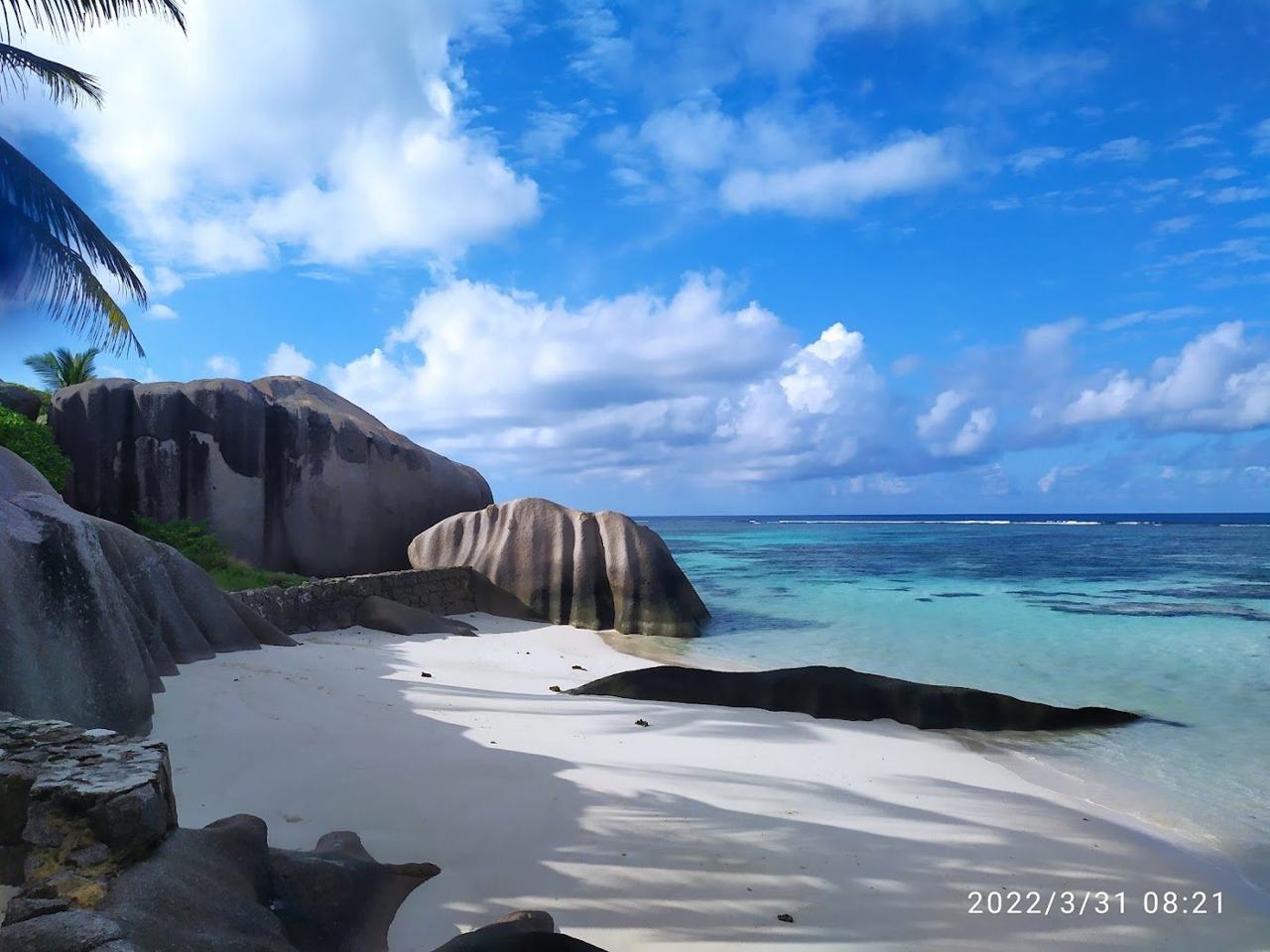
Anse Source d'Argent
The verdict on Anse Source d'Argent
- Who it suitsFor photographers and slow wanderers who want the most sculptural beach in Seychelles, and families happy with shallow paddling rather than real swimming.
- Best spotThere is no beach club on the sand. You reach the beach through L'Union Estate, which has a paid entry, and the cafe and stalls sit near the estate rather than on the beach.
- One thing to knowThe water is shallow and the famous coves get busy, so arrive early or come late in the day for the soft light and the calmer crowds.
Published 3 February 2026. Last reviewed 7 March 2026
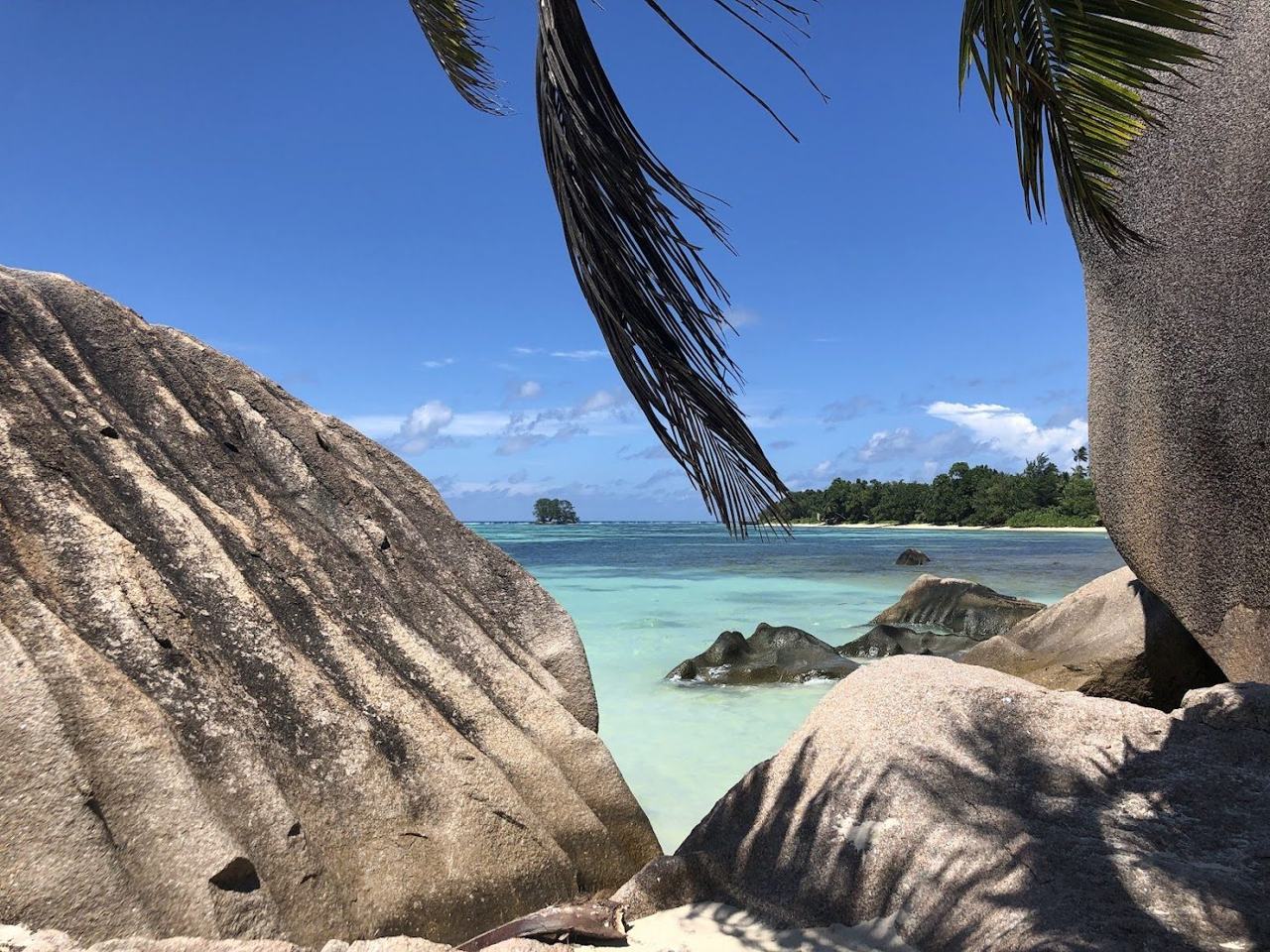
Anse Source d'Argent is the beach you have already seen, even if you have never been to Seychelles. The pink tinged granite boulders, the mirror flat lagoon and the leaning palms have appeared on more posters and adverts than any other stretch of these islands. It sits on the south west tip of La Digue, the small slow island where the ox cart and the bicycle still beat the car, and the approach itself is part of the charm.
Here is the honest part. It is genuinely beautiful and worth the trip, but it is not the swimming beach many people expect. The reef sits close in and the lagoon is shallow, so at low tide you are wading through ankle deep water across sand and rock rather than diving into open sea. That shallowness is exactly what makes the water so still and so photogenic, but if you came for long swims you will be happier at Grand Anse or over on Praslin at Anse Lazio.
The other thing to plan around is access and crowds. You reach the beach by walking through L'Union Estate, an old coconut and vanilla plantation that charges an entry fee, then following the path between the boulders. Tour groups and day trippers from Praslin arrive through the middle of the day, so the small coves can feel busy. Go early after the estate opens, or stay into the late afternoon when the light turns gold and most visitors have gone.
Treat it as a photographer's beach and a wanderer's beach rather than a lounging beach. Climb between the sculpted rocks, find a quiet cove further along, and let the colours do the work. There is no beach club on the sand and no table service among the boulders, so bring water and sun cover, and look to the estate cafe for a drink. For organised daybeds and clubs you will be routed to the wider La Digue and Praslin options in our Seychelles beach clubs directory.
Clubs on and near Anse Source d'Argent
There is no beach club on the sand at Anse Source d'Argent. You enter through L'Union Estate, where a cafe and craft stalls sit near the path, and the polished daybeds and table service belong to hotels elsewhere on La Digue. For current options with minimum spend, use the Seychelles beach clubs directory.
L'Union Estate entry and cafe
The plantation grounds you pass through to reach the beach, with a simple cafe and craft stalls near the path rather than on the sand.
Public coves at Anse Source d'Argent
Free to use once inside the estate, the string of small granite framed coves that people come to photograph and wade in.
Anse Source d'Argent, La Digue, Seychelles
Anse Source d'Argent sits at the south west of La Digue, reached from the main jetty at La Passe by bicycle or a short taxi ride to L'Union Estate, then a flat walk through the grounds. La Digue itself is a short ferry hop from Praslin, which in turn connects to the main island of Mahe by fast catamaran and short flights.
Hire a bicycle at the jetty, the classic way to move around the island, and bring cash for the estate entry. Pack water, sun protection and a camera, and aim for the first hour after opening or the last hour of light if you want the boulders close to yourself.
Not ready to book?
Keep the good shorelines coming. Shore Notes is our occasional letter on the best beaches and the clubs worth your day, sent straight to your inbox. One field, unsubscribe any time.
Reserve a daybed near Anse Source d'Argent
Send your details and we will help arrange a beach club booking near Anse Source d'Argent. We confirm current minimum spend and availability with the venue before you commit. Nothing is charged here.
Independent and honest · 1,340 beaches ranked across 103 destinations · We answer to no resort
Anse Source d'Argent FAQ
Is Anse Source d'Argent worth visiting?
Yes, for the scenery it is one of the most striking beaches anywhere, with sculpted granite boulders and a calm clear lagoon. Just go knowing it is a photographer's beach with shallow water rather than a long swimming beach.
Is there an entry fee for Anse Source d'Argent?
Yes. You reach the beach through L'Union Estate, an old plantation that charges an entry fee for its grounds, so bring some cash for the gate.
Can you swim at Anse Source d'Argent?
You can paddle and wade, and the lagoon is calm and clear, but the reef sits close in and the water is shallow, so it is not ideal for proper swimming. Grand Anse on La Digue and Anse Lazio on Praslin are better for that.
Are there beach clubs at Anse Source d'Argent?
No beach club sits on the sand. A cafe and craft stalls are near the estate path, and daybeds and table service belong to hotels elsewhere on La Digue. See our Seychelles beach clubs directory for options.
When is the best time to visit Anse Source d'Argent?
Come early after the estate opens or late in the afternoon to avoid the midday day trip groups and to catch the soft light on the boulders. The drier calmer months from around April to October suit it best.