Pink Beach
Best for. Travellers chasing a wild, remote cove and a quiet swim, who will take the pink sand as a soft bonus rather than the main show.
Best spot. The waterline at the cove’s eastern end in early light, where the wet sand holds the most colour and the cliffs catch the sun.
Know this. The pink is real but gentle, and the famous photos are heavily filtered, so come for the setting and you will not be let down.
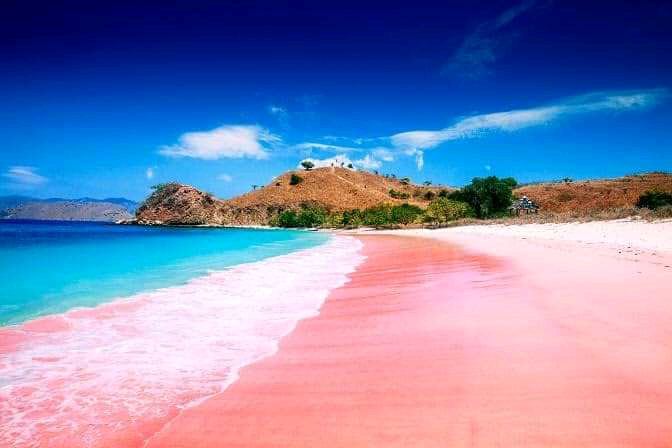
Pink Beach, or Pantai Tangsi to use its local name, is one of only a handful of beaches on earth where crushed red coral tints the sand, and that rarity is what fills the feeds. The honest read, told plainly, is that the colour is real but soft. This is a blush, not a billboard. Most of the images you have seen lean hard on saturation and warm filters, and the gap between that picture and the cove in front of you is the first thing to make peace with. Look closely and the pink is there, threaded through the white in pale ribbons, deepest where a wave has just drawn back and left the sand wet and glowing. In the flat glare of midday it can read almost cream. Come in the low gold of early morning or the last hour before dusk and the whole cove warms, and the photograph finally matches the place.
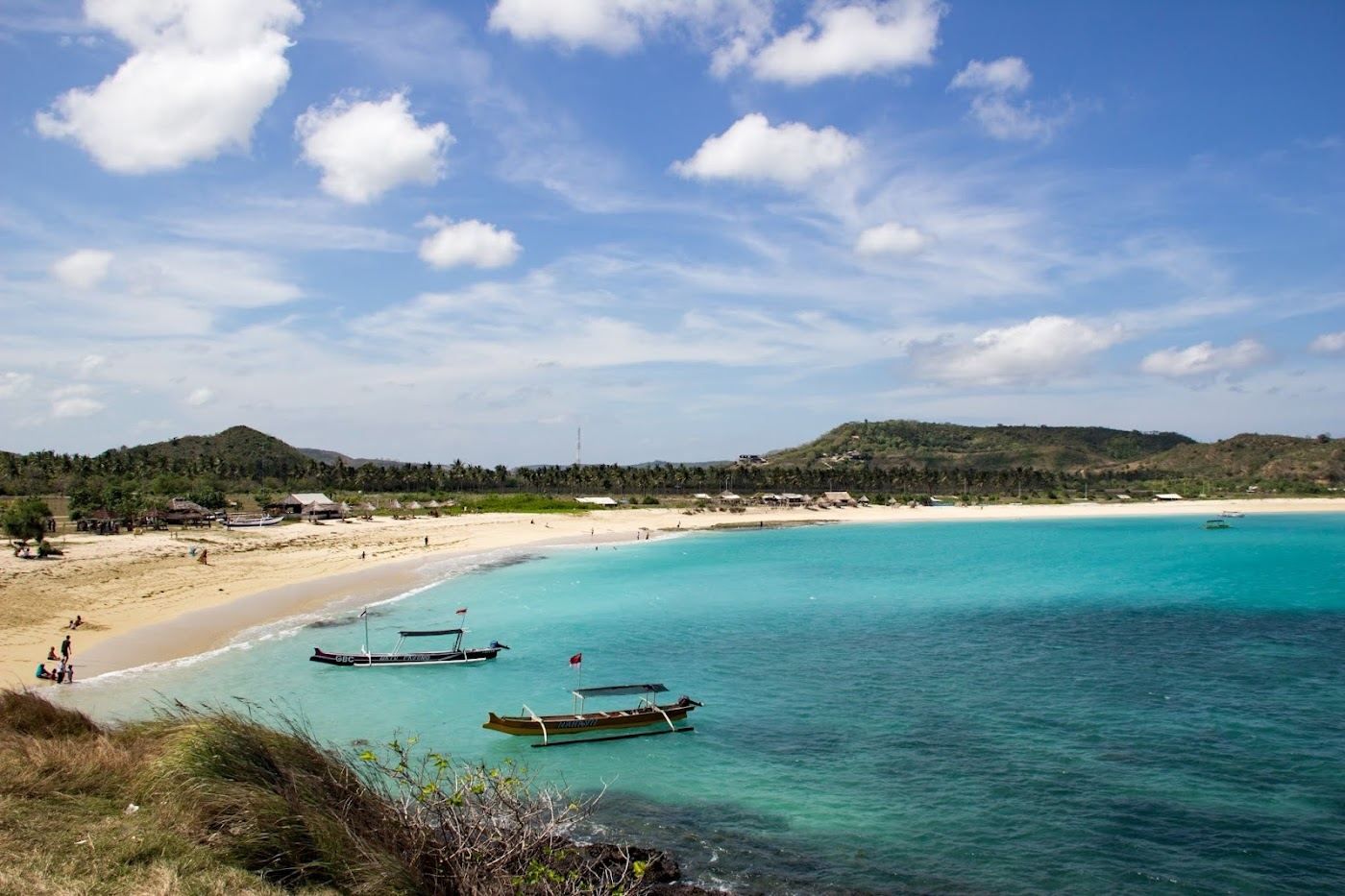
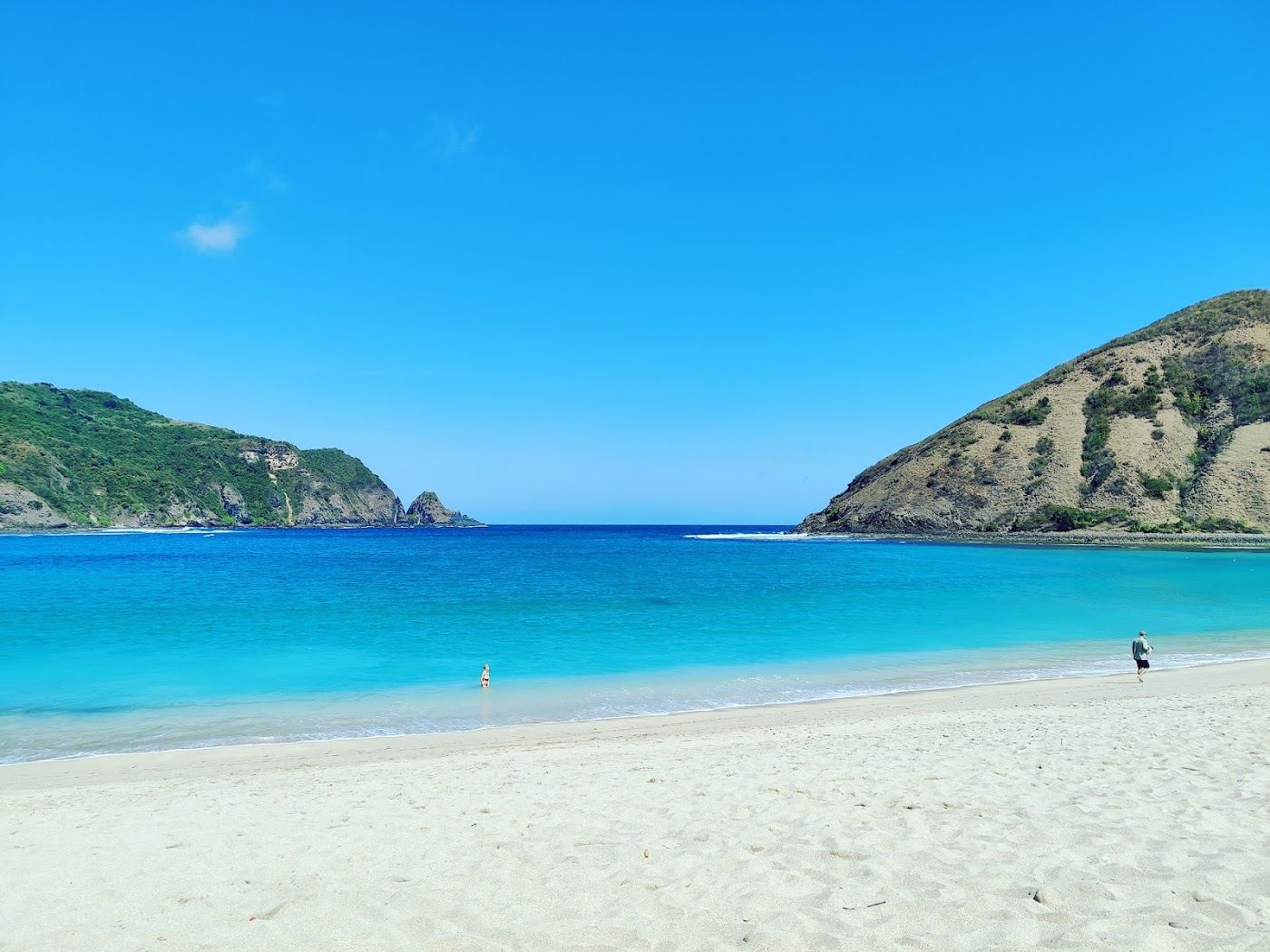
What the pictures rarely show is how far out you have to go to stand here. This is the far southeast corner of Lombok, near the headland of Tanjung Ringgit, a long way past the beach towns on roads that fray to gravel and broken tarmac toward the end. Reaching it is a commitment, best built into a full day rather than squeezed between other stops. The reward for that effort is a setting that the busier beaches have lost entirely. Low cliffs and dry grassland fold down to a small sheltered bay, the water clear and shallow over coral, and the development is close to nothing. You come over the rise, the cove opens below, and the quiet is almost complete.
So weigh it for what it is. If the pink sand is the only reason you are making the trip, temper the expectation, because the colour will not shout. If you come for a wild, remote cove with clean water, room to swim and snorkel, and the rare feeling of a beach barely touched, Pantai Tangsi earns its long road. Bring everything you need, time your visit for the soft light, and pair it with the cliffs and the second smaller pink cove a short boat ride along the shore. Treat the colour as the quiet gift it is, and the setting as the real one.
Clubs on this beach
Pink Beach has no beach club at all, just a few simple warungs, and that emptiness is the point. For a daybed and a full club day you look back toward the south coast at Kuta Lombok, Tanjung Aan and Selong Belanak. Opening hours and any minimum spends are to be confirmed.
Beachfront warungs
A short line of warungs sets up behind the sand, serving cold drinks, coconuts and simple plates, and that is the whole of the scene here. It is the easy, cheap way to settle in for a few unhurried hours in a cove most of the island never reaches. Hours are informal and to be confirmed.
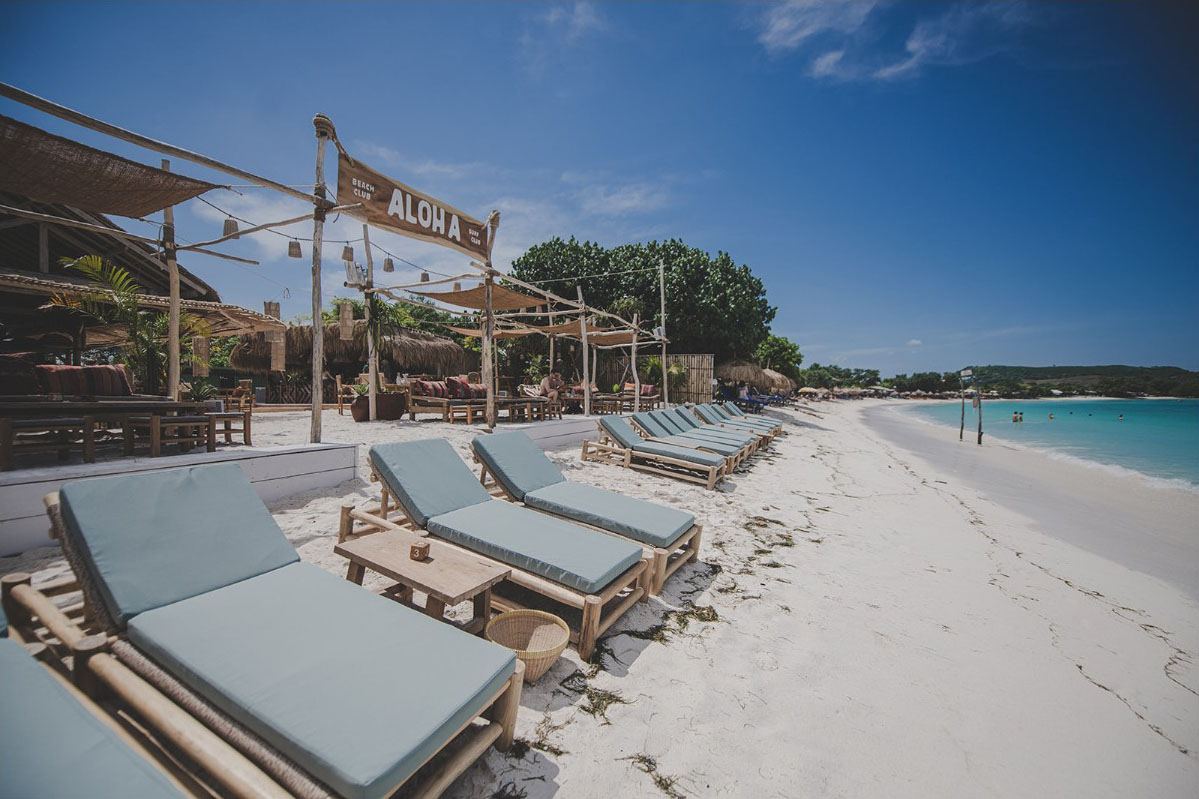 Photo: Aloha Beach and Surf Club via Google
Aloha Beach Club, Tanjung Aan
For a proper club day in the same region as Pink Beach, Aloha Beach Club on Tanjung Aan is the closest of the south coast options, with daybeds, cocktails, seafood and live music toward sunset. It is the natural pairing when you want both the wild cove and a club in one trip. Day use is to be confirmed.
Southeast coast, Lombok
Pink Beach lies near Tanjung Ringgit in the far southeast, roughly two hours from Kuta Lombok and longer from Senggigi, on roads that turn rough and slow toward the end. There is no public transport, so most travellers drive, ride a scooter with care, or join a day tour that handles the route.
Leave early to catch the soft morning light and beat the heat, and treat it as a full day out. Bring water, snacks and sun cover, since facilities are minimal and shade is limited, and consider a short boat hop to the second cove and the cliffs while you are out here.
Photo: Doni Alfian via GoogleNot ready to book?
Keep the good shorelines coming. Shore Notes is our occasional letter on the best beaches and the clubs worth your day, sent straight to your inbox. One field, unsubscribe any time.
Book a beach club
Pink Beach is all wild cove and no club, so we will help arrange a daybed or table on the south coast at Tanjung Aan, Selong Belanak or Kuta Lombok. We reply by email.
Independent and honest · 1,340 beaches ranked across 103 destinations · We answer to no resort
We are an independent editorial resource. Booking requests are passed to clubs and operators, and some may earn us a commission at no cost to you. Prices, availability and opening status are set by the venue and are to be confirmed at the time of booking.
Common questions about Pink Beach
Is the sand at Pink Beach actually pink?
Yes, but far more softly than the photos suggest. The colour comes from tiny fragments of red coral mixed into white sand, so the effect is a gentle blush rather than the saturated rose you see filtered online. It reads strongest where the sand is wet at the waterline and in the soft light of early morning or late afternoon.
Where is Pink Beach in Lombok?
Pink Beach, known locally as Pantai Tangsi, sits in the far southeast corner of Lombok near Tanjung Ringgit, well beyond the main beach towns. It is a long drive from Kuta Lombok or Senggigi on roads that turn rough toward the end, so plan it as a full day out rather than a quick stop.
Is Pink Beach worth the long drive?
It depends on what you came for. If you expect a vivid pink shoreline you may leave a little flat, because the colour is subtle. If you come for a wild, remote cove with clear water, low cliffs and almost no development, the setting rewards the effort. Treat the pink as a quiet bonus and the seclusion as the main event.
Are there facilities at Pink Beach?
Only the simplest. A few warungs set up near the sand for cold drinks and basic plates, and small boats sometimes offer trips to a second pink cove nearby. There is no resort or beach club here, and shade is limited, so bring water, sun cover and anything you need for the day.
Can you swim at Pink Beach Lombok?
The cove is sheltered and usually calmer than the open south coast, with clear shallow water that suits a gentle swim and a snorkel over the coral edges. Conditions are typical and never guaranteed, so read the water on the day, mind the coral underfoot, and keep a close watch on children.