Langford Island
Best for. Travellers who want the easiest reef snorkel in the Whitsundays from a photogenic sand spit, away from the southern crowds, on a charter that times the tide.
Best spot. The northern end of the spit nearest the island, on a lower tide, where the fringing reef and the green turtles gather.
Know this. The spit comes and goes with the tide, so the whole day turns on timing. Aim low, arrive early, and let a good skipper choose the hour.
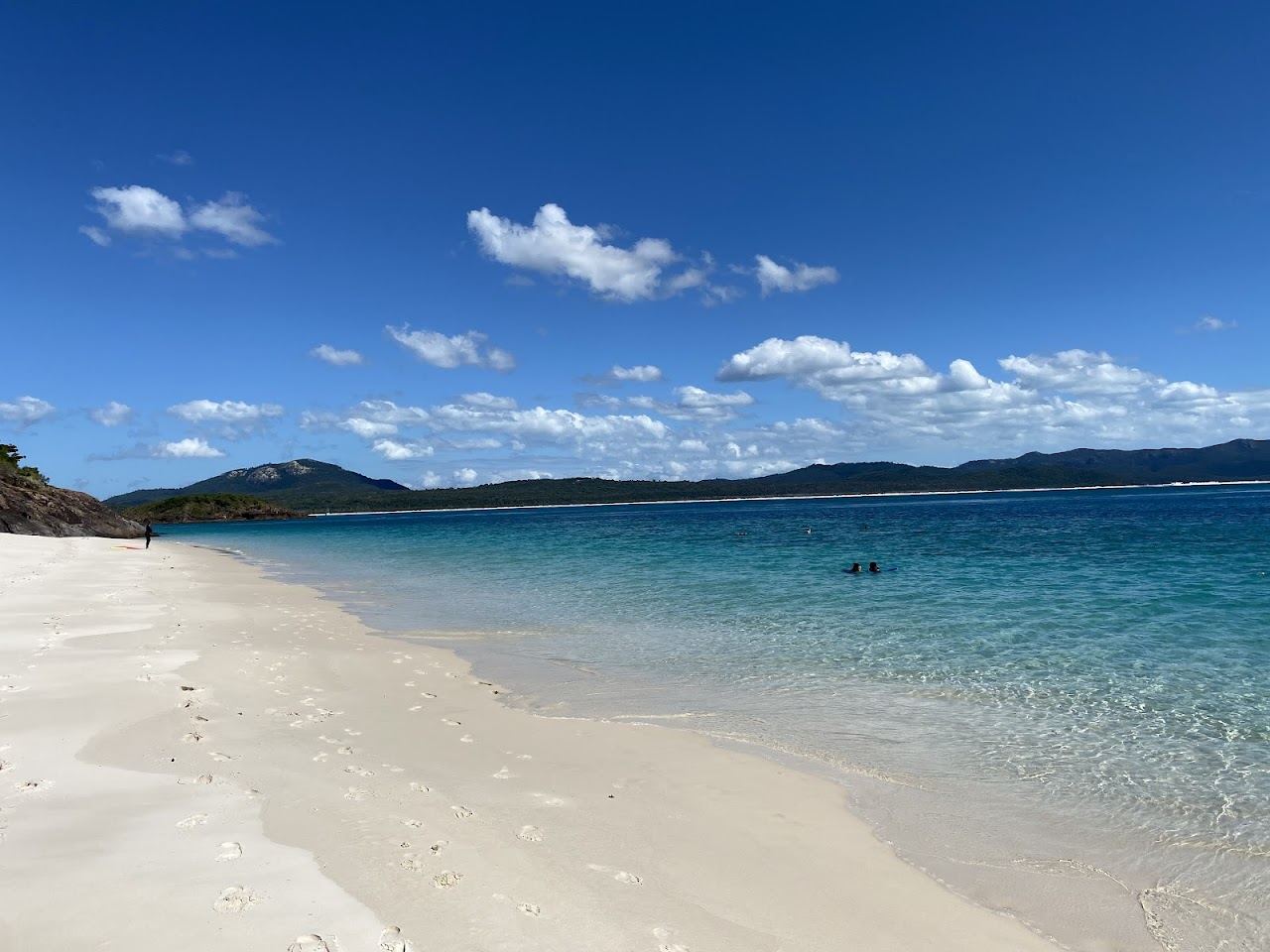
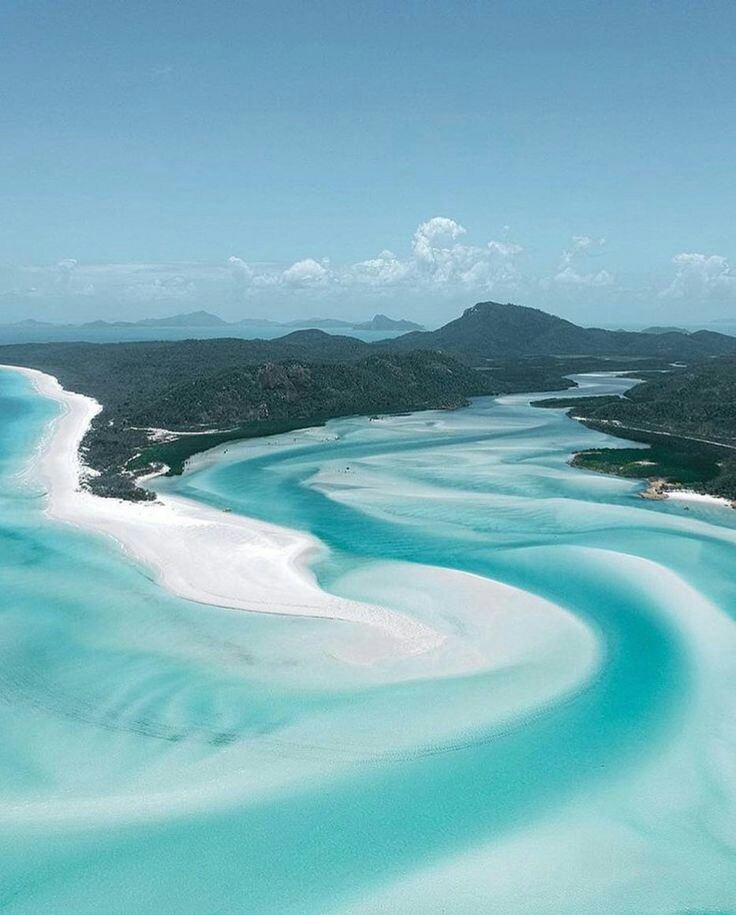
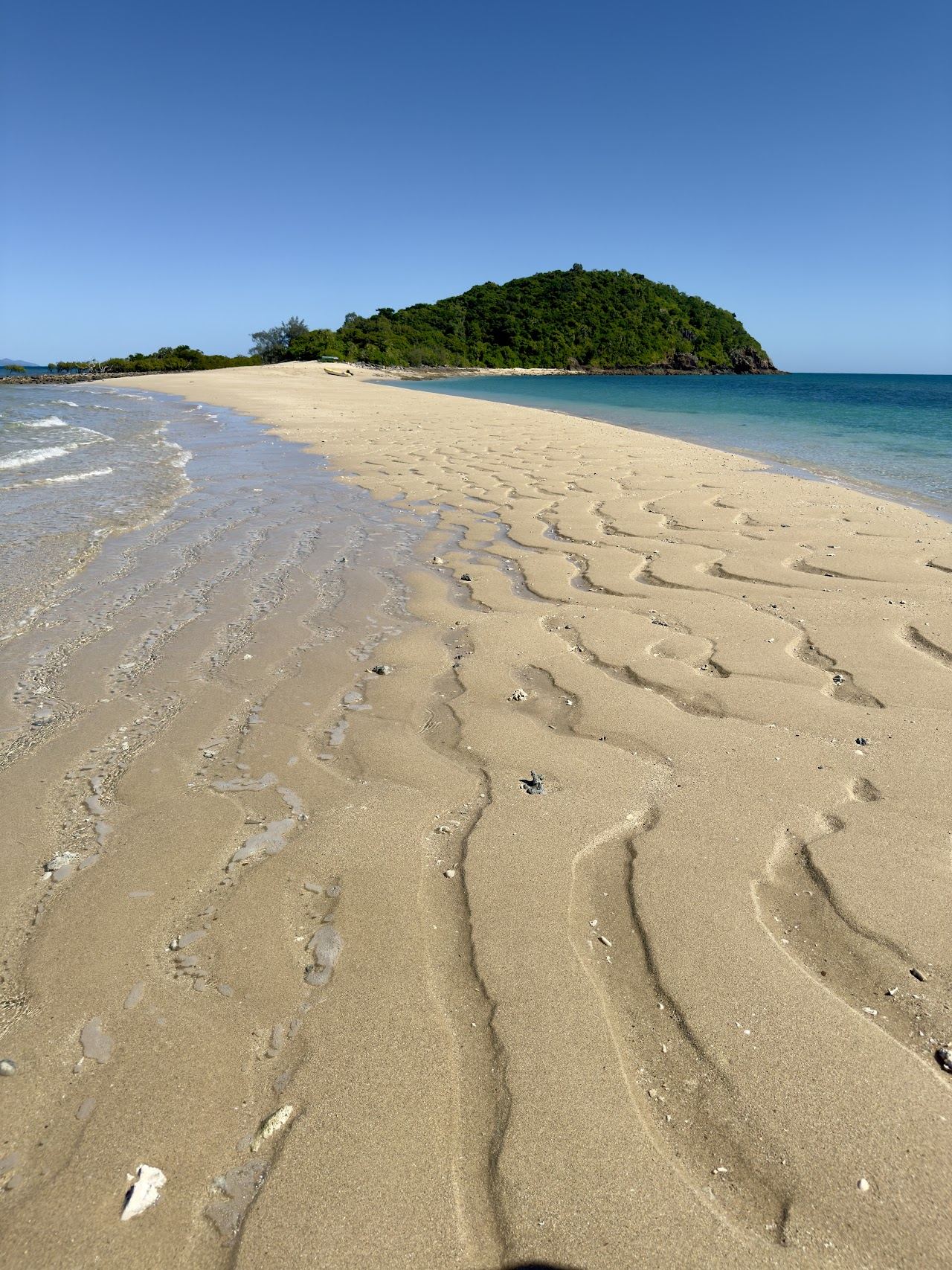
Langford is the most charming small idea in the Whitsundays, a sand spit that the sea writes and erases twice a day. It lies up in the north near Hayman, away from the southern beaches most day boats run to, and its whole personality is that long white tongue of sand reaching out from the island. At lower tide you step off the boat, walk the spit with water on both sides, and wade onto a fringing reef that begins almost at your feet. It is the easiest reef access in the region and one of the prettiest places to simply stand, which is a rare combination.
The honest caveat is the tide, and it is not a small one. The spit is a creature of the tide, broad and inviting on the way down, and largely underwater near the top, so the same place can be a sweep of sand or a thin sliver depending entirely on the hour you arrive. Visit at the wrong stage and you wonder what the fuss was about, visit at the right one and it is unforgettable. There are no facilities to fall back on either, since Langford is uninhabited national park, so the day rests on planning and on the boat. As a Marine National Park Green Zone, fishing is banned, which is exactly why the reef still teems and the green turtles, for which Langford is well known, are so often about.
So the move here is timing and privacy rather than amenity. The reward is real, the underwater life genuinely good and the setting better than its modest fame suggests, but only if you arrive on a lower tide and ideally early, before the wind gets up and the few boats that do come north have gathered. Bring water, reef safe sun cover and a stinger suit in the warm months, take the northern end of the spit for the best of the reef and the turtles, and treat Langford as the quiet northern alternative to the southern circuit. Get the hour right and it is one of the loveliest hours you will spend on the water.
No club, just the spit
Langford is protected national park with no venue ashore, and we never invent one. The luxury is a charter that gets the tide right, so we base you nearby and arrange the boat that visits Langford at the proper hour.
There is no beach club on Langford and there should not be, since the island is uninhabited national park and a protected green zone. We do not invent venues, prices or opening hours, so we will not pretend a sand spit has a sunbed service it does not. What you are really buying here is timing and privacy, a skipper who knows to arrive on the falling tide, a shaded deck and a cold drink between snorkels, and the spit close to your own for an hour before any other boat appears. For that we base you on Hamilton Island, at Airlie Beach or aboard a charter, and arrange the private or small group day that works Langford and the northern reef in the right order. Tell us your dates and party size and we will set it up. The serviced beach clubs of the region sit elsewhere, and our Whitsundays guide covers them.
Northern Whitsundays, by boat
Langford is reached only by water, up in the north near Hayman Island. Day tours and snorkelling boats from Airlie Beach and Hamilton Island call here, and bareboat and crewed charters use the public moorings off the spit. There is no public ferry to the island, so your boat is your access and your base for the day.
Plan the visit around a lower tide so the spit is exposed and the reef sits near the surface, and aim for the morning before the wind and the boats build. Bring water, reef safe sun cover and a stinger suit in the warmer months, since nothing is sold ashore. Heed any marine stinger advice and judge the sea yourself, as there is no lifeguard.
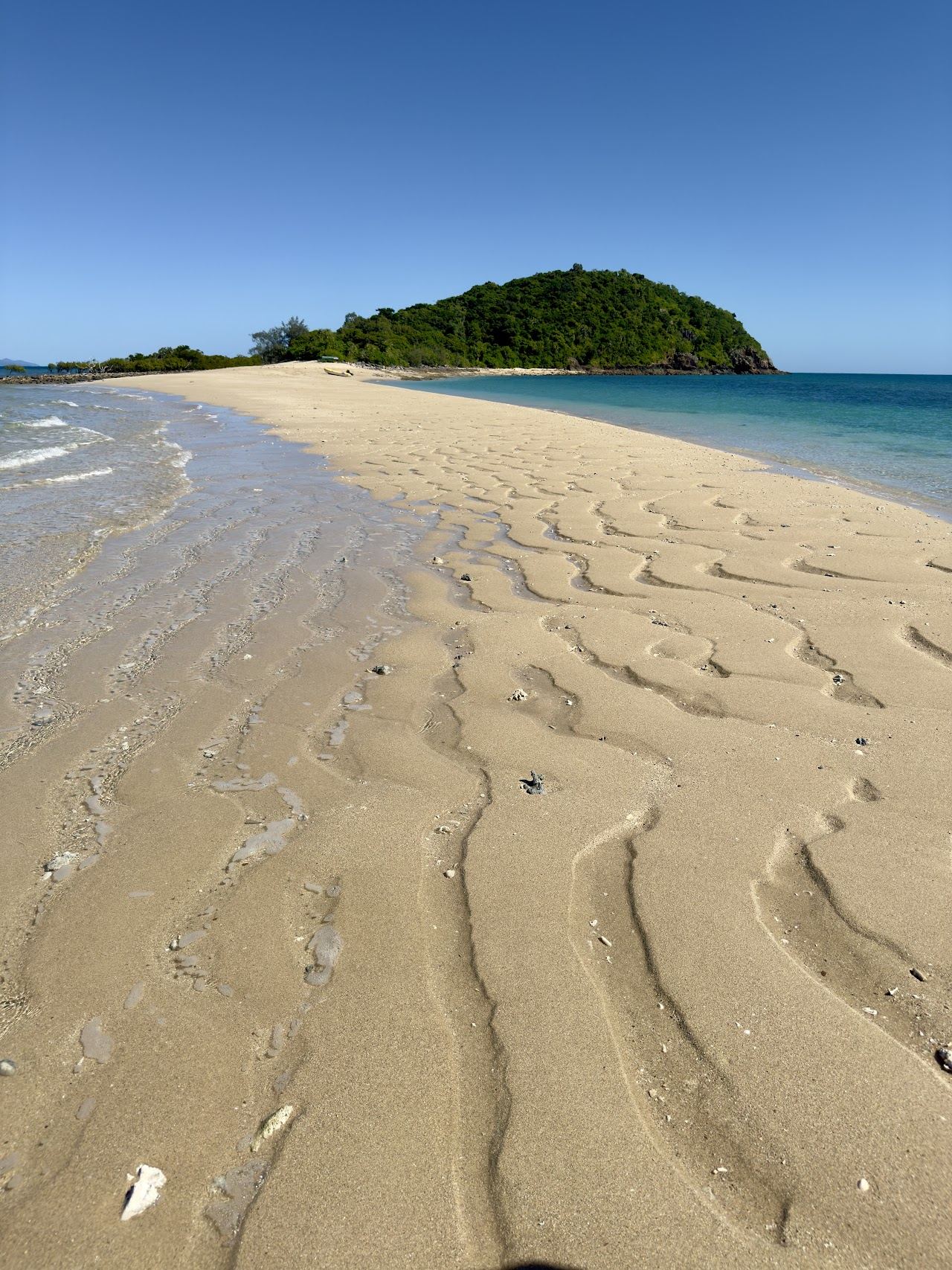 Photo: Rich Press via Google
Not ready to book?
Keep the good shorelines coming. Shore Notes is our occasional letter on the best beaches and the clubs worth your day, sent straight to your inbox. One field, unsubscribe any time.
Book a beach club
Tell us your dates and party size and we will arrange the charter that times the Langford tide and the northern reef, with a base on Hamilton Island or at Airlie Beach. We reply by email.
Independent and honest · 1,340 beaches ranked across 103 destinations · We answer to no resort
We are an independent editorial resource. Booking requests are passed to clubs and operators, and some may earn us a commission at no cost to you. Prices, availability and opening status are set by the venue and are to be confirmed at the time of booking.
Common questions about Langford Island
Where is Langford Island?
Langford Island lies in the northern Whitsundays, close to Hayman Island, and is best known for the long sand spit that reaches out from it. It is an uninhabited national park island reached only by boat, on a charter, a day tour or your own vessel. Its position in the north makes it a more out of the way stop than the busy southern beaches, which is part of its quiet charm.
What is the Langford Island sand spit?
It is a long, narrow tongue of white sand that stretches into the sea off the island and almost vanishes as the tide rises. At lower tide the spit is exposed and you can stroll out along it and wade straight onto the surrounding reef, while at high tide much of it is underwater. That tidal rhythm is why timing matters so much here, and why a skipper who reads the tide makes the day.
Is Langford Island good for snorkelling?
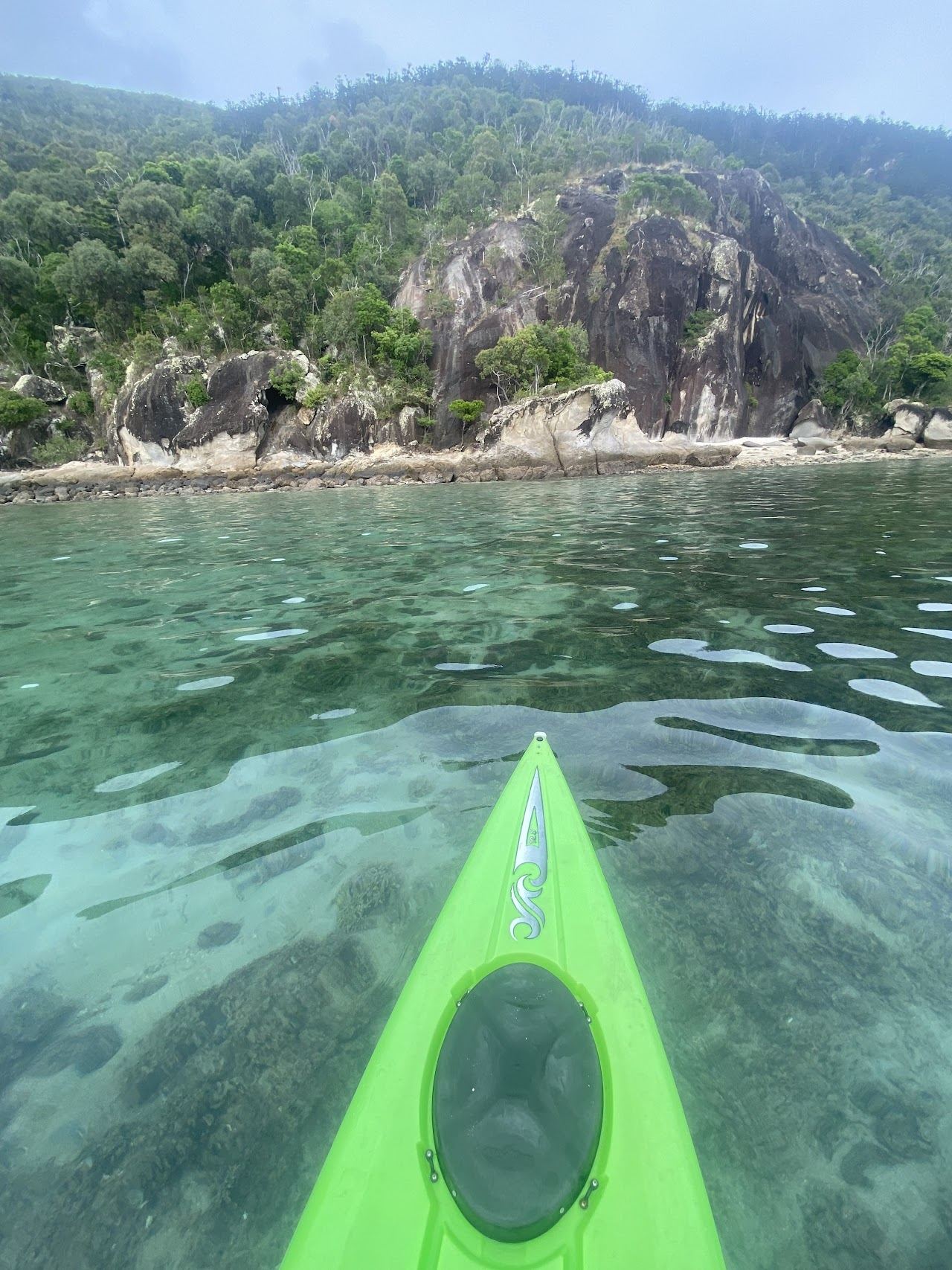
Yes, it is one of the easiest reef snorkels in the Whitsundays. The fringing reef around the spit holds plenty of small colourful fish among the bommies, and Langford is a known green turtle hotspot, so sightings are common. The northern end of the spit, nearest the island, is generally the best stretch. As a Marine National Park Green Zone, fishing is banned, which helps keep the marine life healthy.
Can you stay or land on Langford Island?
There is no accommodation on Langford itself, since it is protected national park. Visitors come for the day by boat and spend their time on the spit and in the water rather than ashore. Public moorings are provided to protect the reef from anchors. There are no facilities, so bring water, sun cover and a stinger suit in the warmer months, and let your boat be your base.
When is the best time to visit Langford Island?
Aim for the dry season from June to October for the clearest, calmest water, and within the day plan your visit around a lower tide so the spit is exposed and the reef sits close to the surface. Mornings are usually calmer and quieter, before the wind and the larger boats build. Conditions are typical rather than guaranteed, so a flexible skipper who can read the day is worth a great deal.