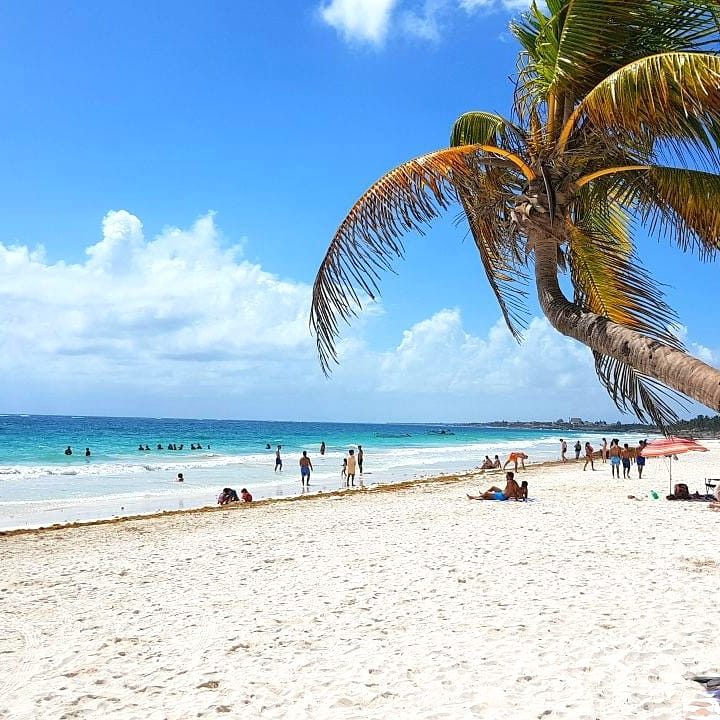
 Photo: S. Lankowski via Google
The verdict
- Best forActive travellers who want wind sports in winter, reef snorkeling and the famous cenote dives nearby.
- Top pickThe hotel zone for kitesurfing in the windy months, with Tankah Bay for sheltered snorkeling.
- One thing to knowTulum's signature underwater experience is cenote diving inland rather than open water surfing, so plan around the reef and the freshwater caverns.
Published 22 April 2026. Last reviewed 15 May 2026
Tulum is not a high energy surf town, and anyone arriving with a board hoping for reliable waves will spend a lot of time waiting. What it does offer is a more varied watersports menu than its laid back image suggests, with a real winter wind season for kitesurfers, a healthy reef just offshore for snorkelers, and some of the best cave diving on the planet a short drive inland.
The wind is the seasonal headline. From roughly November to March the nortes, the north winds, blow down the coast and turn the hotel zone beach into a kitesurfing strip, with schools setting up on the open sand. Outside those months the wind is lighter and the same beaches go calm, better for paddle, snorkel and a lazy swim than for anything fast.
Below the surface, two very different worlds sit side by side. The Mesoamerican reef runs offshore for snorkeling and diving, and inland the limestone is riddled with cenotes, flooded caverns of astonishing clarity that draw divers from around the world. Many visitors find the cenotes are the real reason to get wet here.
We have ranked the beaches below by what you can actually do from them, then point you inland for the cenote diving that no beach can match. Each rank links to its full guide for access, operators and the honest read before you plan a day.
Six beaches for getting active
Wind on the open strip, reef in the sheltered bays.
Pescadores
The open central hotel zone sand is where the kite schools cluster in the windy winter months, with space to launch and steady nortes coming down the coast. Out of season it calms right down for paddle and swimming. Bring or rent gear, as conditions swing with the wind.
Tankah Bay
The sheltered cove is Tulum's friendliest snorkeling, with reef close to shore and a cenote meeting the sea. Calm water and easy entry make it good for beginners and for paddle and kayak. The quieter setting suits a slow exploring day rather than a fast one.
Playa Paraiso
Wide and open, this popular stretch picks up the winter wind for kiting and offers easy paddle and snorkel trips out toward the reef in the calmer months. Operators come and go with the seasons, so check what is running before you build a day around it.
Santa Fe
At the ruins end of the zone the wider sand gives kiters room when the nortes blow, with a dramatic backdrop. It is exposed, so it reads the wind much like the rest of the open coast, brisk in winter and gentle in summer. Good for paddle on calm days.
Boca Paila
The wild road south is for self sufficient kiters and paddlers who want space and no crowd, with open sand and steady wind in season. There are no services and no rescue cover, so this is one for the experienced and well equipped rather than first timers.
Punta Piedra
The rockier shelves here create small pockets of reef life close in, worth a snorkel on a calm day. It is less suited to launching a kite, so treat it as a quieter mask and fins stop between the busier kite beaches rather than a wind sports base.
Where the real action is, and is not
The honest read is that Tulum's beaches are a supporting act and the cenotes are the star. If you have come for watersports, build at least one day around a guided cenote dive or snorkel inland, where the clarity and the cathedral like caverns are genuinely world class. The open coast simply cannot compete with that, and many people leave saying the freshwater was the highlight of the trip.
On the sea itself, manage the wind expectation. Kitesurfing has a real season from about November to March when the nortes blow, and outside that window the same beaches are often too calm for anything fast. Surfers in particular should look elsewhere, as the reef knocks down most of the swell. Snorkelers do better, with Tankah Bay the easiest reef entry and the calmer bays rewarding a patient float.
Two practical truths shape every plan. Sargassum can foul the open beaches from spring into late summer and make in water time unpleasant, so check a report. And the reef is a protected living system, so reef safe sunscreen and a light touch are not optional niceties but the price of keeping these beaches worth visiting at all.
Beach clubs and operators
The Tulum beach club scene threads along the single hotel zone road, where each stretch of sand sits behind a restaurant, a day bed terrace or a small boutique hotel rather than a public car park. Most places run on a food and drink minimum spend rather than a gate fee, lay on loungers and shade, and the better ones face the open Caribbean with the reef a short paddle out. Opening status and spend bands move with the season and the sargassum, so we keep the live list on the directory rather than printing numbers that go stale. Tell us your stretch of beach and your date and we pass the enquiry on to confirm.
Book a beach club in Tulum
Independent and honest · 1,340 beaches ranked across 103 destinations · We answer to no resort
Before you go
Can you kitesurf in Tulum?
Yes, in season. The north winds known as nortes blow from roughly November to March and turn the open hotel zone beaches into a kitesurfing strip, with schools setting up on the sand. Outside those months the wind is usually too light, so time a kite trip for the winter.
Is Tulum good for snorkeling?
It is decent rather than spectacular from the beach, with the Mesoamerican reef offshore. Tankah Bay gives the easiest reef entry close to shore. For the best underwater experience most visitors take a boat to the reef or, better still, snorkel and dive the cenotes inland.
Are the cenotes better than the beaches for diving?
For many divers, yes. The flooded limestone caverns near Tulum offer extraordinary visibility and scenery that no open water site here can match, which is why they draw divers worldwide. A guided cenote dive is the signature underwater experience of the area.
Can you surf in Tulum?
Not really. The offshore reef absorbs most of the swell, so the waves are small and inconsistent and Tulum is a poor choice for surfers. If waves are your priority you are on the wrong coast, and you would do better to plan a trip around wind sports or the cenotes instead.
Does seaweed affect watersports here?
It can. Sargassum lands on the open beaches mainly from spring into late summer and makes in water time unpleasant when it is heavy. The cenotes are unaffected, which is another reason to plan freshwater days as a reliable backup when the coast is weedy.