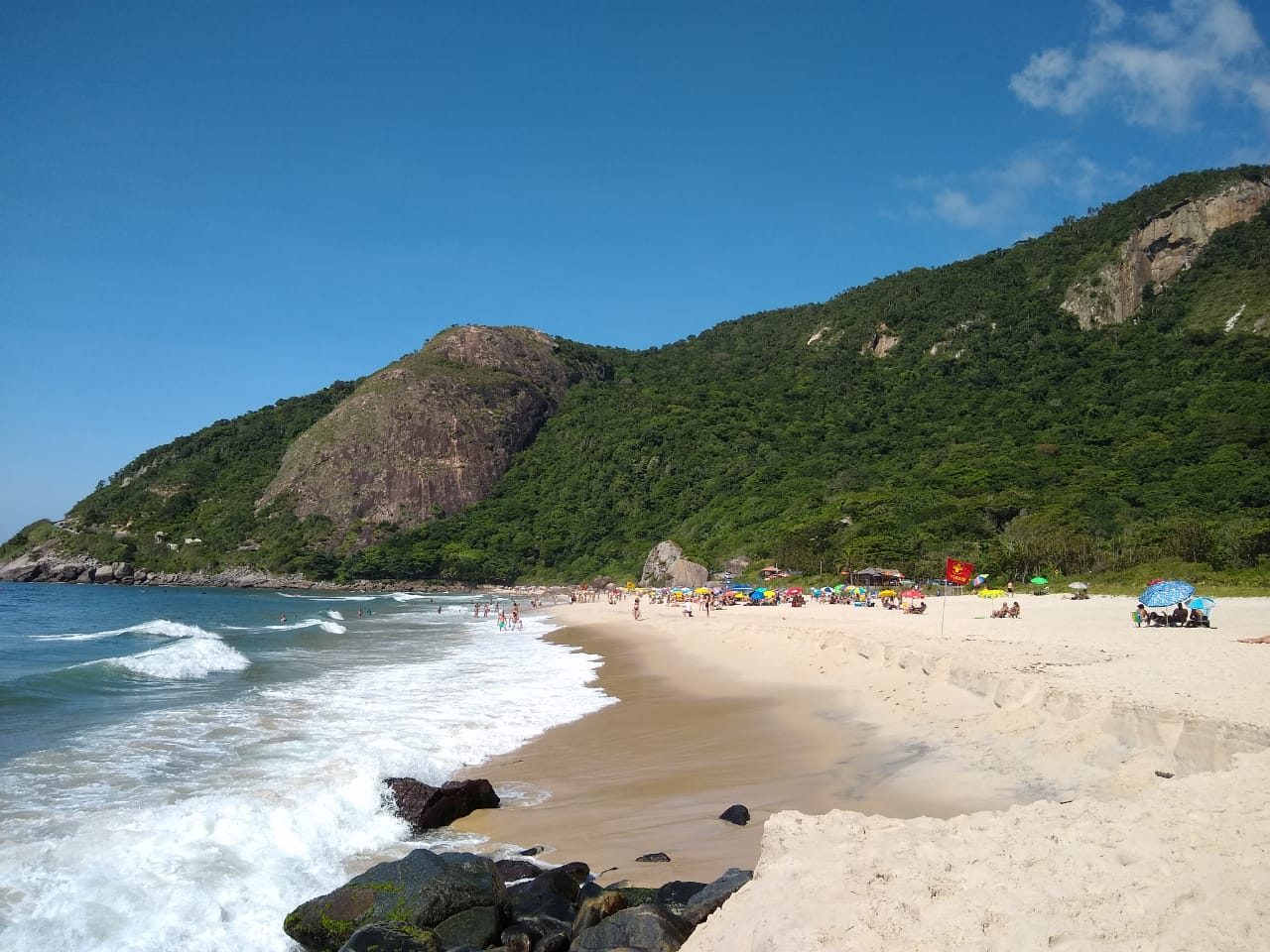
 Photo: Everaldo Ferreira via Google
Most Secluded
Beaches in Rio de Janeiro
Wild western sand and hidden coves away from the famous arcs.
The verdict
- Best forTravellers who want quiet, wild sand and natural beauty, willing to drive west of the city and accept surf and limited facilities.
- Top pickPrainha for the wildest, most beautiful protected beach within reach, with Grumari as the long wild neighbour and Joatinga as the hidden cove.
- One thing to knowRio hides its quiet beaches west of the main city, past Barra, where green hills meet open surf. These are wilder and harder to reach than the famous beaches, with stronger waves and fewer services, so they reward effort and care.
Published 3 March 2026. Last reviewed 6 June 2026
The Rio most visitors see is the great curve of Copacabana and Ipanema, busy and full of life. But drive west, beyond the long modern sweep of Barra da Tijuca, and the city gives way to a wilder coast of green hills, protected land and quiet beaches that feel a world away from the South Zone. This is where Rio keeps its seclusion, in beaches that take effort to reach and reward it with space, beauty and far fewer people.
This guide ranks the most secluded beaches around Rio, weighing how wild and undeveloped each one stays, how far it sits from the crowds and how reliably it holds its quiet. We are honest about the trade offs, since these western beaches are open surf with real currents, limited shade and few facilities, and some need a drive or a walk to reach. For natural beauty and quiet they are unmatched, as long as you come prepared and treat the conditions with respect.
Ranked for seclusion
Scored on how wild and undeveloped each beach stays, how far it sits from the crowds and how reliably it holds its quiet.
Prainha
Prainha is the loveliest of the wild western beaches, a protected horseshoe of golden sand backed by green hills and Atlantic forest, with a strict conservation status that keeps it undeveloped. It is a favourite of surfers and nature lovers and feels gloriously remote. It is open surf with strong waves and limited facilities, so it suits confident swimmers and surfers, and weekends can draw a crowd despite the distance.
Grumari
Next to Prainha, Grumari is a long, wild, protected beach of reddish sand with no development behind it, just hills and forest, giving a real sense of escape close to the city. The space is generous even when others arrive. It is open ocean with powerful surf and rips and there is little shade or services, so bring everything you need, swim with great care and treat the conditions as typical and never guaranteed.
Joatinga
Joatinga is a small, hidden beach tucked below cliffs and reached by a steep path, a secret pocket of sand close to the city that feels private and dramatic. At low tide it grows and calms, revealing pools among the rocks. Access is tide dependent and the path is steep, so check the tide, go at low water and accept that the beach can shrink and the surf can be strong at other times.
Macumba
Macumba sits at the wilder western end of the long beaches past Recreio, a favourite of local surfers with a laid back, off the tourist track feel and plenty of room. It is less polished and more authentic than the South Zone. It is open surf with consistent waves and rips, so it suits surfers and confident water users, and facilities are basic, so come prepared and keep to the patrolled areas to swim.
Sao Conrado
Sao Conrado, also known as Pepino, is quieter than the South Zone beaches and famous as the landing spot for hang gliders and paragliders drifting down from the hills above. It has a dramatic mountain backdrop and a relaxed mood. It is open ocean with surf and currents and the water quality can vary, so check conditions, swim with care near the patrol and enjoy the spectacle of the gliders coming in.
Recreio
Recreio dos Bandeirantes marks the start of the wilder west, a long beach bookended by a rocky outcrop with a more local, spread out feel and room to find a quiet patch away from the access points. It is a popular surf spot. It is open ocean with strong waves and rips along much of its length, so choose a patrolled section, swim with care and treat the surf as typical and never guaranteed.
Where seclusion is real and what it costs
The genuine wild escape near Rio is the protected pair of Prainha and Grumari, west of Barra. Conservation status has kept them undeveloped, so you get golden and reddish sand backed by Atlantic forest and hills, with a real sense of remoteness within an hour of the city. The price is open surf, strong currents and almost no facilities, so they reward confident water users who arrive prepared rather than those wanting a serviced beach day.
Closer in, seclusion is about hidden access. Joatinga is a tiny cove below the cliffs that feels secret and dramatic, best at low tide when it grows and calms, while Sao Conrado is simply quieter than the South Zone with the bonus of hang gliders landing on the sand. These are quieter rather than wild, and they trade the remoteness of the far west for being easier to reach from the city centre.
Two honest cautions. First, the western beaches are open Atlantic with powerful surf and rip currents, so they are not casual swimming beaches and they demand respect, with swimming only where lifeguards patrol. Second, seclusion comes with distance and weekends, since these beaches need a drive and still draw a crowd on a sunny Saturday, so a weekday visit is the real secret. Always come prepared and treat all conditions as typical and never guaranteed.
Where to base a quiet day
The wild western beaches are about open sand and nature rather than booked daybeds, so there is rarely a club on the secluded stretches themselves. The comfortable bases tend to be the kiosks and casual spots near Recreio and Barra, with a drive out to the quieter sand. We never list clubs or minimum spends we cannot confirm, so for current options nearer the city see our Rio de Janeiro beach clubs guide.
Book a beach club in Rio de Janeiro
Independent and honest · 1,340 beaches ranked across 103 destinations · We answer to no resort
Before you go
Which is the most secluded beach in Rio de Janeiro?
Prainha is the most secluded beautiful beach within reach of Rio, a protected horseshoe of golden sand backed by Atlantic forest, west of Barra. Its neighbour Grumari is the long wild alternative. Both are open surf with strong currents and few facilities, so they suit confident water users who come prepared, and a weekday visit is far quieter than a weekend.
Are there any hidden beaches near Rio?
Yes. Joatinga is a small hidden cove reached by a steep path that feels private and dramatic, especially at low tide. Further west, Prainha and Grumari are protected and wild, and Macumba has an off the track local feel. They take effort to reach and are open surf, so check access and conditions and treat the sea as typical and never guaranteed.
How do I get to Prainha and Grumari?
Prainha and Grumari lie west of Barra da Tijuca along the coastal road, roughly an hour from the South Zone depending on traffic, and are easiest reached by car or taxi as public transport is limited. The drive itself is scenic. Go on a weekday for the most space, bring everything you need as facilities are minimal, and respect the surf and currents.
Is Joatinga beach worth visiting?
Yes, for a dramatic hidden cove close to the city, Joatinga is a special spot, reached by a steep path and best at low tide when the sand grows and the water calms among the rocks. It is small and access is tide dependent, so check the tide before you go, time your visit for low water and accept that conditions and the beach size change through the day.
Are the secluded beaches in Rio safe to swim?
They are open Atlantic surf with strong waves and rip currents, so they are not casual swimming beaches and demand respect. Swim only where lifeguards patrol, never alone or in big surf, and treat the conditions as typical and never guaranteed. Many people visit these beaches for their wild beauty and to surf rather than for an easy swim, so plan accordingly.