 Photo: Cyrille Jannin (Sir Hill21) via Google
The Best Beaches
in Reunion
Calm reef lagoons, black sand and a real surf coast, ranked with the shark rules made plain.
The verdict
- Best forTravellers pairing Reunion's volcano and hiking with a few relaxed beach days on the sheltered west coast, who want the lagoons that swim and the honest truth about where the sea is off limits
- Single best spotL'Hermitage for the long, calm, reef sheltered lagoon and shady pines, with Boucan Canot kept for its netted swim, surf and beachfront scene
- One thing to knowYou may swim only inside the reef lagoons and the secured netted zones, because the open sea is closed to swimming after the island's shark crisis, so always read the local signs
Published 7 March 2026. Last reviewed 8 May 2026
Reunion is a French island in the Indian Ocean east of Madagascar, and it is a mountain before it is a beach. The interior is a young volcanic world of the active Piton de la Fournaise, the three vast cirques and a network of trails that count among the best hiking anywhere in the tropics, and that is what most travellers come for. The sand is a smaller, concentrated pleasure, gathered almost entirely on the sheltered, dry west coast around Saint Gilles, Saint Leu and Saint Pierre, where a fringing coral reef builds calm turquoise lagoons against a backdrop of green peaks. It is a beautiful contrast, the high wild island meeting a soft protected shore, and the west coast is where you base for the seaside half of a Reunion trip.
The honest read here is unlike anywhere else we cover, because it is about safety as much as beauty. After a run of serious shark incidents from 2011, the authorities closed the open sea to swimming and surfing and restricted bathing to the reef sheltered lagoons and a few secured, netted zones, and that framework still governs the coast today. It is not a scare story to wave away, it is the rule that shapes where you can and cannot enter the water, and the good news is that the places you actually want to swim, the calm lagoons and the netted beaches, remain open and lovely. We make this plain on every beach below rather than burying it, because knowing it is the difference between a wonderful coast and a dangerous mistake.
We rank the beaches on how they truly swim, snorkel and feel, weighing the calm of the lagoon, the quality of the sand, the scene behind the beach and, above all, where the water is genuinely safe to enter. The west coast holds the white sand lagoons and the surf town energy, the south adds the dramatic palm backed bays and a town beach lagoon, and each has its own character. Conditions, swell and net status change through the year, so we describe what is typical, point you to the swimming zones, and never promise a safe swim outside them.
Ranked, not listed
Scored on the swim, the sand, the setting and where the water is actually safe to enter. Honest verdicts, the rules made plain.
L'Hermitage
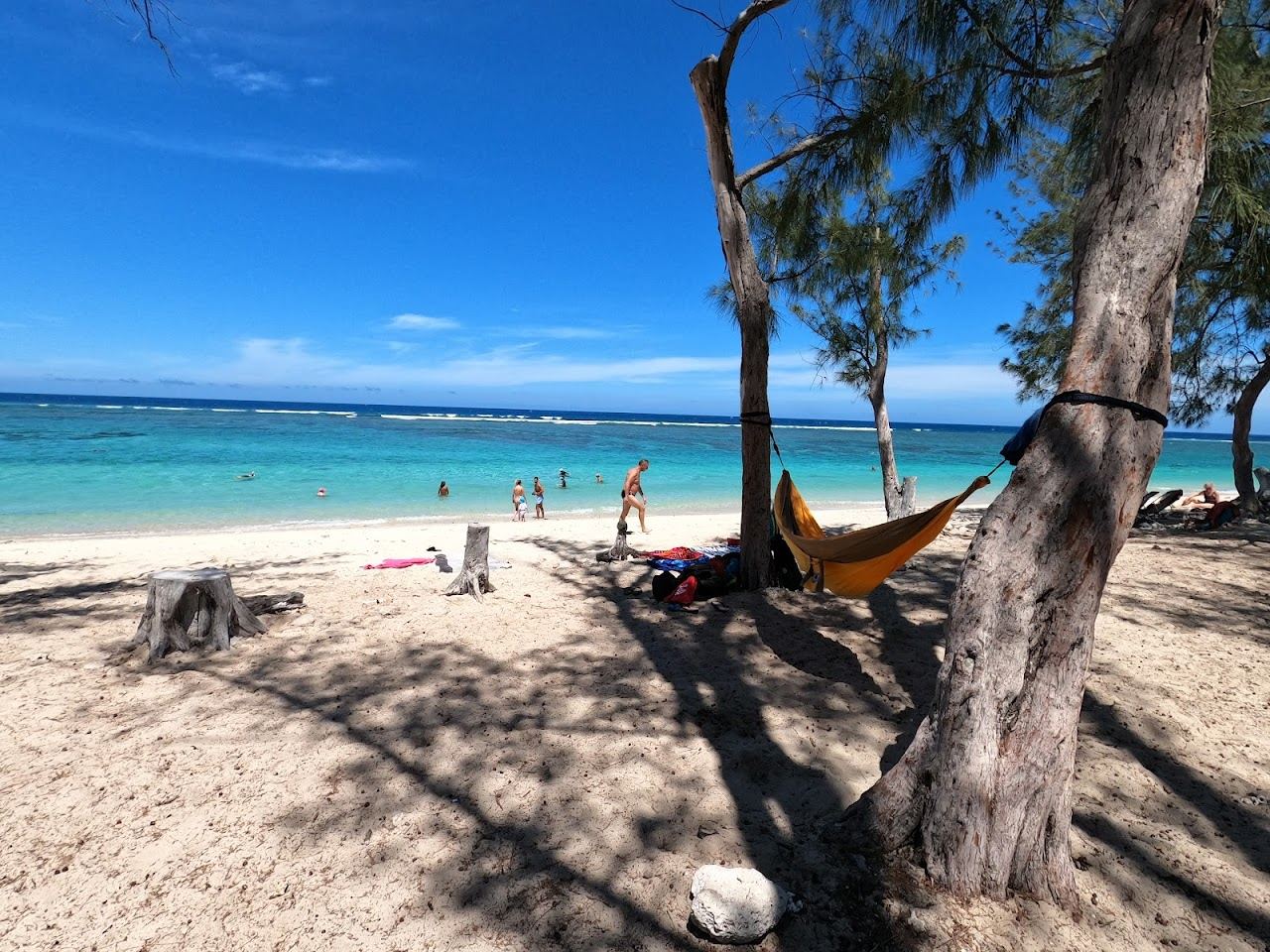
The island's signature beach and our pick, a long ribbon of white sand near Saint Gilles where a coral reef holds a calm, shallow, warm lagoon that is safe to swim and easy to snorkel, all shaded by a forest of filao pines. It is the most complete beach day on Reunion, with families in the shallows, fish over the coral and beach restaurants under the trees. It is also the most popular, so it fills at weekends, but the lagoon is wide and the setting forgives the crowd.
Boucan Canot
The fashionable one, a handsome curve of white sand backed by a pedestrian esplanade of cafes, bars and restaurants, with deeper, clearer water than the lagoon because no reef fronts it. That openness is why it carries an anti shark net enclosing a bathing zone, so you swim within the marked area and treat the open sea as closed. Lively, photogenic and the social heart of the coast, best for a scene and a netted dip rather than a wild empty beach.
Grande Anse
The most dramatic beach on the island, a deep cove of golden sand and leaning coconut palms between black basalt headlands in the south, the picture everyone photographs. The catch is that the open bay has powerful waves and no reef, so swimming is only in the man made basalt walled pool at the southern end, never in the sea itself. Come for the scenery, the picnic under the palms and a dip in the pool, and respect the water beyond it.
Plage de Saint Pierre
The south coast's easy town beach, a white sand strip along a reef sheltered lagoon right beside the lively port town of Saint Pierre, so you get calm, safe family swimming with cafes, markets and the island's best nightlife a short walk away. It lacks the postcard wildness of the west coast lagoons, but the convenience and the town life make it a strong base for the south, and the lagoon water is clear, shallow and full of small fish.
Roches Noires
The town beach of Saint Gilles itself, a lively stretch named for its volcanic sand and the one most travellers stumble onto first, with a netted bathing zone, a surf and bodyboard crowd and an easy walk into the resort's bars and restaurants. It is convenient and sociable rather than pristine, busier and more urban than the Hermitage lagoon next door, so we rate it for the buzz and the location, and send swimmers to the calmer lagoon a few minutes south.
The rule that shapes the coast
Nothing about Reunion's beaches makes sense until you understand the water rule, so let us be direct. Following a cluster of fatal shark attacks that began in 2011, the prefecture banned swimming, surfing and bodyboarding in the open sea, and confined bathing to the reef protected lagoons and a small number of secured, netted zones. This is not a historical footnote or an overcautious sign, it is the live legal and practical framework of the coast, and you respect it absolutely. The reassuring part is that it leaves the beaches you most want wide open, the calm lagoons at L'Hermitage, La Saline and Saint Pierre swim and snorkel beautifully, Boucan Canot and Roches Noires enclose a netted bathing area, and Grande Anse offers its basalt pool. Stay inside those zones, watch the flags and the lifeguards, and you have a safe, gorgeous swim.
With that settled, the gap to manage is expectation. Travellers who arrive picturing a Mauritius style island where you wander into any bay for a swim will be caught out, because here the open sea is genuinely off limits and the surf breaks, world class as some are, are closed or tightly controlled. Reunion rewards a different plan, one where the volcano, the cirques and the trails are the main event and the west coast lagoons are the relaxed reward, a half day of calm water, a beach lunch under the pines and a sundowner on the esplanade. Treat it that way and the beaches feel like a generous bonus to an extraordinary island, rather than a coast that keeps telling you no.
The best months in Reunion
Reunion runs a cooler, drier winter from roughly May to November and a hot, wet summer from December to April, and for beaches the dry season wins easily, with warm comfortable days, calmer seas on the sheltered west coast and the lowest rain. That same stretch overlaps the humpback whale season offshore, a real bonus for the south and west. The summer brings warmer lagoon water but heavier downpours and the Indian Ocean cyclone risk, which can close beaches and trails alike, so the dry west coast is always the smart base. Our full guide to when to go to Reunion walks the year month by month, with the sea, the rain and the whale window.
Where to book a daybed
Set expectations honestly, because Reunion does not run a minimum spend daybed and DJ scene, and that suits its relaxed, French island character. The beach life is the rondavelles and beach restaurants under the filao pines at L'Hermitage, the esplanade cafes and bars at Boucan Canot, and the lagoon side tables at La Saline and Saint Pierre, mostly a matter of a good lunch and a sundowner rather than a cabana you reserve. Names such as Les Balancoires and Go by le Cap Mechant at L'Hermitage, Cap Sunset and the rondavelle at Boucan Canot, and Copacabana at La Saline anchor the scene. Our Reunion beach clubs directory reads the real picture and marks anything uncertain as to be confirmed.
Book a beach club in Reunion
Independent and honest · 1,340 beaches ranked across 103 destinations · We answer to no resort
Before you go
Which is the best beach in Reunion?
For most travellers it is L'Hermitage, the long white sand lagoon beach near Saint Gilles where a coral reef shelters calm, shallow, warm water ideal for swimming and snorkelling under shady filao pines. For a livelier scene with a netted swimming zone, surf and a beachfront esplanade it is Boucan Canot, and for drama the palm fringed Grande Anse in the south is the most photogenic, though there you swim only in the protected pool. The west coast holds nearly all the sand.
Is it safe to swim in the sea in Reunion?
Only in the right places, and this is the most important thing to know before you go. After a series of shark incidents, the authorities banned swimming and surfing outside the reef sheltered lagoons and a few secured netted zones, and that rule still stands. You swim safely inside the lagoons such as L'Hermitage, La Saline and Saint Pierre, in the netted areas at Boucan Canot and Roches Noires, and in the man made pool at Grande Anse. Never swim outside these zones, follow the local flags and signs, and treat any open water as off limits.
Where can you swim safely in Reunion?
Inside the reef protected lagoons and the supervised secured zones. The calm lagoon beaches of L'Hermitage, La Saline les Bains and Saint Pierre offer shallow, sheltered swimming and snorkelling over coral. Boucan Canot and Roches Noires near Saint Gilles have anti shark nets enclosing a bathing area, and Grande Anse in the south has a basalt walled pool. These are the swimming spots, the lagoon water is calm and warm, and conditions and net status change with the swell, so always read the signs.
Does Reunion have good beaches or is it all mountains?
Both, but the mountains come first. Reunion is above all a volcano and hiking island, with the active Piton de la Fournaise, the three cirques and some of the finest trekking in the Indian Ocean, and the beaches are a smaller, concentrated pleasure on the sheltered, dry west coast around Saint Gilles, Saint Leu and Saint Pierre. They are genuinely lovely, white and black sand, calm lagoons and a real surf culture, but you come to Reunion for the wild interior and treat the beach as the relaxed bookend, not the whole trip.
When is the best time to go to the beach in Reunion?
The cooler, drier season from roughly May to November is the easiest for beaches, with warm comfortable days, calmer seas on the west coast and the lowest rain, and it also overlaps the whale watching months. The hot, wetter summer from December to April brings warmer water but heavier rain and the cyclone risk, so the west coast, the driest corner of the island, is always the smart beach base. See our Reunion when to go guide for the month by month detail.