Polignano a Mare
The honest short answer
Published 26 January 2026. Last reviewed 5 April 2026. Conditions described are typical and never guaranteed.
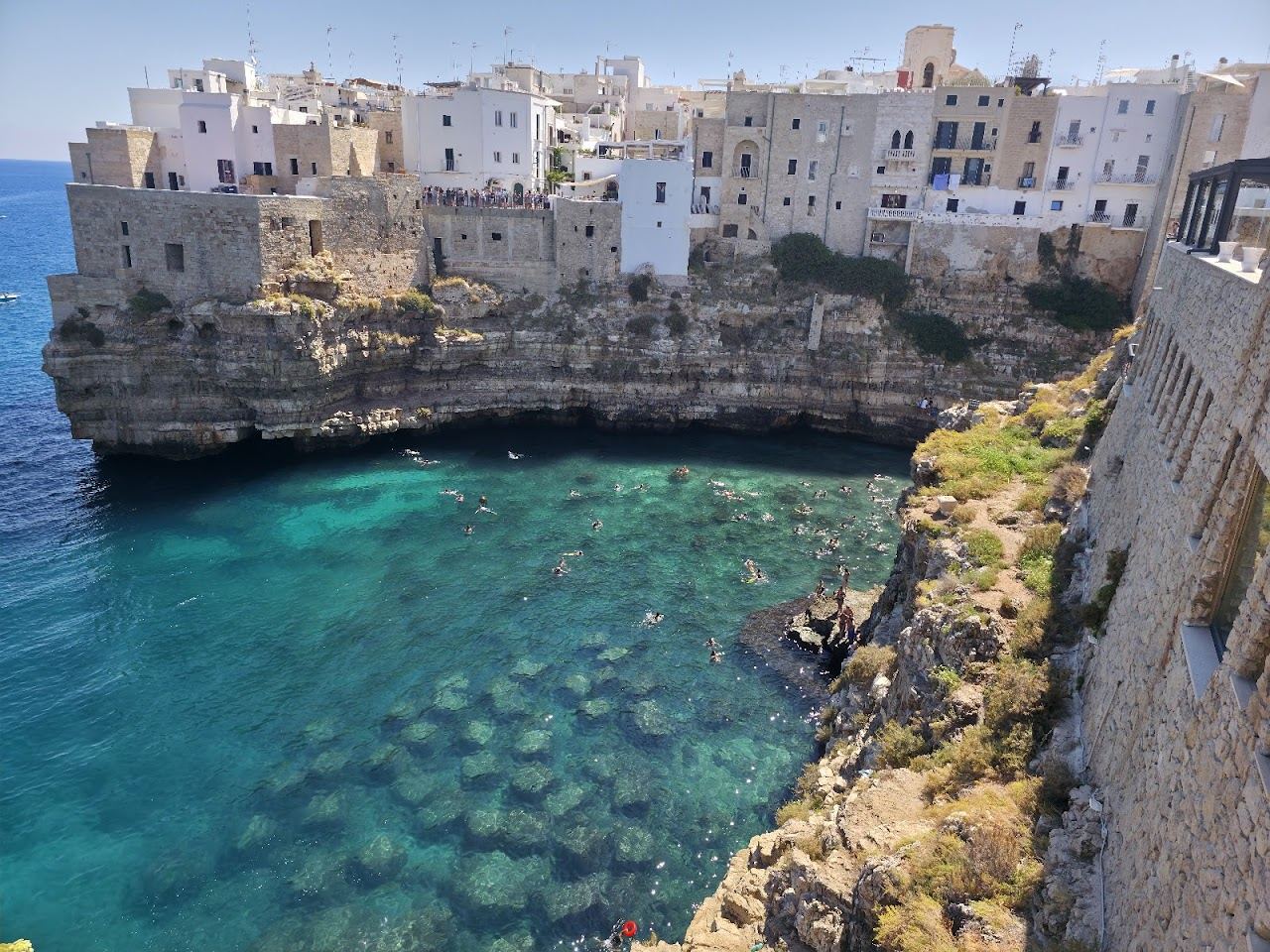
Polignano a Mare is one of the most photographed towns in Puglia, a tumble of white houses perched on Adriatic cliffs above water of an intense clear blue. It is essential to set expectations correctly, because this is a cliff town and a swimming town rather than a beach town. The famous sand is a single small cove, and most of the swimming happens off rocks, platforms and little inlets rather than across a long stretch of beach.
The headline beach is Lama Monachile, also signed as Cala Porto, the pebble cove wedged beneath an old arched bridge that appears on every postcard of the town. It is spectacular and it is tiny, which means in July and August it is extremely crowded by midday. The water there is the prize, deep and clear and perfect for a swim out under the cliffs, but it is a place to arrive early rather than settle all day.
Beyond that cove, Polignano swims off the rocks. Around the headlands and the smaller inlets such as Cala Paura and Cala San Giovanni you will find locals diving into deep clear water from platforms and ledges, and this rock and cove swimming, paired with a wander through the old town and an aperitivo on a cliff terrace, is the real Polignano experience. Bring sandals and a sense of adventure rather than a bucket and spade.
Who should skip it: families wanting a long shallow sandy beach for small children, who will be far happier on the Ionian side at Porto Cesareo or the Maldive del Salento in the deep south. Who should go: travellers who want a stunning cliff town with clear water swimming and are happy to swim off rock and pebble. For the famous cove in detail, see our guides to Lama Monachile and Cala Porto.
Clubs on and near the sand
Polignano keeps its sun terraces and aperitivo bars up in the old town and along the cliffs rather than on the sand, since there is barely any beach to put them on. We list confirmed options in the Puglia club directory.
There are no beach clubs on the sand at Polignano, because the town swims from coves and rock platforms rather than a long beach. The sun terraces and bars sit in the old town and on the cliffs instead. We never invent a venue or a minimum spend, so any option not yet checked is marked to be confirmed in the Puglia directory.
Polignano a Mare sits on the Adriatic coast south of Bari, an easy trip by train or car. The old town and its coves are compact and walkable once you arrive, with the famous Lama Monachile cove reached by steps down from the centre.
Trains from Bari are frequent and drop you a short walk from the old town, which is the simplest way in. By car, summer parking near the centre is tight, so use an edge of town car park and walk in, and expect steps rather than level access down to the cove and the rocks.
Not ready to book?
Keep the good shorelines coming. Shore Notes is our occasional letter on the best beaches and the clubs worth your day, sent straight to your inbox. One field, unsubscribe any time.
Reserve a day on the Puglia coast
Tell us the day and the party, and we will match you to a beach club near Polignano a Mare and pass your request straight to the team.
Independent and honest · 1,340 beaches ranked across 103 destinations · We answer to no resort
Does Polignano a Mare have a beach?
It has one small famous pebble cove, Lama Monachile, also called Cala Porto, beneath the old bridge. Most swimming in Polignano happens off rocks, platforms and small inlets rather than on a long sandy beach, so it is a swimming town more than a beach town.
Is Polignano a Mare good for families with young children?
Less so than the sandy Ionian beaches. The main cove is tiny and crowded and much of the swimming is off rock into deep water. Families with small children are usually happier at Porto Cesareo or the Maldive del Salento, then visit Polignano for the town and the views.
What is the best beach in Polignano a Mare?
Lama Monachile, the pebble cove under the old bridge, is the famous one and has the best swimming and the iconic view. Around the headlands, coves such as Cala Paura and Cala San Giovanni offer rock swimming in deep clear water away from the main crush.
Is Lama Monachile the same as Cala Porto?
Yes, they are two names for the same cove below the old town. You will see both on signs and maps, and our separate guides cover the cove as a beach day and as the iconic photographed inlet.
How do you get to Polignano a Mare?
It sits on the Adriatic coast south of Bari, easy to reach by frequent train or by car. The train drops you a short walk from the old town, while summer driving means tight parking, so use an edge of town car park and walk in.