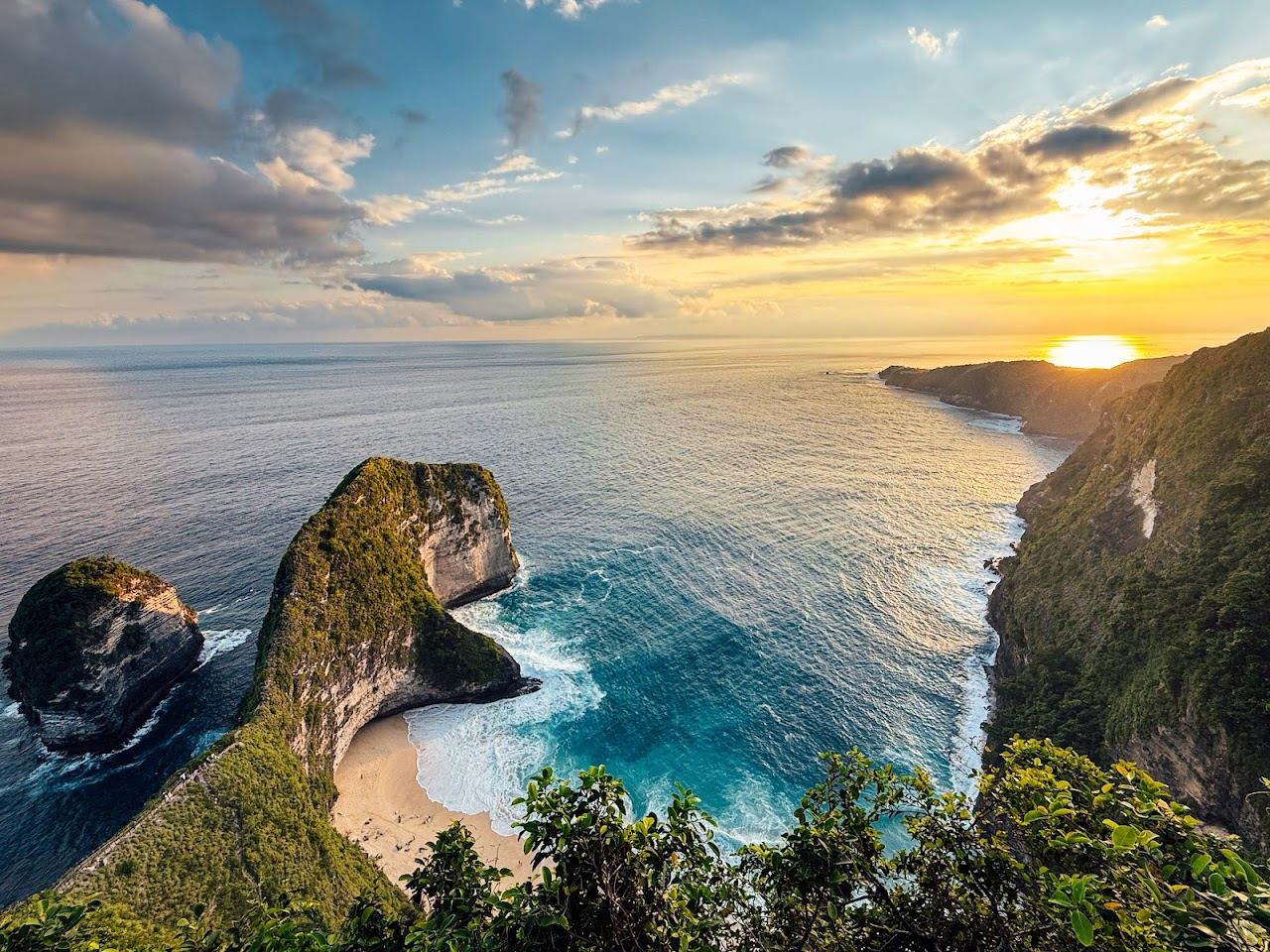
 Photo: Stephen Stewart via Google
The Best Beaches
in Nusa Penida
Cliffs to gawp at, coves to swim in, ranked honestly.
The verdict
- Best forDramatic cliff scenery and a snorkel or two, on a day trip or a slow couple of nights from Bali.
- Single best spotCrystal Bay for the actual swim and snorkel, Kelingking for the view that put the island on the map.
- One thing to knowThe famous cliff beaches are for looking, not swimming. Strong currents, long staircases and no lifeguards.
Published 28 January 2026. Last reviewed 29 May 2026
Nusa Penida is the island that broke the internet, and you should know which version you are signing up for before you board the fast boat from Bali. The beaches here are some of the most photographed in Indonesia, but the picture and the swim are two different things. The famous ones are slivers of white sand at the foot of towering limestone cliffs, reached by long, steep, sometimes punishing staircases, and the open ocean below them is powerful. The genuinely swimmable beaches are quieter and gentler, and knowing the difference is the whole game.
So we rank the beaches below on two scales at once, the spectacle and the swim, because pretending they are the same is how people get into trouble here. Crystal Bay and Atuh are the coves where you actually get in the water. Kelingking and Diamond Beach are the views you climb down to and photograph. There are no public lifeguards on the island, the west coast has been flagged for rip currents, and conditions change with the tide, so we treat the water honestly throughout. Read it as a guide to looking as much as swimming.
Ranked, not listed
Scored on water and swimming, scenery, snorkelling and how hard each one is to reach. Honest verdicts throughout.
Crystal Bay
The one beach on Penida that is genuinely about swimming, a calm palm lined cove that is easy to reach and faces west for the sunset. The water is usually gentle enough for a casual swim and the snorkelling is excellent, with visibility that can reach fifteen to twenty metres on a clear day. It is the island at its most relaxed, so it is where we would spend the slow part of the day. Conditions still vary, so check the sea before you swim out.
Atuh Beach
A crescent of sand framed by rock islets on the quieter east coast, generally considered safer for a swim than Diamond or Kelingking and stunning at sunrise, which it faces across the ocean. The walk down is a proper staircase but shorter than the western giants, and the cluster of warungs above makes it an easy place to linger. For scenery and a swim in one beach, it is the best balance on the island.
Kelingking Beach
The view that made the island famous, a headland shaped like a sleeping dinosaur above a tiny ribbon of white sand and turquoise water. It earns its place on spectacle alone, because the photograph from the clifftop is one of the best in Indonesia. The descent is steep, exposed and slow, and the water below has strong surf, unpredictable currents and no lifeguards, so most people should enjoy it from the top. Treat any posted warning as the final word.
Diamond Beach
Postcard perfect, with jagged limestone pinnacles, bright sand and intense blue water, and a carved staircase that now makes the descent far easier than it once was. It is one of the most beautiful sights on the island, but the open ocean brings shorebreak and currents, so wading near the shore is the sensible limit for most. Pair it with neighbouring Atuh, which sits just along the same dramatic stretch of coast.
Gamat Bay
A small, rocky snorkel cove near Crystal Bay that rewards the scramble down with some of the clearest water and best marine life on the island. There is little sand and it is more a place to slip into the sea than to sunbathe, so it suits snorkellers over loungers. Go on a calm morning, watch the surge around the rocks, and treat the entry with care.
Suwehan Beach
A remote white sand beach below a long, demanding cliff descent, with a distinctive rock standing in the shallows and a fraction of the crowds of the headline names. The effort keeps it quiet and the setting is wild and beautiful, but the open south coast water can be rough, so it is a reward for walkers and photographers rather than swimmers. Bring water and time it for the cooler hours.
Broken Beach
More natural wonder than beach, a near circular cove ringed by cliffs with a stone arch where the sea funnels in through a collapsed cave. There is no way down to the water and the waves inside are fierce, so this is purely a clifftop walk and a remarkable photograph. It sits right beside Angels Billabong, so the two are always visited together.
Angels Billabong
A natural rock pool at the cliff edge that looks like a perfect swimming hole at low tide, with clear green water over a smooth shelf. The danger is real and worth stating plainly, because as the tide rises rogue waves can crash over the rim and people have been swept out to sea. Admire it, take the photo, and keep well back when the swell is up. It ranks for the spectacle, not the swim.
Who it suits, who should skip
Nusa Penida is made for people who want jaw dropping scenery and are happy to work for it. If you picture a beach holiday as wide flat sand and an easy stroll into calm water, this is the wrong island, and you would be happier on the gentler beaches of Bali or the Gili Islands. The staircases here are long and steep, the famous coves are about the view far more than the swim, and the heat on an exposed cliff path at midday is no joke. Come for the drama, not the lounging.
The safety point is not a disclaimer, it is the most useful thing we can tell you. There are no public lifeguards, the west coast has been flagged for rip currents, and the prettiest looking pools can turn dangerous with the tide. So swim only where the water is genuinely calm, which usually means Crystal Bay or Atuh, keep back from the edge at places like Angels Billabong, start early to beat the crowds and the heat on the staircases, and never push into rough water for a photograph. Treat conditions as typical and never guaranteed, and the island gives you its best with none of the risk.
The best months in Nusa Penida
Nusa Penida follows the same two seasons as Bali. The dry season from April to October brings the calmest seas, the clearest water for snorkelling and the safest conditions on the cliff beaches, with the mornings calmest before the wind and the day boats build. The wet season from November to March is greener, cheaper and quieter, but the water turns rougher and the cliff staircases get slippery, which matters more here than almost anywhere because the descents are so steep. Sea temperatures stay warm all year, so the real questions are swell and footing.
Nusa Penida by season
How the water, the crowds and the cliff descents shift across the year.
| Season | Sea and weather | Crowds | Cliff paths | Our take |
|---|---|---|---|---|
| Dry, April to October | Calmer seas, clearest snorkelling, sunny | Peak in July and August | Driest and safest underfoot | The best conditions for water and views |
| Shoulder, April and November | Mostly dry, seas settling or building | Thinner on the staircases | Generally good, check after rain | Good value with decent conditions |
| Wet, November to March | Rougher water, short heavy downpours | Quietest and cheapest | Can be slippery and muddy, take care | Green and calm on land, rougher at sea |
Sea and trail conditions are typical and never guaranteed. There are no public lifeguards on the island, so follow any posted warning.
Daybeds and a base for the day
Nusa Penida is a cliffs and coves island rather than a polished beach club one. The sand here runs on simple warungs and a handful of cliff edge cafes, so the loungers, pools and DJ sets are back across the water on Bali, around Seminyak and the Bukit Peninsula. Many visitors pair a Penida day with a daybed day on Bali, and that is where we can help with a club booking. Tell us your dates and party below and we will line up the right club on Bali, or point you to a good base for exploring Penida.
Book a beach club near Nusa Penida
Independent and honest · 1,340 beaches ranked across 103 destinations · We answer to no resort
Before you go
Which is the best beach in Nusa Penida for swimming?
Crystal Bay is the most reliable beach for swimming on Nusa Penida, a calm palm lined cove that is easy to reach and good for snorkelling. Atuh Beach on the east coast is the other comparatively gentle choice. The famous cliff beaches like Kelingking and Diamond Beach are stunning to look at but face open ocean with strong currents, so they are for the view and the photo rather than a casual swim.
Is Kelingking Beach safe to swim at?
Kelingking is the island's signature view, the cliff shaped like a dinosaur above a sliver of white sand, but the water below has strong surf and unpredictable currents and there are no lifeguards. The Bali Water Safety Foundation has flagged several west coast beaches including Kelingking for rip currents. Treat the sand as a place to stand and photograph rather than swim, take the steep climb seriously, and follow any posted warning. Conditions are typical and never guaranteed.
Can you swim at Diamond Beach and Angels Billabong?
Diamond Beach is breathtaking and a staircase now reaches the sand, but the open ocean here brings shorebreak and currents, so wading near the shore is the most many visitors should do. Angels Billabong is a natural rock pool that looks calm at low tide but can be swept by rogue waves as the tide rises, and people have been pulled out to sea. Check the tide, keep well back when the swell is up, and never swim if conditions look rough.
How do you get to Nusa Penida and around the beaches?
Fast boats cross from Sanur on Bali in around forty five minutes to the harbour at Toyapakeh or Banjar Nyuh. Once on the island the roads are rough and the best beaches sit at the bottom of long cliff staircases, so most people hire a driver or a scooter and a full day, or join an organised tour. Distances look short on a map but the roads are slow, so do not try to see everything in a rush.
When is the best time to visit Nusa Penida?
The dry season from April to October gives the calmest seas, the clearest water for snorkelling and the safest conditions on the cliff beaches, with mornings the calmest before the wind builds. The wet season from November to March is greener and quieter but brings rougher water and slippery cliff paths. Whenever you go, arrive early at the famous beaches to beat the heat and the crowds on the staircases.