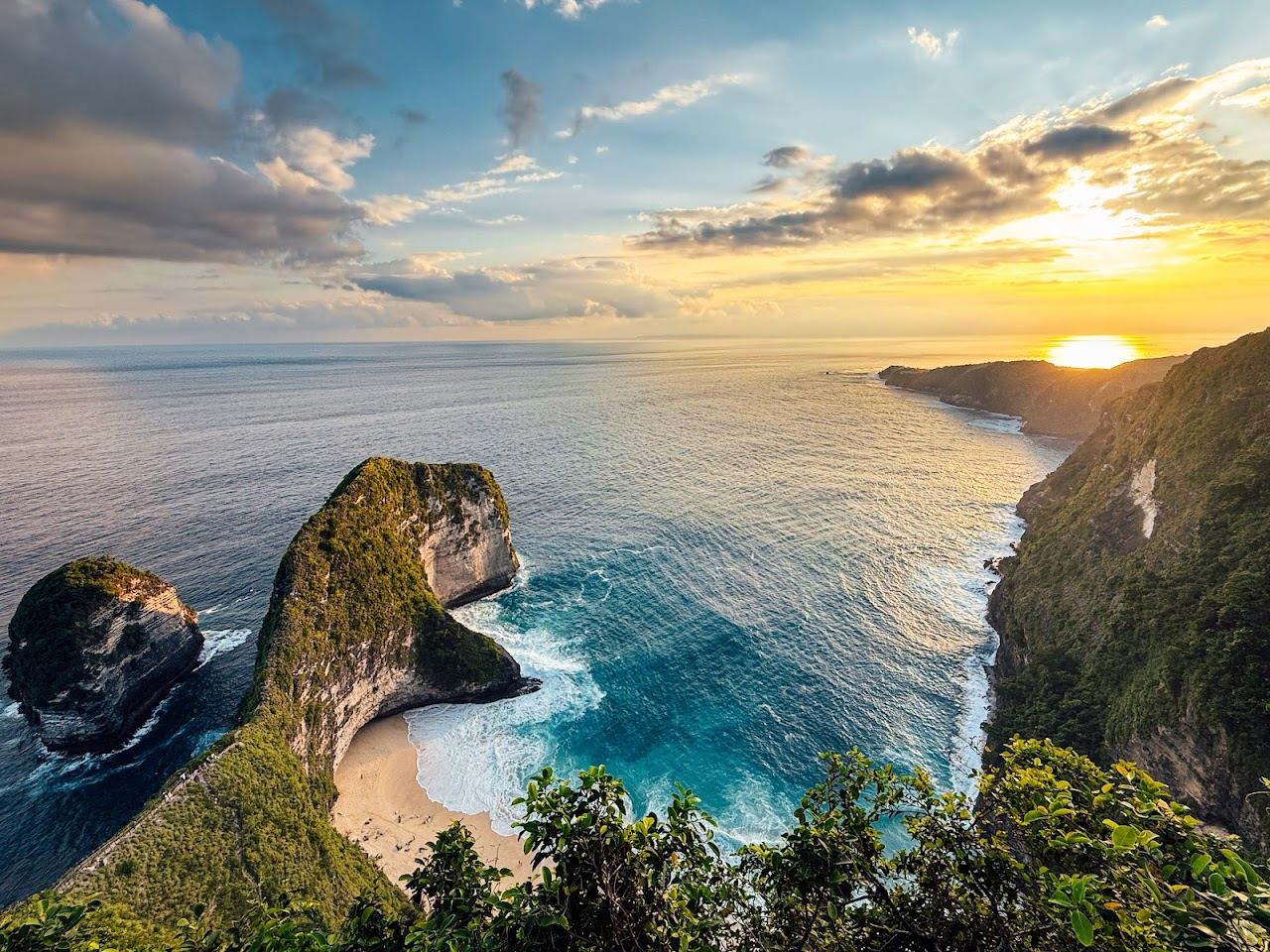
 Photo: Stephen Stewart via Google
When to go to Nusa Penida
A month by month read on the dry and wet seasons, the Bali crossing, the warm sea and the crowds, so you time the cliffs right.
The verdict
- Best forTravellers deciding which month gives them dry weather, calm crossings and the famous viewpoints without the worst of the queues, on Nusa Penida.
- Top pickApril into May or September into October for dry season weather with fewer people, or July and August if you want the buzz and do not mind the crowds.
- One thing to knowThe sea is warm all year, so the real variables are the rains, the wind on the Bali crossing and the crowds, not the water. Time the big viewpoints early or late in the day.
Published 3 February 2026. Last reviewed 20 February 2026
Nusa Penida keeps a simple two season rhythm, and once you read it the timing falls into place. The sea is warm every month of the year, so the water is never the question. What changes is the rain, the wind that ruffles the crossing from Bali, and above all the crowds that swing through the famous cliff viewpoints. Get those right and the island delivers its full drama.
The dry season runs from roughly April to October, with bright skies, the clearest underwater visibility and the calmest seas, peaking in July and August when day trippers pour over from Bali and Kelingking can have a queue for the photo. The wet season runs from November to March, greener, quieter and cheaper, with showers that tend to come in bursts rather than all day, and the odd rougher crossing.
If you take one line from this page, take this one. Aim for the shoulders of April into May or September into October for dry weather with room to breathe, come July and August if you want the high season buzz and accept the queues, and treat the wet season as the quiet, lush bargain for a flexible traveller who plans around the bright mornings.
Month by month at a glance
| Month | Air | Sea | Rain | Crowd | Verdict |
|---|---|---|---|---|---|
| January | Hot, around 30C | Warm, near 29C | Wettest | Quiet | Green and cheap, plan around showers |
| February | Hot, around 30C | Warm, near 29C | Wet | Quiet | Lush, fewer crowds, brief downpours |
| March | Hot, around 31C | Warm, near 29C | Easing | Quiet | Rains fading, good value |
| April | Hot, around 31C | Warm, near 29C | Mostly dry | Building | Dry season starts, sweet spot |
| May | Hot, around 30C | Warm, near 28C | Dry | Building | Clear water, calm and uncrowded |
| June | Warm, around 29C | Warm, near 28C | Dry | Busy | Reliable sun, wind picking up |
| July | Warm, around 28C | Warm, near 28C | Dry | Peak | Busiest, clear seas, choppy crossing |
| August | Warm, around 28C | Warm, near 28C | Dry | Peak | Full high season, queues at viewpoints |
| September | Warm, around 29C | Warm, near 28C | Dry | Easing | Dry and calmer, the quiet favourite |
| October | Hot, around 30C | Warm, near 29C | Dry turning | Quiet | Warm, clear, room on the cliffs |
| November | Hot, around 31C | Warm, near 29C | Rains return | Quiet | Green again, fewer people |
| December | Hot, around 30C | Warm, near 29C | Wet | Festive uptick | Lush and humid, holiday bump |
When each month earns its place
April and May. The bright opening of the dry season and a value sweet spot. The rains have cleared, the island is still green, the sea is clear for snorkelling and the crossings are calm, yet the big July crowds have not landed. You get warm sunny days, easy mornings at Kelingking and Crystal Bay, and softer prices than the peak. For a first trip, this is the easy yes.
July and August. The high season at full tilt. The weather is at its driest and the water its clearest, but this is also when Bali empties towards the island and the famous viewpoints fill, with a queue for the Kelingking photo and a livelier scene everywhere. The wind tends to pick up too, so the crossing can be choppier. Come for the buzz, book ahead, and beat the day trippers by going early or late.
September and October. The quiet favourite. Still firmly in the dry season with warm clear seas and reliable sun, but the peak crowds have thinned, so the cliffs and bays feel more like your own. Underwater visibility is excellent and the island exhales after August. For dry weather with calm and space in one trip, late dry season is hard to beat.
January and February. The wet season low. It is greenest, quietest and cheapest now, and the rain often falls in short bursts with bright spells around it. The honest trade is heavier showers, the chance of a rougher crossing and steep roads that turn slippery after rain, conditions to be confirmed locally. It rewards a flexible, easy going traveller who builds the day around the dry mornings.
Get the Nusa Penida beach calendar
Independent and honest · 1,340 beaches ranked across 103 destinations · We answer to no resort
Before you go
What is the best month to visit Nusa Penida?
The shoulders of April into May and September into October are the sweet spot, with dry season weather, calmer crossings and noticeably fewer people than the July and August peak. The dry season runs roughly April to October and is the easy answer for reliable sun and clear water. The shoulders simply give you that with more room at the famous viewpoints.
Is the sea warm enough to swim year round in Nusa Penida?
Yes. This is the tropics, so the sea stays warm all year, typically around 28C to 29C, and water temperature is never the reason to pick a month. What changes is the swell, the wind and the visibility, which are best in the dry season. Currents at the cliff beaches can be strong and conditions vary by day and are typical rather than guaranteed, so check locally and pick calmer bays for swimming.
When is the boat crossing from Bali roughest?
The channel between Bali and Nusa Penida can get choppy when the wind picks up around the middle of the year, so if you are prone to seasickness aim for the calmer mornings and the shoulder months, and choose a larger fast boat. The wet season can also bring rougher days. Crossing conditions vary daily and are weather dependent, so build in a little flexibility.
How do you avoid the crowds at Kelingking Beach?
Kelingking is the most photographed and most crowded spot on the island, with queues at the viewpoint in high season. The reliable trick is timing, not season. Arrive early in the morning or late in the afternoon when the day trippers from Bali have gone, and save the busiest viewpoints for outside the roughly 10am to 4pm window. The shoulder months thin the crowds further.
When can you see manta rays and Mola Mola around Nusa Penida?
Manta rays are seen at the dedicated manta sites through much of the year, while the larger Mola Mola sunfish are most associated with roughly July to October when cooler water rises. Both are wildlife and sightings are typical rather than guaranteed. The dry season also brings the clearest underwater visibility, so it doubles as the best window for snorkelling and diving.
Is the wet season a bad time to visit Nusa Penida?
Not necessarily. The wet season from November to March brings fewer visitors, lower prices and a lush green island, and it rarely rains all day, with many bright calm mornings. The trade is heavier showers, the odd rougher crossing and steep roads that can be slippery after rain, conditions to be confirmed locally. It suits a flexible traveller who plans around the mornings.