Phi Phi Islands, Krabi
The verdict
- Best for: Couples and beach lovers who stay overnight to catch the islands in their quiet hours, and who want the drama of the limestone with the option of a snorkel and a sunset hike.
- Best spot: Long Beach for the calm swim and snorkel, the Phi Phi viewpoint for sunset over the twin bays, then a late table once the daytrippers have gone.
- Know this: The islands are no secret and the middle of the day is loud and packed. Day trippers leave flat. The reward is for those who sleep here and own the early light.
Published 30 January 2026. Last reviewed 3 June 2026
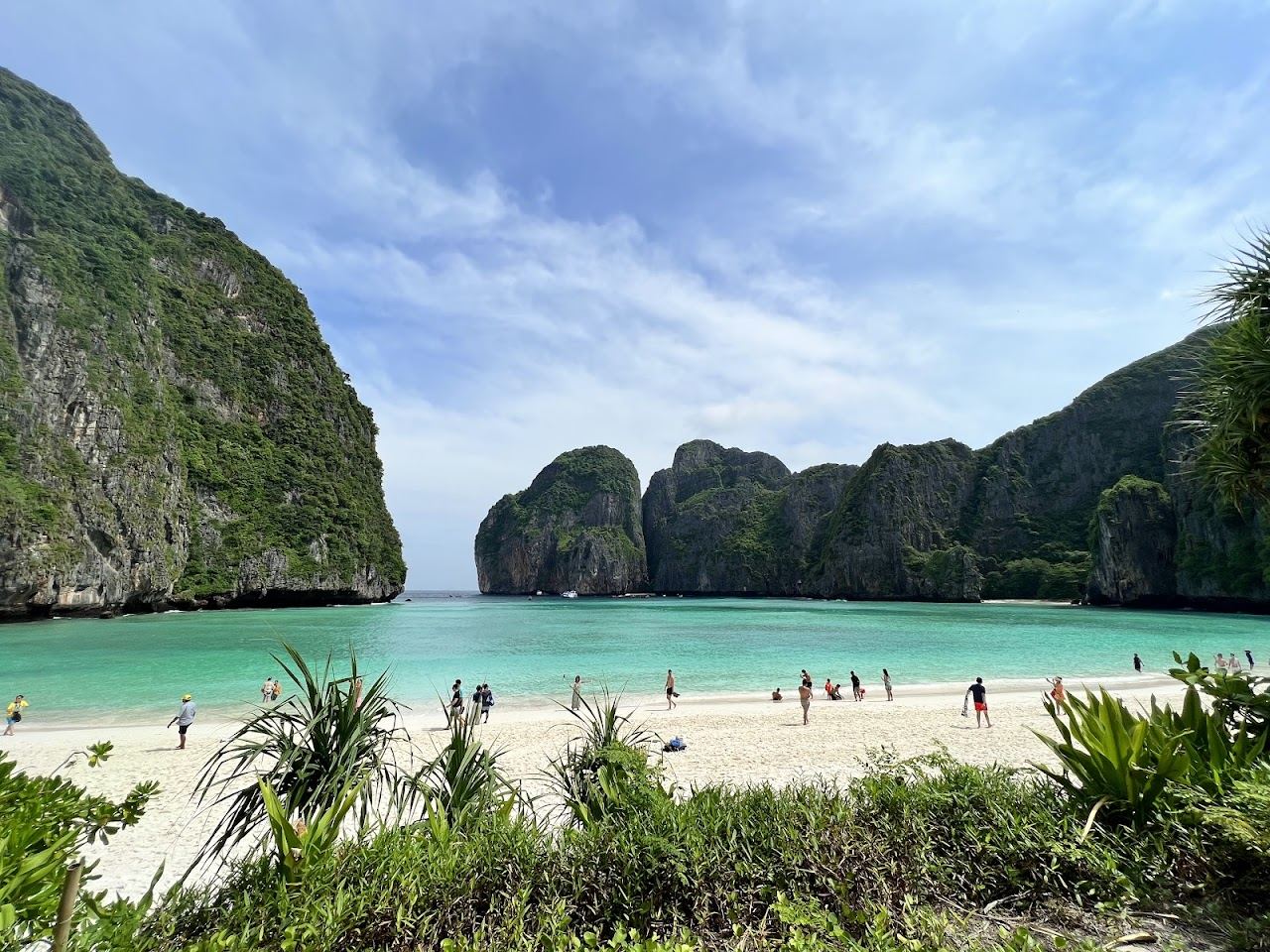
Phi Phi is the postcard that launched a thousand boat tours, and the honest truth is that the postcard is real but you have to work for it. The islands are a cluster of limestone giants rising sheer from impossibly clear water, and the most famous view of all, the twin bays of Phi Phi Don pinched together at a slender waist of sand, is every bit as breathtaking as the photographs promise. The catch is timing. From late morning the ferries and speedboats unload in waves, the village behind Tonsai jams, and Loh Dalum fills with daytrippers and the thump of beach bars warming up. Arrive on a day boat, see it at its busiest, and you leave wondering what the fuss was about.
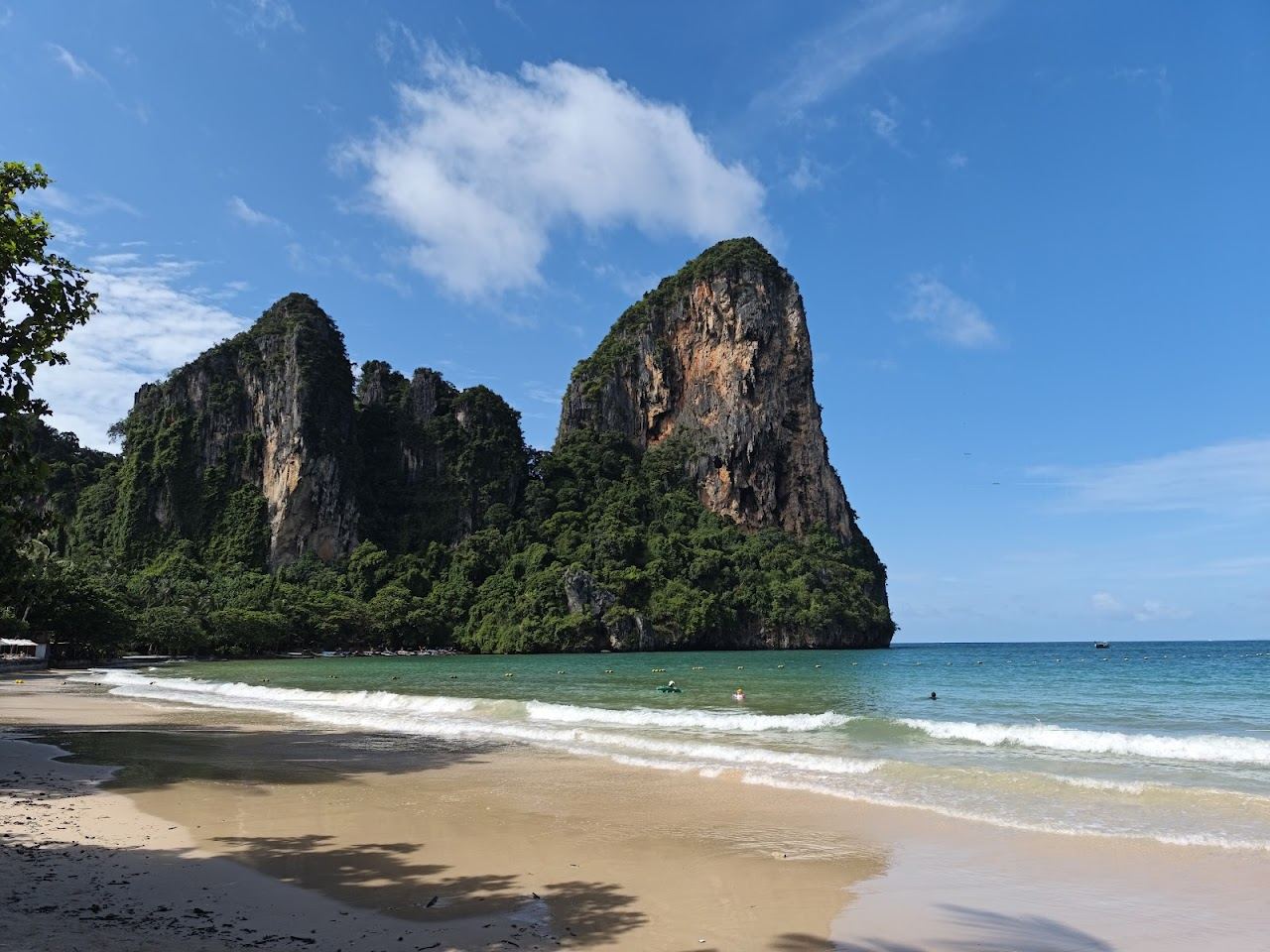
So we treat Phi Phi the way it rewards, as a place to stay rather than to sample. Know your bays before you come. Loh Dalum is the wide, shallow, sociable bay that turns to a mud flat at low tide and becomes the party after dark, beautiful at high water and best admired then. Tonsai is the working bay where the ferries land, handsome at the cliff end but busy with boats. The quiet one, the one couples should walk to, is Long Beach on the south shore, a soft white strip with the calmest water and the best snorkelling, a gentle half hour path or a short longtail ride from the village. And do not confuse any of this with Maya Bay, which sits on the separate uninhabited island of Phi Phi Leh and has its own rules and its own guide.
The magic of Phi Phi lives at the edges of the day. Climb to the viewpoint for sunset, when the light pours gold into both bays and the crowds have mostly sailed home, and you understand the fame at last. Wake early and the sand is yours. Stay a night or two, swim off Long Beach before the boats arrive, take a late dinner when the island exhales, and the Phi Phi that disappointed the daytripper will quietly steal your heart.
Where to settle in
Phi Phi is about the beach bar and the sunset hike rather than the polished daybed. For the wider coast, see our Krabi beach clubs directory for every venue on the mainland.
Long Beach bars, Phi Phi Don
The south shore resorts and their relaxed beach bars are the calm counterpoint to the village, a place to take a sundowner over the quiet end of the island with the snorkelling reef a few steps away. Romantic and unhurried, reached on foot or by longtail, this is where couples should claim a seat for golden hour. The setting does the work.
Loh Dalum beach bars
The wide bay behind the village is the island's nightlife, all fire shows, buckets and music once the sun is down, lively rather than refined and best taken in that spirit. Lovely at high tide in the afternoon for a swim and a drink, it is the social heart of Phi Phi and the opposite of a quiet table for two. Know which mood you are in.
Ao Nang clubs, on the mainland
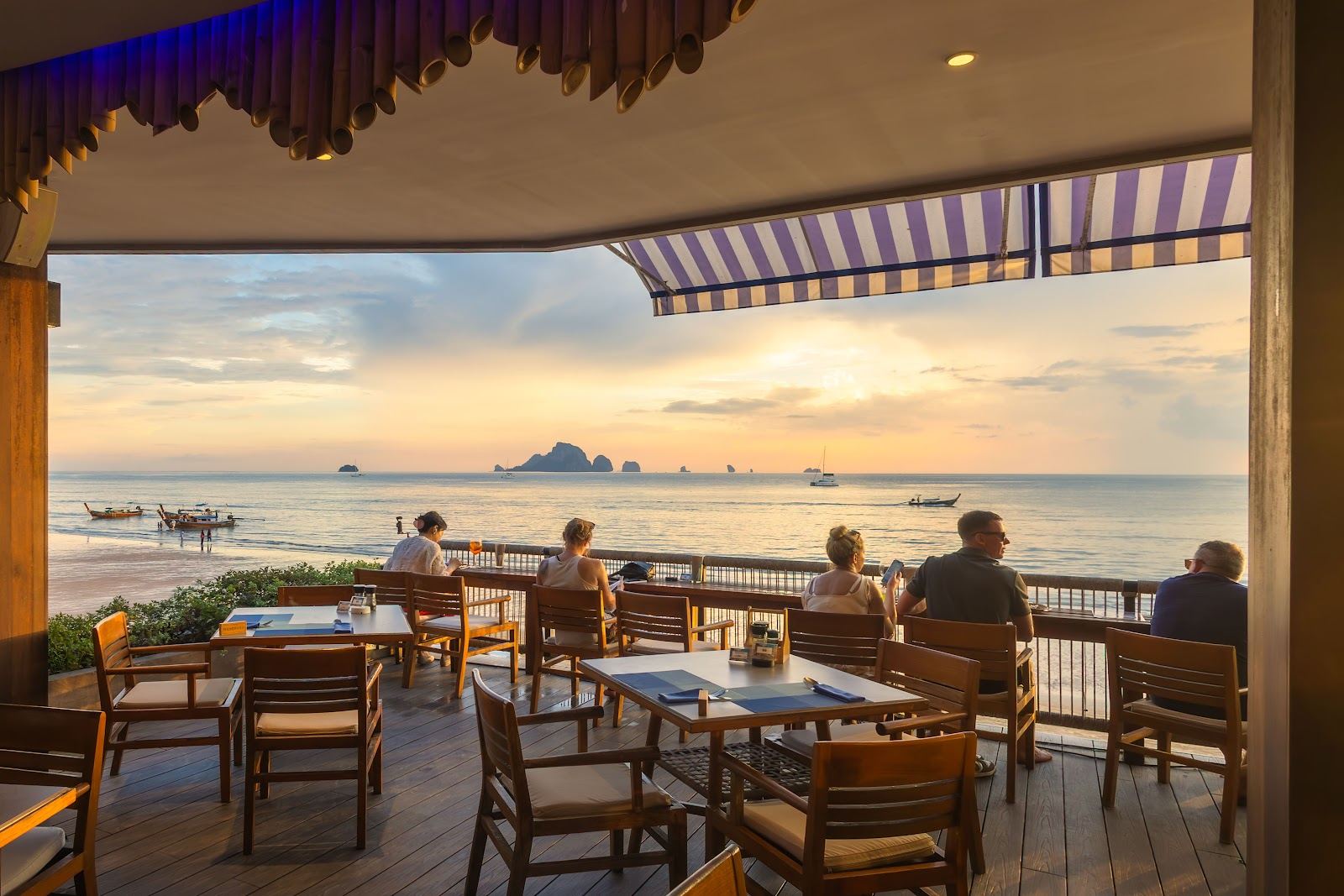
For the polished daybed and the slick sunset session, the mainland beach clubs sit back across the water on Ao Nang, with Reeve and Katara leading the scene. Pair your Phi Phi nights with an Ao Nang evening on the way in or out, and you get both the wild island and the easy lounger. The best of two moods of this coast.
The Phi Phi islands lie off the Andaman coast of Krabi, reached by scheduled ferry from Krabi town or from Ao Nang to Tonsai pier on Phi Phi Don, a crossing of roughly ninety minutes to two hours depending on the boat and the sea. Speedboat day tours run faster but pack the islands at their busiest. There are no cars on Phi Phi, so you walk or take a longtail between the bays, and a porter trolley handles luggage from the pier. Book your ferry both ways in high season and keep some cash for fares and the small pier fees.
Go in the dry season from November to April for the calmest crossing and the clearest water, and plan your beach hours for the early morning and the late afternoon when the daytrippers have gone. Bring reef safe sun cover, water shoes for the rocky entries and a torch for the unlit paths at night. Thailand asks for modest dress away from the sand, so cover up in the village, swim within your depth, mind the boat traffic in the bays, and treat the conditions and the timetable here as typical and never guaranteed.
Not ready to book?
Keep the good shorelines coming. Shore Notes is our occasional letter on the best beaches and the clubs worth your day, sent straight to your inbox. One field, unsubscribe any time.
Plan your day on the coast
Pair your Phi Phi nights with a sunset club back on the mainland at Ao Nang. Tell us your date and party and we will point you to the right spot for two. No obligation, and we reply within 24 hours.
Independent and honest · 1,340 beaches ranked across 103 destinations · We answer to no resort
Common questions
Which Phi Phi beach is best for swimming?
Long Beach, known locally as Haad Yao, is the pick for a real swim and a snorkel, a powdery white strip on the south of Phi Phi Don with clear water and far less noise than the main bays. Loh Dalum is calm and shallow inside its bay and lovely at high tide, but it turns to a wide mud flat at low tide and becomes the party strip after dark. For quiet sand and good water, choose Long Beach and go early.
Is Phi Phi the same as Maya Bay?
No, they are different islands. Maya Bay sits on Phi Phi Leh, the smaller uninhabited island, and is a protected cove you visit by boat with a national park fee. The beaches in this guide are on Phi Phi Don, the inhabited island where the ferries land and where people stay. See our separate Maya Bay guide for that cove and its rules, and treat the two as a pair rather than one place.
How do you get to the Phi Phi islands from Krabi?
Scheduled ferries run from Krabi town and from Ao Nang to Tonsai pier on Phi Phi Don, taking roughly ninety minutes to two hours depending on the boat and the sea. Speedboat day tours are faster but busier. The crossing is smoothest in the dry season from November to April, and the green season can turn the Andaman rough, so treat the timetable as typical and never guaranteed.
Are the Phi Phi islands worth visiting or too crowded?
They are worth it if you time them well. By day the main village and Loh Dalum fill with tour groups and the magic thins, which is why day trippers often leave underwhelmed. The reward goes to those who stay a night or two, because the early mornings and the hour after the last ferries leave are quiet, golden and genuinely romantic. Sleep on the island, walk to Long Beach, and Phi Phi earns its fame.
When is the best time to visit Phi Phi for couples?
Come in the dry season from November to April for the calmest sea and clearest water, and within the day aim for sunrise or the late afternoon when the crowds drain back to their boats. Hike up to the Phi Phi viewpoint for sunset over the twin bays, then take a quiet dinner once the daytrippers have gone. The green season is cheaper and emptier but the crossing and the weather are less reliable.