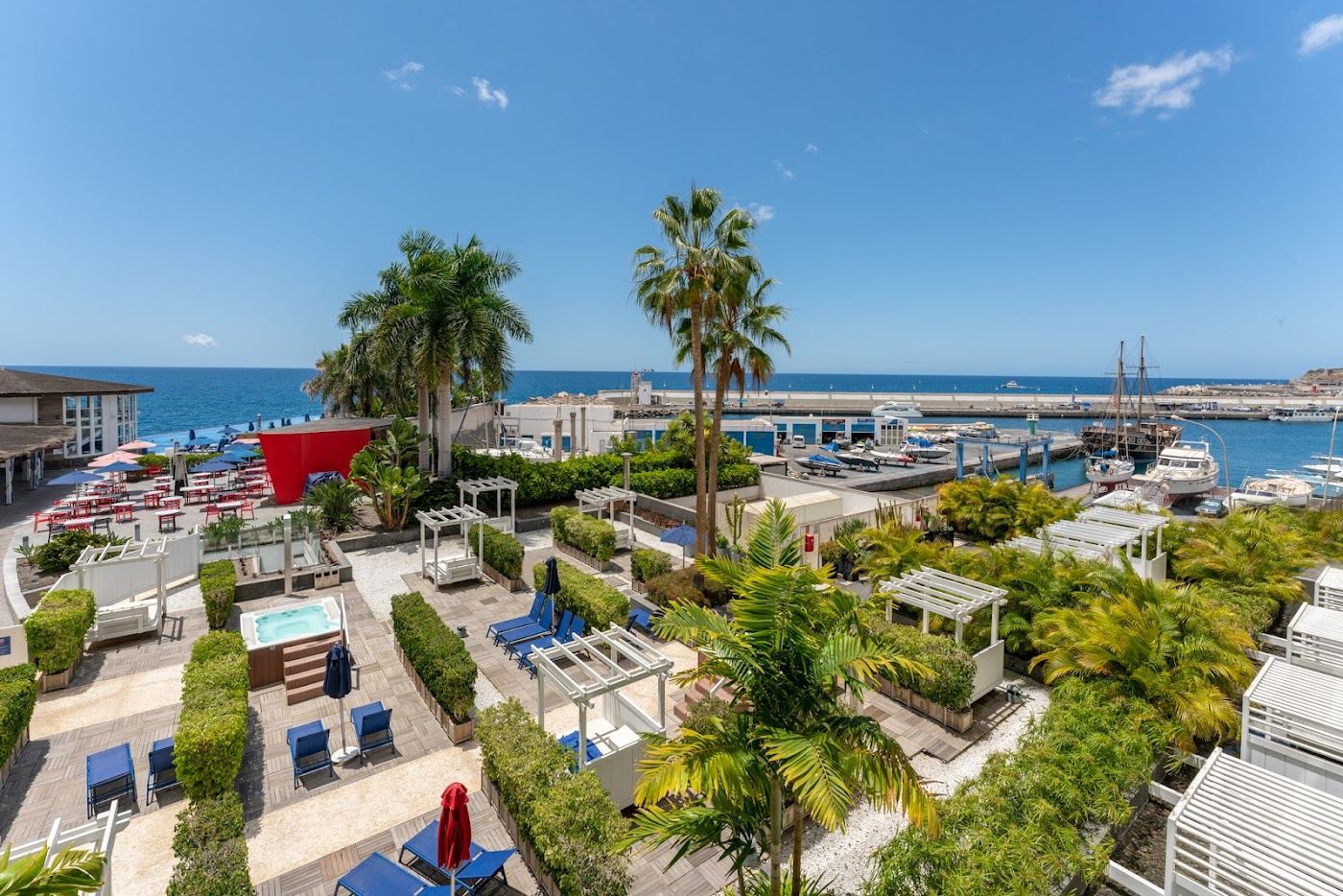
 Photo: Hotel Marina Suites via Google
The Best Beaches for Watersports
in Gran Canaria
From the marina scene at Puerto Rico to the surf at Las Canteras, ranked honestly.
The verdict
- Best forActive travellers and families who want sailing, diving, surf and paddle craft, with calm water to learn in and wind when they want it.
- Single best spotPuerto Rico for the broadest, best run marina scene, and the La Cicer end of Las Canteras for the capital's surf.
- One thing to knowCalm water and strong wind sit on different beaches here, so match the beach to the sport and check the daily conditions.
Published 11 April 2026. Last reviewed 27 May 2026
Gran Canaria reads like two coasts when it comes to the water. The sheltered south west bays are calm enough to learn in and busy with marina operators, while the open Atlantic beaches of the capital and the windward east turn the trade winds and the swell into a playground for surfers and wind chasers. Knowing which coast suits your sport is most of the battle won.
The active day on this island has a lovely rhythm to it, at least the way I like to do it. You take a morning lesson or a dive while the water is calmest, then come ashore to a marina or promenade lined with restaurants for a long fish lunch, the salt still in your hair. Below we rank the beaches on the range of activities, the quality of the operators, and how well the conditions suit each sport.
Ranked for watersports
Scored on the range of activities, the operators and gear on hand, and how the water and wind suit each sport.
Puerto Rico
The busiest, best run watersports hub on the island, with sailing, diving, jet skis, paddle boards, parasailing and deep sea fishing all booked from the marina. Calm sheltered water for beginners, plenty of operators, and marina restaurants for a fish lunch after.
Las Canteras
The city beach is two worlds in one. The northern end behind the reef is calm for snorkelling and paddling, while the La Cicer end picks up the swell and is the capital's home surf break, with board hire and a promenade of cafes between sessions.
Maspalomas
The open dune beach catches the trade winds, which makes its afternoons better for wind powered fun than for gentle swimming. Lively and breezy, it suits the active over the restful, with the calm bays nearby for when the wind gets up.
Anfi del Mar
The calm turquoise bay is gentle ground for learning, ideal for stand up paddle, snorkelling and easy kayaking, with operators on the sand. A kind place to try the water before graduating to the busier scene around Puerto Rico.
Playa del Ingles
The long resort beach that runs into the dunes is well stocked with operators for paddle craft, banana boats and lessons, and busy enough to feel sociable. Wide sand and full facilities make it a practical base for an active family day.
For sheer choice, Puerto Rico is the clear leader, a marina that books everything from diving to deep sea fishing in calm, beginner friendly water. Las Canteras splits neatly into a calm snorkelling end and the capital's home surf break at La Cicer, while Anfi del Mar is the gentlest place to take a first paddle lesson before stepping up to the busier scene.
The honest read is that the headline wind sports happen away from the resort beaches. The serious windsurfing is at Pozo Izquierdo on the east coast, a world tour venue with strong reliable trade winds for the experienced, and the best surf is on the northern swells rather than the sheltered south. Pick the beach for your sport, respect the wind and the flags, and the island gives active travellers a genuinely full and varied week on the water.
Book a beach club in Gran Canaria
Independent and honest · 1,340 beaches ranked across 103 destinations · We answer to no resort
Before you go
Where are the best watersports in Gran Canaria?
Puerto Rico is the main hub, with sailing, diving, jet skis, paddle boards, parasailing and deep sea fishing all run from its marina in calm sheltered water. For surfing, the La Cicer end of Las Canteras in the capital is the home break, while the windier open beaches such as Maspalomas suit wind powered sports. The best beach depends on the activity.
Where can you surf in Gran Canaria?
The capital is the surf centre, with the La Cicer end of Las Canteras the most accessible break and a string of reef and beach breaks along the north coast for the experienced. Conditions are best on the autumn and winter swells. The southern resort beaches are generally too sheltered for proper surf, so head north for the waves.
Is Gran Canaria good for windsurfing and kitesurfing?
Yes, the island is a serious wind sports destination, though the famous spot is Pozo Izquierdo on the east coast, which hosts world tour windsurfing thanks to its strong reliable trade winds. The open southern beaches such as Maspalomas also get breezy in the summer afternoons. These are conditions for the experienced, so beginners should start in the calm southern bays.
Can beginners try watersports here?
Easily. The calm sheltered bays of the south west, such as Anfi del Mar and Puerto Rico, are gentle ground for first lessons in paddle boarding, kayaking and snorkelling, with operators on hand. Puerto Rico in particular has the widest choice of schools and gear. Start in the calm water and move to the windier or surfier beaches as your confidence grows.
When is the best time for watersports in Gran Canaria?
It depends on the sport. The trade winds blow strongest from late spring through summer, which is prime time for windsurfing and kitesurfing, while the surf is best on the autumn and winter swells. For calm water activities such as diving and paddle boarding the sheltered southern bays work all year. Mornings are usually calmer than the breezy afternoons.