Baia dos Porcos
Best for. Snorkelers and walkers who want one of the most beautiful small coves in Brazil and do not mind a short rocky scramble and a tide table to reach it.
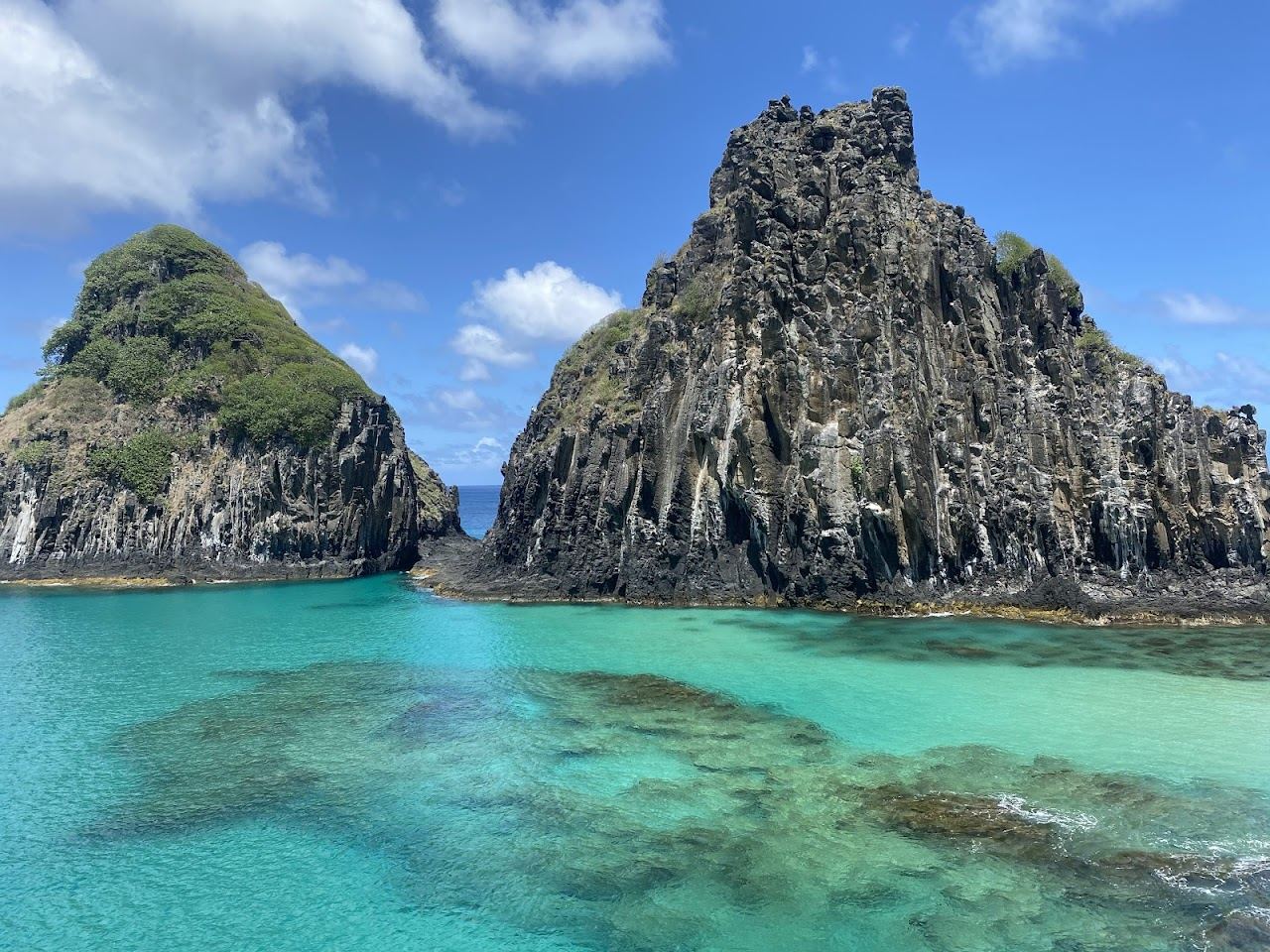
Best spot. The natural rock pools at low tide with a mask, with the twin peaks of Morro Dois Irmaos framing the water, ideally early before the cove fills.
Know this. There are no facilities here, the crossing needs low tide and a helmet, so bring water and plan around the tide.
Baia dos Porcos is the beach that lands on the front of every Fernando de Noronha brochure, and it earns the billing, but you should know what it actually is before you go. This is not a long sweep of sand with a bar at the back. It is a tiny beige cove, perhaps 100 metres of sand wedged into a wall of volcanic rock, with natural pools that form at low tide and the twin peaks of Morro Dois Irmaos rising just beyond. It is one of the most beautiful small coves in Brazil, and it is deliberately hard to reach, which is part of why it stays so unspoiled.
You earn it on foot. From the long Praia da Cacimba do Padre you walk to the end of the sand and scramble across a rocky headland for around 30 minutes, and the park staff hand you a helmet at the entrance because of loose rock. The crossing only works around low tide, so the whole visit has to be planned to the tide table. There are no facilities at the cove, no shade, no toilets and no vendors, so you carry in your own water and snorkel gear and carry out everything you bring. And because it is small and famous, it can feel crowded at peak times.
Play it to the tide and the light. Aim for a low tide early or late in the day, wear shoes with grip for the rocks, and get into the natural pools with a mask while the water is glassy and the fish are in close. Turtles and rays pass through when it is calm, and dolphins are sometimes visible offshore. Then sit for a while under the Dois Irmaos view before you cross back. On the food and culture side, Noronha keeps its eating in the little town of Vila dos Remedios, so treat this as a pure nature morning and save lunch for the village afterwards.
A protected cove, not a club
Baia dos Porcos sits inside a marine national park with no club, bar or lounger on the sand. Noronha keeps its dining and drinks up in the village, not on its protected beaches.
There is no beach club here and there never will be, because this is a strictly protected cove in a marine national park where the rules exist to keep the water and the wildlife as they are. That is the whole point of Noronha. The island keeps its restaurants, pousada bars and sunset drinks up in Vila dos Remedios and around the main beaches, not on the wild coves, so you treat Baia dos Porcos as a nature and snorkeling stop and take your food and drink back in town. Our Fernando de Noronha guide points you to where the island does its eating and its sunset scene.
On foot at low tide
Baia dos Porcos sits on the main island beach coast between Praia do Sancho and Praia da Cacimba do Padre. You reach it on foot from the end of Cacimba do Padre, crossing a rocky headland that takes around 30 minutes over uneven ground and is only passable around low tide. Park staff issue a helmet at the entrance, so plan the visit to the tide table.
Bring water, sun cover and snorkel gear, since there are no facilities at the cove, and wear shoes with grip for the rocks. Budget for the daily environmental tax and the national park fee that Noronha charges, carry out all your rubbish, and only enter the water when it is calm. Save your meal for Vila dos Remedios before or after the walk.
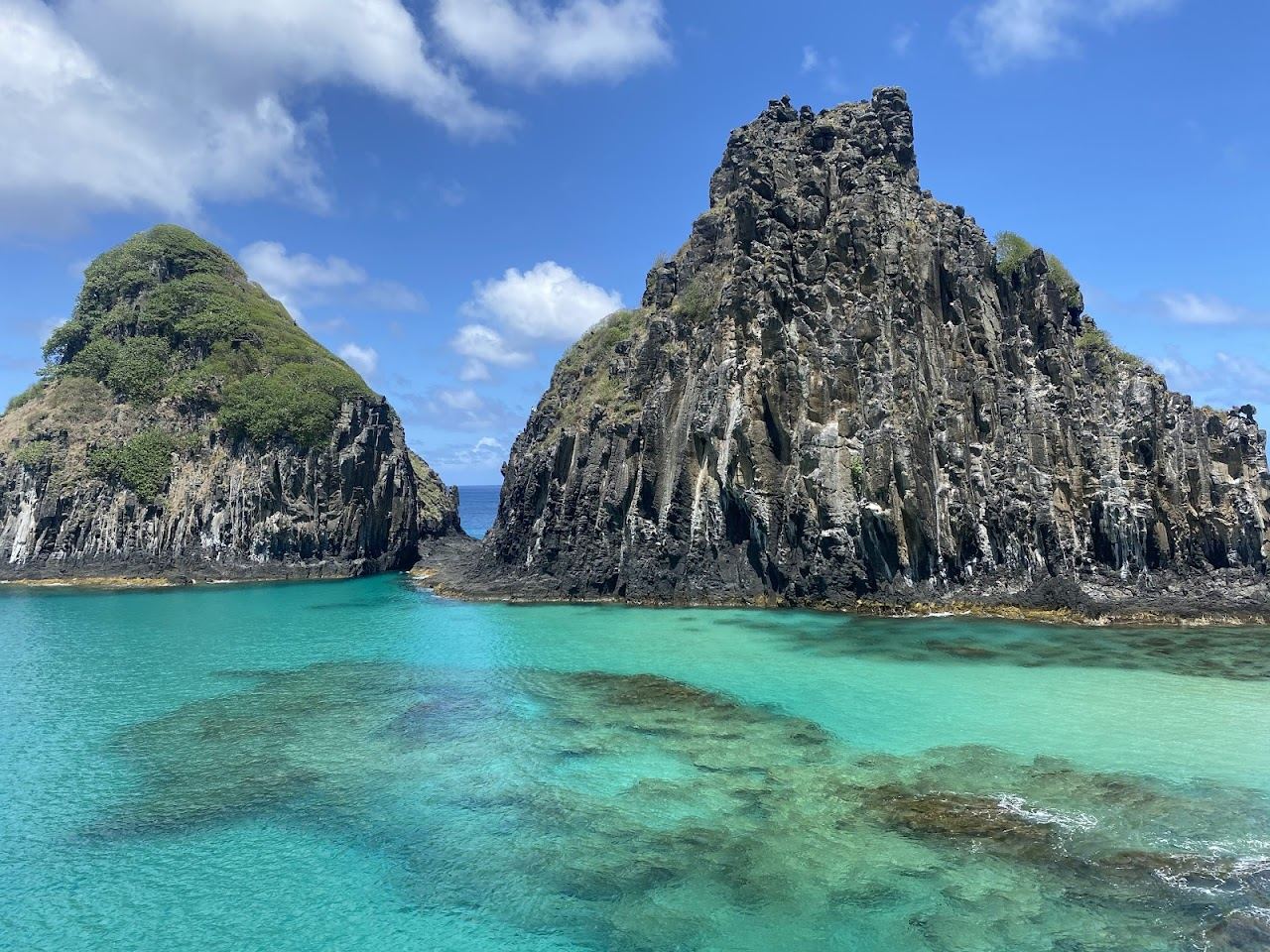 Photo: Marcela Mihessen via Google
Not ready to book?
Keep the good shorelines coming. Shore Notes is our occasional letter on the best beaches and the clubs worth your day, sent straight to your inbox. One field, unsubscribe any time.
Book a beach club
Baia dos Porcos is a protected cove with no club, but tell us your dates and party size and we will help arrange a table or a boat day around Fernando de Noronha. We reply by email.
Independent and honest · 1,340 beaches ranked across 103 destinations · We answer to no resort
We are an independent editorial resource. Booking requests are passed to clubs and operators, and some may earn us a commission at no cost to you. Prices, availability and opening status are set by the venue and are to be confirmed at the time of booking.
Common questions about Baia dos Porcos
How do you get to Baia dos Porcos?
You reach Baia dos Porcos on foot, not by road. From the long Praia da Cacimba do Padre you walk to the end of the sand and cross a rocky headland to the little cove, which takes around 30 minutes over uneven ground. The crossing is only possible around low tide, so plan your visit to the tide table and check locally before you set out.
Do you need a helmet at Baia dos Porcos?
Yes, the national park staff at the entrance require you to wear a helmet for the rocky headland crossing because of the risk of loose rock, and they provide it. It is a short but genuinely uneven scramble, so wear shoes with grip rather than flip flops, take care on the rocks and go slowly. It is worth the small effort for the cove at the end.
Is Baia dos Porcos good for snorkeling?
It is one of the best snorkeling spots on Fernando de Noronha. When the sea is calm, the clear water and the rock pools that form at low tide teem with fish, and you may see rays and turtles, with dolphins sometimes visible offshore. There are no facilities, so bring your own mask and fins, snorkel with care over the rocks and only enter when conditions are settled.
What makes Baia dos Porcos special?
It is a tiny beige sand cove framed by dramatic rocks, with natural pools at low tide and the classic view of the twin peaks of Morro Dois Irmaos, one of the most photographed scenes in Brazil. It is small and can feel busy at peak times, so it rewards an early or late visit around the tide rather than the middle of the day.
When is the best time to visit Baia dos Porcos?
The calmer, sunnier months of November to February tend to bring the best conditions for the crossing and the snorkeling, with clear settled water. Whatever the month, aim your visit at low tide, since that is when you can cross to the cove and when the rock pools form. Fernando de Noronha also charges a daily environmental tax and a national park fee, so budget for those.