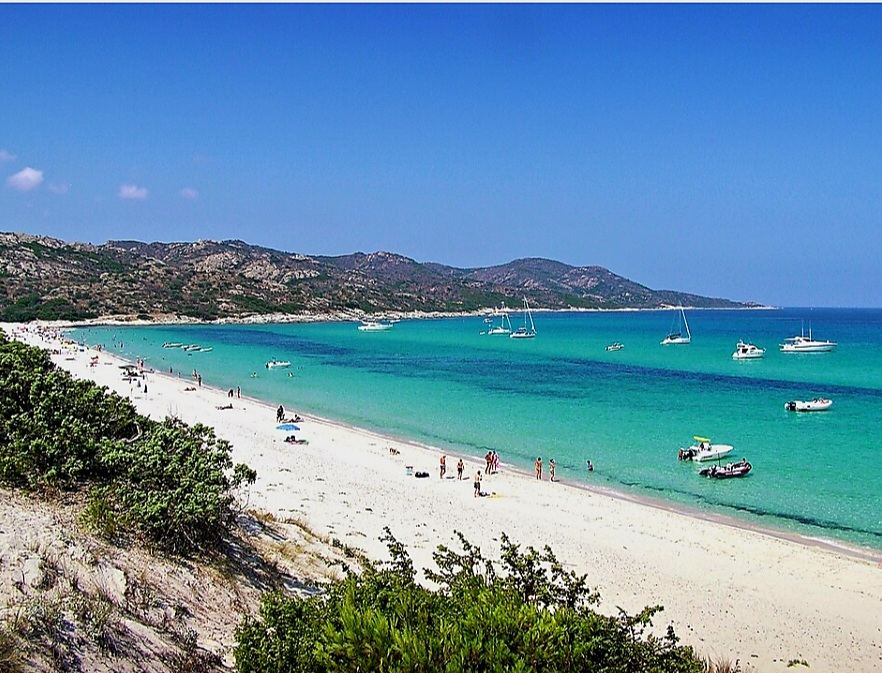
 Photo: Jean pierre BIrbes via Google
The verdict
- Best forTravellers chasing genuinely white sand and clear water who do not mind a track or a boat
- Top pickSaleccia in the Agriates, a wild white sand strand reached by boat or rough track with no resort
- One thing to knowCorsica's white sand is real and often hard won, so the wildest beaches ask for a boat or a long track
Published 2 February 2026. Last reviewed 29 May 2026
Corsica is the island the French Riviera wishes it were. Where the mainland coast turns to pebble, this granite mountain in the sea gives you long strands of genuinely white sand, water that grades from clear shallow turquoise to deep blue, and a backcountry of macchia scrub and pine that keeps many of the best beaches wild. It is, without exaggeration, one of the finest white sand coasts in the whole Mediterranean.
The island's geology does the work. Granite and quartz break down into a pale, almost dazzling sand, and the relative lack of heavy development on much of the coast means the beaches keep their dunes, their juniper fringe and their birdlife. For a naturalist, the joy of Corsica is that the white sand and the wild setting still come together, especially in the protected Agriates desert in the north.
We have ranked these on the brightness of the sand and how wild the beach remains. The wildest and whitest, like Saleccia and Lotu, are reached by boat or a long rough track and have no resort behind them at all, while the famous southern beaches near Porto Vecchio are easier to reach and pay for it with summer crowds. The trade between access and solitude runs right through this list.
The whitest sand in Corsica
Judged on the brilliance of the sand, the clarity of the water and how wild the beach still feels.
Saleccia
The island's wild masterpiece, a long strand of brilliant white sand and clear turquoise water inside the protected Agriates desert, reached by boat or a rough track that keeps it almost empty. There is no resort, only dune, juniper and sea. Bring everything you need and leave only footprints.
Rondinara
A near perfect horseshoe bay of white sand and shallow turquoise water between two headlands in the south. It is sheltered, shallow and beautiful, and busy in high summer for good reason. Come early or out of peak season and the bay is as calm and clear as a lagoon.
Palombaggia
The poster beach of the south, a stretch of pale sand and clear water fringed by umbrella pines and red granite rock near Porto Vecchio. It is stunning and very popular, so the early hours and the quieter ends are where the magic holds. Easy to reach, which is both its gift and its cost.
Santa Giulia
A shallow white sand bay south of Porto Vecchio with warm, clear, almost lagoon like water that suits a slow swim. It is sheltered and family friendly and busy in summer. Bright and easy, it rewards the early arrival before the day boats and the beach clubs fill the bay.
Lotu
Saleccia's quieter neighbour in the Agriates, a white sand cove reached by boat from Saint Florent or a walk along the coast path, with clear shallow water and a lagoon behind full of birdlife. Wild, pale and calm, it pairs perfectly with Saleccia on a boat day. Carry your own water and shade.
Petit Sperone
A small jewel of white sand and clear shallow water at the island's southern tip near Bonifacio, tucked beside a golf course and reached on foot. It is sheltered and bright with a real end of the island feel. Quieter than the headline beaches and worth the short walk in.
Real white sand, and worth the effort to reach it
The good news is simple and genuine. Corsica's white sand is the real thing, as bright and clear as anywhere in the Mediterranean, and the island delivers it without the caveats the mainland Riviera needs. The granite geology gives the sand its paleness, and the limited development on much of the coast keeps the beaches wild in a way that is increasingly rare.
The honest catch is access rather than colour. The very best and wildest beaches, Saleccia and Lotu in the Agriates, are reached by boat from Saint Florent or a long rough track that is hard on a normal car, and they have no facilities at all. That difficulty is exactly what keeps them empty and pristine, so treat it as the price of solitude rather than a problem to solve.
If you want white sand with easy access, the southern beaches near Porto Vecchio like Palombaggia, Santa Giulia and Rondinara deliver it, at the cost of real summer crowds. Wherever you go, carry your water, keep off the dunes and take your litter home, because the wild Corsica that makes the white sand so special only stays that way if visitors tread lightly.
Clubs near the white sand
The beach club scene clusters on the easier southern beaches near Porto Vecchio, where Palombaggia and Santa Giulia carry loungers, restaurants and day boats, while the wild Agriates strands keep things to nothing at all by design. On the busier southern bays a club day can be the most comfortable way to enjoy the white sand. For who runs what and where a booking is worth making, see our Corsica beach clubs directory, and we will check a date for you.
Book a white sand day in Corsica
Independent and honest · 1,340 beaches ranked across 103 destinations · We answer to no resort
Before you go
Which Corsica beach has the whitest sand?
Saleccia in the protected Agriates desert is the island's wildest and whitest, a long strand of brilliant pale sand and turquoise water with no development at all. Rondinara, Palombaggia and Lotu are close behind, all genuinely white thanks to the island's granite geology.
How do I reach the wild Agriates beaches?
Saleccia and Lotu are reached by boat from Saint Florent, by the coastal walking path, or by a long rough track that is hard on a normal car. There are no facilities, so carry your own water, food and shade. The difficulty is exactly why these beaches stay so empty and pristine.
Which white sand beaches are easiest to reach?
The southern beaches near Porto Vecchio, Palombaggia, Santa Giulia and Rondinara, are reachable by road and have the most facilities, which also means the biggest summer crowds. Arrive early or visit out of peak season to enjoy the white sand at its calmest.
Are Corsica's white sand beaches good for families?
Several are excellent, with Santa Giulia and Rondinara offering shallow, warm, clear water that suits children. Conditions are typical rather than guaranteed, so read the water and any flags. The wild Agriates beaches carry no facilities, so plan carefully if you bring young children.
When is the best time to visit Corsica for white sand?
Late spring and early autumn give bright sand and clear water with far thinner crowds than July and August, when the famous southern beaches fill fast. The sea is warmest in late summer and early autumn, so September is a fine balance of warm water and calmer beaches.