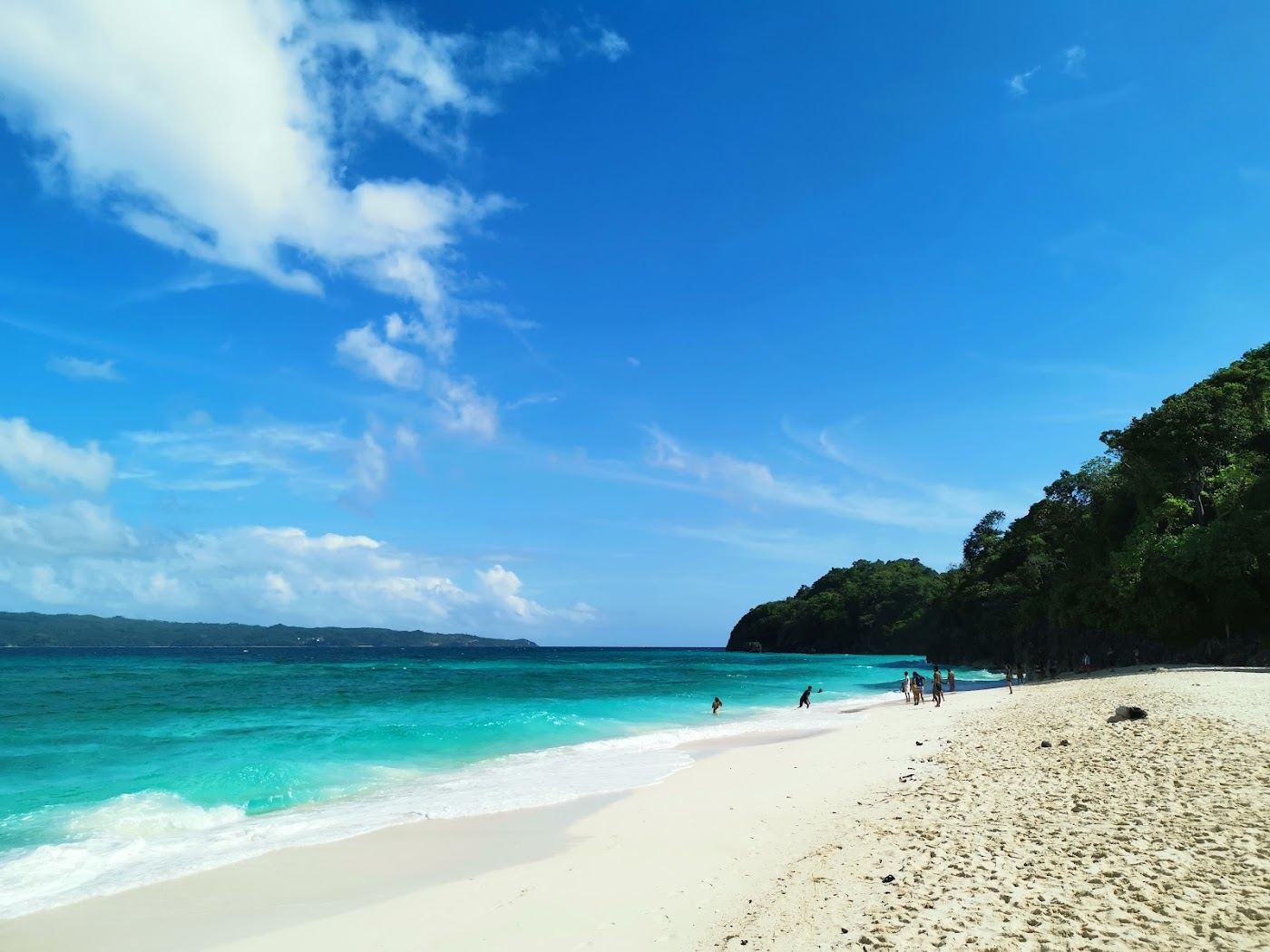
Puka Beach
The honest short answer
Published 11 April 2026. Last reviewed 8 May 2026. Conditions described are typical and never guaranteed.
Puka Beach is what many people picture when they imagine a wilder Boracay, the island before the strip filled up. It sits at the northern tip, a long curve of bright white sand backed by trees rather than bars, and the water is some of the clearest you will find here. After the wall to wall energy of White Beach it feels like a release, and that is exactly why we send families who want space and quiet rather than shops and crowds.
The practical thing to understand is the sand and the sea, because they are not the same as White Beach. The sand is named for the puka shells worked into it, so it is whiter but coarser, with tiny shell and coral pieces that some children find sharp underfoot. A cheap pair of water shoes solves that and makes the day easier. More importantly, the seabed here shelves away faster and the beach faces open sea to the north, so the water is often livelier, with real waves on a breezy day. That is fun for confident older children and a reason to stay close with little ones.
Now the honest part. Puka is beautiful but it is not the gentle paddling pool that the calmer stretches of White Beach can be, and there is no reliable lifeguard, so it asks more of you as a parent. Facilities are deliberately thin. There is a small cluster of stalls near the entrance selling drinks, grilled food and the famous puka shell trinkets, plus a few loungers and umbrellas to rent, but the rest of the strip is bare. If you plan to stay for hours, bring water, sun cover and snacks rather than counting on finding them along the sand.
Who should come here: families with school age children, couples, and anyone happy to trade facilities for natural calm and clear water. Who should think twice: parents of toddlers chasing the gentlest possible entry, who will be more relaxed at the wide Station 1 end of White Beach, and anyone visiting in the windy wet months when the northern swell builds. Come early in the dry season, claim a patch of shade, and Puka rewards you with the quiet, clear water Boracay is supposed to have.
Clubs on and near the sand
Puka is a natural beach with simple local stalls rather than beach clubs. For a bookable lounge day, base yourself on White Beach and use the Boracay club directory.
- Local stalls near the entranceA small cluster of family run eateries and stalls at the northern entrance sells drinks, grilled food and souvenirs, with a few loungers and umbrellas for hire. The simplest way to base a day here. Prices and opening hours to be confirmed on the day.
- No club on the sandThere are no daybed beach clubs along Puka itself, which is much of its appeal. If you want a structured club day with service and shade, plan it on White Beach and treat Puka as a quiet morning trip.
- Free public sandThe beach is free public space, so many visitors simply spread a mat near the trees for shade and rent a lounger from a stall. Bring your own water and sun cover for the undeveloped middle of the strip.
Puka Beach is at the northern tip of the island, roughly a twenty minute tricycle ride from the White Beach stations along the main road. Tricycles wait at the entrance for the return, so you are rarely stuck, but agree the fare before you set off and allow extra time in the busy season. Many island hopping boat tours also stop here, which is a pleasant way to arrive if the sea is calm, though it gives you less control over your timing.
For a family day, the essentials are simple. Come early in the dry season when the water is calmest and the entrance stalls are quiet, and head straight for a patch of natural shade under the trees, since the open sand offers little cover by midday. Bring water, sun protection and snacks, pack water shoes for the shell sand, and keep children within their depth on the steeper shelf. Leave by early afternoon if the wind picks up, and you will have caught Puka at its gentle best.
Not ready to book?
Keep the good shorelines coming. Shore Notes is our occasional letter on the best beaches and the clubs worth your day, sent straight to your inbox. One field, unsubscribe any time.
Reserve a day in Boracay
Tell us the day and the party, and we will match you to a beachfront or resort lounge in Boracay and pass your request straight to the team.
Independent and honest · 1,340 beaches ranked across 103 destinations · We answer to no resort
Is Puka Beach Boracay good for young children?
It is lovely but less gentle than White Beach. The shell sand is coarser underfoot, the seabed drops away more quickly and the water is often livelier, so it suits older children who swim confidently more than toddlers. Visit in the calm morning hours of the dry season, keep little ones at the edge, and read the sea yourself rather than assuming a safe swim.
Why is the sand on Puka Beach different?
Puka Beach is named for the small puka shells mixed through it, so the sand is whiter and coarser than the fine powder of White Beach, with tiny shell and coral fragments underfoot. Many families bring water shoes for comfort, and the grainier sand drains well and stays firm for walking.
Are there restaurants and facilities at Puka Beach?
There is a small cluster of local stalls and simple eateries near the entrance selling drinks, snacks and grilled food, plus some loungers and umbrellas for hire, with prices to be confirmed on the day. Facilities are limited along the rest of the strip, so bring water, shade and anything the children need if you plan to stay for hours.
How do you get to Puka Beach from White Beach?
Puka Beach sits at the northern tip of Boracay, roughly a twenty minute tricycle ride from the White Beach stations along the main road. Tricycles wait at the entrance for the return trip. Agree the fare before you set off and allow extra time in the busy season.
When is the best time to visit Puka Beach?
The dry season from around December to May brings the calmest, clearest water and the easiest swimming, with early mornings the quietest and gentlest. The beach faces open sea to the north, so it can pick up wind and swell in the wet months, when the water is livelier and less suited to small children.