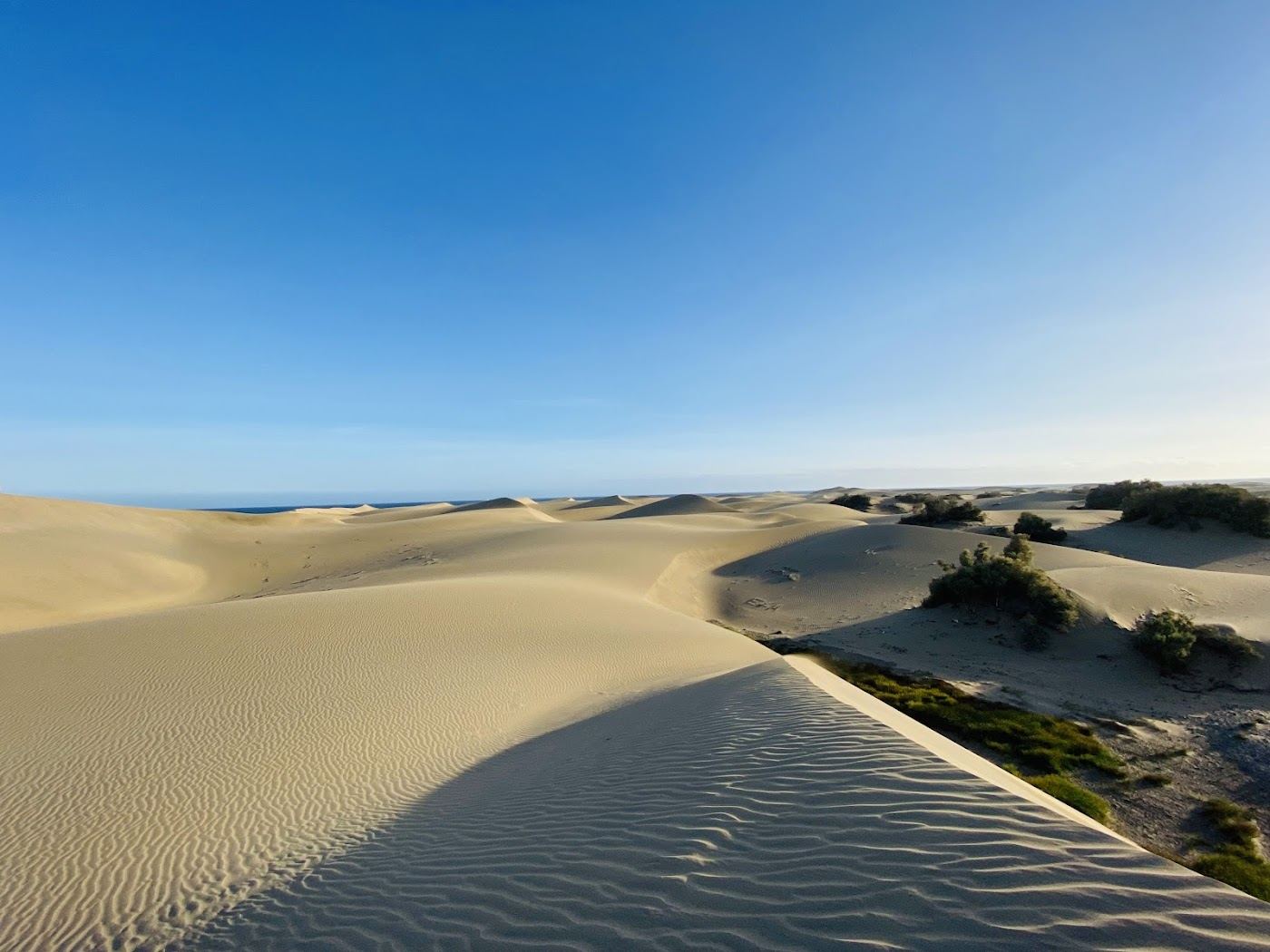
 Photo: ana gil ripoll via Google
The verdict
- Pick Gran Canaria ifYou want the famous golden dunes at Maspalomas, a sheltered family bay at Amadores and a slightly more compact island that is easy to base yourself on.
- Pick Tenerife ifYou want scale and scenery, Mount Teide behind the coast, the biggest mix of black and golden sand and the polished southern resorts of Costa Adeje.
- One thing to knowBoth are year round winter sun islands with warm sea. The real choice is the dunes and an easy base versus the bigger island and its volcano.
Published 8 February 2026. Last reviewed 28 March 2026
Gran Canaria and Tenerife are the two Canary Islands most people choose between for winter sun, and the honest truth is they are close cousins that win on different things. Gran Canaria is the slightly more compact one, a round island sometimes called a miniature continent for the way it packs mountains, ravines and beaches into a smaller space. Its signature is the great golden dune field that rolls down to the sea at Maspalomas, with the sheltered, family friendly bay at Amadores a short way along the coast.
Tenerife is the bigger island and the more dramatic, crowned by Mount Teide, the highest peak in Spain, which gives the whole place a sense of scale. Its beaches run a wider gamut, from the black volcanic sand of Playa Jardin in the green north to the golden imported sand of Las Teresitas near the capital and the polished resort strands of Costa Adeje in the sunny south. There is simply more island to explore, and the volcano gives it the single most memorable day out.
So the question is rarely which has better weather, because both are mild and swimmable for much of the year. It is the dunes and an easy base versus the bigger island and its scenery. Choose Gran Canaria for Maspalomas and a compact, relaxed escape, and choose Tenerife for scale, variety and Teide. Below we lay them side by side, then map each to the traveller it actually suits.
Gran Canaria
Compact and varied, famous for the golden dunes at Maspalomas and the calm family bay at Amadores, with a long established Playa del Ingles scene and quieter corners close by.
Tenerife
Bigger and more dramatic, crowned by Mount Teide, with black and golden sand from Playa Jardin to Las Teresitas and the polished Costa Adeje resorts in the south.
Gran Canaria vs Tenerife at a glance
| What matters | Gran Canaria | Tenerife |
|---|---|---|
| Scene and energy | Relaxed and compact, lively at Playa del Ingles | Bigger buzz at Las Americas, polished Costa Adeje |
| Signature sand | The golden dunes at Maspalomas | Black volcanic and golden imported sand |
| Headline beaches | Maspalomas, Amadores, Puerto Rico | El Duque, Las Teresitas, Playa Jardin |
| Scenery | Mountains and ravines, a compact variety | Mount Teide, the highest peak in Spain |
| Family calm | Sheltered bay at Amadores, easy and gentle | Calm resort beaches across Costa Adeje |
| Getting around | Compact, easy to base yourself in the south | Larger island, a hire car opens up more |
| Cost | Broad range, plenty of value | Similar range, Costa Adeje at the upscale end |
| Best for | The dunes, a compact and relaxed base | Scale, scenery, variety and a big night out |
Where each island wins
The case for Gran Canaria. Gran Canaria is the island for the dunes and for keeping it simple. The great golden sand sea at Maspalomas is genuinely unlike anywhere else in the islands, a rolling dune field that meets a long, sun struck beach, and the sheltered bay at Amadores nearby is calm and easy for families. The island is compact enough that you can base yourself in the south and reach most of what you want without long drives, while the mountains and ravines inland give the road trips their interest. Playa del Ingles brings the energy when you want it, and the quieter corners are never far. It is a relaxed, varied island that does not ask for much planning.
The case for Tenerife. Tenerife is the island for scale and scenery. Mount Teide rises over everything, the highest peak in Spain and the most dramatic day trip in the Canaries, and the island is large enough to hold real contrast, from the green, lush north with the black volcanic sand of Playa Jardin to the bright, dry south where Costa Adeje lines up its polished resort beaches at El Duque and Fanabe. Las Teresitas near the capital brings a long crescent of golden imported sand, and Las Americas delivers the biggest night out in the islands. There is more to see, more to do and more variety of sand, which makes it the richer pick for travellers who want their beach holiday with a side of exploring.
So which should you pick
For the famous dunes, a compact base and a relaxed, easy escape, choose Gran Canaria. Maspalomas is a one of a kind beach, Amadores is calm and family friendly, and the island is small enough to enjoy without much driving. It is also a fine pick if you want a lively resort scene at Playa del Ingles with quieter sand close at hand.
For scale, scenery and the widest variety of beaches, choose Tenerife. The presence of Mount Teide, the spread from black volcanic to golden sand, and the polished resorts of Costa Adeje make it the bigger, more varied island, and the south delivers the biggest buzz in the Canaries. It rewards a hire car and a little more exploring.
If you cannot choose, the two sit close enough that a longer Canary trip can take in both with a short ferry or flight between them. On a single week, base yourself on one and enjoy it fully. Either way, when you are ready to lock in a beach club day, tell us the island and the date and we will line it up.
Book a beach club in Gran Canaria or Tenerife
Independent and honest · 1,340 beaches ranked across 103 destinations · We answer to no resort
Gran Canaria vs Tenerife, answered
Is Gran Canaria or Tenerife better for a beach holiday?
Both are superb winter sun islands with warm sea most of the year. Gran Canaria is a touch more compact and is famous for the golden dunes at Maspalomas and the sheltered bay at Amadores. Tenerife is bigger and more dramatic, crowned by Mount Teide, with a wider mix of black volcanic and imported golden sand and the polished resorts of Costa Adeje. Choose Gran Canaria for the dunes and an easy base, and Tenerife for scale, scenery and variety.
Which island has better beaches, Gran Canaria or Tenerife?
It depends on the sand you want. Gran Canaria has the standout dunes and long golden beach at Maspalomas and the calm, family friendly bay at Amadores. Tenerife offers more variety, from the black volcanic sand of Playa Jardin to the golden imported sand of Las Teresitas and the polished resort beaches at El Duque and Fanabe. For the dunes pick Gran Canaria, for range pick Tenerife.
Which island is livelier, Gran Canaria or Tenerife?
Both have busy resort scenes, but Tenerife's south around Las Americas is generally the louder, bigger night out, while Costa Adeje next door keeps things more polished. Gran Canaria's Playa del Ingles is also lively and is a long established scene, with quieter corners nearby. For the biggest buzz Tenerife edges it, though both islands have calm and busy sides depending on where you base yourself.
Which island has better scenery and things to do?
Tenerife has the bigger landscape, crowned by Mount Teide, the highest peak in Spain, with dramatic drives, forests and the old town of La Laguna. Gran Canaria is sometimes called a miniature continent for its range of scenery in a smaller space, with mountains, ravines and the dunes. Both reward a hire car, but Tenerife's Teide gives it the single most striking day trip.
Is one island cheaper than the other?
The two are broadly similar in cost and both span a wide range, from simple apartments to upmarket resorts. Tenerife's Costa Adeje sits at the more upscale end, while both islands offer plenty of mid range and budget options. Exact prices vary by season and property and are to be confirmed when you book.
When is the best time to visit Gran Canaria or Tenerife?
Both islands are famous for mild weather year round, which makes them classic winter sun destinations as well as summer beach trips. The sea is warm enough to swim across most of the year. Trade winds can pick up on exposed coasts, so a sheltered south facing beach is the calmest bet on breezy days. Conditions are typical and never guaranteed.