 Photo: Lucrezia Calderaro via Google
The verdict
- Best forRemote workers who want a long, cheap, beautiful stay on white sand, with a kite community, beach cafes and a slow Swahili village pace, for weeks rather than days
- Top pickPaje to land and plug straight in, and Jambiani next door when you want the same coast quieter, cheaper and better for focus
- SkipBasing in Nungwi for work. It is gorgeous and swims well at any tide, but it is a party and resort coast, not a place to keep a routine
Published 19 February 2026. Last reviewed 6 June 2026
Zanzibar looks, at first, like a place built for a postcard rather than a laptop. The east coast is a long ribbon of flour white sand and water that runs from milk to electric turquoise, dhows leaning across the lagoon and palms throwing soft shade, and at low tide the sea pulls back across the reef to leave a vast wet mirror that photographs like nowhere else. It is easy to assume a coast this beautiful is a holiday and nothing more. The surprise is that one stretch of it has quietly become one of the better value nomad bases in the Indian Ocean.
That stretch is the southeast, and the engine of it is Paje. A kitesurfing village before it was anything else, it has grown a run of beach cafes and a small but real coworking scene, so a remote worker can land, find a desk, a community and an afternoon on the water within a day. The pace is gentle, the cost of living is kind, and the wind that draws the kites also keeps the long afternoons cool. For plugging into nomad life on the island, nothing else is close.
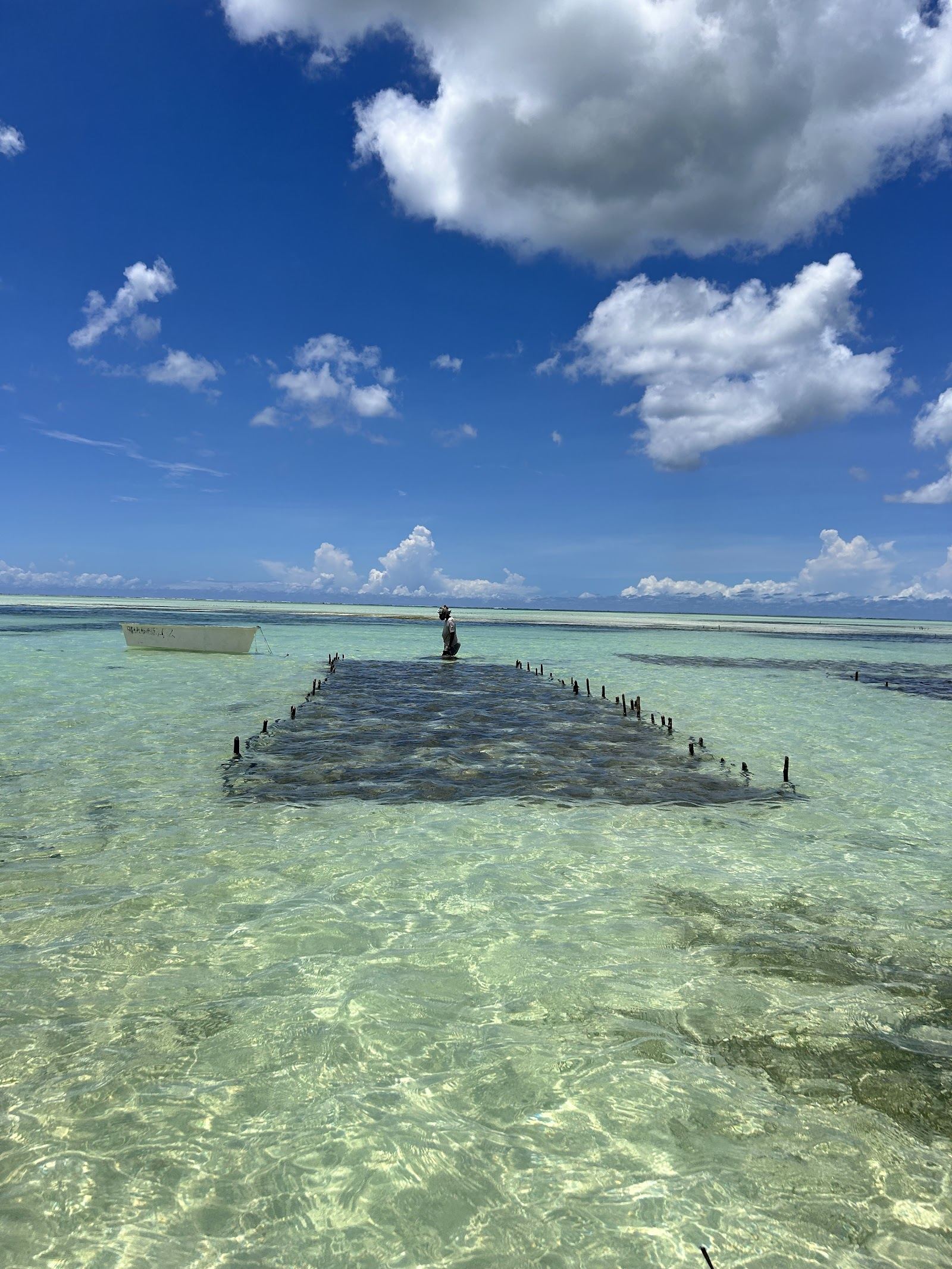
The honest read, and the thing the brochures gloss over, is the tide. On the east coast the sea retreats a long way at low water, so swimming and kiting run on the tide chart rather than the clock, and the famous deep blue belongs to a few hours a day. That is part of why this guide leans where it does. We rank the beaches below by how well they actually serve a working stay, weighing the cafes and coworking, the community, the calm and the cost, not the postcard alone, and we say plainly which is a base and which is a weekend.
Six of the best beaches for digital nomads
Cafes, community, calm and cost.
Paje
The beating heart of the nomad scene, a kitesurfing village with the island's densest run of beach cafes and a small but growing coworking culture. You can roll out of bed, work the morning, kite the afternoon and find half the community without leaving the sand. The water is a luminous turquoise at high tide and a wide wet mirror at low, and for landing straight into Zanzibar nomad life, nothing is easier.
Jambiani
Paje's quieter, cheaper neighbour and the smarter pick for a long, focused stay, a strung out fishing village where seaweed farmers work the flats and the pace slows right down. It has enough cafes and guesthouses to keep a routine without the kite crowd noise, the same white sand and turquoise, and a more authentic Swahili village feel. Come here to work hard and switch off properly.
Bwejuu
The calm middle of the east coast just north of Paje, a quiet, palm backed village with wide empty sand and very little scene. There are fewer cafes here, so it suits a nomad who has their own rhythm and wants stillness rather than community, with Paje a short ride away when you need a desk or company. A peaceful, photogenic base for deep work and slow evenings.
Matemwe
A long, remote northeast village facing Mnemba atoll, prized by divers and travellers who want quiet over scene. The water and the snorkelling are superb and the lodges lean upmarket, but the work infrastructure is thin, so it is for a self contained nomad on a calmer, pricier retreat rather than a cafe hopper. Beautiful, peaceful and a touch isolated, best when focus is the whole point.
Michamvi
The peninsula that closes the south of the kite bay, with a calm east side and a rare west facing shore that catches the island's best sunsets. It is quieter and more upscale than Paje, with a scatter of smart lodges and sunset bars rather than a working scene, so it suits a nomad who wants beauty and calm with Paje close by for the cafes. The pick for evenings and stillness.
Nungwi
The island's most famous beach and the rare one deep enough to swim at any tide, a dazzling north coast curve of white sand, dhows and sunset bars. It is wonderful, but it is a busy resort and party coast, so the cafes lean to bars and the mood is holiday rather than focus. Base on the east coast and come to Nungwi for a weekend swim and a night out rather than a working week.
Where to base, and what to expect
The honest read is that the southeast coast is the nomad coast, and the famous north is the holiday one. Paje gives you the community, the cafes and the kite scene, so it is the easiest place to arrive cold and build a routine, while Jambiani next door trades a little of the buzz for a cheaper, quieter, more focused stay. Bwejuu and Matemwe are for nomads who carry their own rhythm and want stillness, and Michamvi is for the sunsets. Nungwi is the beauty everyone photographs, but it is a party base, so love it for a weekend and work elsewhere.
Then there is the tide, which shapes every day on the east coast more than the weather does. At low water the sea retreats far across the reef flat, leaving the wide mirror of wet sand that looks so striking in photographs but is not for swimming, so you learn to read the tide chart and time your swims and kite sessions to the high. It is part of the rhythm rather than a flaw, but it surprises first timers, and it is the main reason casual swimmers gravitate to deeper Nungwi in the north.
A few practical notes that hold across the island. You work from the cafes and coworking spaces behind the beach, not on the sand, and connection quality varies by venue, with occasional power cuts, so nearly every nomad keeps a local mobile data SIM as a backup. The reliable windows are the dry, breezy spells from roughly June to September and December to February, while the long rains around April and May and the short rains in November can disrupt power and travel. Visa rules and specific venues change, so treat anything precise as to be confirmed and check locally before you commit to a long stay.
Where to switch off after work
When the laptop closes, Zanzibar's beach bars and clubs are where the nomad community gathers, from the kite bars of Paje to the sunset spots of Michamvi and the lively north coast scene at Nungwi and Kendwa. They earn their keep as a social anchor and a way to mark the end of a working week, and they are a markup only if you treat them as a daily habit rather than a treat. Operators, opening status and any minimum spend change with the season, so we keep the live list on the directory and never invent a venue. Tell us your dates and the kind of evening you want and we pass the enquiry on to confirm what is open.
Book a beach club in Zanzibar
Independent and honest · 1,340 beaches ranked across 103 destinations · We answer to no resort
Before you go
Which Zanzibar beach is best for digital nomads?
Paje on the southeast coast is the clear nomad hub, a kitesurfing village with the island's densest run of beach cafes and a small but growing coworking scene, so it is the easiest place to land and find a routine. Jambiani just south is the quieter, cheaper slow living alternative for a longer, more focused stay.
Is Nungwi good for working remotely?
Nungwi is one of the prettiest beaches on the island and the rare one that stays deep enough to swim at any tide, but it is a busy resort and party coast rather than a working base. The cafes lean to bars and the pace is holiday rather than focus, so most nomads visit Nungwi for a weekend and base on the calmer east coast.
Do Zanzibar beaches have good wifi for remote work?
You work from the cafes and coworking spaces behind the beach rather than on the sand, and in Paje these are used to remote workers. Connection quality varies by venue and power cuts happen, so nearly everyone keeps a local mobile data SIM as a backup. Treat any specific speed or venue as to be confirmed and check locally before you settle in.
What is the deal with the tides on the Zanzibar east coast?
The east coast has a large tidal range, so at low tide the sea retreats far across the reef flat, leaving a vast mirror of wet sand and seaweed that is beautiful to photograph but not for swimming. You plan swims and kite sessions around the tide chart. Nungwi and the northwest hold deeper water through the tide, which is why they suit casual swimmers better.
When should a digital nomad visit Zanzibar?
The dry, breezy windows from roughly June to September and December to February are the most reliable, with steady wind that suits the Paje kite scene. The long rains around April and May and the short rains in November bring heavy downpours that can disrupt power and travel, though they are quieter and cheaper. Treat conditions as typical and never guaranteed.