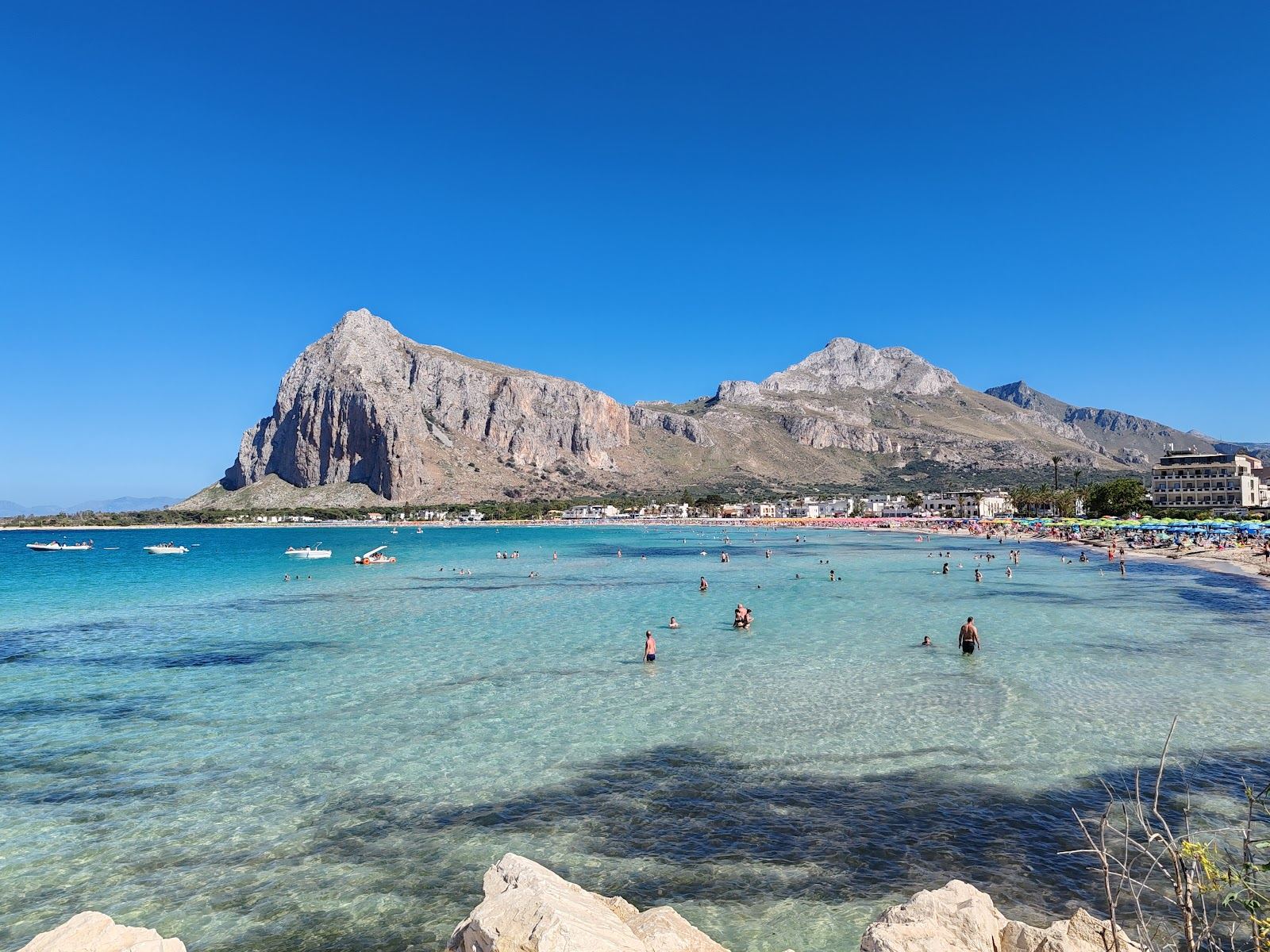
 Photo: Fabio Inghilleri via Google
The verdict
- Best forTravellers who want genuinely white sand and clear water across Sicily and its islands
- Top pickSan Vito lo Capo, a broad bay of pale fine sand below a dramatic headland in the northwest
- One thing to knowThe whitest sand of all sits on Lampedusa, so factor a ferry or flight and a summer cap into the plan
Published 16 April 2026. Last reviewed 26 May 2026
Sicily surprises people who arrive expecting only dark volcanic shingle under Etna. The island is big and varied, and its northwest and far southern islands hold some genuinely white sand, fine and pale, with water that glows turquoise over it. The volcanic east is one Sicily, but the limestone northwest and the sun bleached southern islands are another, and that is where the white sand lives.
The headline beach is San Vito lo Capo in the northwest, a broad arc of pale sand below a sheer headland that feels closer to North Africa than to Etna. Further out, the small island of Lampedusa, technically closer to Africa than to Sicily, holds the famous Spiaggia dei Conigli, a beach of brilliant white sand and a protected turtle nesting cove that regularly tops lists of the best beaches in Europe.
We have ranked these on the brightness of the sand and the clarity of the water first, then on how realistic each is to reach. The closer wins are the northwest bays you can drive to, while the very whitest sand asks for a ferry or a flight and a little planning around the summer caps that protect it.
The whitest sand in Sicily
Judged on the brightness of the sand, the clarity of the water and how easy each beach is to reach.
San Vito lo Capo
A broad northwest bay of pale fine sand below a dramatic limestone headland, with clear shallow water and a North African feel. It is the most accessible white sand on the main island and busy in high summer for good reason. Arrive early, walk toward the cape end and the crowd thins.
Spiaggia dei Conigli
On the far southern island of Lampedusa, a cove of brilliant white sand and clear shallow water that often tops the best beach lists. It is a protected sea turtle nesting site with a visitor cap and strict rules. Reaching it needs a ferry or flight and a booked slot, and it is worth every step.
Mondello
Palermo's white sand bay, a shallow crescent of pale sand and clear water framed by headlands and Liberty era bathing houses. It is bright and easy and packed in summer given the city on its doorstep. Come early or out of season to enjoy the pale sand without the full city crowd.
Fontane Bianche
The name means white fountains, and this southeast bay near Syracuse delivers pale fine sand and clear shallow water that warms gently. It is more local and relaxed than the headline beaches and easy to reach from the city. A solid, genuinely pale option on the southeast coast.
San Lorenzo
A long southeast strand of pale soft sand and shallow clear water near the Vendicari reserve, with a wild fringe of dune and scrub. It is calmer and less developed than the famous bays, and the nearby reserve adds birdlife and salt marsh. White, open and easy underfoot.
Calamosche
A sheltered cove inside the Vendicari nature reserve reached by a walk of around twenty minutes from the car park, which keeps it wild and quiet. The sand is pale, the water clear and the setting protected, with no development at all. Bring everything you need and leave nothing behind.
Two Sicilies, and the white sand sits in one of them
The honest geography is that Sicily has two very different coasts. The volcanic east around Catania and Taormina is dramatic but dark, all pebble, lava rock and grey shingle, and it is not where you go for white sand. The pale fine sand sits in the limestone northwest around San Vito lo Capo and Mondello, along the southeast near Syracuse, and out on the southern islands.
The very whitest beach, Spiaggia dei Conigli, is not on Sicily proper at all but on the small island of Lampedusa, far to the south. It is genuinely spectacular and genuinely protected, a turtle nesting cove with a daily visitor cap and strict rules, and reaching it means a ferry or a flight and a booked slot. Treat that as a special trip rather than a day out from the mainland.
For most visitors the realistic white sand is San Vito lo Capo and the southeast bays, all reachable by car and all worth an early start in summer. Wherever you go, keep off the dunes, take your litter home and give nesting areas space, because the protection on these beaches is exactly what keeps the sand white.
Clubs and lidos near the white sand
Sicily leans toward the Italian lido, a tidy run of loungers and a bar on the busier bays, more than the headline day bed clubs of the islands further north. San Vito lo Capo and Mondello have established lidos, while the reserve beaches like Calamosche stay wild with no service at all. For who runs which stretch and where a lounger is worth booking, see our Sicily beach clubs directory, and we will check a date for you.
Book a beach club day in Sicily
Independent and honest · 1,340 beaches ranked across 103 destinations · We answer to no resort
Before you go
Which Sicily beach has the whitest sand?
Spiaggia dei Conigli on the southern island of Lampedusa is the whitest of all, a protected turtle nesting cove that often tops European beach lists. On Sicily proper, San Vito lo Capo in the northwest is the standout white sand bay and far easier to reach.
Does mainland Sicily have white sand or only the islands?
Both. The limestone northwest around San Vito lo Capo and Mondello and the southeast near Syracuse hold genuinely pale fine sand, while the volcanic east around Catania is dark pebble and rock. The very whitest sand is out on Lampedusa to the south.
How do I get to Spiaggia dei Conigli on Lampedusa?
Lampedusa is reached by ferry or flight from Sicily, and the beach itself is a protected reserve with a daily visitor cap and a short walk down to the cove. Book your slot in advance for summer, carry water and shade, and follow the turtle nesting rules to the letter.
Are Sicily's white sand beaches good for families?
San Vito lo Capo, Mondello and Fontane Bianche all offer shallow, clear, gently warming water that suits children. Conditions are typical rather than guaranteed, so read the water and any flags. The reserve coves like Calamosche need a walk in and carry no facilities, so plan accordingly.
When is the best time to visit for white sand?
Late spring and early autumn give you the bright sand and clear water without the deepest summer crowds and the visitor caps at their tightest. July and August are hot and busy, and the famous beaches fill early, so an early start or a shoulder season trip pays off.