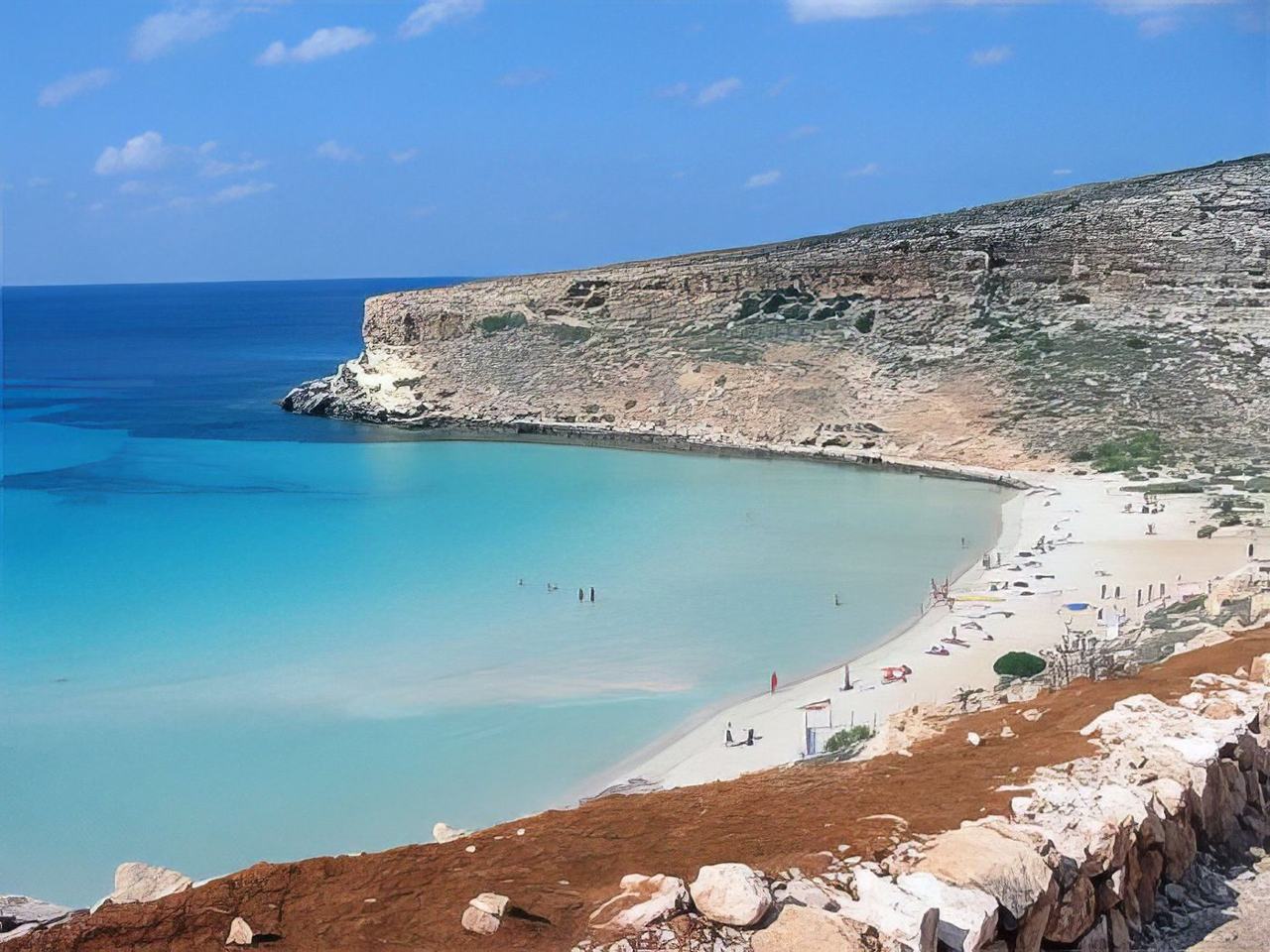
Spiaggia dei Conigli
The honest short answer
Published 10 April 2026. Last reviewed 11 May 2026. Conditions described are typical and never guaranteed.
Spiaggia dei Conigli, the beach of the rabbits on the small island of Lampedusa, is the one Sicilian beach that lives up to every photograph. It is a white sand bay of shallow, almost luminous turquoise water, with a tiny island just offshore that you can wade or swim toward on a calm day. It is regularly named among the best beaches in Italy and Europe, and for once the lists are right. It is also a protected nature reserve and one of the most important loggerhead turtle nesting sites in the whole Mediterranean, and that shapes everything about a visit.
Because of the turtles, this is not a beach you simply turn up to in summer. In the warm season access is capped and managed in timed shifts with numbers limited each day, and a share of places must be booked online in advance, so you plan around it rather than the other way round. You reach the sand by walking a path of roughly 800 metres down from the car park area, easy enough but exposed and uphill on the way back. During nesting season volunteers monitor the sand, nests are marked and fenced, and parts of the bay can be closed at short notice to protect hatchlings.
The honest read is that the rules are the price of the magic, and they are worth paying. There is nothing to buy once you are down there, no bar, no lounger, no toilet and no water point, so this is a true carry in and carry out beach and you bring your own shade because there is none. In return you get water of a clarity that most of the Mediterranean cannot match and a setting that feels genuinely wild and cared for rather than packaged.
Who should skip it: anyone who wants to roll up on a whim with loungers, a snack bar and no planning, who will be happier on a serviced lido beach. Who should go: anyone willing to book ahead, walk in and respect a fragile reserve in exchange for one of the Mediterranean's clearest bays. Check the current reserve booking rules before you travel, and treat the turtles as the reason the place still looks like this.
Clubs on and near the sand
Spiaggia dei Conigli sits inside a strictly protected nature reserve and turtle nesting site, so there are no beach clubs, lidos or loungers on the sand and none are permitted. For a serviced beach day with loungers and refreshment, use the Sicily club directory and the lido beaches elsewhere.
- No club on the sandAs a protected reserve and turtle nesting beach, Spiaggia dei Conigli has no lidos, bars or beach clubs and nothing can be booked or rented on the sand. Bring your own kit and shade, or choose a serviced lido beach for loungers and food.
- Booked reserve entryIn the summer season entry is capped and managed in timed shifts with a share of places booked online in advance. Check the current official reserve booking rules and hours before you travel, as they change each year.
Spiaggia dei Conigli lies on the southern side of Lampedusa, the small island reached by flight or ferry far south of the Sicilian mainland, then by car, scooter or local bus to the reserve. From the parking area a path of roughly 800 metres leads down to the bay, easy on the way down and a steady climb on the way back, so wear proper shoes and pace yourself in the heat.
In summer you plan around the reserve rather than the other way round, booking your timed entry in advance and arriving for your shift, with June and September quieter than the August peak. There is nothing to buy on the sand, so carry all your water, food and shade and carry every scrap of rubbish back out, and check whether any part of the bay is closed for nesting before you set off.
Not ready to book?
Keep the good shorelines coming. Shore Notes is our occasional letter on the best beaches and the clubs worth your day, sent straight to your inbox. One field, unsubscribe any time.
Reserve a day on the Sicily coast
Tell us the day and the party, and we will match you to a beach club near Spiaggia dei Conigli and pass your request straight to the team.
Independent and honest · 1,340 beaches ranked across 103 destinations · We answer to no resort
Do you need to book Spiaggia dei Conigli?
In the summer season yes. Access is capped and managed in timed shifts with numbers limited each day, and a share of places must be booked online in advance. Check the current official reserve rules before you travel, as dates and limits change each year.
How do you get down to Spiaggia dei Conigli?
You reach the island of Lampedusa by flight or ferry, then drive or take a local bus to the reserve, from where a path of roughly 800 metres leads down to the bay. It is easy going down and a steady climb back up, so wear proper shoes.
Are there facilities at Spiaggia dei Conigli?
No. There are no bars, lidos, loungers, toilets or water points anywhere on the beach, and no natural shade. It is a true carry in and carry out beach, so bring all the water, food and sun cover you will need.
Why is Spiaggia dei Conigli protected?
It is one of the most important loggerhead turtle nesting beaches in the Mediterranean. Nests are marked and fenced, volunteers monitor the sand, and access is capped, which is why the bay stays so clean and clear and why the rules are strictly enforced.
When is the best time to visit Spiaggia dei Conigli?
June and September offer warm, clear water with the reserve's protections in force and lighter numbers than peak August. Book your timed entry in advance and aim for the start of your shift for the calmest, clearest water.