 Photo: Linda Milosavljević via Google
The Best Beaches
in Salalah
Cliff backed sand, green monsoon hills and the Arabian Sea, ranked with the khareef made plain.
The verdict
- Best forTravellers pairing Salalah's frankincense coast and green monsoon hills with real beach days, who want the sand that actually swims and the honest truth about the seasons
- Single best spotFazayah for the prettiest swimmable beach below the cliffs, with Mughsail kept for its drama and blowholes rather than a long swim
- One thing to knowThe khareef monsoon from June to September turns the hills green but the sea rough, so the beach swimming season is the calm dry winter
Published 3 April 2026. Last reviewed 28 April 2026
Salalah is the capital of Dhofar, the far southern province of Oman, and it is unlike anywhere else on the Arabian Peninsula. For most of the year it is a sun struck frankincense coast of pale beaches and date palms on the warm Arabian Sea, and then for three months it transforms, when the southwest monsoon wraps the city in mist and turns the surrounding hills a startling tropical green. That double identity shapes everything about the coast here, and the visual contrast is extraordinary, dun coloured Arabia for nine months and a soft green highland in the khareef, with long beaches running below both.
The honest read for a beach traveller is all about timing, because Salalah keeps two seasons and they could not be more different at the shore. From roughly October to April the sea is warm, mostly calm and a pleasure to swim, the light is clean and the long beaches are at their best. During the khareef from June to September the same water turns grey, rough and dangerous, swimming is frequently unsafe and not advised, and the famous Mughsail blowholes fire their highest. The mistake travellers make is arriving in the green season expecting a swimming holiday, when the green season is for landscapes and the winter is for the beach.
We rank the beaches on how they truly swim, look and feel, weighing the calm and clarity of the water in season, the quality of the sand, the drama of the setting and how easy each is to reach. The coast west of the city holds the cliff backed gems, the city itself keeps the easy palm lined beaches, and the east adds white sand and history at Taqah and Mirbat. Conditions and surf change hard with the season, so we describe what is typical, point you to the calm winter months, and never promise a safe swim in the monsoon sea.
Ranked, not listed
Scored on the swim, the sand, the setting and the season. Honest verdicts, the khareef made plain.
Fazayah Beach
The most beautiful beach in the region and our pick, a remote run of pale sand and clear turquoise water below tall ochre cliffs west of the city, an almost cinematic stretch of empty coast. In the dry season it is the prettiest place to swim and the best for a quiet day or a wild camp, with no facilities and genuine solitude. The catch is the access, a steep rough track that wants a four wheel drive, so come prepared, carry water and shade, and treat it as a day trip earned.
Al Mughsail Beach
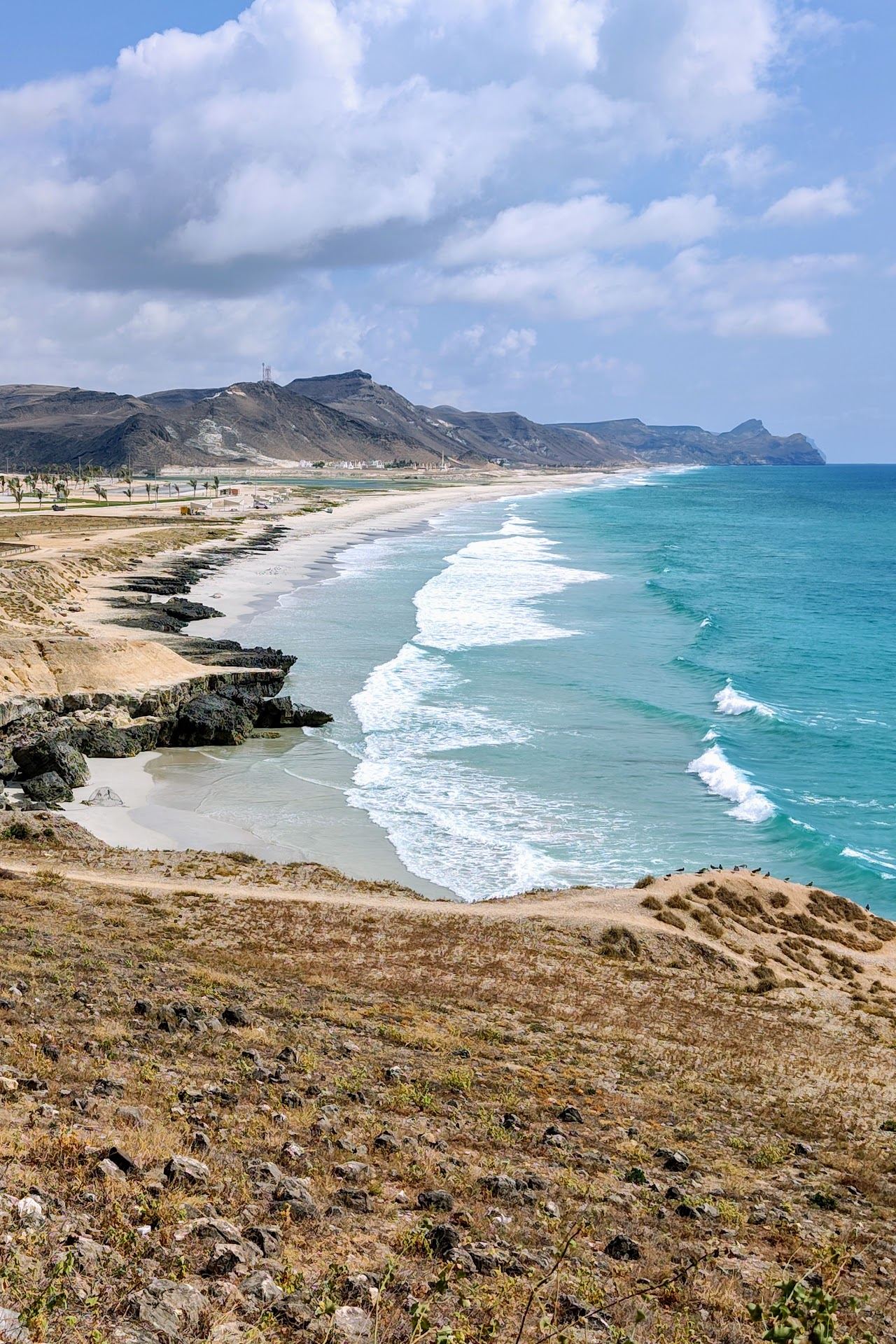
The famous one, and the most dramatic sight on the coast rather than the best swim. A long sweep of sand runs below sheer cliffs, and at the western end a boardwalk leads to the blowholes, where the sea forces spray high through the rock, spectacular and at its most violent in the khareef. The beach itself is handsome and easy to reach on a paved road, but the open water can be rough, so come for the cliffs, the blowholes and the scenery, and swim only when it is calm.
Al Haffa Beach
The easy city beach and the most convenient day out, a long band of soft white sand and clear water lined with coconut palms right on the Salalah corniche near the Al Husn palace area. It is the family favourite, with the souq, cafes and hotels close by and a relaxed evening promenade, so you trade wildness for access and comfort. The swimming is good in the calm season, the setting is gentle rather than dramatic, and it is the natural base if you want sand without a drive.
Taqah Beach
The quiet white sand beach with a castle behind it, a wide palm fringed strand in the old fishing town of Taqah about half an hour east of the city. It is calmer and less visited than the city beaches, good for a long walk, some bird watching and a look at the historic Taqah Castle, with simple shelters and a children's play area rather than a developed front. Come for the space, the heritage and the sand, swim when the sea is calm, and bring your own shade and lunch.
Mirbat Beach
The history and coast combination, the beach of the ancient port town of Mirbat about an hour east, where old merchant houses and a hilltop fort meet a working fishing shore. It is more a place to explore than a polished swimming beach, pairing heritage and atmosphere with the sea, and the coast nearby is a launch point for dolphin trips. Come for the old town, the fort and the sense of the frankincense trade, take the sand as part of the day, and swim only in calm water.
The season that shapes the coast
Nothing about Salalah's beaches makes sense until you grasp the khareef, so let us be direct. From about June to September the southwest monsoon draws cool moist air over Dhofar, hangs mist and drizzle on the hills and turns them an improbable green, and this is the season that fills the city with Gulf visitors escaping the heat. It is genuinely magical for waterfalls, springs and cool green landscapes, and it is the wrong time to plan a swimming holiday, because the sea turns grey and rough, currents run hard, and many beaches are unsafe or closed to bathing while the Mughsail blowholes are at their most ferocious. The green you came for and the swim you wanted do not share a season.
So the smart plan splits the year. Come in the khareef for the scenery, the misty hills, the waterfalls and a dramatic, blustery coast best admired from the sand rather than entered. Come from October to April, and especially November to March, for the beach itself, when the Arabian Sea calms to warm clear blue, Fazayah and Al Haffa swim beautifully, and the days are sunny and dry. Treat Salalah as a two season destination, match your dates to what you actually want, and you avoid the single biggest disappointment travellers report here, a green season swim that the sea will not allow.
One safety line runs through all of it. Conditions are typical and never guaranteed and there is no promise of a safe swim, so read the local flags and signs, respect any closure, and never enter heavy surf or a visible rip current, especially in or near the monsoon months. The remote beaches such as Fazayah have no lifeguards and no facilities, so swim within your depth, keep an eye on children, and carry your own water and shade. Get the season and the caution right and Salalah gives a beach coast like nowhere else in Arabia.
The best months in Salalah
Salalah runs a calm dry winter and a misty green monsoon, and for beaches the winter wins easily. From October to April, and best of all November to March, the Arabian Sea is warm, clear and mostly calm, the days are sunny and the swimming is safe and lovely. The khareef from June to September brings the famous green hills and waterfalls but a rough, often unswimmable sea, so it is a landscape season rather than a beach one, and May is hot and humid in between. Our full guide to when to go to Salalah walks the year month by month, with the sea, the khareef and the swimming window.
Where to book a daybed
Set expectations honestly, because Salalah does not run a Mediterranean style beach club circuit, and that suits its calm, family and resort character. The beach life here is the resort fronts and pool to beach lounges of the hotels along the Al Haffa and city coast, plus the simple corniche cafes and the relaxed evening promenade at Dahariz, rather than a roped off daybed scene you reserve in advance. We never invent a venue, a minimum spend or an opening status, so anything we cannot confirm is marked to be confirmed. Our Salalah beach clubs directory reads the real picture as the cluster fills out.
Book a beach club in Salalah
Independent and honest · 1,340 beaches ranked across 103 destinations · We answer to no resort
Before you go
Which is the best beach in Salalah?
For the beach itself it is Fazayah, a remote run of pale sand and clear water below dramatic cliffs west of the city, the prettiest place to actually swim and the one worth the rough drive. Mughsail is the famous name, a long beach with cliffs and blowholes, but it is more a dramatic sight than a swimming beach. For easy access Al Haffa is the palm lined city beach, with Taqah and Mirbat adding white sand and history to the east.
Can you swim at the beaches in Salalah?
Yes, but the season decides everything. From roughly October to April the Arabian Sea is warm and mostly calm and the swimming is lovely at Fazayah, Al Haffa and the sheltered bays. During the khareef monsoon from June to September the same sea turns rough, grey and dangerous with strong currents, and swimming is often unsafe and not advised. Conditions are typical and never guaranteed, so read the local flags and never swim in heavy surf or rip currents.
What is the khareef and how does it affect the beaches?
The khareef is the southwest monsoon that wraps Salalah in mist, drizzle and green hillsides from about June to September, unique in Arabia and the reason for the summer tourist season. It is wonderful for waterfalls, springs and cool green scenery, but it is not a beach swimming season, because the sea is rough and often closed to bathing and the famous Mughsail blowholes are at their most violent. Come in khareef for the green, come October to April for the beaches.
When is the best time to visit Salalah for the beach?
The cooler dry months from October to April are best for beaches, with warm sunny days, calm clear seas and safe swimming, especially November to March. The khareef from June to September is green and cool but wet and rough at sea, better for landscapes than swimming, and the shoulder of May is hot and humid. For sand and snorkelling aim for winter, and see our Salalah when to go guide for the month by month detail.
Do you need a car to reach Salalah's beaches?
For the city beaches such as Al Haffa and Dahariz no, they sit on the Salalah corniche, but for the best of the coast a car helps and for Fazayah a four wheel drive is strongly advised because the final approach is a steep rough track. Mughsail, Taqah and Mirbat are an easy paved drive west and east of the city. Hire a car or a guided tour, carry water and shade, and treat the remote beaches as day trips with no facilities.