 Photo: ciadesites via Google
The whitest sand beaches in Rio de Janeiro
Pale, soft, clean sand away from the packed promenade, ranked honestly for nature first.
The verdict
- Best forTravellers who want the palest, cleanest, least crowded sand over the famous promenade scene
- Top pickGrumari for the wildest, cleanest pale sand, held inside a protected stretch of coast out west
- One thing to knowRio sand reads pale gold rather than Caribbean white, and the palest, cleanest grains are in the protected wild west, not on Copacabana
Published 14 January 2026. Last reviewed 29 April 2026
Rio is not a white sand city in the Caribbean sense, and it is worth saying so plainly before you pack a snorkel and expect powder. The sand here runs pale gold, fine and warm, and on the busy central beaches it is packed hard by a million feet and flecked with the grit of the city behind it. The whitest, cleanest sand is not where the postcards point.
It sits out west, in the protected coves and long open strands beyond the apartment blocks, where the sand is paler, softer and far less trodden. We have ranked the beaches below for genuinely pale, clean, soft sand rather than for fame, and we have leaned into the wild western shore where the grains stay light and the crowds thin to almost nothing on a weekday.
If you want the short version, go west. Grumari and Prainha sit inside an environmental protection area where the sand is pale and the hills stay green, and the long pale sweep of Barra da Tijuca gives you kilometres of soft, light sand to yourself once you walk past the kiosks. Come early, tread lightly, and leave the hard grey sand of the centre to the postcard crowds.
The palest sand in Rio de Janeiro
Genuine soft pale sand first.
Grumari
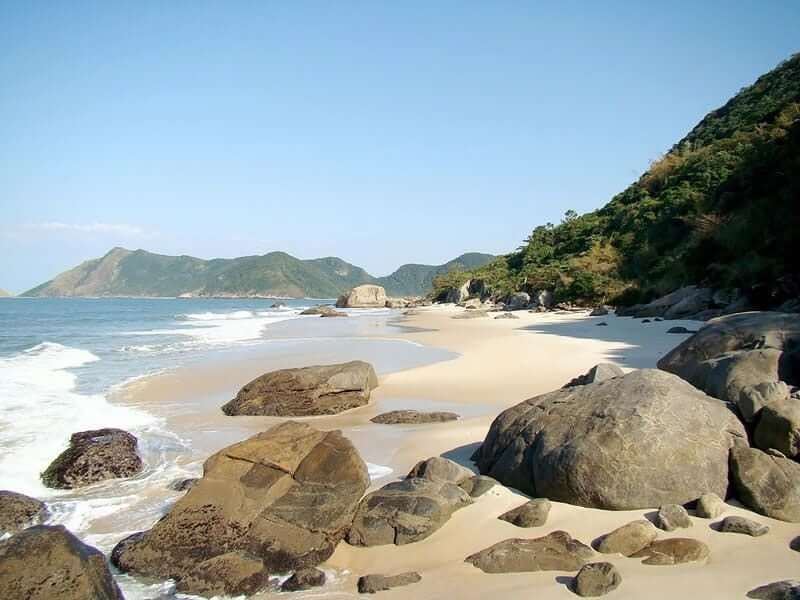
Inside a protected area of forested hills and lagoons, Grumari holds the palest, cleanest sand in Rio, soft underfoot and backed by green rather than concrete. There are no high rises and barely a kiosk, so the grains stay light and unpacked, and on a weekday you can have a wide pale stretch almost to yourself. This is the wild Rio that the promenade forgot.
Prainha
A small horseshoe cove next to Grumari, protected, green backed and loved by surfers and turtles alike. The sand is pale and soft, the headlands keep it intimate, and the whole bay sits inside the same conservation area, so it feels worlds away from the city. It is the cleanest little pocket of pale sand in Rio, best at first light before the surf crowd arrives.
Barra da Tijuca
Rio longest beach, a pale fine strand running for kilometres past Barra. The sand here is lighter and softer than the centre, and the sheer length means you can always walk to an empty patch. It is open to the swell and the wind, so it is more about space and pale sand than calm water, but for soft light grains and room to breathe it has no equal in the city.
Recreio dos Bandeirantes
The wilder far end of the Barra strand, where the apartment blocks give way to a green headland and the sand stays pale and uncrowded. Surfers like the corner by the rocks, walkers like the long empty sweep, and the grains stay soft and light well away from the centre. A quiet, natural close to the western shore.
Ipanema
The pick of the central beaches if you want pale sand within reach of the city, finer and a touch lighter than Copacabana next door. It is still busy and the sand is packed by crowds, but the grains are pale gold and soft underfoot, and the setting between the Dois Irmaos hills is the loveliest in town. The best of the famous beaches, honestly rated.
The honest read on white sand
The honest read on Rio is about colour and crowds. Set against true white sand destinations, Rio sand is pale gold, and on Copacabana and Leme it is grey toned, hard packed and gritty from the city at its back. If a brochure has sold you brilliant white powder in Rio, lower that expectation now, because the reality is a warm pale gold that is lovely in its own right but not Caribbean white.
Where Rio does deliver is in the protected west. Grumari and Prainha sit inside an environmental protection area, so the hills stay forested, the building stops, and the sand keeps its pale softness because far fewer feet pass over it. This is also where the nature is, with green headlands, lagoons behind the dunes, nesting turtles at Prainha and frigatebirds overhead, so the wild west rewards the slow traveller twice over.
A few honest cautions. The western beaches are open to Atlantic swell and can have strong surf and rip currents, so they are for paddling and sunbathing rather than guaranteed easy swimming, and lifeguard cover is not present on every quiet stretch. Conditions are typical rather than guaranteed. Bring water and shade because the kiosks thin out west, take your litter home from the protected coves, and you will see the cleanest, palest sand Rio has at its quiet best.
A base near the pale sand
Rio does its beach life from kiosks and barracas on the sand rather than from grand club daybeds, and the western beaches keep it especially simple and low key. Closer to the centre you will find smarter setups with loungers and service, while the wild west is more cooler box and parasol. We never invent a venue, a minimum spend or an opening status, so anything unconfirmed is marked to be confirmed. Browse the directory and send one enquiry to check what is open and bookable.
Book a beach club in Rio de Janeiro
Independent and honest · 1,340 beaches ranked across 103 destinations · We answer to no resort
Before you go
Where is the whitest sand in Rio de Janeiro?
The palest, cleanest sand in Rio is out west at Grumari and Prainha, which sit inside a protected area of green hills and lagoons where far fewer feet pack the grains. The long strand at Barra da Tijuca is also pale and soft. The central beaches like Copacabana run greyer and harder, so head west for the lightest sand.
Does Rio actually have white sand beaches?
Not white in the Caribbean sense. Rio sand is pale gold, fine and warm, and on the busy central beaches it is grey toned and hard packed. The closest you get to pale, clean, soft sand is in the protected western coves and the long Barra strand, so set your expectations to pale gold rather than brilliant white.
Is Copacabana sand white?
No. Copacabana sand is grey toned, coarse and packed hard by huge crowds and the city behind it, and it is one of the less appealing sands in Rio underfoot. The setting and the energy are the draw there, not the sand. For pale, soft grains go west to Grumari, Prainha or the quiet far end of Barra.
Which Rio beach is best for nature and quiet?
Grumari and Prainha in the far west sit inside an environmental protection area, with forested hills, lagoons, nesting turtles at Prainha and almost no building, so they are the clear pick for nature and quiet. Come early on a weekday, tread lightly in the protected coves, and you will often have pale wild sand nearly to yourself.
Is the water safe for swimming on Rio white sand beaches?
The pale western beaches are open Atlantic shore and can have strong surf and rip currents, so they suit paddling and sunbathing more than guaranteed easy swimming, and lifeguards are not on every quiet stretch. Conditions are typical and never guaranteed. Watch the surf, swim within your depth, and heed any flags where lifeguards are posted.