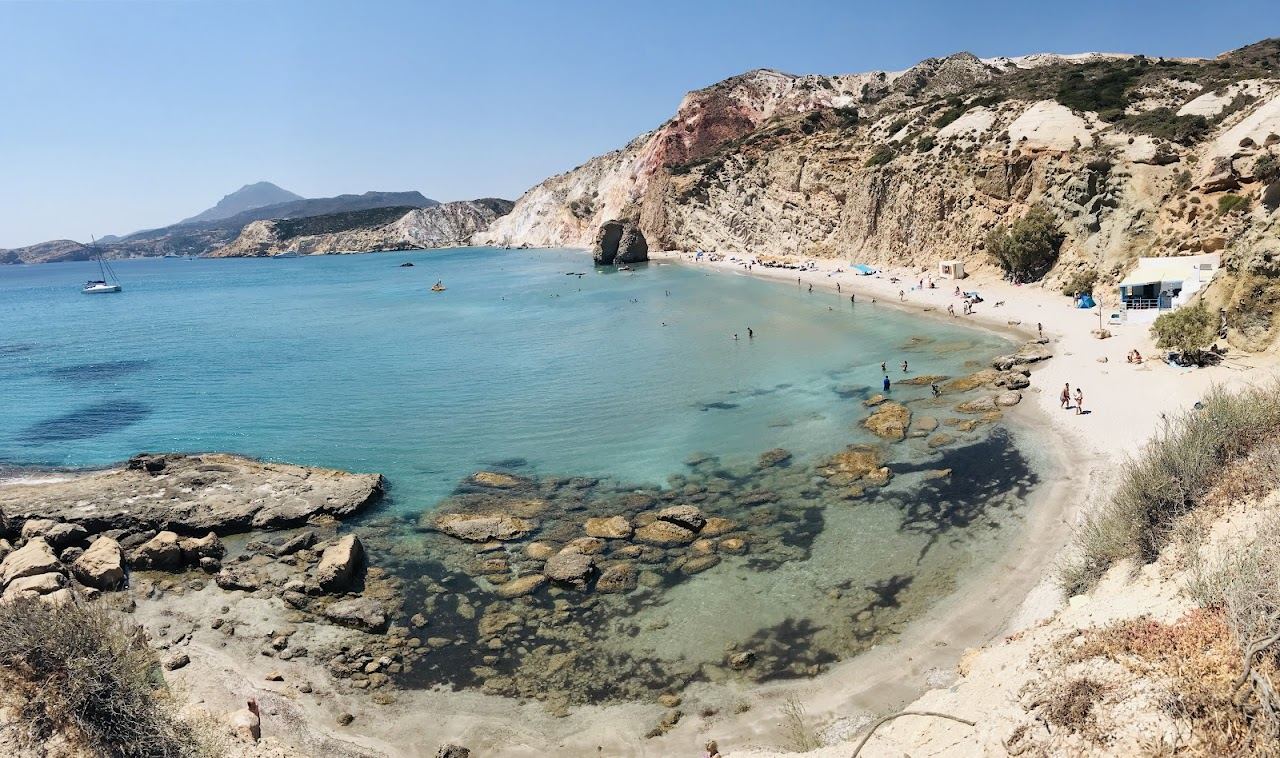
 Photo: Έλλη Αηδονίδου via Google
The Best Beaches
in Milos
Volcanic colour, sea caves and clear water, ranked honestly.
The verdict
- Best forTravellers who want the most dramatic and varied coastline in the Cyclades, volcanic colour, sea caves and clear water, over a glossy beach club scene
- Single best spotSarakiniko to see for its lunar rock, but Firiplaka and Paleochori on the south coast for an actual beach day of long sand, colour and organised bars
- One thing to knowMilos is a swimming and landscape island, not a party one, so a hire car and one boat day to Kleftiko unlock it, and prices are kept to be confirmed
Published 23 March 2026. Last reviewed 20 May 2026
Milos is the most quietly spectacular beach island in the Cyclades, a volcano whose long, twisting coastline holds something close to eighty beaches in an extraordinary range of colour and shape. This is the island of the white lunar rock at Sarakiniko, the coloured cliffs above Firiplaka, the hot volcanic sand at Paleochori and the cathedral of sea caves at Kleftiko, and the honest pleasure of it is variety, since you can swim somewhere completely different every day. While Mykonos sells the scene and Santorini sells the caldera view, Milos sells the swim and the geology, and it does so at gentler prices and with far smaller crowds.
The honest read is that Milos rewards effort and a sense of adventure. Many of the best beaches are spread around the coast and reached by track rather than tarmac, so a hire car or scooter genuinely changes the trip, and a few of the most famous, above all Kleftiko, can only be reached by sea, which makes a boat day part of the plan rather than a luxury. The most photographed spot, Sarakiniko, is a landscape to marvel at more than a beach to laze on, bare of sand and shade, so we are clear below about where to go to actually spend a day on a towel.
Below we rank the beaches that genuinely repay a visit, we are plain about which is a sandy beach day, which is a quick wonder and which needs a boat, and we say where the famous rock is overrated as a beach and where the real swimming is. We never invent a club, a price or an amenity, so anything we cannot confirm is marked to be confirmed, and conditions are described as typical rather than guaranteed.
Ranked, not listed
Scored on the swim, the scenery, the access and the honesty. The famous rock flagged for what it really is.
Sarakiniko
The icon of Milos and one of the strangest, most beautiful places in Greece, a sweep of smooth white volcanic rock that looks like the surface of the moon dropping into deep blue sea. It is unmissable, best early or at sunset, with a small sandy inlet for swimming and popular cliff jumping. The honest catch is that it is a landscape, not a sandy beach, with no shade and no facilities, so see it and swim, but spend the lazy day elsewhere.
Firiplaka
For an actual beach day, this is the one, a long stretch of pale sand beneath striking coloured cliffs on the sheltered south coast, with clear shallow water and organised sunbeds and a bar in season. It pairs real natural drama with genuine comfort, which the lunar rockscapes cannot, so it is the smart choice when you want beauty and a full day on the sand. A full guide is on the way.
Paleochori
The liveliest beach day on the island, a long south coast sweep under red and ochre cliffs where the sand is warmed by volcanic heat from below and the bars run an easy all day rhythm. Sirocco famously cooks in the hot sand and Deep Blue keeps the drinks and music going, so it is the closest Milos comes to a club day while staying relaxed rather than rowdy. A full guide is on the way.
Kleftiko
The showpiece, a cathedral of white sea cliffs, arches and caves rising from glass clear water in the remote southwest, reached only by sea. It is a swimming and snorkelling wonder rather than a beach, with no sand to lie on, so you visit on a boat trip or small cruise from Adamas and spend the time in the water and the caves. The single most spectacular thing to do on Milos. A full guide is on the way.
Tsigrado
The adventure cove, a tiny pocket of fine sand and turquoise water hidden beneath cliffs and reached by a steep scramble down a narrow gap with a rope and a wooden ladder. The descent is not for everyone, but those who make it find a small, beautiful and gloriously private beach. Bring everything you need and good shoes, and skip it if the climb worries you. A full guide is on the way.
Provatas
The easy family choice, a small organised bay of reddish sand and shallow, gently shelving water on the sheltered south coast, with sunbeds, tavernas and simple parking. It is calm and low key rather than dramatic, which is exactly its appeal for children and for a relaxed day without a scramble or a boat. A sound base when you want comfort over spectacle. A full guide is on the way.
Firopotamos
A picture of a fishing hamlet, a small sheltered cove of clear calm water framed by white and blue boat houses and a little chapel on the north coast. The swimming is gentle and the setting postcard pretty, so it suits a quiet morning dip and a wander rather than a long sandy day. Lovely and low key, and a fine pairing with nearby Plathiena. A full guide is on the way.
Plathiena
A sheltered sandy bay near the village of Plaka and the old fishing coves, with soft sand, calm clear water and some natural shade, more of a proper beach than its northern neighbours. It is an easy, pretty spot for a swim and a relaxed afternoon away from the busiest sand, reached by a short drive and a path. A gentle, scenic choice for the north of the island. A full guide is on the way.
Who it suits, who should skip
Set your expectations on the famous rock honestly. Sarakiniko is genuinely one of the most extraordinary sights in the Aegean and you should absolutely see it, but it is a lunar landscape, not a sandy beach, with no shade and no facilities beyond a canteen by the car park, and it draws a crowd in the middle of the day. Treat it as a sunrise or sunset wonder and a swim from the inlet, then go elsewhere for your towel. The same applies to Kleftiko, which is a boat day and a swimming marvel rather than a place to lie down. If you came for long, comfortable sand, the south coast at Firiplaka, Paleochori and Provatas is where you belong.
Who should skip what comes down to effort and the wind. Tsigrado rewards the adventurous with a hidden cove but its rope and ladder descent is not for small children, the nervous or anyone with a lot to carry, so the faint hearted should choose easier sand. The Meltemi shapes the days, since it can make the north coast rough while the sheltered south stays calm, so let the daily wind steer you between the two coasts. Above all, Milos asks for a hire car and ideally one boat day, and travellers unwilling to move around will see only a fraction of what makes it special. Come for the swimming and the scenery rather than nightlife, and few islands repay you better.
The best months in Milos
Milos runs a classic Cycladic season. July and August bring the warmest sea, the strongest sun and the busiest beaches, along with the peak of the Meltemi, which can churn the north coast while the south stays sheltered. June and September are the value sweet spot, with warm clear water, lighter winds and far more room, while May and October stay pleasant for swimming and exploring as the season opens and eases. Because the island is so spread out and wind sensitive, let the day's forecast steer which coast you choose, and time a calm morning for Sarakiniko before the crowds.
Where to book a sunbed
Read Milos honestly and it is a beach bar island, not a beach club one. There is no bottle service strip here, and the energy lives in the water and the long, slow lunches at a handful of organised beaches. Paleochori on the south coast holds the closest thing to a club day, where Sirocco cooks in the hot volcanic sand and Deep Blue keeps the drinks and music easy, while Achivadolimni and Provatas carry relaxed family friendly bars and the village of Pollonia has waterfront lounges for the evening. Most spots simply charge for a sunbed set and whatever you eat and drink, with figures that move by beach and season and are best confirmed on the day. Our full directory compares every bar by beach and vibe.
Book a beach club in Milos
Independent and honest · 1,340 beaches ranked across 103 destinations · We answer to no resort
Before you go
Which is the best beach in Milos?
It depends on what you want. Sarakiniko is the most famous and the most photographed, a white lunar rockscape that is unmissable to see but bare of sand and shade, so for an actual beach day Firiplaka and Paleochori on the south coast are better, with long sand, colourful cliffs and organised bars. Kleftiko is the spectacular sea cave bay reached only by boat. Milos rewards a hire car and a different beach each day.
Is Sarakiniko a real beach?
More a landscape than a beach. Sarakiniko is a sweep of smooth white volcanic rock shaped like the surface of the moon, with a small sandy inlet for swimming and popular cliff jumping, but no sand to speak of, no shade and no facilities beyond a canteen by the car park. It is genuinely worth seeing, best early or at sunset, but it is a place to marvel and swim rather than to laze a whole day on a towel.
Do you need a car or a boat to see the Milos beaches?
A hire car or scooter makes the island sing, since the best beaches are spread around the coast and several of the prettiest are reached by track. Some of the most famous, above all Kleftiko, are accessible only by sea, so a boat trip from Adamas or a small group cruise is the way to reach them. Between a car and one boat day you can cover the headline beaches comfortably in a few days.
Is Milos better than Mykonos or Santorini for beaches?
For raw natural beauty and swimming, many travellers think so. Milos has more dramatic and varied coastline than either, with volcanic colour, sea caves and clear water, and it is quieter and better value. What it does not have is a glossy beach club and nightlife scene, so if you want the party and the daybed empire, Mykonos or Santorini fit better, while Milos wins for a beautiful, unhurried beach holiday.
When is the best time to visit Milos beaches?
June and September are the sweet spot, with warm clear sea, strong sun and lighter winds than the July and August peak, plus more room and gentler prices. High summer is hottest and busiest and brings the strongest Meltemi, which can make the north coast rough while the south coast stays sheltered, so let the wind steer which beach you choose. May and October are quieter as the season opens and winds down.