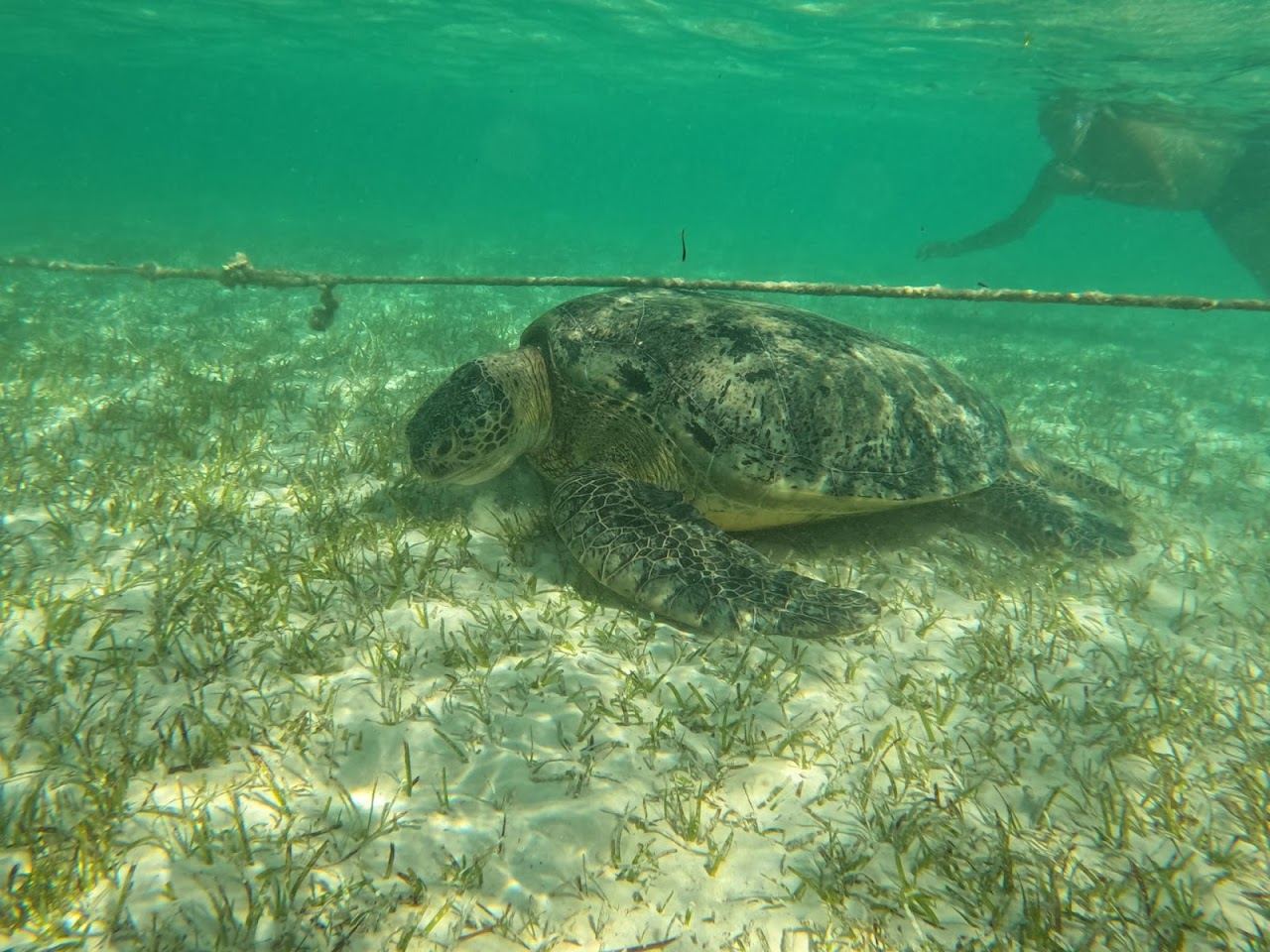
Marsa Mubarak, Marsa Alam
The verdict
- Best for: Keen snorkellers and divers who want one of the richest wildlife bays on the Marsa Alam coast, with turtles, the chance of a dugong and seahorses, and who value the marine life over a classic sandy beach day.
- Best spot: The seagrass flats on a guided early snorkel, drifting slowly and quietly so the turtles and the shy dugong carry on grazing undisturbed.
- Know this: Marsa Mubarak is a wildlife bay first and a beach second, so the snorkelling is superb but the shore is modest, and the dugong, while resident, is never a guaranteed sighting.
Published 31 March 2026. Last reviewed 12 April 2026
Marsa Mubarak is the bay you visit for what is under the surface rather than what is on it. Where Sharm El Luli sells the sand and Abu Dabbab sells the calm horseshoe, Marsa Mubarak sells biodiversity, a sheltered bay with one of the richest seagrass meadows on the coast, grazed by green turtles and the elusive dugong and dotted with seahorses, rays and reef fish. For a keen snorkeller or diver it is one of the most rewarding swims around Marsa Alam, a slow drift over a living meadow where something is always moving, and the calm water makes it accessible to gentle swimmers too.
The honest read is to come with the right expectation. This is a wildlife bay first, so the shore is modest and the facilities are slim, and anyone hoping for a broad white beach with sunbeds and a cafe will be in the wrong place. The seagrass that makes the snorkelling so good also covers the shallow floor, so it is a bay for floating and watching, not for wading onto clean sand. And as at Abu Dabbab, the dugong is resident but shy and roams a wide protected meadow, so it is a hopeful bonus rather than a booking you can count on, whatever an excited tour pitch implies.
So our verdict is to treat Marsa Mubarak as a marine encounter, not a beach day. Go on an early guided snorkel when the water is glass and the wildlife is calm, drift slowly and quietly so the turtles and any dugong graze undisturbed, and keep your fins and hands off the seagrass and coral. Bring your own mask if you can and let a good guide find the seahorses you would never spot alone. Approached that way, this is among the best value wildlife swims on the coast. Approached as a sunbed and sand day, it will leave you wondering what the fuss was about, which is the only way this special bay disappoints.
No club on this bay
Marsa Mubarak is a protected wildlife bay, not a serviced beach club. We say so plainly and route enquiries through our directory and the guided snorkel trips that run from the nearby resorts.
Marsa Mubarak protected bay
There is no beach club on the bay, only the protected wildlife shallows and the guided snorkel trips that visit them from Port Ghalib and the resorts. Verdict: the value here is the marine life, not loungers and bars, so book a reputable guided snorkel that respects the protected rules, and if you want a serviced sandy day instead, the managed bays at Coraya and Port Ghalib are the better fit, which we cover in the directory.
Marsa Mubarak lies just north of Port Ghalib and close to the airport, reached most easily on a boat snorkel trip from the marina or the nearby resorts, or by a shore entry where access is permitted, so for most visitors it is a half day excursion rather than a casual walk in. If you are staying around Port Ghalib or Coraya Bay it is only a short hop away, while from the southern beaches add driving time, and any access or trip fees are to be confirmed.
Come set up for snorkelling rather than sunbathing, with your own mask, snorkel and reef shoes if you have them, plenty of water and your own shade, since the bay is not a serviced beach. Choose a reputable guide who follows the protected area rules on numbers and distance, go on an early trip for the calmest water and the quietest wildlife, drift slowly and never chase or touch the turtles, dugong or seahorses, keep your fins off the seagrass and coral, and remember the desert sun is strong even when the water feels cool.
Not ready to book?
Keep the good shorelines coming. Shore Notes is our occasional letter on the best beaches and the clubs worth your day, sent straight to your inbox. One field, unsubscribe any time.
Reserve a day at Marsa Mubarak
Tell us your date and party and we will point you to a reputable guided snorkel and the right calm bay for Marsa Mubarak and the wider Marsa Alam coast, from the wildlife flats to a serviced beach. No obligation, and we reply within a day.
Independent and honest · 1,340 beaches ranked across 103 destinations · We answer to no resort
Common questions
Is Marsa Mubarak worth visiting?
For a keen snorkeller or diver it usually is, since Marsa Mubarak is one of the richest wildlife bays on the Marsa Alam coast, with turtles, seahorses, rays and the chance of a dugong over a sheltered seagrass meadow. The honest catch is that it is a wildlife bay rather than a sandy beach, with modest shore and slim facilities, so come for the marine life, ideally on a guided early trip, and conditions are typical and never guaranteed.
Can you see dugongs at Marsa Mubarak?
Sometimes. A dugong is resident in the bay and grazes the seagrass, but it is shy and ranges across a wide protected meadow, so a sighting is a hopeful bonus rather than a guarantee, and the best odds are a calm early snorkel with a knowledgeable guide. Turtles and seahorses are seen far more reliably, and you should never chase or crowd any of the wildlife, keeping a respectful distance at all times.
How do you get to Marsa Mubarak?
Most visitors reach it on a boat snorkel trip from Port Ghalib marina or the nearby resorts, which is the usual and most responsible way given the protected status, while a shore entry is possible where access is permitted. It sits just north of Port Ghalib and close to the airport, so it is a short hop for anyone staying nearby, with trip times, access and any fees to be confirmed with the operator.
Is Marsa Mubarak good for swimming?
It is better for snorkelling and gentle floating than for a classic sandy swim, because the seagrass meadow that feeds the wildlife covers much of the shallow floor, so you drift and watch rather than wade onto clean open sand. The water is calm, warm and sheltered, which makes it an easy and rewarding snorkel for most abilities, but there is no lifeguard, so judge conditions yourself and we make no swimming safety promise.
Are there facilities at Marsa Mubarak?
Few. This is a protected wildlife bay rather than a serviced beach, so there are no reliable sunbeds, cafe or shade on hand, and most people arrive on an organised trip that brings the gear and water. If you come independently, bring your own mask, reef shoes, water and shade, and plan to be self sufficient, since the focus here is firmly the marine habitat and not loungers and bars.
When is the best time to snorkel Marsa Mubarak?
The bay snorkels well across the year thanks to its shelter, with the warm clear water of October to April easiest for visitors and the warmest sea from June to October. Calm early mornings give the best visibility and the quietest wildlife in any season, so aim for the first trips of the day. High summer is very hot on land but fine in the water with shade, and conditions are typical and never guaranteed.