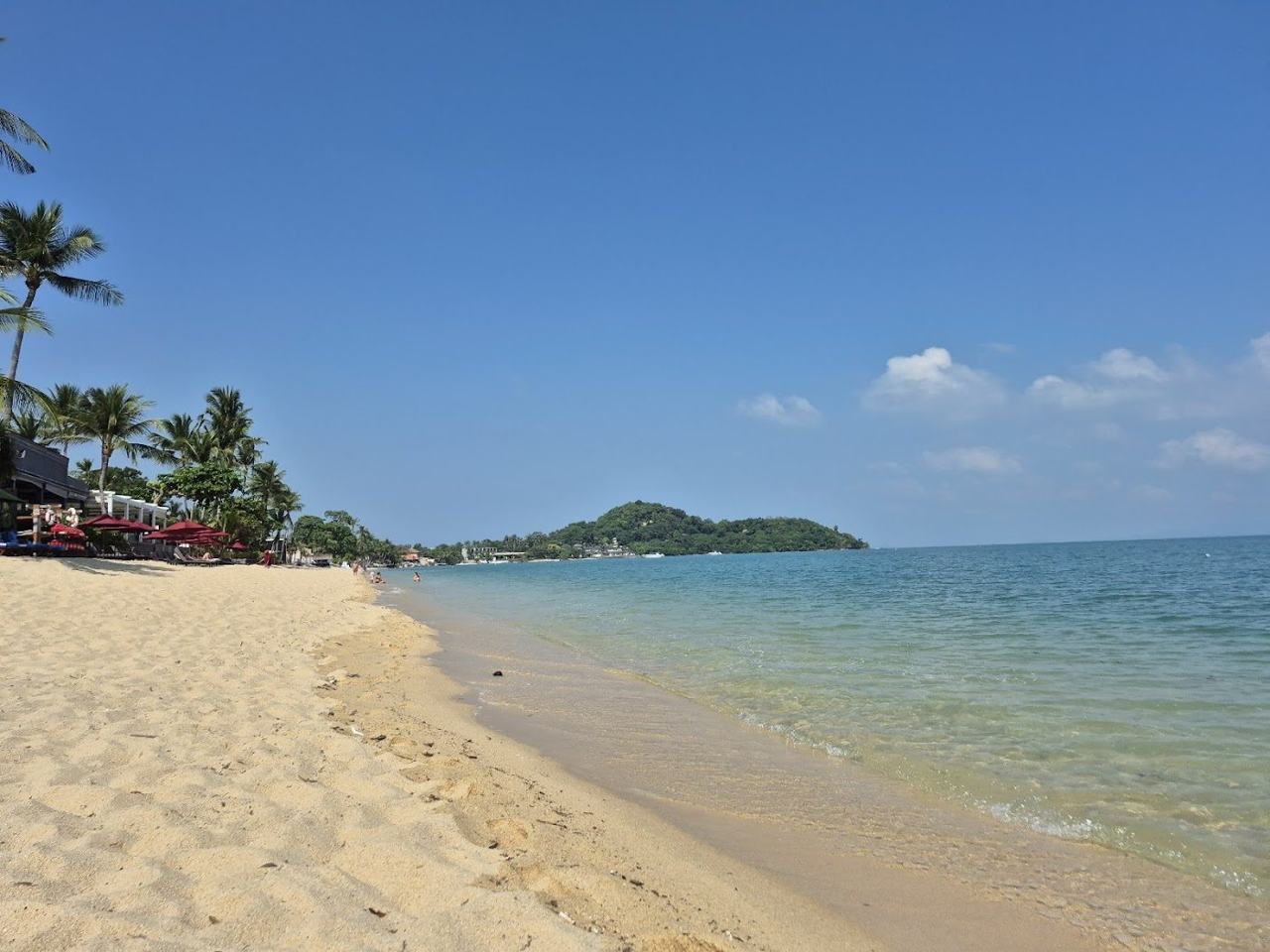
 Photo: Paterson via Google
The verdict
- Best forAnyone choosing weeks for calm beaches, value or quiet over the wettest months
- Top pickFebruary to April, when the island is at its driest and the sea is calm and clear
- One thing to knowKoh Samui runs on a different calendar from Phuket, with its wettest weather in the northeast monsoon around November, not the European summer
Published 22 March 2026. Last reviewed 18 May 2026
Koh Samui keeps a different calendar from the Andaman coast around Phuket, and that catches a lot of people out. Sitting in the Gulf of Thailand, the island stays driest and calmest in the early months of the year, sees pleasant sunny spells through the European summer, and takes its heaviest rain late in the year when the northeast monsoon arrives. The temperature barely changes, so timing is about the rain and the sea, not the heat.
This guide walks the year month by month, with a quick grid for the headline conditions and longer notes on the months that matter most. We have been honest about the trade offs, because the driest, calmest weeks are not always the busiest, and the cheapest, quietest weeks come with the real risk of heavy rain and a churned up east coast.
If you want the short answer, February to April is the island's most reliable window, with dry days and calm, clear water, while June to August usually brings good sunny spells between showers. The weeks to approach with care are October to December, when the monsoon brings the heaviest rain. Below is the fuller picture so you can match the month to the trip you want.
Month by month at a glance
| Month | Air | Sea | Rain | Crowd | Verdict |
|---|---|---|---|---|---|
| January | Warm, drying | Settling, around 28C | Easing | Busy, festive tail | Monsoon fading; improving by the week and still lively |
| February | Warm, dry | Calm, around 28C | Low | Busy | Excellent dry weather and calm clear sea; a top month |
| March | Hot, dry | Calm, around 29C | Low | Moderate | Hot and reliably dry; prime calm beach weather |
| April | Hottest, humid | Calm, around 30C | Low, building late | Moderate, Songkran spike | Very hot and mostly dry, with Songkran mid month |
| May | Hot, humid | Calm, around 30C | Showers building | Quieter | Warm with afternoon showers; good value, mostly sunny |
| June | Warm, humid | Calm, around 29C | Some showers | Moderate | Often dry and sunny between showers; a strong value month |
| July | Warm, humid | Calm, around 29C | Some showers | Busy, summer bump | Generally good with sunny spells; a popular summer month |
| August | Warm, humid | Calm, around 29C | Some showers | Busy | Warm and largely sunny with passing showers; summer peak |
| September | Warm, humid | Calm, around 29C | Increasing | Quieter | Showers rising toward the monsoon; quieter and cheaper |
| October | Warm, humid | Building swell, around 29C | Heavy, rising | Quiet | Monsoon arriving; rain and east coast swell build |
| November | Warm, wet | Roughest, around 28C | Wettest | Quiet | The wettest month, with a churned east coast; lowest prices |
| December | Warm, easing | Settling late, around 28C | Heavy early, easing | Building over holidays | Wet early then improving; festive weeks get busy |
When each month earns its place
February. One of the best months of the year on Samui, with the monsoon well behind and reliably dry, sunny days over calm, clear water. The east coast beaches at Chaweng and Lamai are at their gentlest, swimming is easy and the island is comfortable rather than oppressively hot. It is a busy month, but for dependable beach weather it is hard to beat.
April. The hottest month, when heat and humidity build before the first storms, and the dry season is still mostly intact. It also brings Songkran, the Thai new year water festival in mid April, which is lively and fun but busy. Come for the warmth and the festival, drink plenty of water, and expect it to be genuinely hot.
June. A quietly excellent month and often the best value of the year. The European summer brings sunny spells with only passing showers, the sea stays calm and warm, and prices and crowds are lower than the peak weeks. It is not guaranteed dry, but the balance of weather, value and space makes it a smart time to visit.
August. A busy summer month that is warmer and sunnier than its reputation suggests, with the heaviest rain still some way off. Expect plenty of beach days broken by the odd passing shower, calm Gulf water and a lively island, though prices and crowds run higher with the summer holiday crowd. A dependable choice if you are tied to school holidays.
October. The turn of the season, as the northeast monsoon begins to arrive with rising rain and building swell on the exposed east coast. The beaches grow quieter and prices fall, which appeals to value seekers, but the weather becomes a real gamble and the sea at Chaweng and Lamai can churn up. Worth it only if you want quiet and can plan around the rain.
November. Usually the wettest month of the year, when the northeast monsoon brings the heaviest rain and the roughest sea, with the east coast beaches taking the brunt. Prices and crowds are at their lowest, so it suits travellers chasing value who do not mind grey skies and indoor backup plans. The flip side is genuine peace and the lushest, greenest island.
Get the Koh Samui beach calendar
Independent and honest · 1,340 beaches ranked across 103 destinations · We answer to no resort
Before you go
What is the best month to visit Koh Samui?
February to April is the island's most reliable window, with dry, sunny days and calm, clear water. February and March stand out for settled weather without the extreme heat of April. June to August also brings good sunny spells. The island runs on a different calendar from Phuket, so its best beach weather is in the early year.
When is the rainy season in Koh Samui?
The heaviest rain comes with the northeast monsoon, roughly from October to December, peaking in November, which is usually the wettest month. This is the opposite of the Andaman coast around Phuket. The driest, calmest weather is from February to April, with sunny spells common through the European summer too.
How is the weather in Koh Samui different from Phuket?
They sit on opposite coasts with opposite seasons. Phuket on the Andaman side is wettest from May to October, while Koh Samui in the Gulf is wettest from October to December. So when one is in its monsoon, the other can be drier. If your dates are fixed, it is worth choosing the island whose calendar suits them.
Is the sea warm enough to swim all year in Koh Samui?
Yes. The Gulf of Thailand around Samui stays warm all year, generally around 28 to 30 degrees, so temperature is never the issue. The real question is the rain and, in the November monsoon, the swell on the exposed east coast beaches such as Chaweng and Lamai, which can churn the otherwise calm water.
When is Koh Samui most crowded?
The festive weeks around Christmas and new year are a peak despite the lingering monsoon, and the European summer months of July and August bring another busy spell. February and March offer dry weather with slightly more room, while the wet weeks of October and November are the quietest and cheapest of the year.