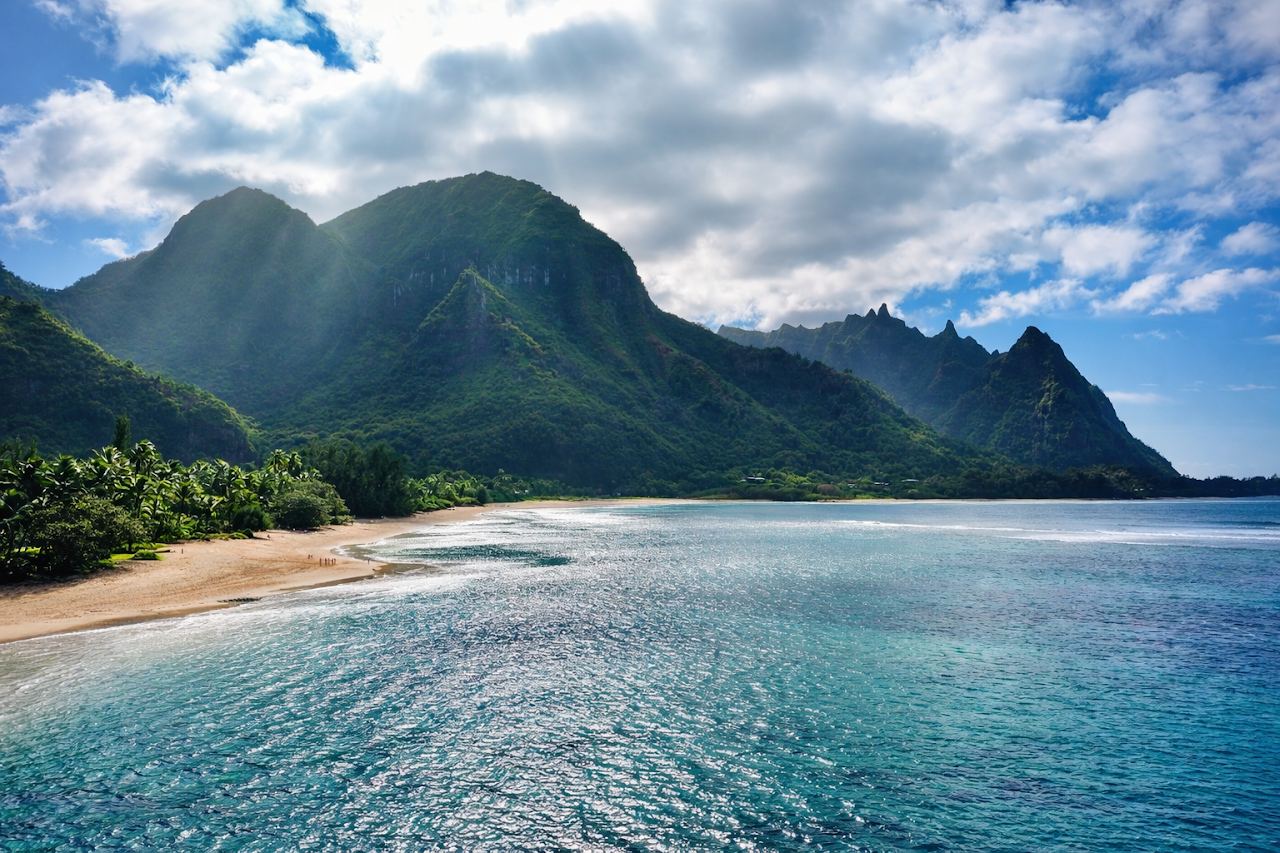
Tunnels Beach
Best for. Snorkelling families who visit in the calm summer months and are happy to solve the parking, using the reef by day and the neighbouring lifeguarded park for facilities.
Best spot. The inner reef at the eastern end near Haena Beach Park on a calm summer morning, sheltered and shallow enough for beginners to float over the coral.
Know this. Conditions flip hard by season, so the same beach that is a gentle summer aquarium becomes dangerous with high surf and strong currents from October to April.
Tunnels, or Makua to give it its Hawaiian name, is the beach that lands on the front of Kauai guidebooks, and for once the hype is earned. It is a broad golden crescent on the lush north shore, fringed with palms, framed by the green spires of the Na Pali coast and fronted by one of the largest, richest reefs on the island. In the right season it delivers snorkelling that ranks with anywhere in Hawaii, a shallow inner reef gentle enough for a nervous beginner and an outer reef laced with the lava tunnels that gave the beach its nickname. When Tunnels is on, it is magic.
The single most important thing a family can understand about Tunnels is that it is really two different beaches depending on the calendar. Through the summer, roughly May to September, the north swells go quiet, the reef shelters a calm clear lagoon, and the water is a friendly aquarium you can float over for hours. Through the winter, roughly October to April, the same reef takes the full force of north Pacific swells, the surf turns huge and the currents turn fierce, and people get into serious trouble here every year. There is no lifeguard on Tunnels itself. So the honest rule is seasonal and firm. In summer, snorkel the inner reef on a calm morning, keep an eye on the youngest, and do not push out to the tunnels unless you are a strong confident swimmer. In winter, treat Tunnels as a place to admire the surf from the sand and take your swimming to a calmer, guarded beach instead.
The other thing to solve before you arrive is parking, which is the genuine friction of a Tunnels day. There are only a handful of tiny spots tucked in the residential access alleys past the end of the main road, and they fill at dawn. The reliable answer for a family is to park in the public lot at Haena Beach Park next door, which also gives you the restrooms, showers and the nearest lifeguard, then walk a few minutes along the sand to the Tunnels reef. Do not block driveways or the alleys, come early, bring your own snorkel gear, water and reef safe sun cream, and remember there is no shop out here. Solve the parking and pick the right season, and Tunnels rewards you with the best snorkelling day on Kauai. Ignore either, and it can be a frustrating or even dangerous one.
A wild reef, not a club beach
Tunnels is a protected stretch of Hawaiian coast with no clubs or concessions, so bring what you need and let the reef and the Na Pali cliffs carry the day.
There is no beach club, bar or lounger hire on Tunnels, and there never will be, since this is a quiet residential end of the north shore backed by a state park. What you get is raw Kauai, palms, golden sand, the Na Pali cliffs and a spectacular reef, with the simple facilities of Haena Beach Park a short walk away. For most families that is exactly the point, a wild beautiful beach rather than a scene, so plan for self sufficiency and enjoy the lack of noise.
If a daybed, a pool and food service are what you are after for part of the trip, Kauai keeps its resort beaches and its calmer, more developed swimming coves elsewhere on the island, several of them lifeguarded and far better suited to small children. Our Kauai beaches and clubs guide points to the ones worth your time, and we can help you plan a day that pairs the Tunnels reef in the morning with an easier, better serviced beach in the afternoon.
The end of the north shore road
Tunnels Beach sits near the very end of the north shore road at Haena on Kauai, just before Haena State Park and the start of the Na Pali coast. From the towns of Hanalei and Princeville it is a beautiful drive of around twenty to thirty minutes over a series of one lane bridges. The beach is reached either from the tiny access alleys past mile marker eight or, more reliably, on foot from the public lot at Haena Beach Park a short walk to the east.
Come early, since the handful of parking spots fill at dawn and the day only gets busier. Use the Haena Beach Park lot for parking, restrooms, showers and the nearest lifeguard, and walk in along the sand. Bring your own snorkel gear, water, food and reef safe sun cream, because there are no shops out here. Above all let the season guide you, snorkel the calm inner reef in summer, and keep out of the water when winter surf is running.
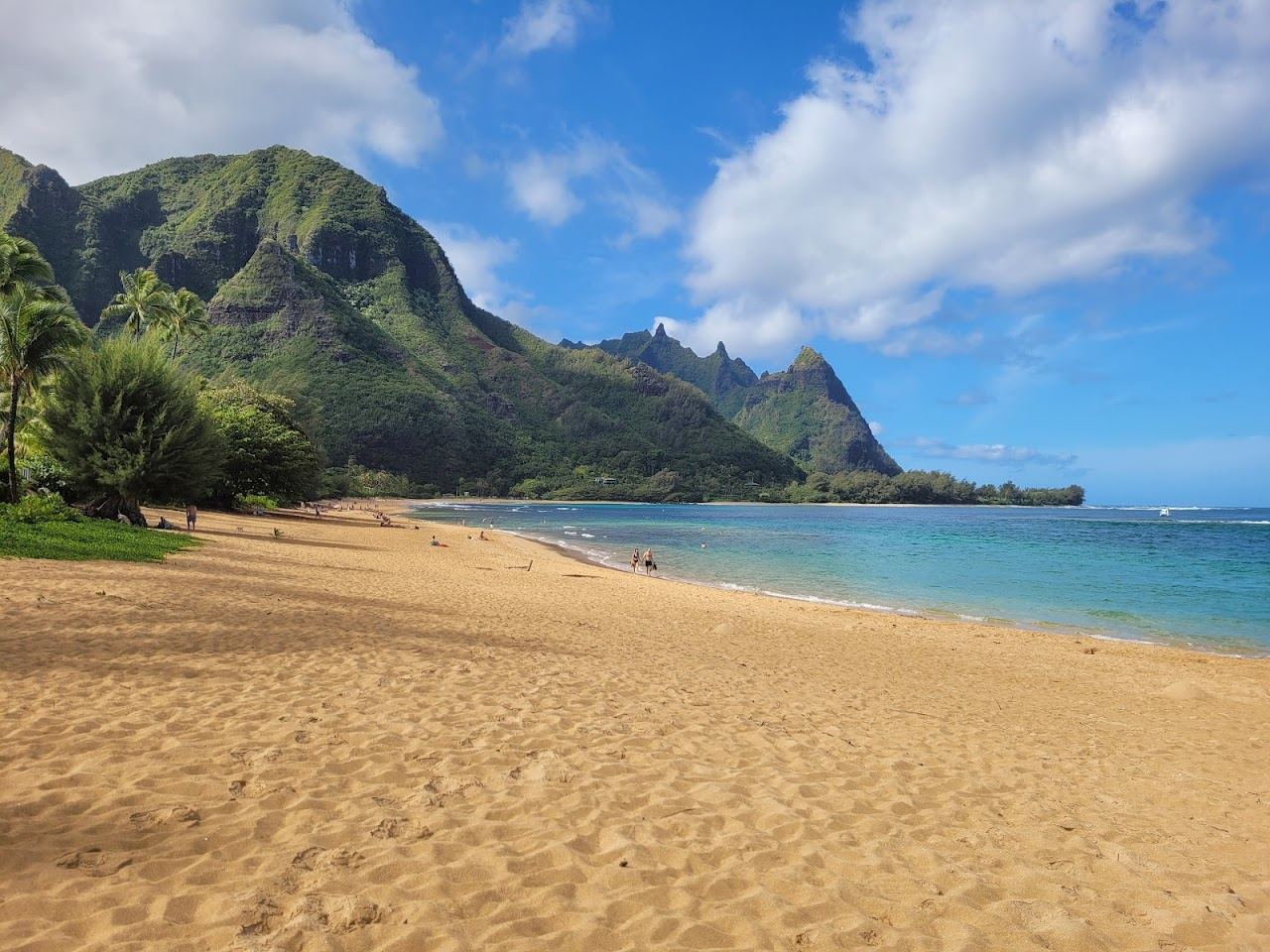 Photo: David Cote via Google
Not ready to book?
Keep the good shorelines coming. Shore Notes is our occasional letter on the best beaches and the clubs worth your day, sent straight to your inbox. One field, unsubscribe any time.
Book a beach club
Tunnels is a wild reef with no club, but tell us your dates and party size and we will help you plan a day and arrange a lounger or lunch at an easier, better serviced Kauai beach. We reply by email.
Independent and honest · 1,340 beaches ranked across 103 destinations · We answer to no resort
We are an independent editorial resource. Booking requests are passed to clubs and operators, and some may earn us a commission at no cost to you. Prices, availability and opening status are set by the venue and are to be confirmed at the time of booking.
Common questions about Tunnels Beach
Can you swim and snorkel at Tunnels Beach?
Yes, in the summer months this is some of the best snorkelling in Hawaii. From roughly May to September the reef shelters a calm, clear inner lagoon that is gentle enough for beginners, while the outer reef and its lava tunnels suit strong swimmers. In winter, from about October to April, high surf and powerful currents make the water dangerous, so treat Tunnels as strictly a summer swimming beach and always read conditions first.
Where do you park for Tunnels Beach?
Parking is the real challenge. Only a handful of small spots sit in the residential access alleys past mile marker eight, and they fill at dawn. The reliable option for a family is the public lot at Haena Beach Park just to the east, which also has restrooms, showers and a lifeguard, followed by a short walk along the sand to the reef. Do not block driveways or the access alleys.
Is there a lifeguard or facilities at Tunnels Beach?
Not on Tunnels itself. There are no restrooms, showers or lifeguard directly on the beach. The nearest facilities and the closest lifeguard are next door at Haena Beach Park, a few minutes walk along the sand, which is why most families base their day around the park. Ask the park lifeguard about the day's conditions before you snorkel, and never go out alone.
Is Tunnels Beach good for families with children?
In summer it can be excellent for snorkelling families, with a calm shallow inner reef full of fish and easy floating. It works best when you use Haena Beach Park next door for parking, toilets, showers and the lifeguard, and walk in. In winter the surf and currents make it unsuitable for swimming, so save it for the calm season and choose a guarded, gentler beach for young children when the north shore is rough.
Do you need a reservation for Tunnels Beach?
No. Unlike the neighbouring Haena State Park and Ke'e Beach, which require advance reservations and an entry fee for out of state visitors, Tunnels itself and the public parking at Haena Beach Park currently need no reservation and charge no entry fee. Policies on the north shore do change, though, so it is worth checking the latest county and state park information before you drive out.
When is the best time to visit Tunnels Beach?
Aim for the summer, roughly May to September, when the north shore swells calm down and the inner reef becomes a clear, gentle snorkelling lagoon. Early mornings are best for calm water, light crowds and a chance at parking. From October to April the surf builds and the currents strengthen, so winter visits are for watching the waves from the sand rather than getting in the water.