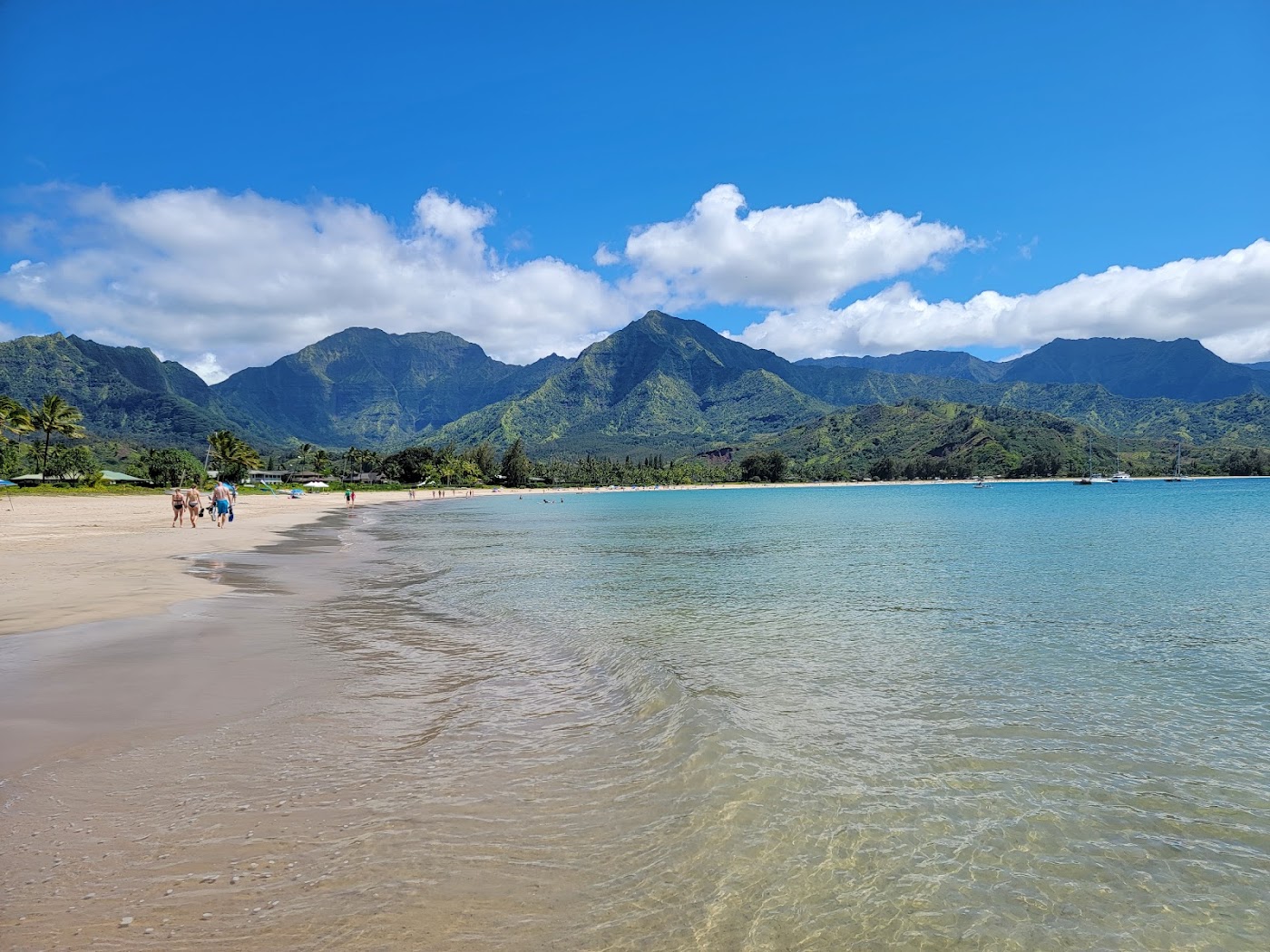
 Photo: Brad Pignon via Google
The verdict
- Best forTravellers choosing between reliable summer sun, the lush green of the wet season and the value of the shoulder months.
- Top pickApril, May, September or October, for low rain, warm sun, calmer seas and fewer crowds.
- One thing to knowKauai is the wettest main island, and the north shore always sees more rain and bigger winter surf than the sunny south.
Published 17 January 2026. Last reviewed 21 February 2026
Kauai is the green one, the oldest and most weathered of the main Hawaiian islands, and that lushness has a price written into the calendar. The cliffs of the Na Pali coast and the folded interior are emerald because it rains here more than anywhere else in the chain. Reading the seasons on Kauai is mostly about rain and surf, since the air and the sea stay warm and swimmable all year.
The drier season runs from about April to October and the wetter one from November to March. Yet the island splits itself in two as much as it splits the year. Mount Waialeale in the interior wrings the rain out of the trade winds, so the north shore around Hanalei and Princeville is greener and wetter, while the south shore around Poipu and the sunnier west stay drier whatever the month. A grey morning in Hanalei can be a bright one in Poipu, half an hour away.
Surf flips with the seasons too. Winter sends powerful swells onto the north shore, where Hanalei Bay fills with surfers and the water turns dramatic, while the south coast lies calmer for swimming. Come summer the pattern reverses. Winter also brings the greenest landscapes, the fullest waterfalls and the humpback whales offshore. Below is a month by month read, then the months that most reward or most test a visit, all of it typical rather than promised.
Month by month at a glance
| Month | Air | Sea | Rain | Crowd | Verdict |
|---|---|---|---|---|---|
| January | Warm | Warm | High | High | Green and wet, big north shore surf, holiday crowds |
| February | Warm | Warm | High | Medium | Lush and showery, whales offshore, winter swell |
| March | Warm | Warm | Medium | Medium | Drying out, spring break weeks busier |
| April | Warm | Warm | Low | Medium | Often the sweet spot, drier, calmer, good value |
| May | Warm | Warm | Low | Low | Dry, sunny and quiet, excellent value |
| June | Warm | Warm | Low | High | Reliable summer sun, calmer north shore, busy |
| July | Warm | Warm | Low | High | Hot, dry and peak season, south shore swell |
| August | Warm | Warm | Low | High | Dry and sunny, warmest sea, crowds high |
| September | Warm | Warm | Low | Low | A sweet spot, dry, warm and quiet, great value |
| October | Warm | Warm | Medium | Low | Still mostly dry and uncrowded, first swells return |
| November | Warm | Warm | High | Medium | Wetter and greener, surf building, crowds rising late |
| December | Warm | Warm | High | High | Lush and showery, big north surf, holiday peak |
When each month earns its place
May and September. These two shoulder months are the connoisseur's pick. Both sit in the drier season, the crowds and rates fall away between the spring and summer rushes, the sea is warm and the light is clean. You get the reliability of summer without the peak season prices or the busy beaches, which is exactly the balance most travellers are after.
April. April often hits the sweet spot, drying out after the wet winter while staying quiet. The waterfalls are still full and the hills are vivid green, the north shore surf is easing toward summer calm, and the value is strong before the June rush. Pack for the odd shower, since the north can still catch passing rain.
July and August. Midsummer is the dependable sun season, hot, dry and bright, with the warmest sea and the calmest north shore for swimming and snorkelling. The catch is company, since these are the busiest and priciest months, so book early and start beach days before the crowds arrive. The south shore picks up summer swell for surfers.
January. Deep winter is the island at its greenest and most dramatic. The waterfalls thunder, the interior glows emerald, humpback whales pass offshore and the north shore surf is at its biggest. The trade off is the most rain of the year and holiday crowds, and the north can be properly wet, so base yourself south in Poipu if sun is the priority.
Get the Kauai beach calendar
Independent and honest · 1,340 beaches ranked across 103 destinations · We answer to no resort
Before you go
What is the best month to visit Kauai?
April, May, September and October hit the sweet spot, with low rainfall, warm sun, calmer seas and fewer crowds than the holiday peaks. The drier summer months are reliable for sun but busier, while winter brings the greenest landscapes, the biggest north shore surf and the most rain.
When is the dry season in Kauai?
The drier season runs broadly from April to October and the wetter season from November to March. Kauai is the wettest of the main Hawaiian islands, and rain falls year round, but the north shore around Hanalei and Princeville always sees more than the sunnier south around Poipu.
Is the sea warm enough to swim in Kauai year round?
Yes. The water stays warm and swimmable every month, a little warmer in late summer and only slightly cooler in winter. The bigger variable is surf, not temperature. The north shore can see powerful winter swells from about November to March, while the south shore is calmer in winter and picks up summer swell. Conditions are typical and never guaranteed.
When is the best surf on the north shore of Kauai?
The biggest north shore surf arrives with the winter swells, broadly November to February, when Hanalei Bay draws experienced surfers and spectators. Those same months bring calmer water and easier swimming to the south shore. In summer the pattern flips, with gentler north shore seas and more swell in the south.
When can you see whales and hike the Na Pali coast?
Humpback whales pass Hawaii broadly from November to April, with winter the prime viewing window. For calmer seas to take a boat along the Na Pali coast, the drier months from April to October are usually best, when the winter swells have eased. Both vary year to year and are never guaranteed.