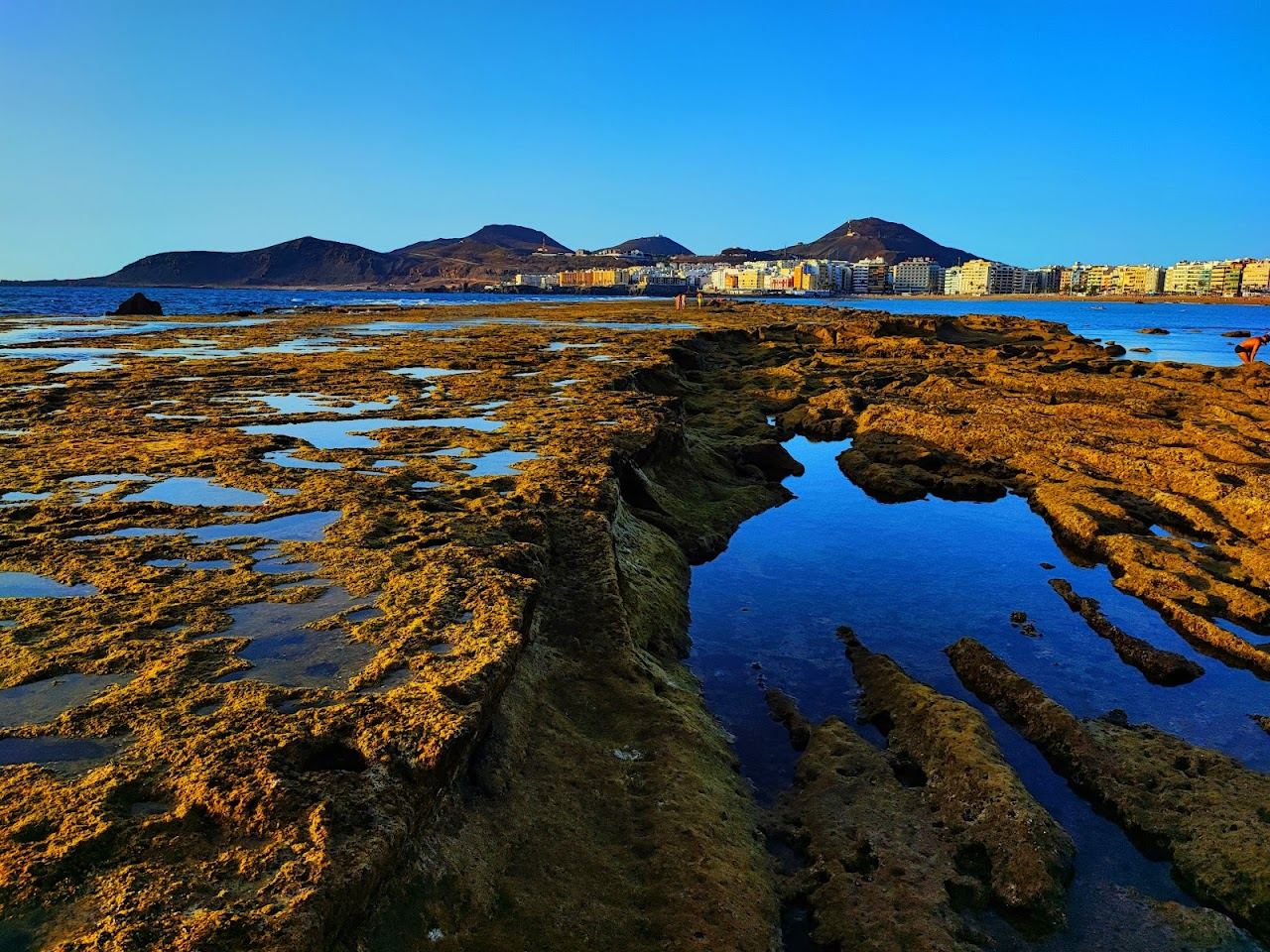
 Photo: David Béjar (David Béjar fotografía) via Google
The best snorkelling beaches in Gran Canaria
Where a volcanic rock bar turns a city beach into a free, calm fishbowl.
The verdict
- Best forTravellers who want clear Atlantic water and easy reef without resort prices, plus one wilder reserve for the keen
- Top pickLas Canteras and its La Barra reef, a free city beach where a volcanic rock bar shelters a natural fishbowl
- One thing to knowThe famous golden dune beaches in the south are poor for snorkelling, so go to the rock bar or the east coast reserve instead
Published 20 February 2026. Last reviewed 15 March 2026
Gran Canaria is booked for its golden dunes, and the value truth for a snorkeller is that the dunes are the wrong place to look. The grand south coast beaches at Maspalomas and Playa del Ingles are open sweeps of sand with surf and almost no reef, so a mask sees little there. The good snorkelling sits in two unlikely places instead: behind a black rock bar on a city beach in the capital, and along the raw volcanic rocks of a marine reserve on the quiet east coast. Both reward you for knowing where to look rather than where the brochures point.
What the island gives you, in the right spot, is clear Atlantic water that stays swimmable almost the whole year and rarely turns cold. The smart, cheap move is to base a snorkel around Las Canteras, where you swim for free off a fully serviced city beach, and to save the one paid effort, a trip out to the El Cabron reserve, for the day you want real fish life. Treat the sheltered southern bays as easy beginner water and the rocks as the real prize, and you get the best of the island without paying resort rates for a thin reef.
Gran Canaria snorkelling beaches, ranked
Picked for how much there is to see, how calm the entry is and how little it costs to get in the water.
Las Canteras
A long golden city beach in Las Palmas with a secret: La Barra, a natural volcanic reef bar that runs offshore and shelters the bay into a calm, clear fishbowl. At low tide the fish gather in the cracks of the rock and you swim out to them for nothing, with showers, lifeguards and easy access behind you. The best value snorkel on the island.
Amadores
A man made golden sand bay scooped out of the cliffs in the south, with calm, sheltered, clear water that makes for the gentlest entry on the coast. The fish life is modest beside the rocky reserves, but the rocky edges hold a few and the calm suits a first snorkel. Go early before the bay fills, since the sand and the day beds are the draw by midday.
Anfi del Mar
A horseshoe of white sand around a calm bay with a small palm islet, sheltered and clear and very easy to wade into. It is resort water rather than a wild reef, so expect gentle conditions and modest fish around the rocky corners. A pleasant, safe float that pairs well with a slow resort day.
Puerto Rico
A sheltered south coast bay beside the marina, with calm, warm water and full facilities a step from the sand. The snorkelling is easy rather than rich, with rocky ends that hold a little life and a flat, protected centre. Handy and calm, and the launch point for the boat trips that reach the quieter coves nearby.
Mogan
The calm, pretty beach below the canal village in the southwest, with sheltered clear water and an easy entry off soft sand. Fish life is light and the appeal is the peaceful, protected swim and the village behind it. A relaxed, low cost morning in the water before the harbour lunch.
The honest read on snorkelling here
Be honest about the south coast headliners. Maspalomas and Playa del Ingles are glorious to look at and lovely for a long walk and a swim, but as snorkelling they disappoint: they are wide, open, surf swept and sandy, with little for a mask to find. Travellers arrive expecting reef and leave a little flat. They are beaches to enjoy on their own terms, not to snorkel. For fish, the rock bar in the capital and the reserve on the east coast are the honest answers.
The one trip worth the effort is the El Cabron Marine Reserve near the fishing village of Arinaga on the east coast. It is a protected volcanic seabed of caves, arches and ledges with a remarkable variety of fish, easily the richest snorkelling on the island. The catch is the access: the entry is over rock rather than sand, it is exposed to swell, and you really want a car and sturdy footwear or a local operator to make it simple. Go on a calm day, treat the conditions as typical and never guaranteed, and it rewards the effort in a way the resort bays cannot.
The value rule for Gran Canaria is to spend your money where it counts. The free swim at Las Canteras and the sheltered southern bays cost little and suit easy mornings, so save the one paid push for El Cabron when the sea is calm. Snorkel early before the wind builds, never stand on the rocks or chase the fish, and you can see the best of the island's underwater life without paying a premium for a thin reef.
Where to settle after the swim
Gran Canaria pairs its snorkelling with an easy beach club afternoon, especially in the sheltered south where Amadores, Anfi del Mar and Puerto Rico all carry day beds, shade and full service a step from the calm water. Up in the capital, Las Canteras keeps it simple with a long free promenade beach and cafes behind the sand, which is the better value if you would rather not pay a minimum spend. We keep an honest list of where a day bed is worth it and where the beach is simply free public sand, so you can match the morning float to the kind of afternoon your budget wants.
Book a beach club in Gran Canaria
Independent and honest · 1,340 beaches ranked across 103 destinations · We answer to no resort
Before you go
What is the best beach for snorkelling in Gran Canaria?
Las Canteras in the capital is the best free shore snorkel, thanks to La Barra, a natural volcanic rock bar that shelters the bay into a calm fishbowl. At low tide the fish gather among the cracks in the reef and you swim in off a city beach with full facilities. Go on a calm morning when the surface is flat.
Where is the richest marine life for snorkelling in Gran Canaria?
The El Cabron Marine Reserve near the fishing village of Arinaga on the east coast is the island's standout, a protected volcanic seabed with caves, arches and a huge variety of fish. Entry is rocky and the access is harder than a sandy beach, so a car and sturdy footwear help and a local operator makes it easier. It is the one trip worth the effort for keen snorkellers.
Can you snorkel in Gran Canaria all year round?
Yes. The water stays clear for most of the year and rarely drops below about 18C even in winter, so snorkelling is possible in every season. Summer and early autumn give the calmest, warmest water. Conditions are typical rather than guaranteed, so check the wind and swell before you swim.
Are Maspalomas and Playa del Ingles good for snorkelling?
Not really. They are vast, beautiful golden sand beaches backed by the dunes, but they are open, surf swept and sandy underfoot with little reef, so there is not much to see with a mask. They are wonderful for a walk and a swim, not for snorkelling. For fish, head to Las Canteras or the rocky east coast instead.
Do you need a boat to snorkel in Gran Canaria?
No. The best snorkelling here is all from the shore, from the La Barra reef at Las Canteras to the sheltered resort bays in the south and the rocks at El Cabron. A boat trip can reach quieter coves but it is an optional extra rather than a need. Most travellers snorkel free off the sand and rocks.
Which south coast beaches are sheltered enough for beginners?
Amadores, Anfi del Mar and Puerto Rico are man made or part sheltered bays with calm, clear water and easy entry, which makes them kind for a first snorkel. The fish life is modest compared with the rocky reserves, but the calm and the facilities are the draw. Go early before the bays fill with swimmers and pedalos.