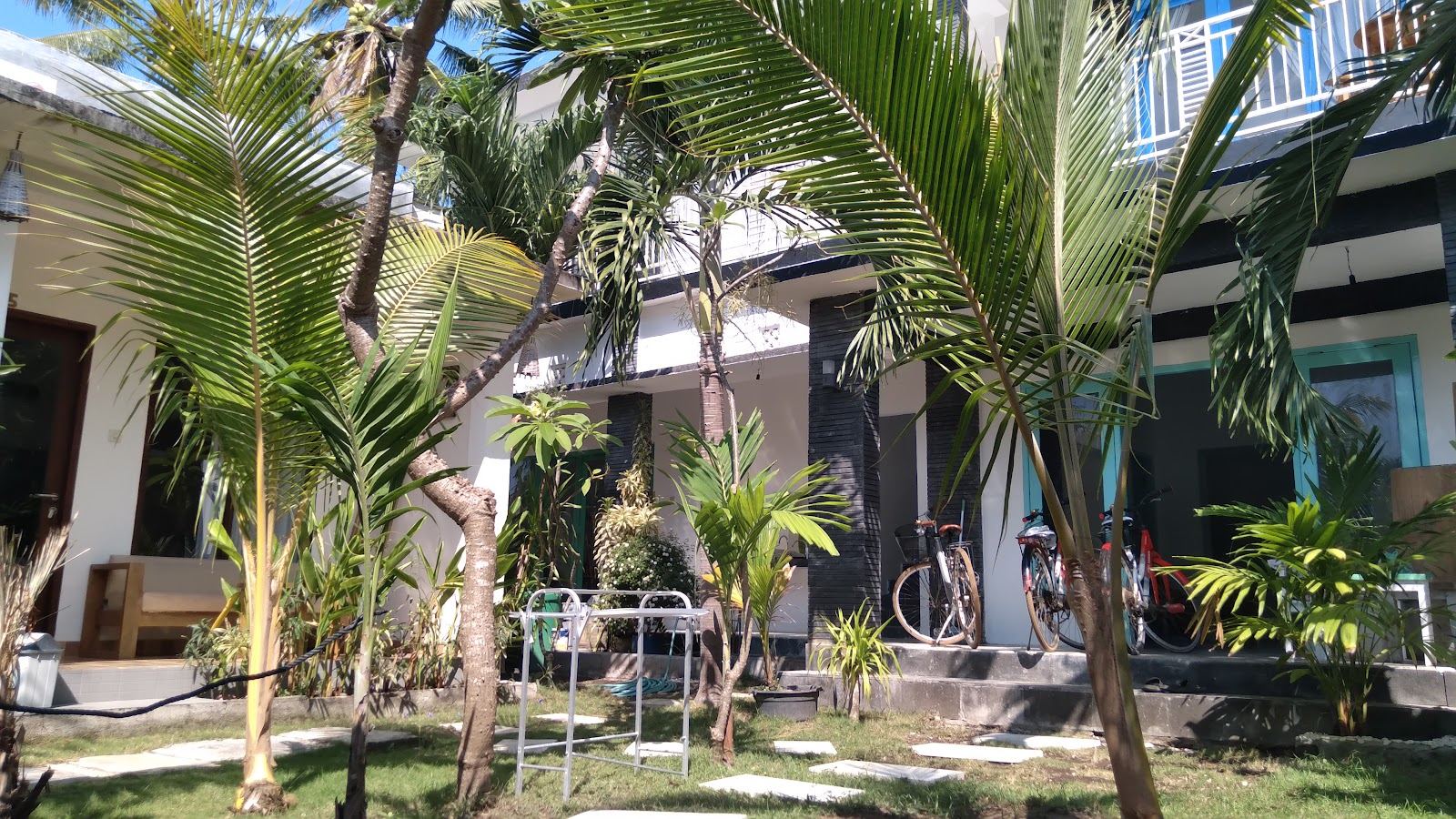
 Photo: Palm Trees via Google
When to Go to the
Gili Islands
Season, sea, rain and crowds, month by month for a value beach trip.
The verdict
- Best forTravellers timing a Gili beach trip who want calm clear water for snorkelling, reliable sun and a sense of the crowds and prices before they book
- Single best spotMay, June and September, the dry season shoulder months with calm seas and clear water at well below the July and August prices
- One thing to knowThe sea is warm all year, so timing is about rain, water clarity and the boat crossing, not temperature. The dry season wins on all three
Published 14 March 2026. Last reviewed 4 April 2026
The Gili Islands sit just off Lombok in the tropics, so the heat and the sea barely change across the year and the calendar comes down to one thing, the difference between the dry season and the wet. The dry months from about May to September bring calm seas, clear water and dependable sun, which is exactly what you want for snorkelling the reef and crossing from Bali or Lombok in comfort. The wet season from November to March is hotter and stickier, with heavier rain, murkier water and the chance of a rougher boat ride, though it is also the cheapest and quietest time to come.
The honest read for a value traveller is that you do not need the peak to get the best of the islands. July and August have the finest conditions but also the highest prices and the busiest beaches, while the shoulder months of May, June and September deliver nearly identical calm clear water for noticeably less. If your budget matters more than guaranteed sun, the early wet season can still work, since the rain here often arrives in short heavy bursts rather than washing out whole days. Match the month to your priorities and the islands rarely let you down.
Month by month
Typical conditions only, never guaranteed. The sea stays warm all year, so watch the rain and the crossing.
| Month | Air | Sea | Rain | Crowd | Verdict |
|---|---|---|---|---|---|
| January | Hot, around 30C | Warm, near 29C | High | Moderate | Wet season peak, warm but rainy and humid |
| February | Hot, around 30C | Warm, near 29C | High | Low | Wettest stretch, quiet and cheap |
| March | Hot, around 31C | Warm, near 29C | Easing | Low | Tail of the wet season, good value |
| April | Hot, around 31C | Warm, near 29C | Low | Rising | Drying out, calm and well priced |
| May | Hot, around 31C | Warm, near 28C | Low | Moderate | Dry season opens, clear water returns |
| June | Warm, around 30C | Warm, near 28C | Very low | Rising | Calm, clear and good value before the peak |
| July | Warm, around 29C | Warm, near 28C | Very low | High | Peak season, best conditions and busiest |
| August | Warm, around 29C | Warm, near 28C | Very low | Highest | Driest and busiest, prices at their peak |
| September | Warm, around 30C | Warm, near 28C | Low | Moderate | The best all round month, calm and clearing of crowds |
| October | Hot, around 31C | Warm, near 28C | Rising | Moderate | Warm and quieter, first wet season showers |
| November | Hot, around 31C | Warm, near 29C | Rising | Low | Wet season begins, cheap and quiet |
| December | Hot, around 30C | Warm, near 29C | High | Rising at the holidays | Rainy but festive, a short peak at New Year |
The months that matter
May opens the dry season and is one of the best value months of the year. The rain has eased, the water clears for snorkelling, the seas calm for an easy crossing, and the crowds and prices are still well below the summer peak. It is the smart traveller's window for turtle snorkelling off Trawangan and quiet sunsets before the islands fill, with rooms noticeably cheaper than they will be in July.
June carries the dry season into its stride, with calm clear water, almost no rain and the heat sitting a touch lower than the wet season. Crowds are rising but have not peaked, so it remains good value for a snorkelling trip and a slow beach stay. Along with September it is the sweet spot for travellers who want the best conditions without paying the high season premium.
July and August are the peak, and the trade is comfort for cost and company. The weather is at its driest and the water at its clearest, which is ideal for diving and snorkelling, but the islands are busiest, the Trawangan bars are full and room rates climb to their highest of the year. Book accommodation and any fast boat well ahead, and expect the liveliest, priciest version of the Gilis.
September is arguably the finest month overall. The dry season conditions hold, the water stays clear and the seas calm, yet the school holiday crowds thin out and prices begin to ease. It is the ideal window for warm clear snorkelling, quiet white sand on the northwest of Trawangan and a slower pace at much better value than August.
October is a pleasant shoulder month, warm and still fairly clear, with the first wet season showers arriving and the crowds light. It is a good quiet choice as long as you accept some rain risk. From November the wet season returns in earnest, bringing heavier rain, more humidity and murkier water, though the short sharp downpours often leave plenty of beach time around them.
December to March is the heart of the wet season and the cheapest, quietest stretch, save for a brief surge over Christmas and New Year. Expect warm rain, the odd rougher crossing and reduced underwater visibility, but also the lowest prices, the emptiest beaches and the same warm sea. For a value trip with a flexible attitude to weather it can be a genuine bargain, while travellers set on guaranteed snorkelling are better waiting for the dry season.
Where to book a daybed
Timing a daybed or sunset table on the Gilis is mostly about the season, since the beach bars and lounges run their fullest service through the dry months and some scale back in the wettest weeks. The liveliest clusters sit on the northwest of Gili Trawangan and along the east shore of Gili Air, busiest in July and August and more relaxed and cheaper in the shoulder and wet season months.
We never invent a venue, a price or an opening status, so any rate, season or minimum spend is to be confirmed until the venue confirms it. Tell us your dates and we will pass the enquiry on so they can confirm whether they are open and what a daybed costs before you travel.
Book a beach club in the Gili Islands
Independent and honest · 1,340 beaches ranked across 103 destinations · We answer to no resort
Before you go
When is the best time to visit the Gili Islands?
The dry season from about May to September is the best window, with the calmest seas, clearest water for snorkelling and the most reliable sun. July and August are the peak and the dearest, so the shoulder months of May, June and September give nearly the same conditions for noticeably less. Conditions are typical rather than guaranteed.
Is the sea warm in the Gili Islands all year?
Yes. The sea sits warm year round at roughly 28C to 29C, so water temperature is never the issue. What changes through the year is the clarity and the sea state, which are best in the dry season and choppier and murkier in the wet season. The crossing from Lombok or Bali is also calmer in the dry months.
What is the wet season like in the Gili Islands?
The wet season runs roughly November to March, bringing heavier rain, more humidity, the odd rougher boat crossing and murkier water for snorkelling. The rain often comes in short heavy bursts rather than all day, so beach time is still possible, and prices and crowds are at their lowest. For a value trip the wet season can work if you accept the weather risk.
Which months are cheapest in the Gili Islands?
The wet season months from late January to March are usually the cheapest, with the lowest room rates and quietest beaches, followed by the shoulder months of April, May and October. The most expensive periods are July and August and the Christmas and New Year window, when demand peaks and prices climb. Booking the slow public boat keeps transport cheap year round.
When is snorkelling best in the Gili Islands?
Snorkelling is best in the dry season from May to September, when the water is clearest and the seas calmest, which matters for spotting turtles at Turtle Point and the reef between the islands. Visibility drops in the wet season as rain and run off cloud the water. Tides also matter year round, since the reef flats are too shallow to swim at low water.
Is it worth visiting the Gili Islands in the rainy season?
It can be, for a value or quiet trip. The wet season brings lower prices, fewer people and a sleepier pace, and the rain often falls in short bursts rather than ruining whole days. The trade is murkier water, the chance of a rougher crossing and less reliable sun. If you want guaranteed snorkelling and calm seas, the dry season is the safer choice.