Pasjaca Beach, Konavle
The verdict
- Best for: Confident swimmers and walkers after one of the most dramatic beaches in Croatia, photographers, and anyone happy to carry in everything they need for the day.
- Best spot: The main strip of sand at the foot of the steps, early in the day, before the light goes flat and the small beach fills with the few who make the climb.
- Know this: Access is down a steep path and through tunnels cut in the cliff with a long flight of steps, there are no facilities at all, and the water deepens quickly, so it suits able visitors and confident swimmers.
Published 2 March 2026. Last reviewed 16 May 2026
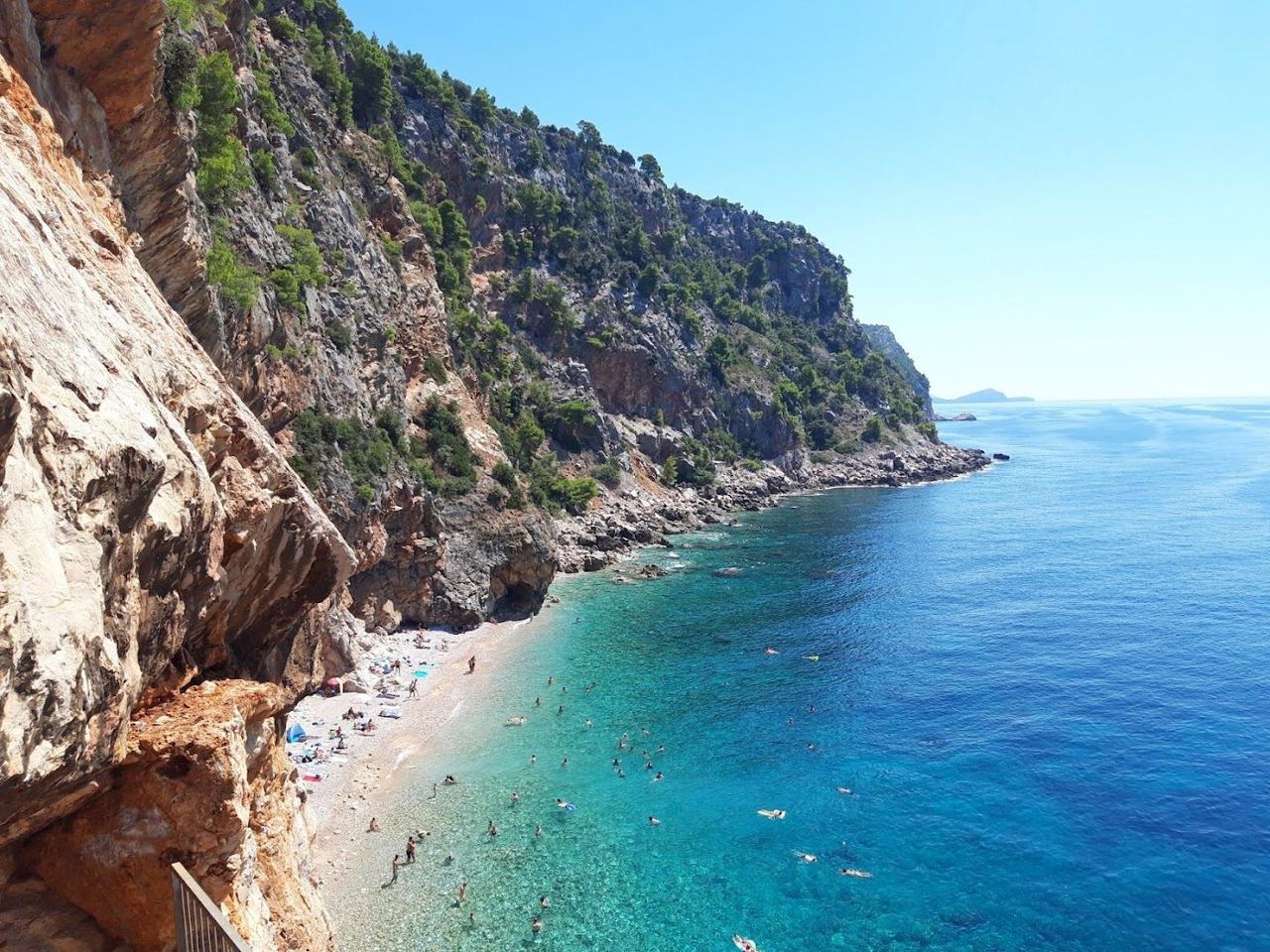
Pasjaca is the beach that looks unreal in photographs and is almost as striking in person. It lies at the foot of towering cliffs in Konavle, the green southern corner of Croatia below Cavtat and around thirty kilometres south of Dubrovnik, beneath the village of Popovici. The strip of sand and shingle was an accident of engineering: when a tunnel to the sea was cut in the 1950s the excavated rock was left on the shore, and the waves slowly ground it into the beach you see today.
The setting is the whole experience. You leave the car at the top, then descend a steep path and a long flight of steps that passes through tunnels hewn through the rock, emerging at a small beach pinned between the cliff and water of an extraordinary clarity. It earned a name as one of Europe's most beautiful beaches, and standing on the sand with the wall of rock rising behind you and the open Adriatic in front, it is easy to see why. The water deepens quickly and is gin clear, so for a confident swimmer the swim is as memorable as the view.
The honest note is that Pasjaca asks something of you. The climb down and, harder, back up is steep and tiring in the heat, there are no facilities of any kind, no shade beyond the cliff, and the small beach can all but disappear when the sea is up. This is not a beach for small children, for anyone who struggles with steps, or for a lazy serviced day; for that, the town beaches of Dubrovnik suit better. Come able and prepared, early and on a calm day, carry in everything you need, and Pasjaca is one of the most dramatic beaches you will ever climb down to.
Clubs near this beach
Pasjaca is a wild cliff beach with no concessions of any kind rather than a club beach. We describe what is there honestly and route enquiries to the named club style venues of the coast through our directory; we never invent venues.
No club on the sand
Pasjaca has no beach club, bar, sunbed hire or kiosk on the sand, which is central to its wild appeal. There is a car park at the top of the access path run independently, with charges and arrangements to be confirmed.
Cavtat and Dubrovnik venues
For a serviced beach club style day, the venues around Cavtat and Dubrovnik are the nearest option, listed in our directory. We route enquiries there and never present a wild cove as something it is not.
Pasjaca lies below the village of Popovici in Konavle, around thirty kilometres south of Dubrovnik and roughly twelve kilometres from Cavtat. Most visitors drive, as there is a car park at the top of the access path, from which a steep path and stepped tunnels lead down to the beach. There is no easy public transport to the trailhead, so a car is the practical choice. Conditions are typical and never guaranteed.
Allow time and energy for the climb back up, which is the hard part in the heat, and wear proper shoes for the steps and tunnels. Bring water, food, shade and sun protection because there is nothing on the beach, choose a calm settled day so the sea does not cover the sand, and take care near the cliff and in the deep clear water.
Not ready to book?
Keep the good shorelines coming. Shore Notes is our occasional letter on the best beaches and the clubs worth your day, sent straight to your inbox. One field, unsubscribe any time.
Reserve a day at Pasjaca Beach Beach
Pasjaca is a wild cliff beach rather than a club beach, but tell us your date and party and we will point you to the right beach club style venues around Cavtat, Dubrovnik and the wider Dalmatian Coast. No charge to enquire.
Independent and honest · 1,340 beaches ranked across 103 destinations · We answer to no resort
Common questions
How do you get down to Pasjaca Beach?
From the car park above the beach, below the village of Popovici, you follow a steep path and a long flight of steps that runs through tunnels carved in the cliff, descending around two hundred metres in all. The climb back up is steep and tiring in the heat, so allow time and energy for it.
Are there any facilities at Pasjaca?
No. There are no cafes, sunbeds, showers or toilets at Pasjaca, and no shade beyond the cliff. You must carry in water, food, shade and sun protection and carry out your rubbish, which is part of why the cove stays so wild and clean.
Is Pasjaca Beach suitable for children?
It is not ideal for small children. The access is steep, with steps and tunnels, there are no facilities, and the water deepens quickly below the cliffs. It suits able walkers and confident swimmers far more than families with toddlers.
Why is Pasjaca Beach so famous?
Pasjaca is famous for its dramatic setting at the foot of towering cliffs, reached through tunnels in the rock, and for water of striking clarity. It was named one of Europe's most beautiful beaches, which drew wide attention to a once little known cove.
When is the best time to visit Pasjaca?
Come on a calm settled summer day, when the sea is gentle and does not cover the small beach, and arrive early for the softer light and the limited space. Avoid rough or windy days, when access is harder and much of the sand is underwater.