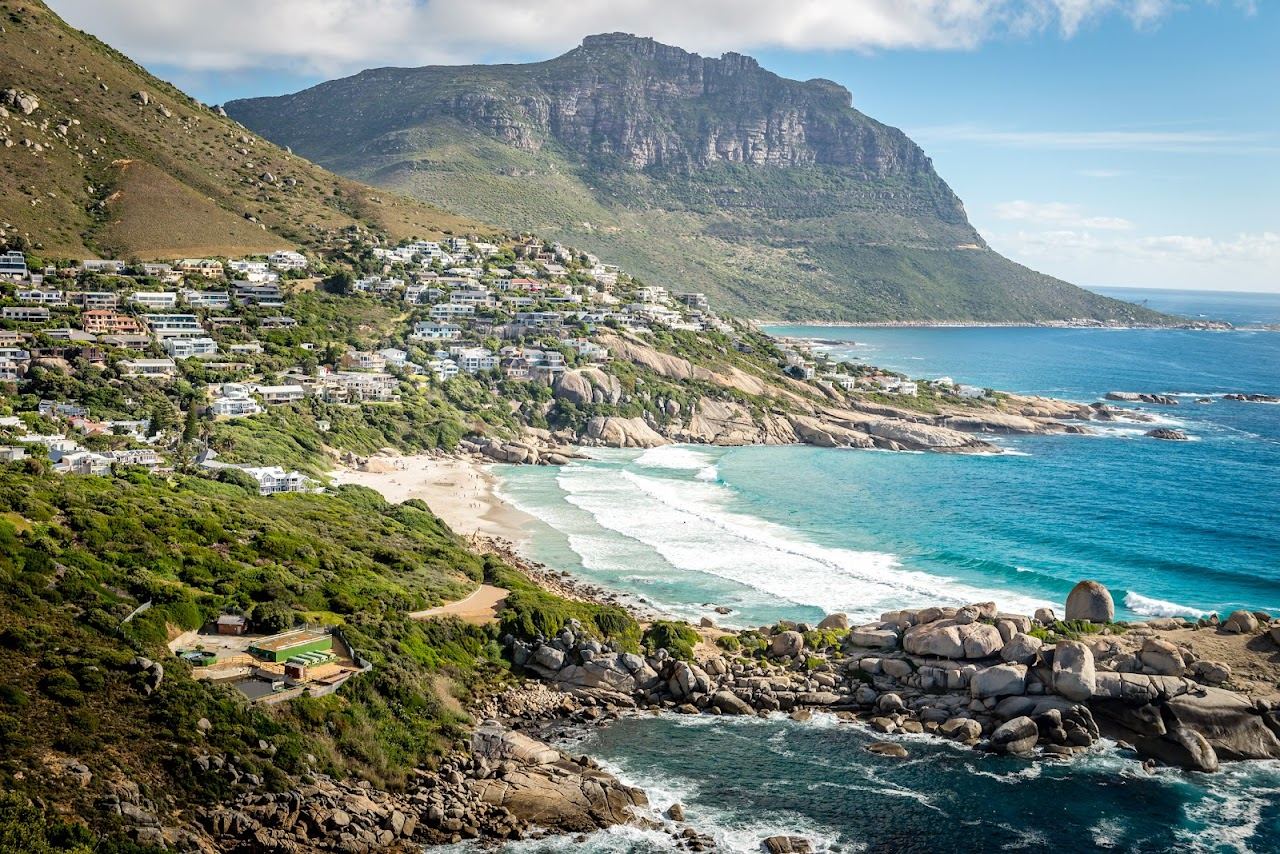
 Photo: Stefan Smuts via Google
The verdict
- Best forTravellers who want genuinely brilliant white sand and dramatic scenery and do not mind a cold sea
- Top pickLlandudno for blinding white sand, granite boulders and an undeveloped, wild sunset cove
- One thing to knowThe sand here really is dazzling white, but the Atlantic that laps it is cold all year, so this is a beach for lying on more than long swims
Published 23 January 2026. Last reviewed 29 May 2026
Cape Town has the real thing. While much of the world calls pale gold white, the Atlantic seaboard here is bright quartz white, the kind of sand that throws the light back at you and squeaks underfoot. The catch is no secret and we will not bury it, which is that the water is cold, properly cold, fed by the Benguela current straight off the deep south Atlantic. So these are beaches to lie on, walk and photograph rather than to swim for hours.
We have ranked the white sand seaboard below for the quality and brightness of the sand and the wildness of the setting, leaning toward the coves where granite boulders, mountain and fynbos frame the beach and the building falls away. The naturalist in us pulls toward the quieter, undeveloped stretches where you share the sand with cormorants and the odd dassie rather than with a full promenade.
If you want the short version, Llandudno is the one, a brilliant white cove ringed by boulders with no shops and a famous sunset. Clifton four beaches give you the same bright sand with more shelter from the wind, and the vast wild sweep of Noordhoek lets you walk for an hour on pale sand without passing a soul. Pack a windbreaker, accept the cold sea, and Cape Town gives you the whitest sand in this part of the world.
The palest sand in Cape Town
Genuine soft pale sand first.
Llandudno
A blinding white cove held between giant granite boulders and steep fynbos slopes, with no shops, no road noise and one of the great Cape sunsets. The sand is soft, bright and deep, the setting is wild and the lack of any development keeps it feeling like nature rather than scene. The cold surf draws bodyboarders, but most come simply to sit on the white sand and watch the sun drop.
Clifton
Four white sand coves tucked below the road and split by granite outcrops, the most sheltered bright sand in the city. The wind that scours the seaboard is partly blocked here, the sand is brilliant white and fine, and each cove has its own quiet character. The water is icy and the access is down many steps, but for pure white sand within reach of town this is the pick.
Noordhoek
A vast, wild white beach running for kilometres below Chapman Peak, backed by dunes and a wetland and crossed by horse riders rather than crowds. You can walk for an hour on pale, clean sand and meet almost no one, with the wreck of the Kakapo half buried in the dunes for company. This is the white sand of the slow traveller, open, windswept and gloriously empty.
Camps Bay
The social white sand strand below the Twelve Apostles, bright and broad with the mountains rising straight behind. The sand is genuinely white and the setting is hard to beat, though the palm lined promenade and the bars make this the busiest of the seaboard beaches. Come for the scene and the scenery, and walk to the quieter southern end if you want the white sand with less noise.
Sandy Bay
A secluded white sand cove reached only on foot through fynbos and dunes, Cape Town long standing naturist beach and all the quieter for the walk in. The sand is pale and soft, the boulders give shelter and privacy, and the lack of any road or building keeps it wild. Go knowing its naturist character, tread the dune paths gently, and you have white sand in real seclusion.
The honest read on white sand
The honest read on Cape Town is a happy one on sand and a blunt one on water. The sand really is dazzling white, fine quartz that squeaks and glows, easily the brightest in this guide and a match for far more famous places. Where honesty is needed is the sea, because the Atlantic seaboard is fed by the cold Benguela current and rarely climbs out of the low teens in Celsius, so a long swim is bracing at best and numbing at worst.
That cold is also why the sand stays so wild and uncrowded outside high summer. Llandudno, Noordhoek and Sandy Bay have little or no development, so you share them with cormorants, gulls, the occasional whale offshore in season and a dassie on the rocks rather than with a wall of sunbeds. For the naturalist this is the trade worth making, brilliant sand and real wildness in exchange for a sea you mostly admire from the shore.
A few honest cautions. The southeaster wind can howl across the seaboard and sandblast a beach in summer, so check the forecast and pick a sheltered cove like Clifton on a windy day. The cold water carries rip currents and only some beaches are patrolled, conditions are typical rather than guaranteed, and there is little shade on the open sweeps, so bring a windbreak and water. Respect the dune paths and the naturist etiquette at Sandy Bay and you will see Cape Town white sand at its wild best.
A base on the white sand
Cape Town beach life leans toward the Camps Bay strip of bars and terraces rather than daybed clubs on the sand, and the wilder white coves like Llandudno and Noordhoek have no service at all, which is rather the point. Where there are setups they cluster along the Camps Bay promenade. We never invent a venue, a minimum spend or an opening status, so anything unconfirmed is marked to be confirmed. Browse the directory and send one enquiry to check what is open and bookable.
Book a beach club in Cape Town
Independent and honest · 1,340 beaches ranked across 103 destinations · We answer to no resort
Before you go
Where is the whitest sand in Cape Town?
The brightest white sand is along the Atlantic seaboard, with Llandudno and the four Clifton coves the standouts for fine, dazzling quartz sand. Noordhoek on the peninsula offers the same pale sand over a vast wild sweep. The sand here is genuinely white rather than pale gold, among the brightest anywhere in this guide.
Why is the sea so cold on Cape Town white sand beaches?
The Atlantic seaboard is cooled by the Benguela current, which pulls cold water up from the deep south Atlantic, so the sea off Llandudno, Clifton and Camps Bay rarely rises out of the low teens in Celsius even in summer. The False Bay side is warmer, but the whitest sand is on the cold Atlantic side, so these are beaches to lie on more than to swim.
Which Cape Town beach is best for nature and quiet?
Noordhoek for a vast wild sweep of dune backed sand crossed by horses not crowds, and Sandy Bay for a secluded cove reached only on foot through the fynbos. Llandudno is also undeveloped and wild despite being easy to reach. All three keep their white sand because the cold water and the lack of building hold the crowds off outside peak summer.
Is Camps Bay sand white?
Yes, Camps Bay has genuinely white, broad sand below the Twelve Apostles, and the setting is superb. It is simply the busiest of the white sand beaches, lined with a palm promenade and bars, so it trades quiet for buzz. Walk to the southern end for the same white sand with fewer people, or choose Clifton or Llandudno for a calmer scene.
Is the water safe for swimming on Cape Town beaches?
The Atlantic seaboard is cold and can carry rip currents, and only some beaches are patrolled, so swims are bracing and best kept short and within your depth. Conditions are typical and never guaranteed. The warmer False Bay beaches suit longer swims, but for the whitest sand on the Atlantic side, treat the sea as something to dip into rather than to swim for hours.