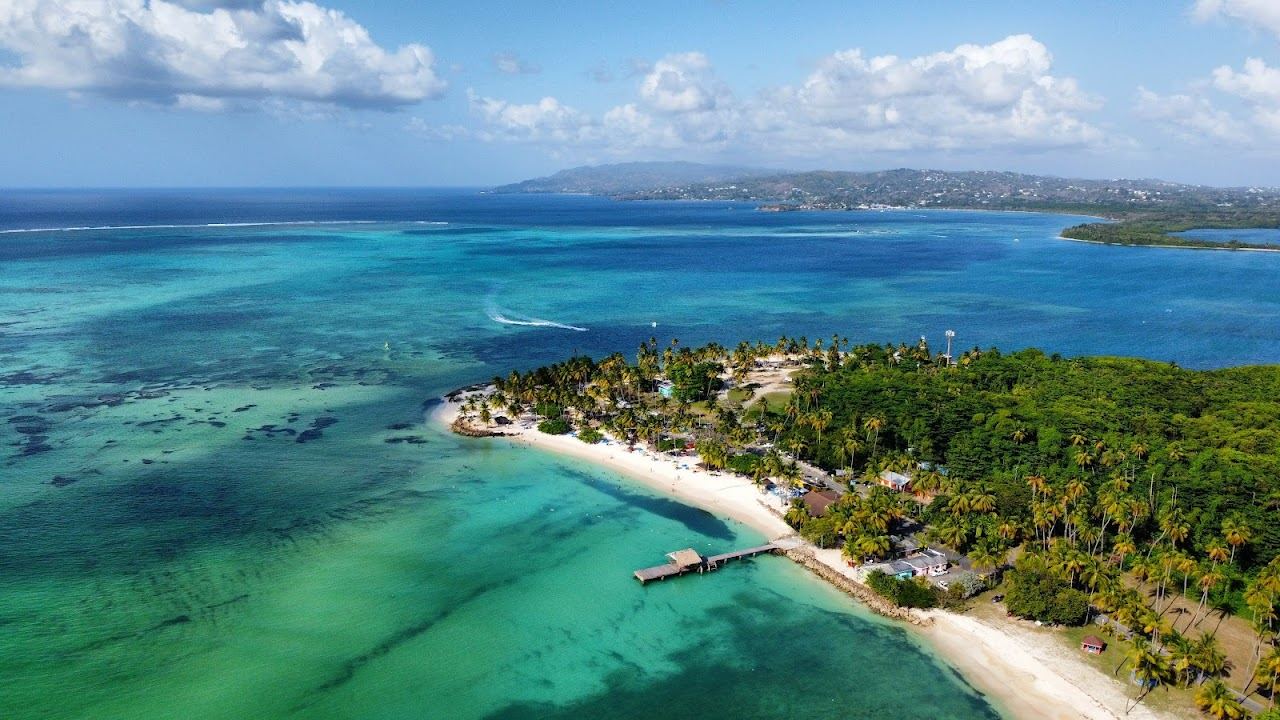
 Photo: Stefan Bissessar via Google
The Best Beaches
in Tobago
Wild leeward coves, the famous jetty and the reefs and turtles, ranked the honest way.
The verdict
- Best forSlow travellers and nature lovers who want the wild leeward coves and the reefs and turtles, not just the busy postcard beach by the airport
- Single best spotEnglishmans Bay for undeveloped, forest backed sand and snorkelling, with Pigeon Point kept for one easy morning and the Buccoo Reef trip
- One thing to knowThe southwest near the airport is the convenient, crowded end and the northeast leeward coast is the slow, green, genuinely wild one, so split your days between the two
Published 17 March 2026. Last reviewed 14 April 2026
Tobago is the quiet half of Trinidad and Tobago, a small green island in the southern Caribbean that has kept the low rise, slow rhythm so much of the region has lost. Most arrivals land in the flat southwest, where the airport, the big hotels and the famous beaches of Pigeon Point and Store Bay sit within a few minutes of one another, and that corner is genuinely easy and pretty. But the soul of the island is north and east of there, up a winding leeward road that threads between rainforest and a string of fishing village bays where the sand turns gold, the water clears and the crowds thin to almost nothing.
The honest read is that the two ends of Tobago ask for two different moods. The southwest is convenient, lively and built for an easy holiday, with calm shallow water, water sports and the launch boats for Buccoo Reef, but it is also where the island feels busiest and where Pigeon Point quietly charges you to enter. The leeward coast is the reward for driving on, a run of wild, forest backed coves such as Castara and Englishmans Bay where you swim, snorkel and watch for turtles and seabirds with the kind of room the brochures rarely promise. This is a naturalist island first and a resort island second, and it rewards travellers who treat it that way.
We rank the beaches below on how they actually swim, snorkel and feel on the day, not just how they photograph, and we are honest about the busy ones and the wild ones alike. Tobago is also a serious nature destination, with the oldest legally protected rainforest reserve in the western hemisphere on the ridge above these bays, nesting turtles on its beaches in season, and the protected Buccoo Reef offshore, so we flag where to tread lightly. Conditions here change with the swell, the tide and the season, so we describe what is typical and never promise a safe swim.
Ranked, not listed
Scored on the sand, the swim, the snorkelling and how wild or convenient each bay really feels. Honest verdicts, the overrated called out.
Englishmans Bay
The wild heart of the island and our favourite, a forest backed crescent of gold sand hidden below the Northside Road with clear water, a rocky reef at each end and almost nothing built on it. One small kitchen and a few rented chairs aside, it is just sand, sea and birdsong, which is exactly why slow travellers come. Snorkel the ends, swim the middle, leave it as you found it.
Pigeon Point
The image on every Tobago postcard, a sheltered run of pale sand and shallow turquoise water with the famous thatched jetty and the launch boats for Buccoo Reef. It is the most developed beach on the island and the only one that charges to enter, so it is calm and easy but busy. Come early for the still morning water, take the reef trip, and treat it as the polished day rather than the wild one.
Castara Beach
A working fishing village wrapped around two palm backed bays, where you may still help haul a seine net at dawn and turtles come ashore in season. The sand is soft, the water clear and calm, the snorkelling good off the rocks, and the rhythm is the slowest and most genuine on the leeward coast. Low key bars, a waterfall walk inland, and a real community rather than a resort strip.
Store Bay
The lively, convenient one, a short pale sand beach minutes from the airport with lifeguards, food huts famous for curried crab and dumpling, and boats out to the reef. It swims well and suits an easy first or last day, but it is compact and gets busy, so it is more a friendly local beach than a wild escape. Eat at the huts, take the reef boat, and move up the coast for solitude.
Where the picture flatters, and where it does not
The gap to manage in Tobago is between the easy southwest and the wild northeast. Pigeon Point is the image everyone arrives for, and it is lovely, but it is the only beach on the island that charges admission, it is the most developed sand here, and by late morning it is busy with day trippers and reef boats. None of that ruins it, yet it does mean the smart plan is an early morning visit for the still lagoon water and the jetty, the Buccoo Reef and Nylon Pool trip while you are there, and then the wilder coast for the rest of your stay. Store Bay nearby is convenient and swims well with lifeguards, but it is short and can feel crowded, so it earns its place for the food huts and the easy logistics more than for solitude.
Drive the leeward road and the island changes character entirely. Castara is a genuine fishing village where the seine nets still come in and turtles nest in season, and Englishmans Bay is as close to a perfect undeveloped Caribbean beach as the region still offers, a forest backed crescent with snorkelling at both ends and one small kitchen for lunch. The honest caution is that these wild bays have few facilities and no lifeguards, the leeward road is slow and winding, and the rocky ends and occasional swell ask for respect rather than bravado. Tread lightly, follow local guides for the turtles and the reef, and the quiet coast gives back far more than the busy corner ever will.
The best months in Tobago
Tobago runs on a dry season from roughly December to May and a wetter green season from June to November, and the dry months are the easy choice for calm seas, clear snorkelling water and dependable sun, with the very driest stretch around February and March. The sea stays warm all year, generally around 27 to 29 degrees, so the real questions are the rain, the swell and the crowds rather than the temperature. The turtle nesting season layers on top, running roughly January to September and peaking March to June, which makes spring a special window for naturalists. Our full guide to when to go to Tobago walks the year month by month, including the turtle and reef seasons.
Where to book a daybed
Set your expectations honestly, because Tobago does not do the glossy daybed and DJ beach club scene of the bigger Caribbean names, and that is part of its charm. The beach life here is the Pigeon Point Heritage Park facilities and bars, the food huts of Store Bay, the village beach bars of Castara, the famous Sunday night street party known as Sunday School at Buccoo, and the relaxed beach bars at the leeward resorts, with prices that mostly mean paying as you order rather than a minimum spend. Each beach below points to the genuine venues on or near its sand, and our Tobago beach clubs directory reads the real scene rather than inventing a polished one. Where a venue sets a minimum or its status is uncertain, we mark it to be confirmed.
Book a beach club in Tobago
Independent and honest · 1,340 beaches ranked across 103 destinations · We answer to no resort
Before you go
Which is the best beach in Tobago?
It depends on what you want from the sand. For wild, undeveloped beauty the leeward gem is Englishmans Bay, a forest backed crescent with good snorkelling and almost nothing built on it. For the postcard image it is Pigeon Point, with its thatched jetty and calm lagoon water, though it is the one beach that charges to enter and fills up fast. For a living fishing village with turtles and seine nets, Castara is the soulful pick.
Is Pigeon Point worth the entry fee?
For one visit, yes, with clear eyes. Pigeon Point is genuinely lovely, a sheltered stretch of pale sand and shallow turquoise water with the famous jetty and easy facilities, and it is the launch point for Buccoo Reef and the Nylon Pool. It is also the only beach in Tobago that charges admission and the busiest, so the honest move is to arrive early, enjoy the calm water and the reef trip, then trade up to a free leeward bay like Englishmans for a wilder afternoon.
Where can you snorkel in Tobago?
The headline is Buccoo Reef, a protected marine park reached by glass bottom boat from Pigeon Point, Store Bay or Buccoo, usually paired with a float in the shallow Nylon Pool sandbar. For snorkelling straight off the sand, the calmer leeward bays such as Englishmans Bay and Castara hold rocky ends and clear water with reef fish, best on a settled day. Conditions change with the swell and are never guaranteed, so read the water first.
Can you see turtles nesting in Tobago?
Yes, in season. Leatherback, green and hawksbill turtles nest on Tobago beaches roughly from January to September, with the peak from March to June, and guided evening watches run at nesting beaches such as Turtle Beach and Stonehaven Bay on the leeward coast. Several village beaches see nesting too, so follow a local guide, keep lights low and give the animals room, which is the whole point of treading lightly here.
How many beaches should you visit in Tobago?
Give it three or four across a week and you see the real range. Pair one easy day at Pigeon Point or Store Bay near the airport with the Buccoo Reef trip, then spend the rest of your time working up the leeward coast to Castara, Englishmans Bay and beyond, where the beaches turn wild and quiet. The southwest is the busy, convenient end and the northeast is the slow, green one, so split your days between them.