 Photo: Anja F. via Google
The verdict
- Best forSnorkellers who want the calmest, clearest water and the rocky edges where fish gather
- Top pickAbama for a sheltered cove with clear water and rocky sides on the southwest coast
- One thing to knowThe dark sand beaches hold few fish, so aim for the rocky ends and the sheltered southwest
Published 8 April 2026. Last reviewed 28 May 2026
Tenerife is a volcanic island, and that shapes its snorkelling more than any brochure lets on. Many of the beaches are dark grey or black sand, the Atlantic runs cooler than the Mediterranean, and the open sand holds very little to look at underwater. The fish are here, plenty of them, but they gather around the rocks, the reefs and the harbour walls rather than out on the sand. Know that, and Tenerife turns from a disappointment into a genuinely rewarding snorkel.
We have ranked these for exactly that, weighing how sheltered and clear the water usually is, where the rocky edges give fish somewhere to live, and how easy the entry is for a comfortable swim. The calmest and clearest water is on the sheltered southwest coast around Costa Adeje and Guia de Isora, which is where most of this list sits, with one honest northern option for context.
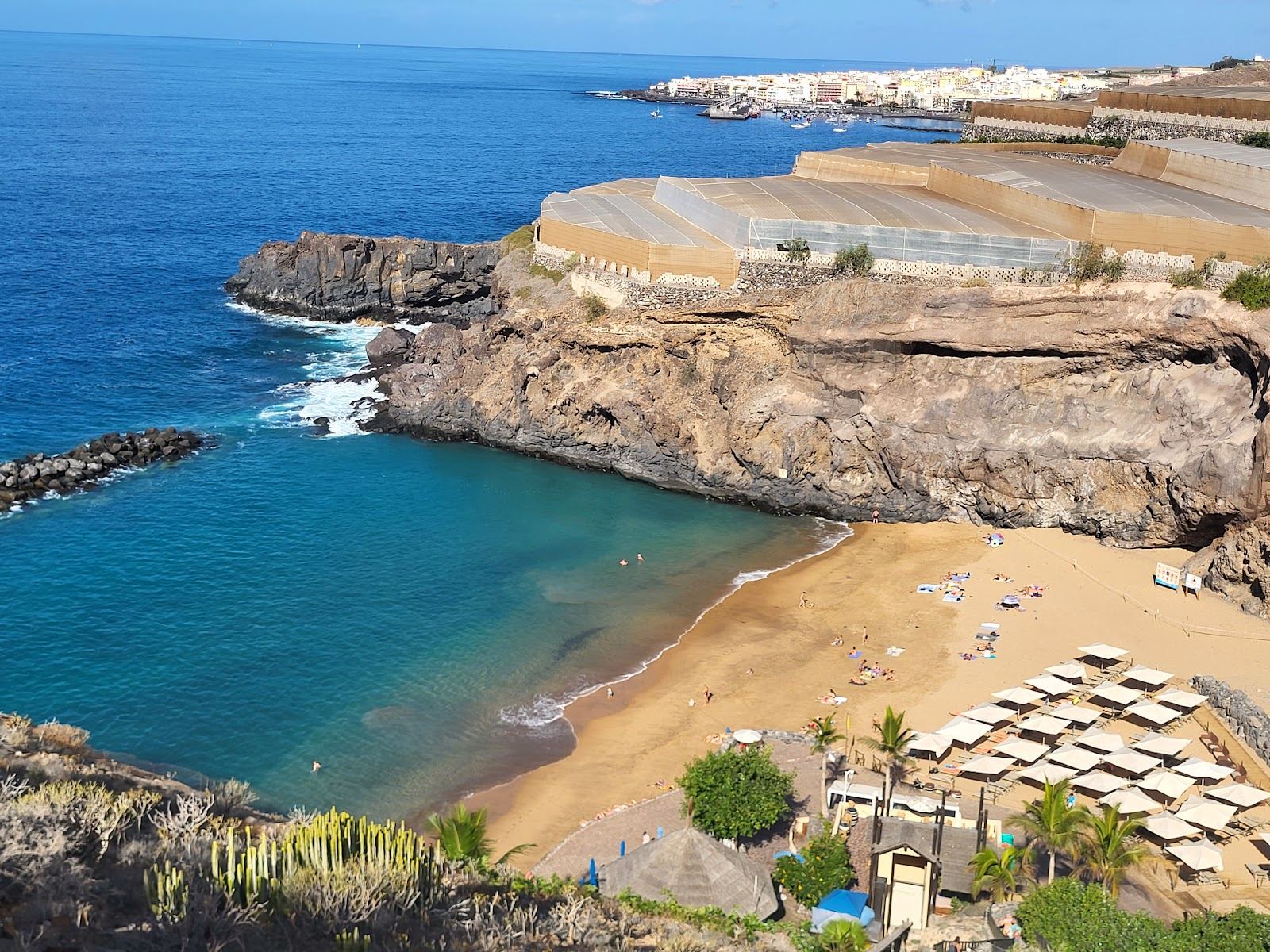
If you want one easy pick, take the lift or the path down to Playa de Abama, a sheltered cove of pale sand tucked below the cliffs with rocky sides and usually calm, clear water. Enter over the sand, work the edges of the rocks and you will find the island's snorkelling at its gentle best.
The best snorkelling beaches
Calm, clear water and rocky edges first.
Playa de Abama
A sheltered cove of pale imported sand below the cliffs at Guia de Isora, with rocky sides and usually calm, clear water that make it the island's most reliable easy snorkel. Enter over the sand and explore the rocks at either end for fish. Reached by a path or lift from above, which keeps it quieter.
Los Gigantes
The dramatic town below towering cliffs, where the deep, clear water is a magnet for snorkellers and divers working the rocks and the harbour edges. The small black sand beach is sheltered, and boat trips reach the clearest water beneath the cliffs. Some of the most striking snorkelling scenery on the island.
El Duque
A smart Costa Adeje beach of golden sand with rocky outcrops at each end where fish gather in usually mild, clear water. Easy access and calm conditions make it a comfortable snorkel close to the resorts. Work the rocks rather than the open sand and keep clear of them in any swell.
Torviscas
A calm Costa Adeje beach next to Fanabe with rocky sections and a sheltered feel that suit an easy snorkel near the promenade. The clear water on a still day brings fish to the edges of the rock. Convenient and gentle, a good pick if you are based in the Adeje resorts and want fish without a drive.
Los Cristianos
A sheltered town bay with calm, shallow water that suits beginners and a rocky harbour edge that holds fish. Not the clearest on the island, but among the gentlest for a first snorkel or a family try. Boat trips also leave from here for clearer water offshore. Easy, safe feeling and central.
Playa Jardin
The most sheltered snorkelling option in the north at Puerto de la Cruz, a black sand beach with landscaped gardens and rocky ends, though the Atlantic swell here is stronger and the visibility varies. Snorkel only on a calm day and stay near the protected edges. Included for northern visitors, with the honest caveat about the sea.
The honest read on snorkelling here
The beach to skip for snorkelling is Las Teresitas, the calm golden sand crescent near Santa Cruz. It is a genuinely lovely beach and a fine family swim, but its imported sand and protecting breakwater leave a sandy bottom with almost nothing to see underwater. If fish are the point of your day, do not drive there for them. The same honesty applies to the wild north coast beaches like Benijo and El Bollullo, which are stunning to look at but too exposed to Atlantic swell and current for reliable snorkelling.
Where Tenerife delivers is the sheltered southwest, and the trick is to work the rock rather than the sand. Fish, from parrotfish and wrasse to the occasional ray or trumpetfish, live around the rocky ends of the beaches, the reefs and the harbour walls, so enter over sand where it is calm and then explore the edges. A thin wetsuit or rash vest is worth it, because the Atlantic is cooler than the Mediterranean and it lets you stay in far longer, and it protects you from the rocks you are trying to reach.
Read the sea every time. These are ocean beaches, so swell, current and visibility change with the day and the season, and the same cove can be glassy one morning and stirred up the next. Snorkel on calm days, keep away from the rocks in any surf, stay within your depth, and check the beach flags before you go in. Conditions are typical and never guaranteed, and no beach here should be treated as a guaranteed safe swim. For the clearest water of all, a short boat trip off Los Gigantes or Los Cristianos beats any shore entry.
Beach clubs on the coast
The Costa Adeje coast that holds the best snorkelling also has the island's smartest beach clubs, a good place to dry off and take a lounger after a morning in the water. We never invent a venue, a minimum spend or an opening status, so anything unconfirmed is marked to be confirmed. Browse the directory and send one enquiry to check the day before you commit.
Book a beach club in Tenerife
Independent and honest · 1,340 beaches ranked across 103 destinations · We answer to no resort
Before you go
Where is the best snorkelling in Tenerife?
The clearest water and the most fish are on the sheltered southwest coast, off the rocky ends of beaches like Abama, El Duque and Torviscas and in the deep, calm water below the cliffs at Los Gigantes. The volcanic sand beaches themselves hold few fish, so aim for the rocky edges where life gathers. Conditions are typical and never guaranteed.
Is Tenerife good for snorkelling?
It is good rather than world class, and it rewards knowing where to look. The Atlantic here is cooler and the beaches are mostly dark volcanic sand, so the fish live around the rocks and reefs rather than on the open sand. The sheltered southwest gives the calmest, clearest water and the best chance of parrotfish, wrasse and the odd ray.
Do I need a wetsuit to snorkel in Tenerife?
Many people are comfortable in summer without one, but the Atlantic is cooler than the Mediterranean and a thin wetsuit or rash vest makes a long snorkel far more pleasant, especially outside the warmest months. It also adds buoyancy and protects you from the rocks. Bring or rent one if you plan to be in the water for a while.
Can beginners snorkel on these beaches?
Yes, on the calm, sheltered ones. The gentle bays at Los Cristianos and the protected cove at Abama are good for a first try, and El Duque is usually mild. Enter where it is sandy and calm, keep away from the rocks in any swell, and stay within your depth. Conditions are typical and never guaranteed, so check the flags before you go in.
Should I skip Las Teresitas for snorkelling?
For snorkelling, yes. Las Teresitas is a lovely, calm, golden sand beach near Santa Cruz, but that imported sand and its breakwater mean a sandy bottom with little to see underwater. It is a fine beach for a relaxed swim and a family day, just not the place for fish. Head to the rocky southwest coast instead.
Is the north coast good for snorkelling?
Less reliably. The dramatic north coast beaches like Benijo and El Bollullo are beautiful, but the Atlantic swell and stronger currents there often make snorkelling difficult and the water cloudy. Playa Jardin in Puerto de la Cruz is more sheltered but still varies with the sea. For consistent, calm snorkelling, the sheltered southwest is the safer bet.