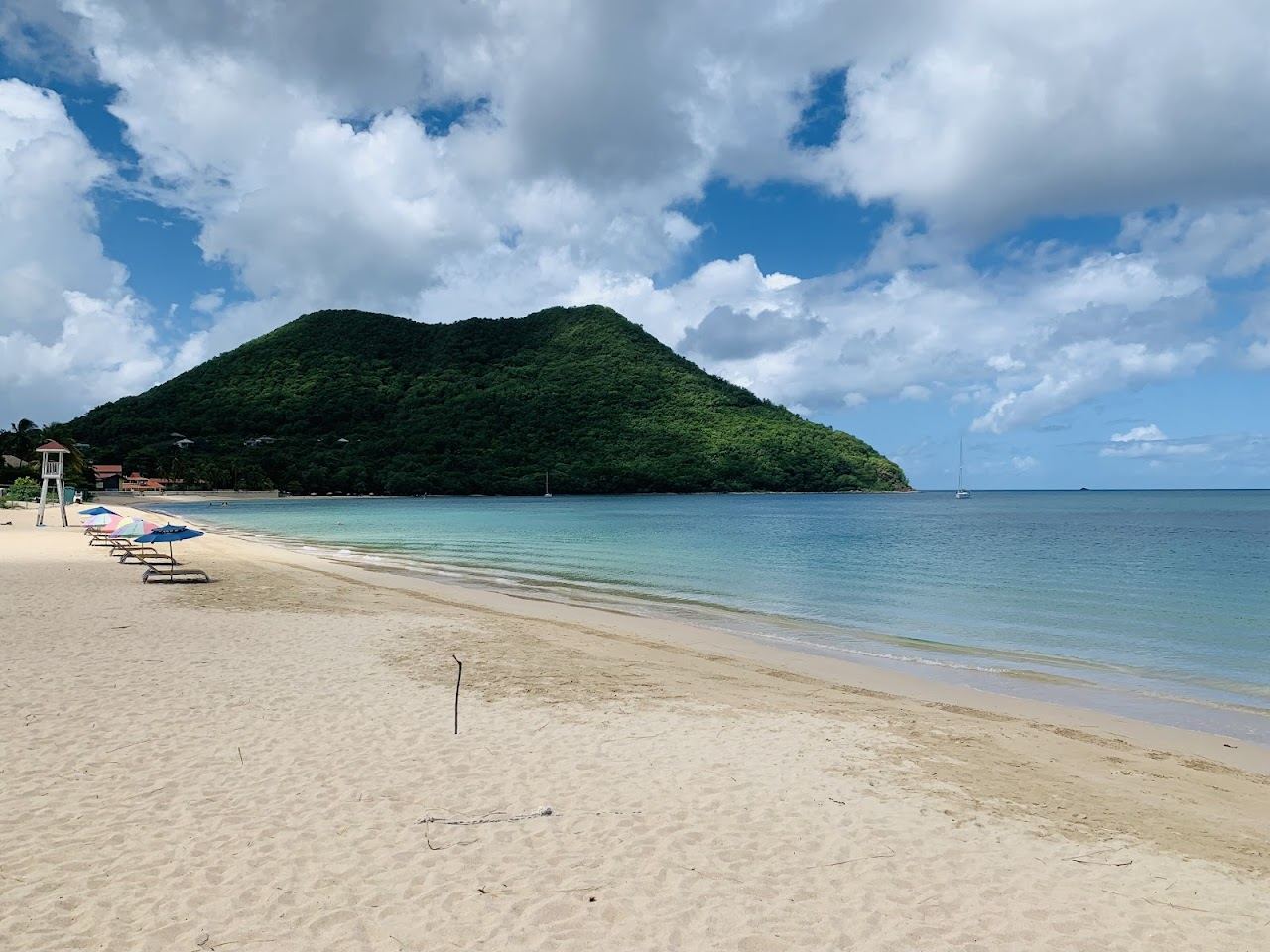
 Photo: Harm van den Hoven via Google
The Best Beaches
in St Lucia
Dramatic Piton coves, dark volcanic sand and the honest read on the white sand myth.
The verdict
- Best forTravellers who want dramatic scenery, world class snorkelling and a few genuinely calm swimming beaches, with a straight answer on the white sand expectation.
- Single best spotSugar Beach between the Pitons for the view, with Reduit Beach in Rodney Bay for the easiest all round day.
- One thing to knowMost St Lucia beaches are small dark sand coves about scenery and reef, while the longest pale golden sand sits up north.
Published 23 March 2026. Last reviewed 31 May 2026
St Lucia is one of the most beautiful islands in the Caribbean, but it rewards a traveller who arrives with the right picture in their head. This is a green, mountainous, volcanic island, crowned by the twin Pitons rising straight out of the sea, and its beaches are mostly small, dramatic coves of golden to dark grey sand rather than the long white strands of the flatter islands. Come for the scenery and the snorkelling and you will be thrilled. Come expecting mile after mile of powder white sand and you will need to know where to look.
The island divides simply. The sheltered Caribbean west coast holds almost all the swimming beaches, from the lively resort sweep of Reduit Beach in Rodney Bay in the north to the spectacular Piton coves around Soufriere in the south. The wild Atlantic east coast is rugged and scenic but rough, with surf and currents that make it no place for a casual swim. The beaches below are ranked with honest verdicts on the sand, the water, the access and the crowds, so you can match the beach to the day you want.
A note on the famous ones. Sugar Beach and Anse Chastanet are genuinely world class for their setting and their reef, but the first has sand brought in over a naturally dark shore and the second is volcanic grey, so they are about drama and snorkelling rather than classic Caribbean white. The pale golden sand most visitors picture is found north at Reduit and Pigeon Island. Knowing that before you book is the difference between delight and surprise.
Ranked, not listed
Scored on the setting, the sand, the water and the access. Honest verdicts, the hype checked.
Sugar Beach
The showpiece, a crescent of soft sand set directly between Gros Piton and Petit Piton with arguably the most dramatic beach view in the Caribbean. The white sand is brought in over the natural dark shore, the Viceroy resort sits behind it, and the snorkelling off the rocks at either end is excellent. It is public below the tide line, so you can visit, but arrive early and respect the resort areas. The first choice for sheer setting.
Anse Chastanet
The snorkelling and diving star, a dark volcanic sand cove just north of Soufriere where a protected reef begins only yards from the shore and holds well over a hundred fish species. It is rated among the Caribbean's best shore access snorkelling for good reason. The sand is grey rather than golden and the resort frames it, but for putting your face in the water nothing else on the island compares. The pick for reef lovers.
Reduit Beach
The easiest all round beach day on the island, a long sweep of pale golden sand on Rodney Bay with calm clear water, water sports, beach bars and the most facilities anywhere in St Lucia. It is the closest the island comes to the classic Caribbean resort beach, lively and convenient rather than secluded. For swimming, sun and a sunset drink with no logistics, this is the practical winner. The pick for a relaxed, serviced day.
Marigot Bay
One of the prettiest small bays in the Caribbean, a sheltered hurricane hole of yachts and green hills with a slim palm backed beach, La Bas, reached by a short ferry across the water. The swimming is calm and the setting postcard perfect, more about the scene and the calm than a big stretch of sand. The pick for a serene, photogenic half day and a waterside lunch.
Anse Cochon
A quiet dark sand cove on the west coast best known for its snorkelling and diving, with a reef close to shore and the Lesleen M wreck just offshore. It is reached by boat or a steep road via the Ti Kaye resort above, which keeps it calm and uncrowded. The sand is volcanic grey and facilities are limited, so it is a swim and snorkel stop rather than a full beach day. The pick for an underwater morning.
Pigeon Island Beach
Two small calm beaches inside the Pigeon Island National Landmark at the north tip of Rodney Bay, with pale sand, gentle water and the bonus of the historic Fort Rodney and its views above. It pairs an easy swim with a walk through real island history, and the Jambe de Bois cafe handles the refreshments. There is a small entry fee for the park. The pick for swimming with a side of heritage.
Anse Mamin
The secluded neighbour to Anse Chastanet, a quiet dark sand cove reached by a short walk or boat from the resort beach, backed by jungle and the old plantation trails. It is the more private of the pair, calm and undeveloped with a single simple bar, the place to escape the snorkel crowd next door. Facilities are minimal, so bring what you need. The pick for real quiet near Soufriere.
Vigie Beach
A long, calm stretch of golden sand right by Castries and the small island airport, popular with locals and easy to reach. It is quieter and more low key than Rodney Bay, with shade trees, gentle water and few facilities, the everyday beach rather than the postcard one. Planes pass low overhead from the nearby runway, which some enjoy and some do not. The pick for an easy, unfussy swim near the capital.
Who it suits, who should skip
For scenery and snorkelling, the south around Soufriere is unbeatable. Sugar Beach gives you the Pitons rising on either side, Anse Chastanet puts a world class reef a few strokes from the sand, and the quiet coves of Anse Cochon and Anse Mamin reward anyone who likes the water more than the lounger. This is the dramatic, green, volcanic St Lucia that earns the island its fame, and it is where to base yourself if a beautiful setting and a healthy reef matter more than a long beach.
For the easy, serviced beach day most travellers picture, go north. Reduit Beach in Rodney Bay is the longest pale golden sand on the island with calm water and every facility, Pigeon Island adds gentle swimming with history, and Vigie gives a low key local stretch near Castries. The north is flatter, busier and more developed, with the airport for the smaller flights, and it is the practical base for swimming, sun and nightlife over scenery.
The honest caution is the white sand expectation. St Lucia is volcanic, so outside the north and the imported sand at Sugar Beach, most coves are golden to dark grey, and the beaches are small rather than sweeping. If you have your heart set on mile after mile of powder white sand, an island like Antigua or the Bahamas fits that picture better, and St Lucia will surprise you. Come instead for the most spectacular beach scenery in the Caribbean and the best reef snorkelling, and the island delivers in full. The west coast is calm and swimmable, the Atlantic east is rough and scenic, and conditions are typical rather than guaranteed and shift with the season.
The best months in St Lucia
St Lucia has a clear two season rhythm. The dry season from December to May brings the sunniest skies and the least rain, and it is the classic time for the beach, busiest and priciest around the winter holidays and into spring. The green wet season from June to November is warmer and lusher, with brief heavy showers, lower prices and the small hurricane risk of the wider Caribbean, though the island sits toward the quieter southern edge of the belt rather than its centre.
Sea temperatures stay warm all year, around the high twenties Celsius, and snorkelling visibility on the protected west coast is good across the calendar. The smart shoulder weeks of late spring and early summer often pair good weather with softer prices. For the full month by month picture on weather, sea and crowds, see our St Lucia when to go guide. Conditions vary year to year and are never guaranteed.
Where to book a beach day
St Lucia is more a beach bar and resort beach island than a strip of gated minimum spend clubs, and knowing that helps you plan it. The scene runs from the lively bars of Reduit Beach in Rodney Bay, where Spinnakers and SeaGrapes line the sand, to the romantic hideaways like the Naked Fisherman below Cap Maison and the candlelit tables of Marigot Bay, with the Soufriere resort beaches handling the Piton coves.
Rather than pay a club entry, you rent a lounger or take a table, settle in for lunch and a sunset drink, and book ahead for the busier dinners and the harder to reach coves. See our St Lucia beach clubs guide for the honest directory, the moods, the locations and the booking notes, with any minimum spend marked to be confirmed where it is not published.
Book a beach club in St Lucia
Independent and honest · 1,340 beaches ranked across 103 destinations · We answer to no resort
Before you go
Which is the best beach in St Lucia?
Sugar Beach, set between the Gros Piton and Petit Piton, has the most spectacular setting on the island and white sand brought in over the natural dark volcanic shore. For the easiest all round beach day, Reduit Beach in Rodney Bay is the long golden sweep with calm water and facilities, and for snorkelling Anse Chastanet is the star.
Does St Lucia have white sand beaches?
Some, but it is not a white sand island in the way Antigua or the Bahamas are. St Lucia is volcanic, so most of its beaches are small coves of golden to dark grey sand. The longest naturally pale sand is up north at Reduit Beach and Pigeon Island, while the famous Piton beaches are dramatic scenery with imported or dark sand rather than classic white strands.
Are St Lucia beaches good for swimming?
The west coast beaches are, yes. The Caribbean side is sheltered and calm, so Reduit, Marigot Bay, Sugar Beach and the Soufriere coves are good for swimming most days. The wild Atlantic east coast around Vieux Fort has surf and currents and is not for casual swimming. There is rarely a lifeguard, so swim within your depth and read the water.
Can you visit Sugar Beach without staying at the resort?
Yes. Like all beaches in St Lucia, Sugar Beach is public below the high water line, so you can visit even though the Viceroy resort sits behind it. Access is via a marked public path or by boat, and a public section is set aside, though loungers and service are for guests. Arrive early and respect the resort areas for the easiest visit.
When is the best time to visit St Lucia for the beach?
The dry season from December to May is the classic window, with sunny skies and the least rain, peaking in price around the winter holidays. June to November is the greener, cheaper wet season with brief heavy showers and the small hurricane risk, though St Lucia sits at the quieter southern edge of the belt. See our St Lucia when to go guide for the detail.
Are St Lucia beaches good for snorkelling?
Very. The Soufriere coast is the highlight, with Anse Chastanet rated among the Caribbean's best shore snorkelling, its reef starting just yards from the sand, and the nearby Anse Cochon a fine reef and wreck dive. The marine reserves keep the reefs healthy. Visibility is good year round, so bring or hire a mask and explore the protected west coast.