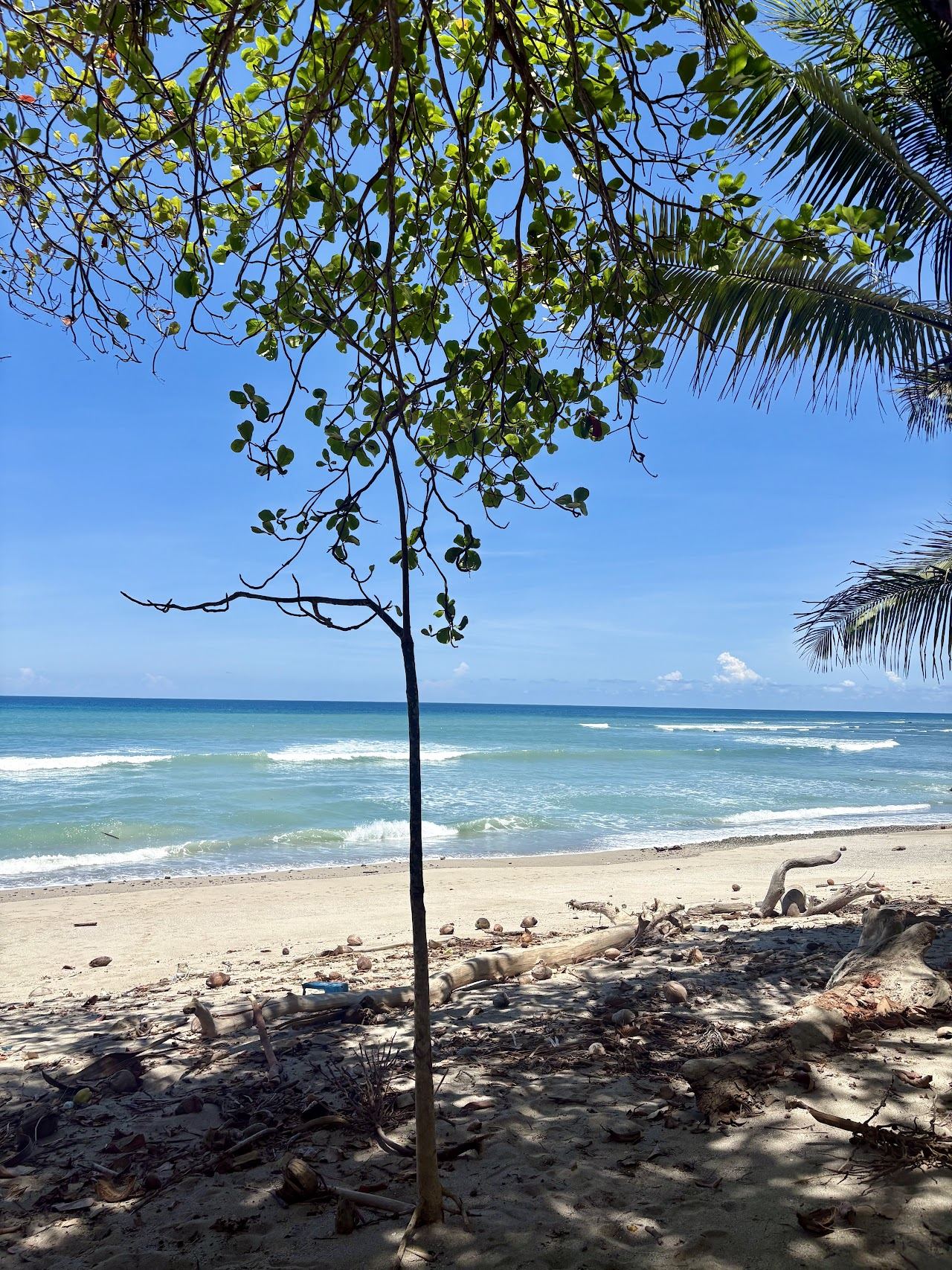
Playa Cabuya
The verdict on Playa Cabuya
- Who it suitsSlow travellers and the curious, drawn by the island cemetery you walk to at low tide and the trails of the Cabo Blanco reserve, who value quiet and a sense of place over a swim or a scene.
- Best spotThe reef crossing to Isla de Cabuya at low tide for the cemetery and the view back, paired with the reserve entrance and a quiet lunch up in Montezuma.
- One thing to knowThis is a rocky, rural shore rather than a sandy swimming beach, the island is reachable only at low tide, and the hamlet is tiny, so come for the walk and the quiet, not the water.
Published 7 February 2026. Last reviewed 28 March 2026
Cabuya is what lies at the very end of the road, a rural hamlet a short way south of Montezuma and around the headland from Mal Pais, pressed up against the green edge of the Cabo Blanco reserve. There is no resort strip and no surf scene here, just a quiet, rocky shore shaded by old fig trees, a handful of homes and sodas, and one of the more haunting sights on the peninsula offshore. This is a beach for the curious and the slow, a place you come to walk, to wonder and to feel how far you are from the crowds, rather than to lay out a towel and swim.
The thing that draws people is the island. Just off the shore sits Isla de Cabuya, a small island that has served as a burial ground since pre Columbian times and is still in use today, the only island cemetery of its kind in the region. At low tide a rocky strip of reef uncovers and you can walk across in around ten minutes, picking your way over the flat reef to the unusual gravestones among the trees, then back before the water returns. It is an oddly moving twenty minutes, and a reminder that a beach can hold history as much as leisure. Beyond it, the entrance to Cabo Blanco, Costa Rica's first protected area, begins right here, with its trails and wildlife.
The honest catch is that Cabuya gives you almost nothing of the usual beach day. This is a rocky, shallow shore, not a sandy swimming beach, the island is reachable only around low tide, and the hamlet is so small that food and lodging are limited to a few casual sodas, with the fuller table a drive north in Montezuma. There is no reliable lifeguard and the crossing demands attention to the tide, so this is a place to plan around the water rather than ignore it. Come for the island, the reserve and the quiet, and you will not be disappointed.
Cabuya rounds out the gentle, wild end of the cluster and sits naturally beside its neighbours. Pair it with the calm cove, waterfall and far better eating of Montezuma a short drive north, the rocky tide pools and fishing kitchens of Mal Pais around the headland, or the wide surf of the main Santa Teresa beach when you want the swell back. For a sunset drink and a proper table you will head back toward town, and our Santa Teresa beach clubs directory lines the bars up by setting and vibe.
Cabuya is calmest for the island walk in the dry season, so plan the right week before you commit. Leave your email for Shore Notes, our occasional letter on when to go and quiet weeks, or read our guide to the calmest swimming beaches near Santa Teresa.
Clubs and sodas at Playa Cabuya
Cabuya is a tiny rural hamlet with a scattering of casual sodas rather than any club or daybed scene, and we never invent venues, prices or status. The shore here is for the island walk, the reserve and the quiet, with the fuller food and bars a short drive north in Montezuma and back toward town. Anything we cannot confirm we list as to be confirmed. For verified bars and a sunset table on the wider coast, use the Santa Teresa beach clubs directory.
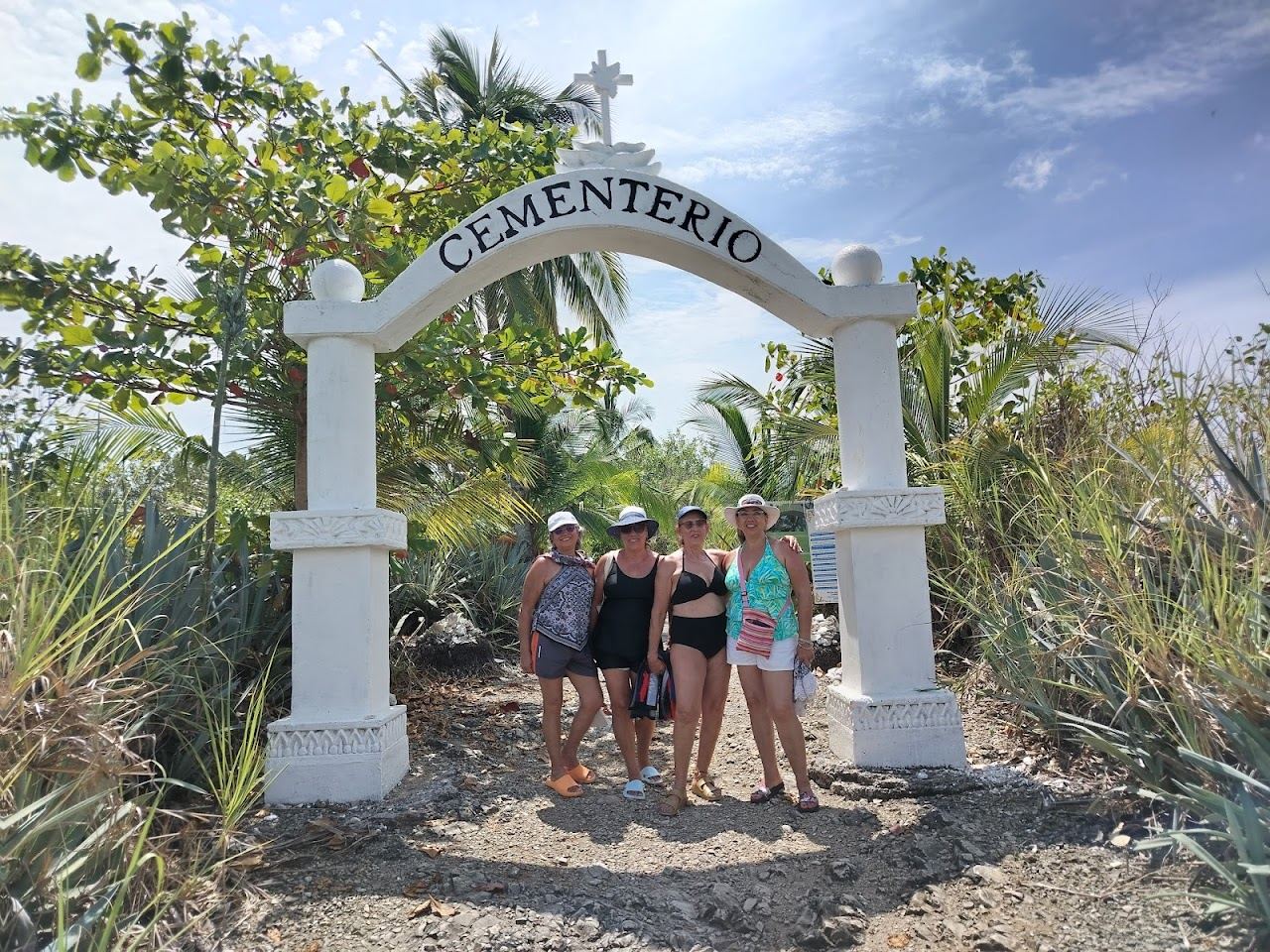 Photo: Alexandra Vadgas Pérez via Google
Isla de Cabuya and the reef
The island cemetery offshore, reached on foot at low tide over the uncovered reef, is the reason to come and the quiet heart of the place rather than a venue. There are no daybeds or minimum spend here, just the crossing, the gravestones among the trees and the walk back. Plan it around the tide, and we keep any practical details to be confirmed.
Free public shore
The Cabuya shore is public and free, a rocky, fig shaded edge where you can sit in near total quiet, watch the tide pull back to reveal the island walk and feel the wildness of the reserve next door. The few village sodas behind the shore serve a simple lunch, all this small hamlet needs.
Playa Cabuya, Nicoya Peninsula
Cabuya sits a short drive south of Montezuma and around the headland from Mal Pais, at the southern edge of the peninsula where the Cabo Blanco reserve begins. Most travellers reach the region by driving and taking the car ferry from Puntarenas to Paquera, or by flying to the small Tambor airstrip, then continuing through Cobano and Montezuma on roads that are dusty in the dry season and rough in the rains, so allow plenty of time and consider four wheel drive in the green months.
Plan the day around two things, the tide and the reserve. The island cemetery is reachable only at low tide, so check the times, carry water and shoes you can wear on rock, and turn back in good time before the crossing floods. The reserve has its own opening days and trails, so confirm those before you go. Treat the sea and the crossing as natural and unguarded, swim and walk within your limits, and keep the fuller lunch for Montezuma a short drive north, since Cabuya itself offers only a quiet soda or two.
Not ready to book?
Keep the good shorelines coming. Shore Notes is our occasional letter on the best beaches and the clubs worth your day, sent straight to your inbox. One field, unsubscribe any time.
Reserve a daybed near Playa Cabuya
Send your details and we will help arrange a sunset table or a beach club booking near Playa Cabuya and across Santa Teresa. We confirm current access, minimum spend and availability with the venue before you commit. Nothing is charged here.
Independent and honest · 1,340 beaches ranked across 103 destinations · We answer to no resort
Playa Cabuya FAQ
How do you reach the Cabuya island cemetery?
Isla de Cabuya sits just offshore and is reached on foot at low tide, when a rocky strip of reef is uncovered and you can walk across in around ten minutes. The island has been a burial ground since pre Columbian times and is still in use, so tread respectfully. Check the tide before you go and turn back in good time, as the crossing floods again as the water returns.
Is Playa Cabuya good for swimming?
Not really as a classic sandy swim. Cabuya is a rocky, rural shore where the draw is the island walk, the reef and the quiet rather than a long wade, and the water is shallow and rocky over much of it. The gentlest moments come at the right state of tide, but treat the sea as typical rather than guaranteed, mind the rocks, and note there is no reliable lifeguard.
What is there to do near Playa Cabuya?
The main draws are the island cemetery at low tide and the entrance to the Cabo Blanco Absolute Natural Reserve, Costa Rica's first protected area, which begins here with its trails and wildlife. The hamlet itself is tiny and rural, so it is a place for a quiet walk, the reserve and the island rather than a busy day. Bring water and plan around the reserve's opening days.
Where do you eat in Cabuya?
Choice is limited, as this is a small rural hamlet with only a scattering of casual sodas and simple kitchens rather than a dining scene. The fuller spread of restaurants is a short drive north in Montezuma. We never invent venues, so check current names and opening days locally, as listings in such a small place change often and seasonally.
When is the best time to visit Playa Cabuya?
The dry season from December to April brings the surest sun and the clearest, calmest conditions for the island walk and the reserve. The green season from May to November is lusher and quieter, with warm afternoon rain and rougher roads in return. Whatever the month, plan your visit to the island around low tide and check the reserve's opening days before you go.