Playa de los Dedos, Punta del Este
The verdict
- Best for: Value travellers who want the icon of Punta del Este on foot and the cheapest way into surfing, the free Hand and a beginner lesson rather than a daybed.
- Best spot: Right by the Hand for the photo and the surf schools; walk a little south along Brava for quieter free sand away from the crowd.
- Know this: The Hand is mobbed at midday, so come early or near sunset for the shot, and cross to Playa Mansa when you want calm water.
Published 6 March 2026. Last reviewed 24 April 2026
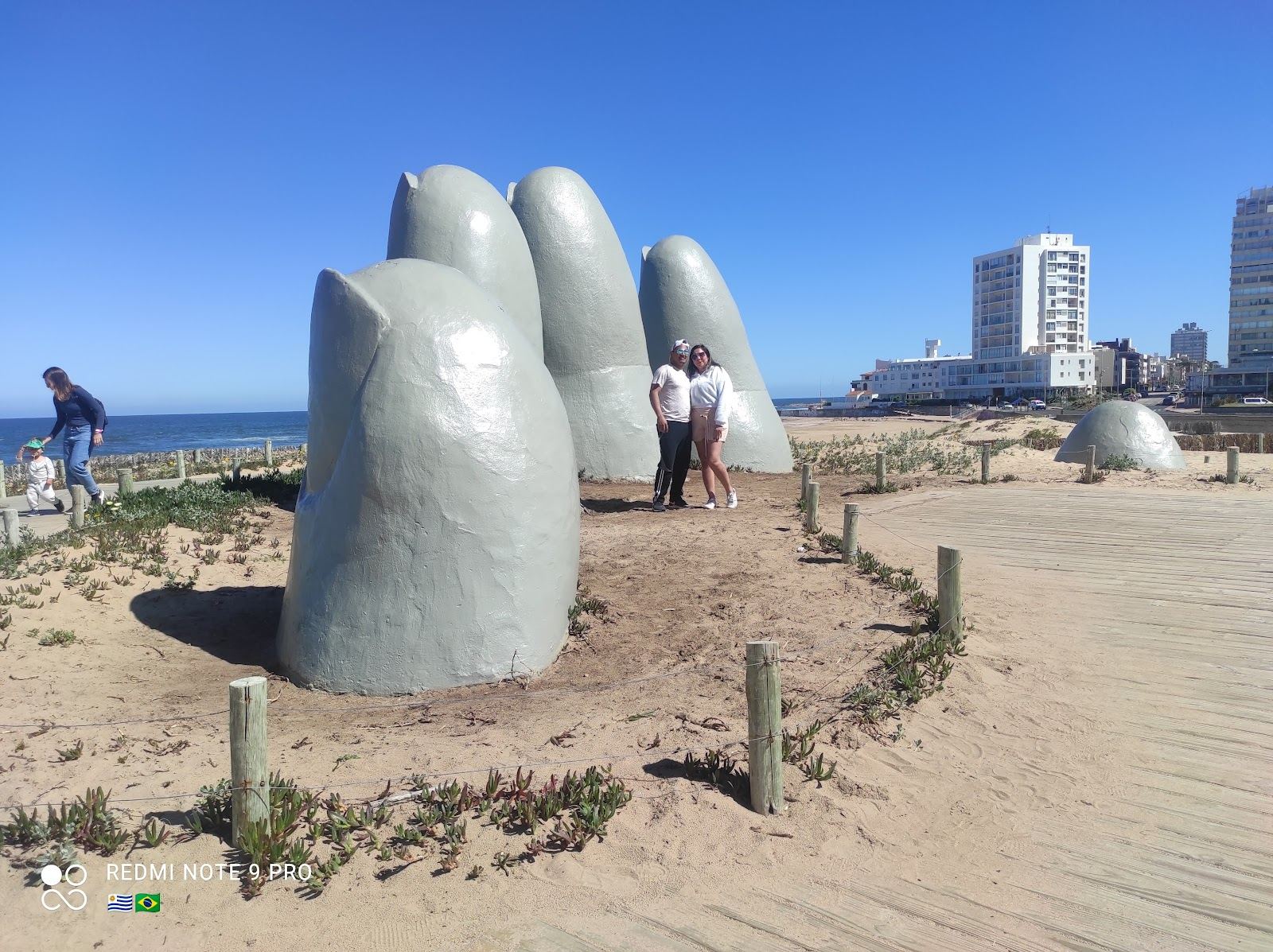
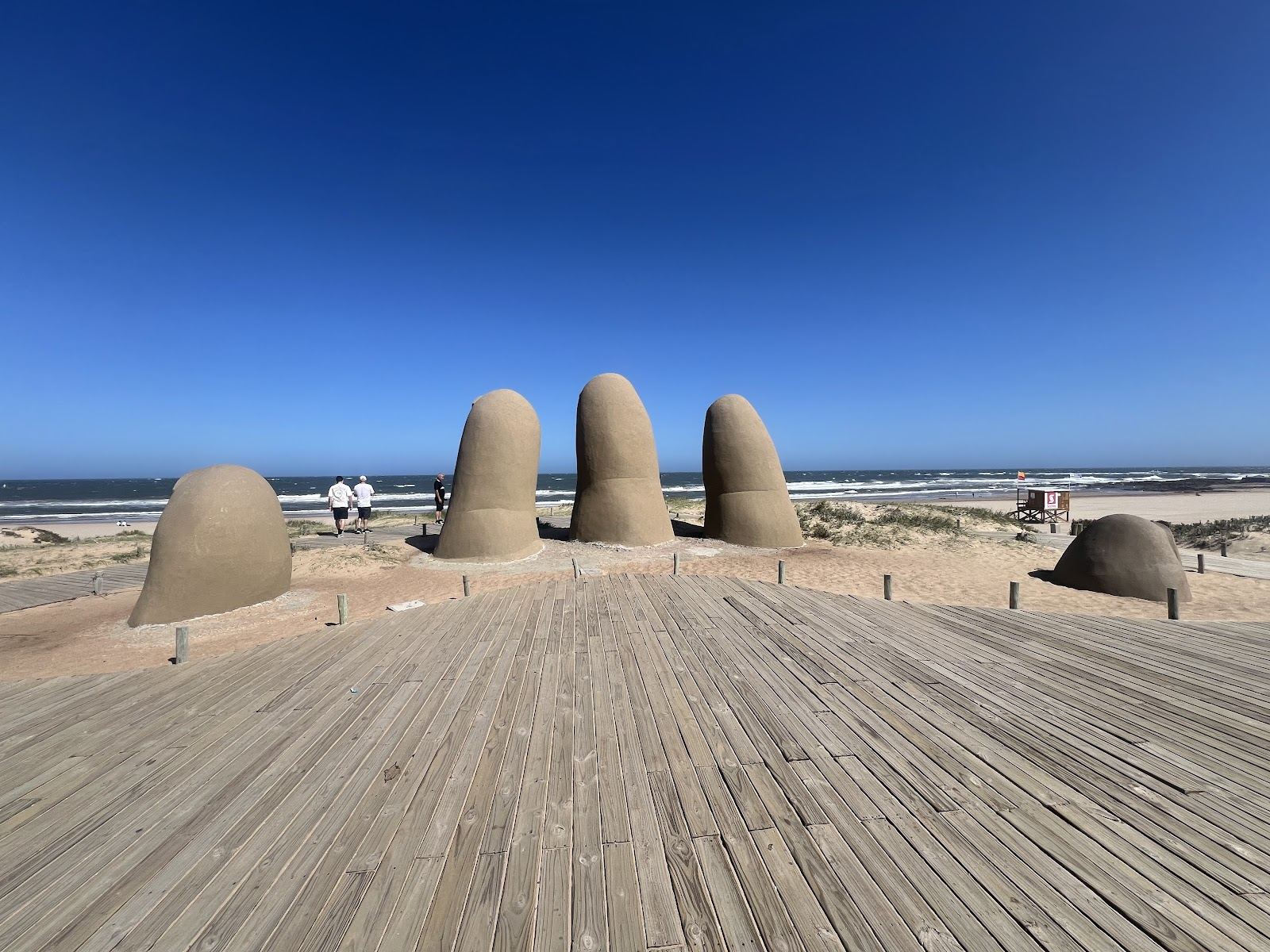
Playa de los Dedos is the part of Playa Brava that everyone actually means when they picture Punta del Este. It is the town end of that long Atlantic beach, named for los dedos, the fingers of the giant concrete Hand that claws up out of the sand here. The sculpture was made by the Chilean artist Mario Irarrazabal and first shown in 1982 as a warning about the strong waves, and it has since become the symbol of the whole resort and the one photo most people leave with. For a value traveller the headline is simple, the most famous thing in town is completely free and you can walk to it.
The honest part is that the Hand is a crowd magnet, and at midday in summer you will queue with a hundred phones for a clean shot. The fix costs nothing, just turn up early in the morning or near sunset, when the light is better and the crowd thins, and the icon is yours. This is also the easiest place in Punta del Este to get on a surfboard, with schools on the front renting boards and teaching beginners on the calmer days, which makes it the cheap entry point to the sport before you graduate to the better waves at Montoya up the coast.
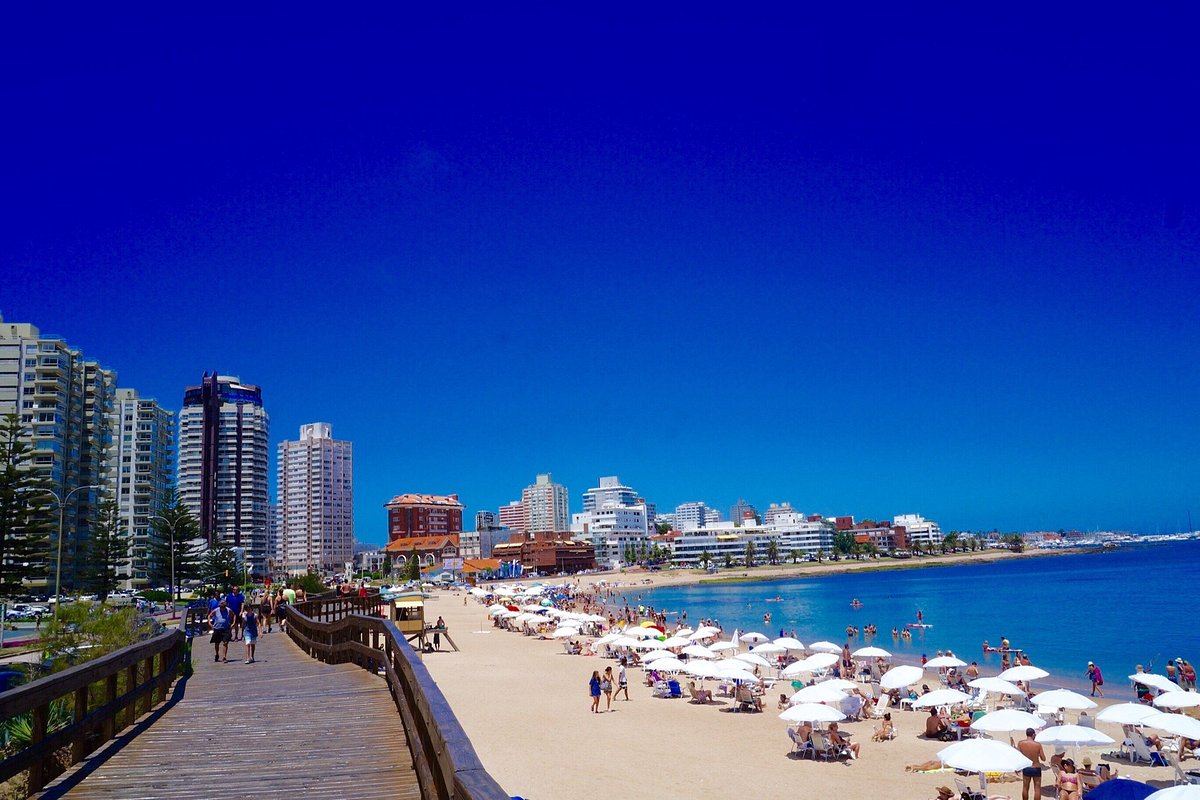
Beyond the sculpture the value play is the same as the rest of Brava. Walk in from the town centre, the marina or the bus terminal, all close enough that you rarely need a car, lay your towel on the free sand, and stroll a little south for quieter space away from the Hand. Bring water and snacks from a town supermarket rather than paying the stalls and paradores on the front, keep any spend for a group surf lesson if you fancy it, and cross to the calm Playa Mansa side when you want an easy swim. The icon, the surf and the open horizon are all on the house here.
Clubs on this beach
Los Dedos is free public sand with seasonal stalls and paradores, while the full beach club scene sits north around La Barra and Bikini.
Paradores and stalls by the Hand
In the summer season paradores and stalls set up near the Hand offering loungers, drinks, snacks and board hire with a view of the surf, a casual and affordable take rather than a full beach club. Names, opening and prices change season to season and are to be confirmed, so treat any of them as an optional stop on the day rather than something to book ahead. The free sand and the free icon beside them are the value choice.
Free public sand and the free Hand
The beach itself is the value pick, free to use with the most photographed sculpture in Uruguay included at no cost. Bring your own towel, water and shade and you have a full day at the symbol of the coast for nothing, with the town and its cheaper eateries a short walk back. For most visitors this beats any paid setup here, since the icon and the view belong to everyone.
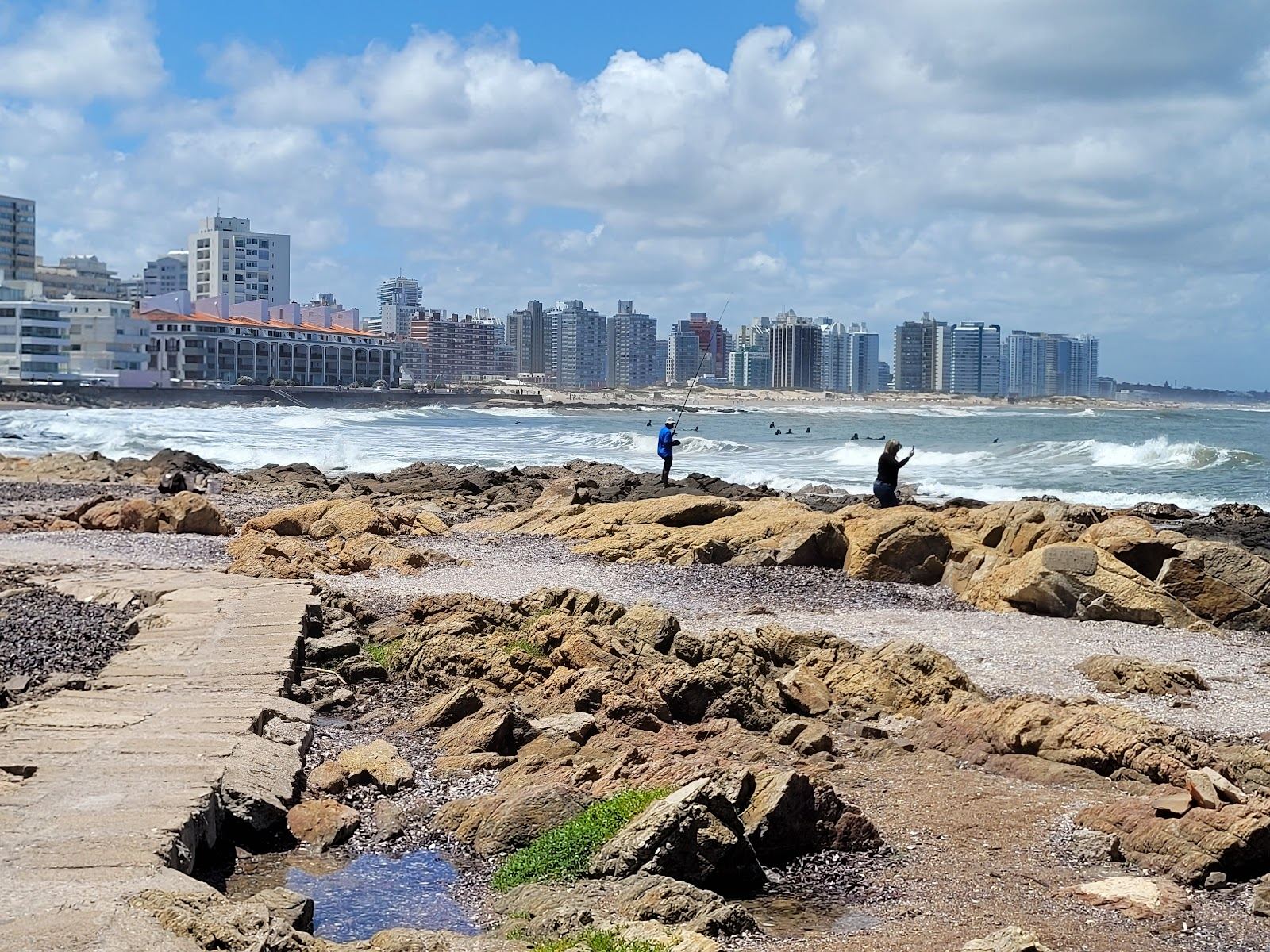
Playa de los Dedos sits at the town end of Playa Brava, on the eastern Atlantic side of the peninsula, a short and flat walk from the centre of Punta del Este, the marina and the bus terminal. Most visitors reach it on foot without a car or a fare, and the Hand sculpture is the easiest landmark to aim for. If you are staying further out, local buses run along the coast road and are the cheap way in.
For the cheapest visit, walk in, photograph the free Hand in the early or late light, use the free public sand and bring water and food from a town supermarket rather than the stalls on the front. Surf schools are the simplest way onto the water if you want a lesson or a board. This is open Atlantic water, so conditions are typical rather than guaranteed, the currents are real and the sea is cool, and lifeguard cover is seasonal, so read the flags before you swim.
Not ready to book?
Keep the good shorelines coming. Shore Notes is our occasional letter on the best beaches and the clubs worth your day, sent straight to your inbox. One field, unsubscribe any time.
Reserve a beach club day in Punta del Este
Los Dedos is free public sand by the Hand with seasonal stalls beside it, and the full beach club scene sits north around La Barra and Bikini. Tell us your date, party and plan and we will help arrange a daybed or table nearby. No charge to enquire.
Independent and honest · 1,340 beaches ranked across 103 destinations · We answer to no resort
Common questions
What is Playa de los Dedos?
Playa de los Dedos is the local name for the town end of Playa Brava, the section beside the giant Hand sculpture whose fingers, los dedos, rise from the sand. It is the closest beach to central Punta del Este, the easiest place to learn to surf, and the spot everyone walks to for the most famous photo on the coast. The icon and the sand are both free.
Is the Hand sculpture free to see?
Yes. La Mano, the giant hand with fingers reaching from the sand, was made by the Chilean artist Mario Irarrazabal and first shown in 1982, and it costs nothing to see or photograph. It is the symbol of Punta del Este and the one shot most visitors leave with. Come early in the morning or near sunset to photograph it without the midday crowd, and bring your own water rather than buying at the stalls.
Can you learn to surf at Playa de los Dedos?
Yes, this town end of Brava is the easiest place in Punta del Este to start, with surf schools on the front renting boards and teaching beginners on the calmer days. The waves vary with the swell and wind, so check the forecast, and a group lesson is cheaper than a private one. Stronger surfers head north to Montoya in La Barra for cleaner, more reliable waves.
Can you swim at Playa de los Dedos?
You can, but it is the open Atlantic side of the peninsula, with real waves and currents that suit confident swimmers and surfers more than children. Lifeguards are generally on duty in summer, though cover varies and is to be confirmed. Conditions are typical rather than guaranteed and there is no swimming promise, so for an easy dip cross to the calm Playa Mansa side a few minutes away, and here swim only when it is calm and never alone.
How do you visit Playa de los Dedos cheaply?
Because it is the town end of the beach, you reach it on foot from central Punta del Este, the marina and the bus terminal, so you rarely need a car or a fare. The cheapest visit is the simplest one, walk in, photograph the free Hand, lay your towel on the free sand, and bring water and snacks from a town supermarket rather than paying the stall and parador prices on the front.