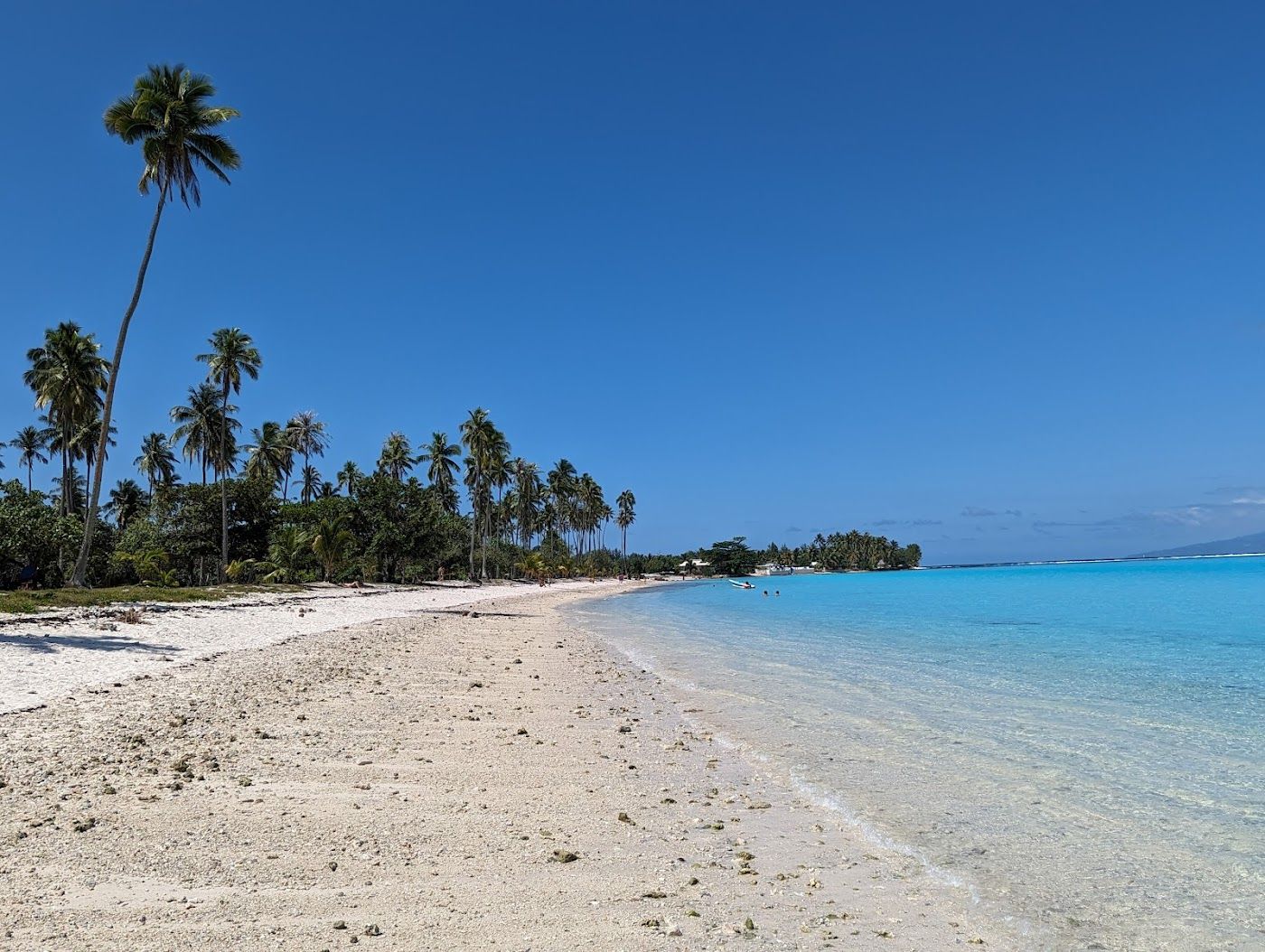
 Photo: Cristina Massari via Google
The verdict
- Best forAnyone choosing weeks for the calmest lagoon, clear snorkeling and the dry winter light, or for the humpback whales
- Top pickThe dry season from May to October, with June to September the clearest and calmest; September and October add the whales and thinner crowds
- One thing to knowThis is the South Pacific, so the seasons invert; the dry, cooler winter is the prime window and the humid wet season runs over the Western winter holidays
Published 15 March 2026. Last reviewed 6 April 2026
Moorea is the jagged green sister of Tahiti, a short ferry hop across the channel, where volcanic peaks rise straight out of a turquoise lagoon and the reef holds the swell at bay. It is one of the more affordable and unhurried corners of French Polynesia, built for slow days of snorkeling, paddling and watching the light move over Mount Rotui. The lagoon stays warm all year, usually somewhere between 25 and 29 degrees, so as with much of the tropics the temperature is not what shifts. What shifts is the rain, the humidity, the trade winds and, in spring, the whales.
Because this is the South Pacific, the calendar runs opposite to Europe and North America. The dry season is the austral winter, from about May to October, when the southeast trades blow cooler and clearer air across the island and the lagoon turns glassy. The wet season, from November to April, brings the heat, the humidity and short heavy showers, along with a low but real cyclone risk over the Western winter holidays. This guide walks the year month by month, with a quick grid and longer notes on the months that earn a special mention.
If you want the short answer, aim for the dry winter and treat June through September as the dependable heart of it, with the calmest water and the most reliable sun. September and October are quietly the best of both worlds, when the humpbacks are in the warm water and the peak summer crowds have begun to ease. The wet months are not a write off, lush and far cheaper, but they ask for patience with the showers and a flexible plan.
Month by month at a glance
| Month | Air | Sea | Rain | Crowd | Verdict |
|---|---|---|---|---|---|
| January | Warm, humid | Warm, around 29C | Wet season, heavy showers | Low | Lush and quiet; humid with a low cyclone risk and cheapest rates |
| February | Warm, humid | Warm, around 29C | Wettest, cyclone risk | Low | The most humid and shower prone month; green but a weather gamble |
| March | Warm, humid | Warm, around 29C | Wet easing late | Low | The wet season tailing off; good value, improving toward month end |
| April | Warm | Warm, around 29C | Drying out | Building | A pleasant transition; often lovely as the humidity drops |
| May | Warm, fresher trades | Warm, around 28C | Dry season opens | Building | The dry season begins; clear and comfortable, a fine value month |
| June | Warm days, cooler nights | Warm, around 27C | Dry, clear | Higher | Prime conditions; calm lagoon, reliable sun and clear water |
| July | Warm, breezy | Warm, around 26C | Dry, can be windy | Peak | Peak season; superb but busy, book well ahead |
| August | Warm, breezy | Warm, around 26C | Dry | Peak | Peak crowds and fine weather; the first whales arrive late |
| September | Warm | Warm, around 26C | Dry, clear | Easing | A top pick; whales in, dry skies and crowds beginning to thin |
| October | Warm, warming | Warm, around 27C | Dry, warming | Moderate | Excellent and quieter; whales tailing off, warm and settled |
| November | Warm, humid building | Warm, around 28C | First showers return | Lower | A pleasant shoulder; humidity creeps back, whales may linger early |
| December | Warm, humid | Warm, around 29C | Wet season returns | Building, holidays | Festive but humid and showery; the lagoon stays warm and inviting |
When each month earns its place
May. The opening of the dry season and one of the smartest weeks of the year. The wet season humidity has lifted, the trades bring fresher, clearer air, and the lagoon settles, all before the July and August peak fills the island and lifts the prices. If you want dry season conditions with shoulder season value and space, May rewards you.
June to September. The dependable heart of the year, cooler in the evenings, drier by day, with the calmest and clearest lagoon for snorkeling the coral gardens and drifting over the rays. July and August are the busiest and most expensive, coinciding with the Western summer holidays, so book the overwater stays and the popular tours well ahead. Late August brings the first humpbacks into the warm offshore water.
September and October. Arguably the sweet spot. The dry weather holds, the humpback whales are at or near their peak as mothers and calves rest near the reef, and the peak crowds begin to ease while the lagoon warms again. Whale watching is weather and luck dependent and never guaranteed, but few months pair such fine conditions with such a good chance of the encounter.
February. The opposite end of the scale, statistically the wettest and most humid month and the height of the low cyclone risk. It is among the cheapest and quietest times, and the island is at its most lush and green, but a passing storm is possible and the showers are heaviest, so it is a window best taken with flexible bookings and an eye on the forecast.
Get the Moorea beach calendar
Independent and honest · 1,340 beaches ranked across 103 destinations · We answer to no resort
Before you go
What is the best month to visit Moorea?
The dry season from May to October is the prime window, and June through September is the sweet spot, with the clearest skies, the calmest lagoon and the most comfortable temperatures. September and October add the humpback whales while the peak summer crowds begin to thin. Conditions are typical and never guaranteed.
When is the rainy season in Moorea?
Moorea sits in the South Pacific, so its seasons invert and the wet season runs from November to April, over the Western winter. It is warmer and more humid then, with frequent but often brief showers and a low cyclone risk that peaks around January to March. The lagoon stays warm and swimmable throughout.
When can you see whales in Moorea?
Humpback whales migrate to French Polynesia from roughly August to November, with the peak around September and October, when mothers and calves rest in the warm waters off the island. Tours run through the season, though sightings depend on the day and conditions and are never guaranteed.
Is the lagoon warm enough to swim in Moorea?
Yes, the lagoon stays warm all year, typically around 25 to 29 degrees, so swimming and snorkelling are comfortable in every month. It is at its calmest and clearest in the dry winter from May to October, while the wet season can stir up brief showers and warmer, slightly murkier water after rain. Conditions are typical and never guaranteed.
When is the cheapest and quietest time to visit Moorea?
The lowest prices and thinnest crowds come in the wet season from December to March, the most humid and shower prone stretch. For value with good weather, the shoulder weeks of May and late October to November pair lighter crowds with dry, settled conditions and, in spring, the tail of whale season.