 Photo: Danilo Ramalho via Google
The verdict
- Best forSnorkellers who want clear, deep Atlantic water and fish over volcanic rock, and who understand Madeira is a temperate island of pebble and stone rather than a tropical coral reef.
- Top pickGarajau inside the marine reserve for the clearest water and the resident groupers, with Reis Magos next door as the easy companion swim.
- One thing to knowAlmost every entry is pebble or rock rather than sand, so bring water shoes and pick a calm day on the sheltered south coast.
Published 8 February 2026. Last reviewed 27 May 2026
Madeira snorkels nothing like the tropics, and the sooner you picture it correctly the more you will enjoy it. This is a young volcanic island rising steeply out of the cool Atlantic, so there is no warm coral reef and no flat turquoise lagoon. What there is instead is water of remarkable clarity, deep and clean and a saturated blue, washing over black basalt rock and pebble shores that drop away quickly into the open ocean. The marine life is temperate rather than rainbow, but it is abundant and close, and on a calm day the visibility off the south coast can be superb. Read it as an Atlantic experience, not a Caribbean one, and it delivers.
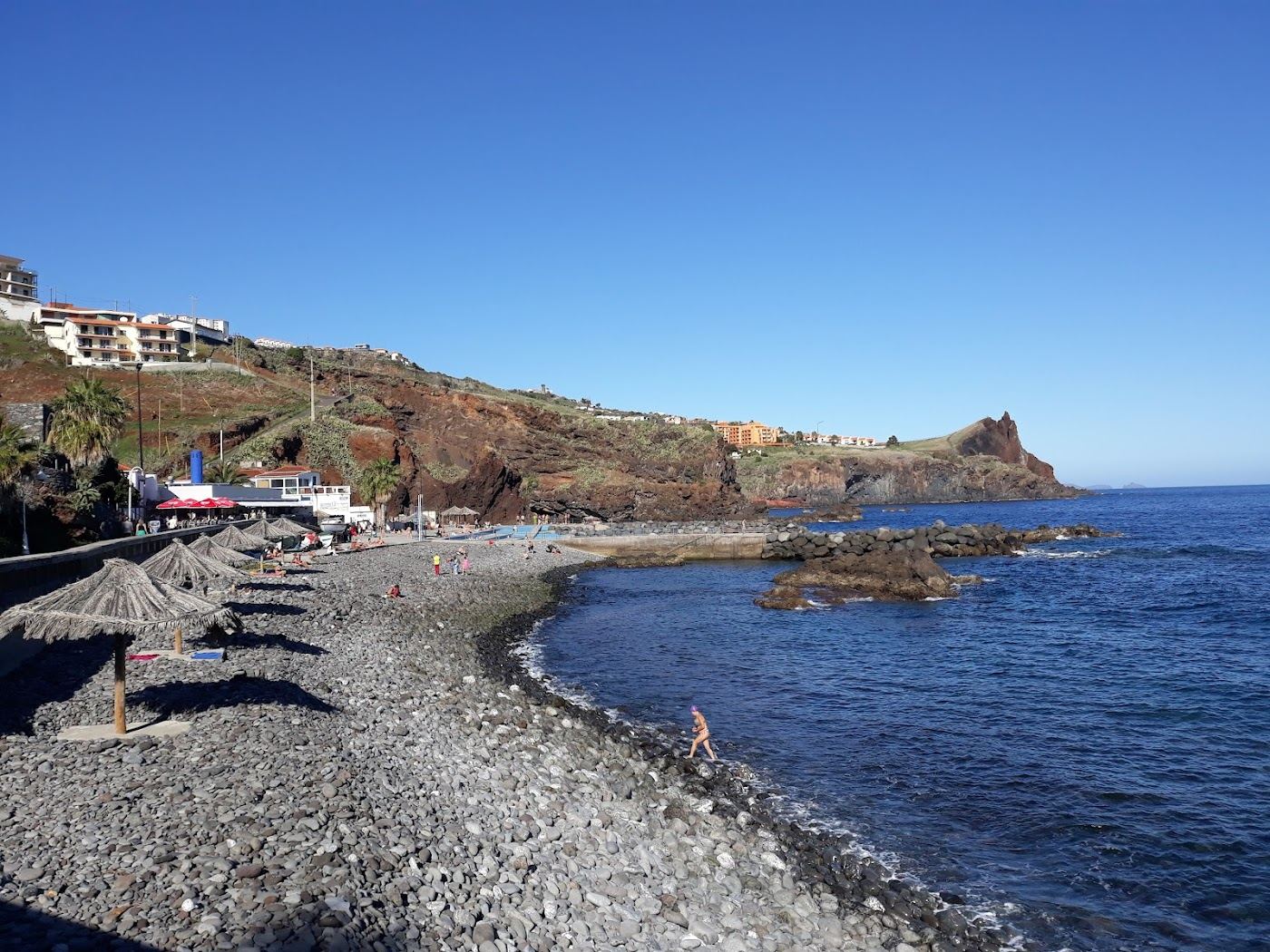
The clear standout is Garajau on the southeast coast, beneath the great clifftop Christ statue. The pebble beach there sits inside a partial marine reserve protected since 1986, and the protection shows, because the water is clear and dusky groupers, the meros, patrol the rocks in numbers that have made this Madeira's signature snorkelling and diving site. A cable car carries you down the cliff to the shore, the entry is straight off the stones, and the fish are unbothered by swimmers. Reis Magos, the small pebble beach immediately next door, shares the same clean stretch of coast and makes a natural pairing for a day in the water.
Beyond that southeast corner, the snorkelling is about clarity and rock. The volcanic pools at Doca do Cavacas near Funchal and the famous lava basins at Porto Moniz in the northwest both give sheltered, clear water with fish around the stones, while the golden sand island of Porto Santo offers warm, clear, easy swimming over sand rather than reef. We have ranked the options below by clarity and marine life, named the beach to skip for snorkelling, and kept the honest note that entries are stony and conditions are typical rather than guaranteed, so uncertain details say to be confirmed.
Madeira snorkelling beaches, ranked
The southeast reserve first, the rock pools next.
Garajau
The best snorkelling on the island by a clear margin, a pebble beach inside the Garajau marine reserve below the Christ statue, protected since 1986. The water is clean and clear and the resident dusky groupers, the meros, drift unhurried over the volcanic rock, joined by bream, wrasse and shoals of small fish. A cable car drops you to the shore and the entry is straight off the stones. Bring water shoes, pick a calm day, and this is genuinely memorable temperate water snorkelling.
Reis Magos
The easy companion to Garajau, a charming small pebble beach a short way along the same clear southeast coast, with a slipway, a couple of cafes and clean water that holds plenty of fish around the rocks at either end. It is more relaxed and accessible than Garajau, a lovely place to pair a swim with lunch, and the visibility on a settled day is excellent. Choose it for an unfussy, scenic snorkel close to Funchal, accepting pebbles underfoot rather than sand.
Doca do Cavacas
A cluster of natural volcanic rock pools on the coast just west of Funchal, where the Atlantic fills basins carved into the basalt and the clear water gathers fish among the stones. It is a striking, sculptural setting, more rock pool than beach, with ladders and steps into the deeper sections for a sheltered snorkel when the open sea is lively. Pick it for the dramatic lava landscape and an easy, protected swim, and mind the rough rock and the surge on bigger days.
Porto Moniz
The island's famous natural swimming pools at the far northwest tip, lava rock basins filled and refreshed by the Atlantic, sheltered from the open swell and clear enough to hold a scatter of small fish among the stones. It is one of the most scenic places to get in the water on Madeira, framed by towering cliffs and breaking surf beyond the walls. Treat it as a beautiful, protected dip with light snorkelling rather than a reef, and check the sea, since the north coast is wilder than the south.
Porto Santo
The golden sand island a short ferry from Madeira, with a long warm beach and clear, gentle water that makes for the easiest swimming in the archipelago. The honest note for snorkellers is that the bay is mostly sand, so the marine life is thinner than the rocky reserves, but the rocky ends and nearby islets hold fish and the clarity is lovely. Choose it for warm, easy, sandy bottomed water and a proper beach day, then snorkel the rocky margins rather than the open sand.
Calheta
The honest skip for snorkelling. Calheta is one of Madeira's rare golden sand beaches, built with imported sand inside a sheltered marina, and it is a delightful place to swim and to watch the sunset, but the sandy, enclosed basin holds little marine life. Come here for the calm water, the bars and the rare sand underfoot, not for the fish, and put your snorkelling day into Garajau or Reis Magos instead. Listed to keep the ranking honest for anyone basing themselves in the southwest.
The honest read on snorkelling here
The honest read on snorkelling in Madeira begins with letting go of the reef. This is the cool Atlantic, not the tropics, so there is no coral and no bath warm lagoon, and a visitor expecting either will be briefly disappointed. What the island gives instead is water of real clarity over dramatic black volcanic rock, and a temperate cast of marine life that is genuinely worth getting in for, dusky groupers, seabream and salema, ornate wrasse, the odd ray or barracuda and dense shoals shimmering in the blue. It is a different aesthetic, more about light, depth and clean water than colour, and once you accept that it is quietly excellent.
The life concentrates where it is protected, which is why Garajau stands so far above the rest. Inside the marine reserve the fish are numerous and calm, and the southeast coast around Garajau and Reis Magos holds the clearest, most sheltered water on the island, the corner to prioritise if snorkelling is the point of your day. Elsewhere the experience leans on geology, the lava pools of Doca do Cavacas and Porto Moniz offering protected, scenic water with lighter fish life, and Porto Santo offering warm, clear, sandy swimming that is easier underfoot but thinner below the surface. The recurring practical truth is that Madeira's shores are pebble and rock, so water shoes are not optional.
Timing favours late spring through early autumn, roughly May to October, when the water warms and the sheltered south coast settles into its calmest, most comfortable spell. The clarity holds for much of the year, but winter swells and cooler temperatures make it less inviting, and the north coast is always wilder than the south. Pick a calm day, favour the southeast, carry shoes and a thin wetsuit if you feel the cold, and remember conditions are typical rather than guaranteed. We keep the live operator list on the directory, and uncertain details say to be confirmed.
Where to settle after the swim
After a snorkelling day, Madeira's swimming complexes and beach bars cluster along the Funchal lido seafront and the southern coast, the kind of clear water lidos and seafront tables where you land for a lounger, a long lunch and a sundowner. A day pass or a sundown table is the easy way to round off a morning at Garajau or Reis Magos, though operators, opening status and any minimum spend shift through the year. We keep the live list on the directory. Tell us your dates and what you have in mind and we pass the enquiry on to confirm what is open.
Book a beach club in Madeira
Independent and honest · 1,340 beaches ranked across 103 destinations · We answer to no resort
Before you go
Where is the best snorkelling in Madeira?
Garajau, on the southeast coast just below the great Christ statue, is the standout. The beach sits inside the Garajau partial marine reserve, protected since 1986, where the water is clear and dusky groupers known as meros gather in numbers you rarely see elsewhere. Reis Magos next door shares the same clear stretch. A cable car drops you to the pebble shore, and the entry is straight off the stones.
Is Madeira good for snorkelling?
Yes, in its own temperate Atlantic way. Madeira has no tropical coral, but the water is deep, clean and often strikingly clear, and the volcanic rock holds plenty of fish, groupers, bream, ornate wrasse and shoals of small silver fish. The catch is that almost every entry is pebble or rock rather than sand, so you want water shoes and calmer days, and the marine reserve at Garajau is where the life concentrates.
Can you snorkel straight from the beach in Madeira?
On the right beaches, yes. Garajau and Reis Magos on the clear southeast coast and the volcanic rock pools at Doca do Cavacas near Funchal all let you wade in off the pebbles or steps and find fish within a few strokes. The water is clear but cold by tropical standards and the entries are stony, so bring shoes and read the sea, since conditions are typical rather than guaranteed.
Is there coral in Madeira?
No tropical coral reef, because Madeira sits in the cooler Atlantic rather than the tropics. What you see instead is life over black volcanic rock, dusky groupers, salema and seabream, ornate wrasse, the occasional barracuda or ray, and dense shoals in the clear blue. It is a different kind of snorkelling to a reef, more about clarity, depth and fish than colour, and at Garajau it is genuinely rewarding.
When is the best time to snorkel in Madeira?
Late spring through early autumn, roughly May to October, brings the warmest water and the calmest seas on the sheltered south coast, which is the most comfortable window. The water stays clear much of the year, but winter swells and cooler temperatures make it less inviting. The south stays calmer than the north, so favour the southeast coast, and treat conditions as typical rather than guaranteed.