Playa de Janubio, Lanzarote
The verdict
- Best for: Photographers, walkers and the curious who want raw volcanic scenery and the great salt pans, not a swim.
- Best spot: The viewpoint over the Salinas de Janubio in late afternoon, then fish at El Golfo a short drive north.
- Know this: The currents here are dangerous and there is no lifeguard, so this is a beach to look at, not to swim.
Published 3 April 2026. Last reviewed 6 May 2026
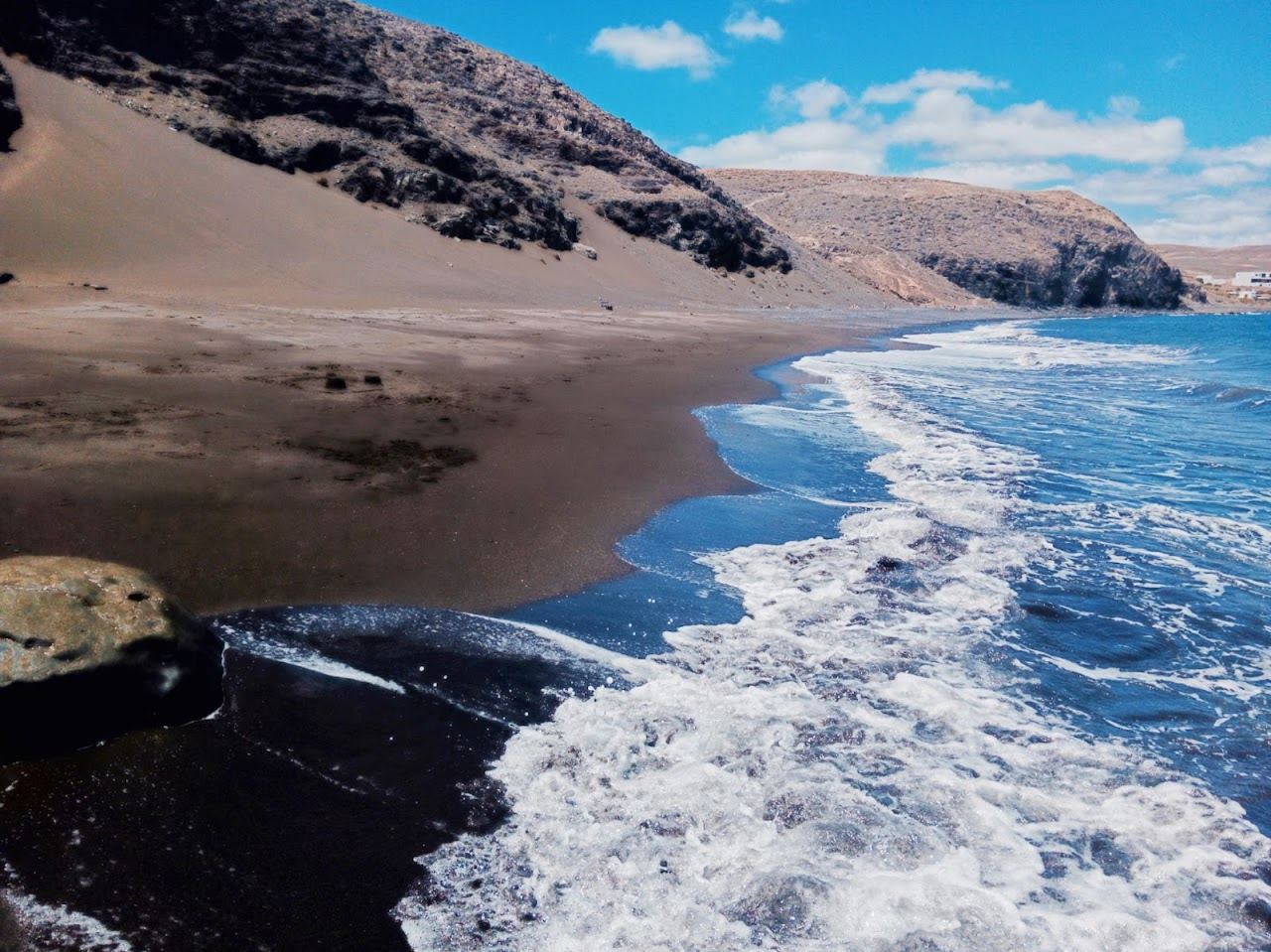
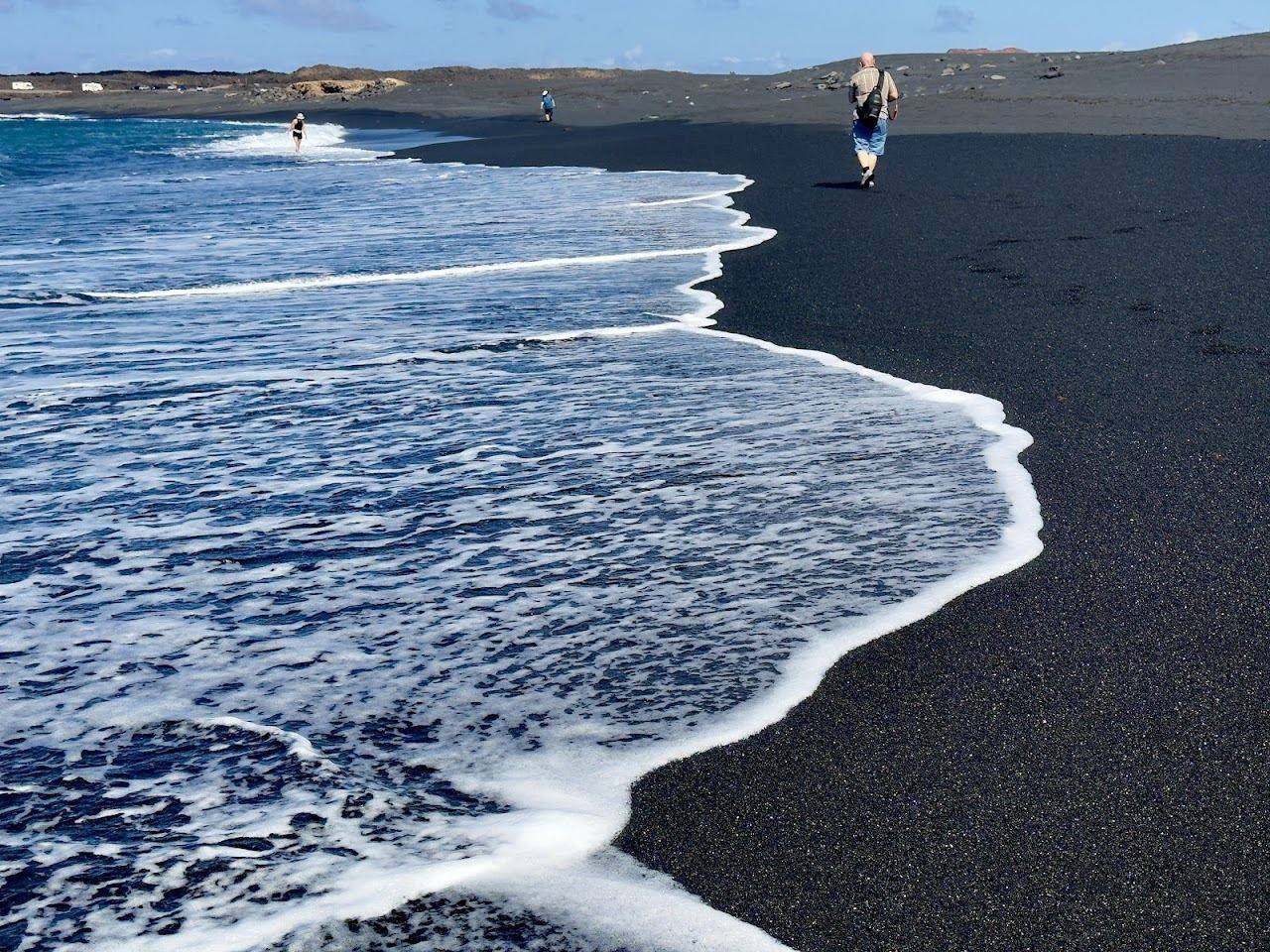
Janubio is Lanzarote at its most elemental. On the exposed southwest coast, a long bank of black volcanic sand meets the open Atlantic, and behind it lies one of the strangest and most beautiful sights on the island, the Salinas de Janubio, a vast geometric patchwork of salt pans that shift through whites, pinks and ochres as the water and the light change. The black sand is the legacy of the great Timanfaya eruptions of the 1730s that remade this corner of the island, and standing here you feel the raw volcanic story under your feet.
The honest read has to start with the water, because this is not a swimming beach and pretending otherwise would be reckless. The currents at Janubio are strong, the undertow serious, there is no lifeguard, and red flags are common. People do come down onto the sand to walk, to feel the wind and the spray and to photograph the surf against the black shore, but the sea is for looking at, not for getting into, and that goes double for anyone with children. Come knowing that, and Janubio is one of the great free spectacles of Lanzarote.
For a food and culture wanderer, the trick is to fold Janubio into the wider southwest. Time your visit for the late afternoon, when the salinas glow and the sunset spreads over the Atlantic, then drive the short distance north to El Golfo, the little fishing village famous across the island for fresh fish and seafood on terraces above the water, beside the green Charco de los Clicos lagoon. Order the catch of the day with papas arrugadas and mojo, and you have turned a wild viewpoint into a full and memorable evening.
Tables near this beach
Janubio is a wild scenery beach with nothing on the sand, so the food is in the villages nearby. Compare the island's beach bars in our Lanzarote directory.
El Golfo fish restaurants
A short drive north, the fishing village of El Golfo is the natural lunch stop, a row of terraces above the water serving fresh fish and seafood beside the green Charco de los Clicos lagoon. These are restaurants rather than beach clubs, and any minimum spend is to be confirmed.
Playa Blanca seafront bars
For sunbeds, beach bars and a proper club mood after a wild morning at Janubio, the resort of Playa Blanca is about 15 minutes south with the most choice on this coast. Browse the options through our directory, where opening and pricing are noted as to be confirmed.
Janubio lies on the southwest coast in the municipality of Yaiza, right beside the main road south towards Playa Blanca. By car it is around 15 minutes from Playa Blanca and roughly 30 from the airport, with a roadside viewpoint over the salt flats and free parking. There is no useful bus, so a car is the way to reach it and to link it with the rest of the southwest.
Park above the salinas, take in the view and walk down to the black sand if you wish, but stay out of the water and keep children back from the surf. Bring water and sun cover for the exposed shore, and plan the day around the late light and a fish lunch in El Golfo just north, with the Timanfaya volcanoes and the wineries of La Geria within easy reach inland.
Not ready to book?
Keep the good shorelines coming. Shore Notes is our occasional letter on the best beaches and the clubs worth your day, sent straight to your inbox. One field, unsubscribe any time.
Reserve a day near Janubio
Tell us the date and party and we will match you to a beach bar or table on the southwest coast near Janubio, El Golfo and Playa Blanca and pass on your request. No charge to enquire.
Independent and honest · 1,340 beaches ranked across 103 destinations · We answer to no resort
Common questions
Can you swim at Playa de Janubio?
No, swimming is not recommended at Janubio. This stretch of the southwest coast is known for strong tides, powerful undertows and dangerous currents, there is no lifeguard, and red flag conditions are common. Come for the wild scenery, the black sand and the salt flats rather than a swim, and keep well back from the water, especially with children.
What are the Salinas de Janubio?
The Salinas de Janubio are the largest salt flats in the Canary Islands and one of the few still working in Lanzarote, a geometric patchwork of shallow pans beside the beach. The colours shift with the water levels and the light, the lagoon draws many birds, and the whole site is protected, which makes it one of the most photographed places on the island.
Is Janubio worth visiting?
Yes, but as a place to look rather than to swim. Janubio is one of the most dramatic corners of Lanzarote, black volcanic sand born of the Timanfaya eruptions, the salt pans glowing beside it and big Atlantic light at sunset. Photographers, walkers and anyone curious about the island's volcanic story will find it unforgettable, while families chasing a swim should look elsewhere.
Where do you eat near Janubio?
The fishing village of El Golfo is a short drive north and is the natural lunch stop, famous across the island for fresh fish and seafood served on terraces above the water, beside the green Charco de los Clicos lagoon. Order the catch of the day with papas arrugadas and mojo, and time it for the late afternoon light over the coast.
When is the best time to visit Janubio?
Late afternoon into sunset is the moment here, when the low sun lifts the colours of the salt pans and the black sand and the Atlantic catches fire. The site is open and exposed, so spring and autumn are kinder than the windy heart of summer. Bring sun cover and water, as there is no shade and few services on this wild coast.