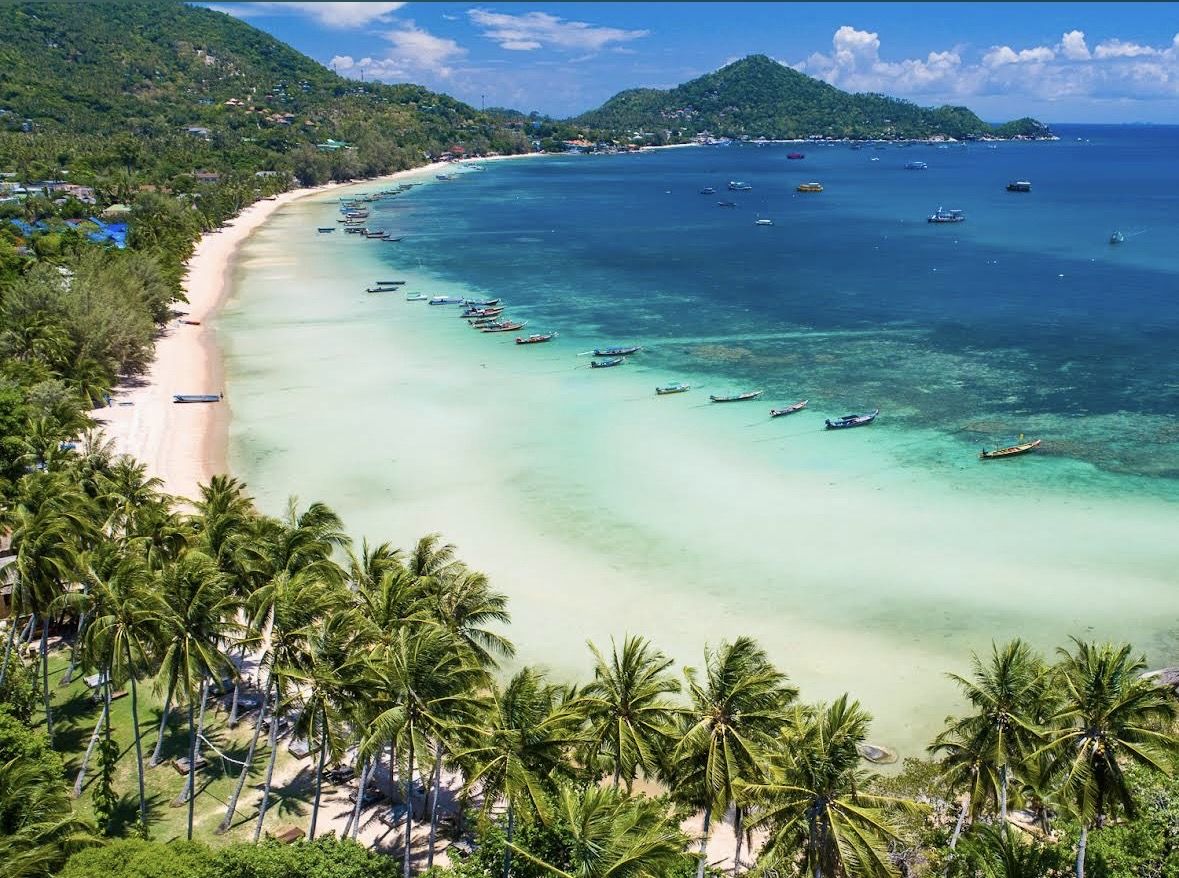
 Photo: Bino via Google
The verdict
- Best forDivers and snorkelers choosing weeks for clear water and calm seas, and anyone wanting warm swimming without the wettest months
- Top pickA long window from late February to September, with June and the September to October stretch the connoisseur's choice for the clearest water; skip November
- One thing to knowKoh Tao sits in the Gulf of Thailand, so its monsoon runs late in the year, not in the Andaman summer; the rain and swell arrive around October and peak in November
Published 27 January 2026. Last reviewed 18 March 2026
Koh Tao is a small granite island in the Gulf of Thailand, ringed by coral and built almost entirely around the water. It is one of the cheapest places in the world to learn to dive, and that single fact shapes the island and your timing more than anything else. The sea here stays warm all year, usually around 28 to 30 degrees, so the question is never whether the water is swimmable. The question is what the wind, the swell and the underwater visibility are doing, and those follow a clock all their own.
That clock matters because the Gulf does not share the Andaman coast's calendar. While Phuket and the west coast take their monsoon over the European summer, Koh Tao and the Gulf islands stay mostly dry then and save their wet season for late in the year. The rain and the rougher seas build through October, peak in November, and ease off through December, while the long run from roughly February to September is the dependable stretch of warm, often glassy water. This guide walks the year month by month, with a quick grid and longer notes on the months that earn a special mention.
If you want the short answer, aim for the dry, settled months and treat September and October as the quiet secret for clarity, when the wind drops and the visibility opens up. June is a calm, uncrowded favourite. The one window to approach with care is October into November, when the island turns green, the dive boats watch the forecast, and the exposed eastern bays take the brunt of the swell.
Month by month at a glance
| Month | Air | Sea | Water and rain | Crowd | Verdict |
|---|---|---|---|---|---|
| January | Warm, around 29C | Warm, around 28C | Drying out, last showers easing | Busy | Recovering from the rains; generally good, occasional leftover swell early |
| February | Warm, around 30C | Warm, around 28C | Dry, clarity improving | Busy | A reliable, calmer month with warming visibility and good value diving |
| March | Hot, around 32C | Warm, around 29C | Dry, clear | Busy | Excellent water and the start of the whale shark window |
| April | Hottest, around 33C | Warm, around 30C | Dry, clear | Busy, Songkran | Superb conditions and peak heat; whale shark chances continue |
| May | Hot, around 32C | Warm, around 30C | Mostly dry, brief showers begin | Easing | Warm and quieter; a fine value shoulder month |
| June | Warm, around 31C | Warm, around 30C | Mostly dry, often flat calm | Lower | A connoisseur's month; quiet, calm and dependable underwater |
| July | Warm, around 31C | Warm, around 29C | Brief passing showers | Higher | Busy with the summer crowd but generally good diving |
| August | Warm, around 31C | Warm, around 29C | Occasional showers | Higher | Lively and warm; conditions usually hold well |
| September | Warm, around 30C | Warm, around 29C | Some rain, often superb clarity | Easing | The clearest water of the year begins as the wind drops |
| October | Warm, around 30C | Warm, around 29C | Rain building, swell increasing | Lower | A transition month; lovely early, wetter and rougher late |
| November | Warm, around 29C | Warm, around 28C | Wettest, rough on the east coast | Low | The month to avoid; heavy rain and the year's roughest seas |
| December | Warm, around 28C | Warm, around 28C | Rain easing, improving late | Building, holidays | Damp early then drying; festive weeks fill the bays late month |
When each month earns its place
February to April. The dependable heart of the dry season. The air warms steadily toward the April peak, the sea sits in the high twenties, and the water turns clear and calm. This is also when the first whale shark window opens, roughly March into April, when these gentle giants drift past the dive sites following the plankton. The trade off is that this is the busy stretch, so book courses and rooms ahead and expect company at the popular sites around Chumphon Pinnacle and Sail Rock.
June. A quiet favourite. The early summer often brings flat, glassy mornings and uncrowded boats, with warm water and dependable visibility before the European summer rush arrives in force. If you want the calm of the dry season without the peak prices or the peak numbers, June rewards you.
September and October. The island's open secret. As the southwest winds ease, the Gulf can turn unusually clear, with visibility regularly opening beyond 30 metres and the second whale shark window arriving. Early in this run the conditions can be the best of the entire year. The caution is that it shades into the wet season, so the later you push into October the more you should watch the forecast and keep your plans flexible.
November. The month to treat with respect. Statistically the wettest and roughest, when the monsoon settles over the Gulf, the swell wraps onto the exposed eastern bays, and dive trips are most likely to be reshuffled or called off. It is the cheapest and quietest time, and the island stays green and atmospheric, but it is a gamble best taken with patience and loose plans.
Get the Koh Tao beach calendar
Independent and honest · 1,340 beaches ranked across 103 destinations · We answer to no resort
Before you go
What is the best month to dive Koh Tao?
For the clearest water the connoisseur's window is September and October, when the wind drops, the sea settles and visibility regularly opens up beyond 30 metres. The long stretch from late February to April is the other strong run, dry and calm with whale shark chances. June is a quiet favourite, often flat calm. Conditions are typical and never guaranteed.
When is the rainy season in Koh Tao?
Koh Tao sits in the Gulf of Thailand, so its wet season runs late in the year rather than over the Andaman summer. The rain and swell build through October, peak in November, which is usually the roughest and wettest month, and ease through December. The rest of the year is mostly dry with warm water.
When can you see whale sharks at Koh Tao?
Whale sharks are most often reported in two windows, roughly March to April and again from September to October, though they can appear at any time and are never a certainty. They are wild animals following the plankton, so a sighting is always a matter of luck and conditions on the day.
Is the sea warm enough to swim at Koh Tao?
Yes, the Gulf stays warm all year, typically around 28 to 30 degrees, so swimming and snorkelling are comfortable in every month. The variable is not temperature but clarity and swell, which sour during the late year monsoon, especially on the exposed east coast. Conditions are typical and never guaranteed.
When is the cheapest and quietest time to visit Koh Tao?
The lowest prices and thinnest crowds come in the wet months from October to December, with November the quietest and most weather affected. For value with good conditions, the shoulder weeks of May, June and early September pair lighter crowds with warm, often calm seas.