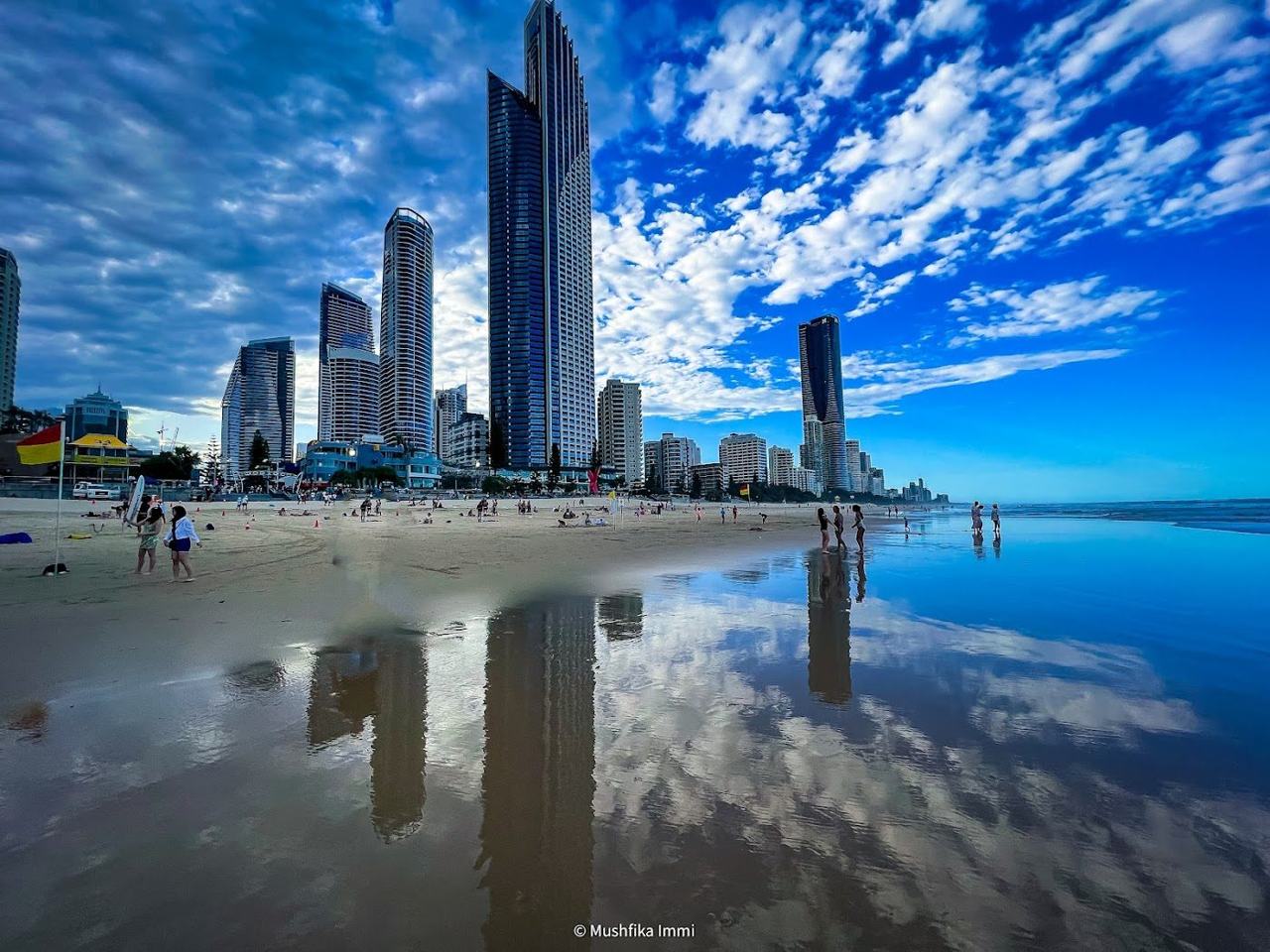
 Photo: Mushfika Immi via Google
When to Go to
the Gold Coast
Season, sea and crowds, month by month for a beach day.
The verdict
- Best forTravellers timing a Gold Coast beach trip who want warm, sunny days and swimmable sea without the summer holiday crowds, heat and prices.
- Top pickLate spring and early autumn, roughly September to November and March to April, are the sweet spot, with warm sea, plenty of sun and more room than peak summer.
- One thing to knowThe Gold Coast is a year round beach destination, but summer is hot, humid and crowded and winter is mild with cooler water, so the shoulder seasons quietly give the best all round beach days.
Published 16 April 2026. Last reviewed 9 May 2026
The Gold Coast has one of the kindest beach climates in Australia, subtropical and sunny for much of the year, so unlike a Mediterranean coast it does not really shut down in winter. That said, the seasons make a real difference to a beach day. Summer brings hot, humid, busy beaches and the chance of storms, winter brings mild, dry, bright days with cooler water, and the shoulder months in between balance warm sea, strong sun and smaller crowds.
Below we break the year down month by month for what actually affects a beach day, the air temperature, the sea temperature, the rainfall and the crowd level, with an honest verdict for each. Remember the seasons are reversed from the northern hemisphere, so summer falls over December to February and winter over June to August. Use the grid to pick your window, then the notes to fine tune it around the school holidays and the weather.
Month by month at a glance
| Month | Air | Sea | Rain | Crowd | Verdict |
|---|---|---|---|---|---|
| January | Hot, around 29C | Warm, around 26C | Humid, storms | Highest | Peak summer heat and crowds, warm sea, book ahead |
| February | Hot, around 29C | Warmest, around 26C | Wettest | High | Warmest water but humid and stormy, still busy |
| March | Warm, around 27C | Warm, around 25C | Easing | Easing | An autumn sweet spot, warm sea and thinning crowds |
| April | Mild, around 25C | Pleasant, around 24C | Drier | Low | Lovely warm days, calm sea, quiet and comfortable |
| May | Mild, around 22C | Cooling, around 22C | Dry | Low | Fresh sunny days, sea cooling, very pleasant and calm |
| June | Cool, around 20C | Cool, around 21C | Driest | Low | Mild dry winter days, cooler swims, whale season starts |
| July | Cool, around 20C | Coolest, around 20C | Dry | Moderate | Sunny crisp days, cool sea, school holiday bump |
| August | Mild, around 21C | Cool, around 20C | Dry | Low | Clear dry days, cool water, great for walks and whales |
| September | Warm, around 23C | Warming, around 21C | Dry | Building | Spring arrives, warming sea, an excellent quiet window |
| October | Warm, around 25C | Pleasant, around 23C | Some storms | Moderate | Warm sunny days, swimmable sea, a strong choice |
| November | Warm, around 27C | Warm, around 24C | Building | Building | Late spring warmth, warm water, busier toward month end |
| December | Hot, around 28C | Warm, around 25C | Humid, storms | Rising to high | Summer and holidays begin, hot, busy from mid month |
When each month earns its place
March. The pick of autumn. The sea is still warm from summer, the humidity and storm risk begin to ease and the holiday crowds have gone home, leaving warm, pleasant beach days with room to spread out. It is one of the best months to visit, combining swimmable water with comfortable air and quiet sand. Early March can still feel summery, while late March settles into calm, golden autumn weather.
April. A quiet, comfortable gem. Days are warm and dry, the sea holds a pleasant temperature into the month and the beaches are calm and uncrowded outside the Easter break. It is ideal for relaxed swimming, long coastal walks and the headlands at their best. Keep an eye on the Easter holiday dates, when family beaches fill briefly, but otherwise April is one of the most relaxed times on the coast.
June. Winter begins, and on the Gold Coast that means mild, dry, sunny days rather than cold. The sea cools to a brisk but swimmable temperature for the hardy, and the air is fresh and clear, perfect for walking the headlands. Best of all, the whale migration starts, with humpbacks passing offshore that you can spot from points like Burleigh and Rainbow Bay. Crowds are low outside any school break.
September. Spring's quiet sweet spot. The sea is warming again, the days lengthen and brighten and the winter chill lifts, yet the summer crowds have not arrived, so you get warm, sunny beach days with space to enjoy them. Whales are often still passing early in the month. For warm air, improving water and calm beaches, mid September is one of the smartest windows of the year.
December. Summer and the holiday season arrive together. Early December can still be relatively calm, but from mid month the school holidays begin, the beaches fill, prices climb and the coast hits its busiest stretch. The water is warm and the days are hot and often humid with afternoon storms. If you come in December, arrive before mid month for room or book everything well ahead for the peak.
Get the Gold Coast beach calendar
Independent and honest · 1,340 beaches ranked across 103 destinations · We answer to no resort
Before you go
When is the best time to visit the Gold Coast for the beach?
Late spring and early autumn are the sweet spot, roughly September to November and March to April, with warm sea, plenty of sun and far smaller crowds than the summer holidays. These shoulder months give comfortable air, swimmable water and quiet sand. Summer is warmest but hot, humid and crowded, so the shoulder weeks give the best all round beach day.
How warm is the sea on the Gold Coast by month?
The sea peaks around 26C in January and February, holds a warm 24C to 25C through autumn, cools to about 20C in the winter months of June to August, then warms again from September. Comfortable swimming runs most of the year, with summer and early autumn the warmest. Conditions are typical and never guaranteed.
Can you swim on the Gold Coast in winter?
Yes, many locals swim year round, though the winter sea of around 20C feels brisk and a wetsuit is welcome for longer sessions. Winter days are mild, dry and sunny, ideal for beach walks and whale watching, with cooler but swimmable water. If you want warm water for easy swimming, the months from October to April are more comfortable.
When is whale watching season on the Gold Coast?
The humpback whale migration typically runs from around June to early November, with sightings often possible from headlands like Burleigh Heads and Rainbow Bay as well as on boat tours. The peak is usually mid winter to early spring. Sightings are never guaranteed, but the cooler months offer the best chance alongside crisp, clear beach walking weather.
What is the most crowded time on the Gold Coast?
The summer school holidays from mid December through January are the busiest and priciest, when the beaches, roads and accommodation are at their fullest. The Easter break and other school holidays bring shorter spikes. For quiet sand, target the shoulder months and avoid the holiday periods, and even in peak season an early start buys you room and easy parking.