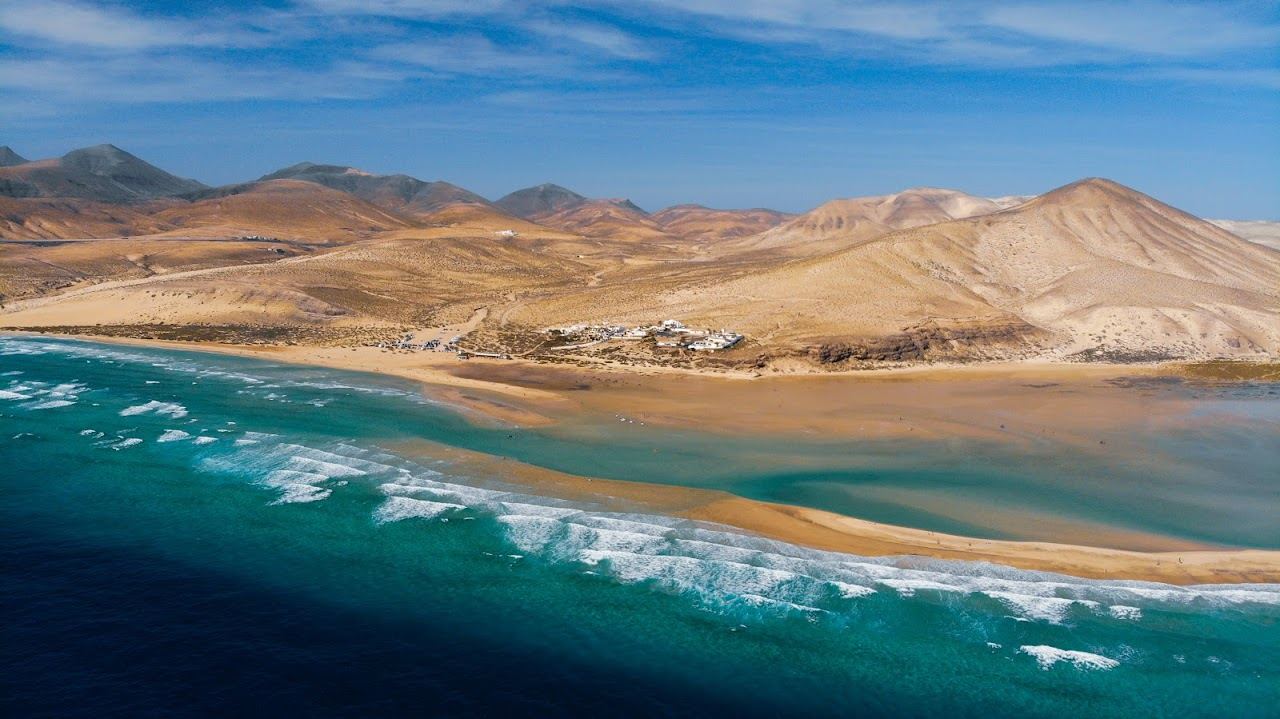
 Photo: Peter Trembeczki via Google
When to go to Fuerteventura for the beach
Month by month on air, sea, rain, wind and crowds, with the honest read on the best weeks to swim.
The verdict
- Best forTravellers choosing the right weeks for warm sea, gentle heat, calmer wind and lighter crowds on the windiest of the Canary Islands.
- Single best spotLate spring and early autumn for warm water, comfortable sun and fewer people than the peaks.
- One thing to knowThis is a true year round island, mild even in winter, but the trade winds blow harder here than on any of its neighbours.
Published 1 February 2026. Last reviewed 13 May 2026
Fuerteventura shares the kind, steady climate of the Canaries and pushes its own feature to the front, the wind. Sitting closest of the islands to the African coast, it is warm and bright through winter, hot but rarely fierce in summer, and pleasant in between, so the beach season never really closes. The trade winds, though, are stronger here than anywhere else in the archipelago, cooling the air and feeding the famous windsurf and kite scene while the sheltered lagoons stay calm.
The honest sweet spots are the shoulders of the year. Late spring brings settled warmth and a sea beginning to warm, with room before the rush, while early autumn keeps the water at its warmest as the heat and the worst of the wind ease. Summer is hot, breezy and busy, and winter is mild and bright, the island's famous sun season, though the sea turns brisk. There is no truly bad month, only the right one for what you want.
Use the grid and notes below to choose your week, and remember the wind shapes the choice as much as the warmth. For the warmest swimming, aim for late summer into autumn. For the calmest days, favour the sheltered lagoons of El Cotillo and the bays of the south, and go in the morning before the breeze builds. Conditions are typical and never guaranteed, so read the temperatures as a guide rather than a promise.
Month by month at a glance
| Month | Air | Sea | Rain | Crowd | Verdict |
|---|---|---|---|---|---|
| January | Mild, around 21C | Coolest, around 19C | Occasional | Busy with sun seekers | Prime winter sun, mild and bright with a brisk but swimmable sea |
| February | Mild, around 21C | Cool, around 18C | Occasional | Busy | Warm winter escape with calm light days, the sea still brisk |
| March | Mild, around 22C | Cool, around 18C | Low | Busy, easing | Bright settled days as winter fades, pleasant and good value |
| April | Warm, around 23C | Cool, around 18C | Low | Moderate | Warm and quieter, a lovely shoulder month before the wind builds |
| May | Warm, around 24C | Warming, around 19C | Very low | Moderate | Settled warmth and a kinder sea, one of the best months |
| June | Warm, around 26C | Pleasant, around 20C | Very low | Building | Warm and sunny with the trade winds rising on exposed beaches |
| July | Hot, around 28C | Pleasant, around 21C | Very dry | Busy | Hot and windy, the trade winds at their strongest and the kite season peaking |
| August | Hottest, around 29C | Warm, around 22C | Very dry | Peak | The holiday peak, warm sea, strong wind and full beaches |
| September | Hot, around 28C | Warmest, around 23C | Low | Busy, easing | Arguably the best month, warm sea, softer winds, thinning crowds |
| October | Warm, around 26C | Warm, around 23C | Rising | Moderate | Warm sea lingers and the heat softens, a fine calmer month |
| November | Mild, around 24C | Pleasant, around 21C | Wetter | Building | Mild and still warm enough to swim as the winter sun season starts |
| December | Mild, around 22C | Cooling, around 20C | Wettest | Busy | Festive winter sun, mild and mostly bright, the sea cooling but swimmable |
When each month earns its place
May. One of the loveliest months on the island. The days are warm and settled, the sea has begun to warm into a comfortable swim, and the crowds are light before the summer rush. The trade winds are gentler than in high summer, which keeps even the exposed beaches kinder, and it is a fine time to pair the El Cotillo lagoons with a drive through the green hills to Betancuria for goat cheese and fresh fish.
August. The holiday peak, when the beaches are at their busiest and the trade winds blow hardest, drawing kitesurfers to Sotavento and stirring the sand on the open shores. The sea is warm and the sun is strong, so swim a sheltered lagoon early and save the windy afternoon for the dunes or a long lunch in Corralejo. It is the season the wind sports world gathers on the Jandia peninsula.
September. Many regulars call it the best month, and with reason. The sea holds the summer warmth and is at its warmest of the year, the fierce edge comes off the heat, the winds soften and the crowds begin to thin as the holidays end. Rain stays low and the light is beautiful, which makes it the pick for warm water without the peak intensity or prices, and a fine time for the wild drive out to Cofete.
December. The heart of the winter sun season. The island stays mild and mostly bright while northern Europe shivers, filling the southern resorts with sun seekers over the festive weeks. The sea cools to around 20C, brisk but swimmable for the hardy, and the wind is gentler than in summer. Not a month for guaranteed beach heat, but a reliable one for winter warmth, light and easy exploring inland.
Book a beach club in Fuerteventura
Independent and honest · 1,340 beaches ranked across 103 destinations · We answer to no resort
Before you go
What is the best month to visit Fuerteventura for the beach?
Late spring and early autumn are the best all round, pairing a warm sea with comfortable heat, softer winds and far more room than the summer peak. May, June, September and October are the sweet spots. For the warmest water specifically, the sea is at its kindest from late summer into autumn because it holds the season's warmth.
When is the sea warmest in Fuerteventura?
The sea is warmest from late summer through autumn, peaking around 23C in September and October and staying pleasant into November. Because the water lags the air, spring can feel cool for swimming even on a warm day, while early autumn keeps the warmth long after the peak heat eases. Treat these temperatures as typical rather than guaranteed.
Is Fuerteventura windy?
Yes, and it is the windiest of the main Canary Islands, which is exactly why it is such a windsurf and kite mecca. The trade winds blow strongest through the summer and on the exposed east and south coasts around Sotavento. The wind keeps the heat comfortable but stirs the sand, so on the blowiest days seek a sheltered lagoon at El Cotillo or a protected cove.
Is Fuerteventura good to visit in winter?
Very. It is one of the most reliable winter sun islands in Europe, mild and bright through the cool months and lovely for the beach, the dunes and exploring inland. The sea turns brisk at around 19C but stays swimmable for the hardy, and the wind is gentler than in summer. It is the island's busy winter sun season, so book ahead, but for escaping the cold it is hard to beat.
When is the cheapest time for a Fuerteventura beach trip?
The quieter shoulder weeks of late spring and early autumn, outside the school holidays and the winter sun peak, tend to offer the best value with warm settled weather. High summer and the Christmas and New Year period are the priciest. For value with a warm sea, May, June and late September are the picks.