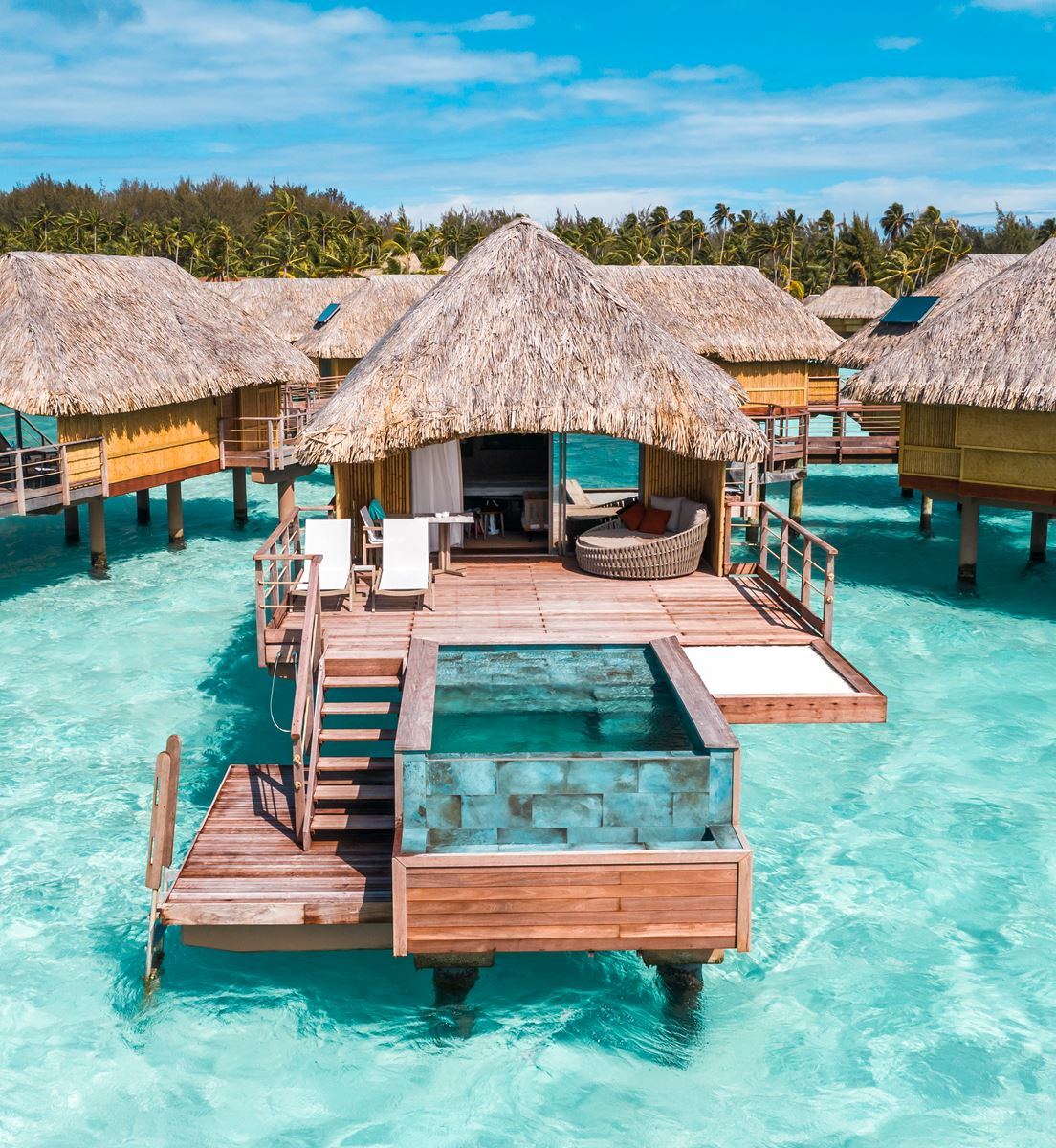
 Photo: Le Bora Bora by Pearl Resorts via Google
The verdict
- Best forAnyone choosing weeks for the lagoon, value or quiet over the peak season crush
- Top pickMay and October, the dry season shoulders, with fine weather and softer prices than July and August
- One thing to knowThe lagoon is warm and swimmable all year; the real questions are rain, humidity and the cyclone risk, not temperature
Published 26 February 2026. Last reviewed 11 March 2026
Bora Bora sits deep in the South Pacific, just south of the equator, so the temperature barely moves across the year and the lagoon stays warm whatever month you choose. What actually changes is the rain, the humidity and the crowds, and that is what should drive your timing. The island runs on two seasons, a dry one from roughly May to October and a wet one from November to April, with the European and North American summer holidays of July and August layered on top as the busy peak.
This guide walks the year month by month, with a quick grid for the headline conditions and longer notes on the months that matter most. We have been honest about the trade offs, because the driest, calmest weeks are also the busiest and priciest on what is already an expensive island, while the cheapest, quietest weeks come with humidity, passing storms and a small cyclone risk.
If you want the short answer, aim for the shoulder months of May or October, or the heart of the dry season in June and September. You get reliable sun and a calm lagoon without the very steepest peak prices. Below is the fuller picture so you can match the month to the trip you want, whether that is a honeymoon, a snorkelling week or a quieter value stay.
Month by month at a glance
| Month | Air | Sea | Rain | Crowd | Verdict |
|---|---|---|---|---|---|
| January | Hot, humid | Warm, around 29C | Wettest, cyclone risk | Quieter after New Year | Low season; lush and cheaper, but plan around heavy rain |
| February | Hot, humid | Warm, around 29C | Very wet, cyclone risk | Quiet | Still wet and humid; good value if you watch the weather |
| March | Hot, humid | Warm, around 29C | Wet, easing late month | Quiet | The wet season tailing off; a quiet gamble |
| April | Warm, drying | Warm, around 29C | Drying out | Building | Shoulder into the dry season; a fresher, greener window |
| May | Warm, dry | Warm, around 28C | Mostly dry | Moderate | A top shoulder month; dry season opens, crowds still light |
| June | Warm, dry | Warm, around 27C | Dry | Moderate, building | Excellent; the dry season at its most pleasant |
| July | Warm, dry, breezy | Warm, around 27C | Driest stretch | Peak | Superb weather, but the busiest and priciest weeks |
| August | Warm, dry, breezy | Warm, around 27C | Driest month | Peak | Peak season; book far ahead and expect full resorts |
| September | Warm, dry | Warm, around 27C | Dry | Easing | A top month; dry weather holds as the peak thins out |
| October | Warm, humidity rising | Warm, around 28C | Mostly dry, first showers late | Moderate | A fine shoulder month; dry season fading, prices softer |
| November | Hot, humid | Warm, around 29C | Wet season starting | Quieter | Greening up; value returns with the showers |
| December | Hot, humid | Warm, around 29C | Wet, heavy late month | Peak over the holidays | Wet, yet the festive weeks are busy and pricey |
When each month earns its place
May. One of the smartest months of the year. The dry season has opened, the island is still green from the rains, and the heavy peak crowds have not yet arrived. The lagoon is calm and clear for swimming and snorkelling, and prices sit below the July and August ceiling. A strong all round window, and a quiet one for a honeymoon.
June. The dry season at its most comfortable, with sunny days, lower humidity and a gentle breeze. Crowds are building toward the peak but the island does not yet feel full, and the lagoon conditions are excellent. A lovely month for almost any kind of Bora Bora trip, from snorkelling to slow days on the water.
July. Among the driest, sunniest weather of the year, which is exactly why it is the busiest and most expensive. Resorts fill, transfers run back to back, and the famous overwater villas need booking far ahead. The trade off is dependable weather and a lively island. Come now and reserve everything early.
August. Typically the driest month, with the same superb conditions and the same peak crowds and prices as July. If you visit now, embrace the season, lock in your resort and excursions well in advance, and use the calm mornings on the lagoon before the day tours spread out. The water is at its clearest for the coral gardens.
September. Arguably the sweet spot of the year. The peak crowds thin while the dry, sunny weather holds, so you get July quality conditions with a little more room and softer prices. A superb month for snorkelling the Toopua coral gardens, swimming with the mantas and quieter sunsets at Matira.
October. The closing shoulder of the dry season, still mostly sunny and calm with humidity beginning to creep back late in the month. Prices ease and the island quietens, which makes it a fine value window if you do not mind the small chance of an early shower. A good month to pair beach time with the lagoon.
January. The heart of the wet season and statistically the rainiest month, hot and humid with a genuine cyclone risk across the wider region. It is the cheapest, greenest time, and rain can fall in heavy bursts rather than all day, but it is a gamble best taken with flexibility and a close eye on the forecast.
Get the Bora Bora beach calendar
Independent and honest · 1,340 beaches ranked across 103 destinations · We answer to no resort
Before you go
What is the best month to visit Bora Bora?
For most people it is the shoulder months of May or October, at the start and end of the dry season, with excellent weather, calmer prices and fewer crowds than the July and August peak. June and September are also superb. The dry season as a whole, May to October, is the safe window for the lagoon.
When is the dry season in Bora Bora?
The dry season runs from roughly May to October, with abundant sunshine, lower humidity and the calmest, clearest lagoon. August is typically the driest month. The wet season is from November to April, hotter and more humid with passing tropical showers and a cyclone risk, though it brings lower rates and quieter sand.
Is the sea warm enough to swim all year in Bora Bora?
Yes. The lagoon stays warm all year, generally around 25 to 29 degrees, so swimming and snorkelling are comfortable in any month. The real questions are rain, humidity and crowds rather than temperature, which barely moves so close to the equator.
Is it worth visiting Bora Bora in the wet season?
It can be, if you value lower prices and a quieter island. The wet season from November to April is hotter and more humid with heavier showers and a small cyclone risk, but rain often falls in bursts rather than all day. Keep some flexibility, and watch the forecast for the festive weeks, which are busy and pricey despite the rain.
When can you see manta rays in Bora Bora?
Reef manta rays visit the lagoon cleaning stations at Anau and behind Motu Toopua through much of the year, so there is no single season, though clearer dry season water makes for better viewing. Sightings are never guaranteed and depend on tide, time of day and conditions, which is why a guided tour is the reliable way to find them.